div style="max-width:860px;margin:0 auto;font-family:Georgia,'Times New Roman',serif;color:#1a1a1a;line-height:1.65;">
Montana: The Madison & Yellowstone Rivers
Where & when to fish it
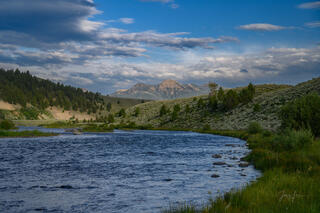
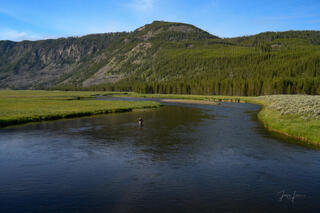
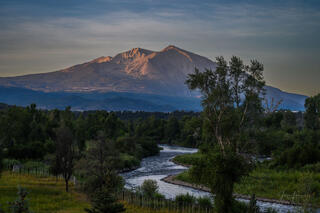
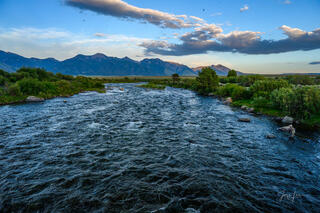
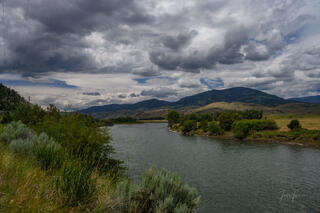
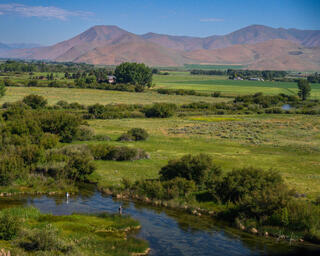
The Madison River runs 50 miles of classic freestone water. The famous "Fifty-Mile Riffle" holds brown trout in its deep runs, while the upper sections near West Yellowstone fish well on summer hoppers with explosive surface takes. The window worth planning around is the autumn brown-trout run, when fish move up in full spawning color. The Yellowstone River — the longest free-flowing river in the Lower 48 — winds through Paradise Valley below the Absaroka Range, holding rainbow, brown, and native Yellowstone cutthroat. Time it for the early-summer salmonfly hatch: big bugs, aggressive fish, dramatic country.
How I photograph it
The Madison's east-west orientation is the photographer's gift here — it lights up at both sunrise and sunset, so low-angle light rakes the riffles and backlights mist on cold mornings. I work the autumn run for spawning-color browns set against golden cottonwoods and snow-dusted peaks, and I keep the angler small in the frame to let the river's scale carry the image. On the Yellowstone, the challenge is holding epic landscape and intimate angling in one composition: I shoot wide from a low bank to stack the drift, the cottonwoods, and the Absarokas into a single layered frame, usually in the last hour of light.
Madison River guide · Montana waters · Shop Madison & Yellowstone prints →
Idaho's Spring Creeks: Henry's Fork & Silver Creek
Where & when to fish it
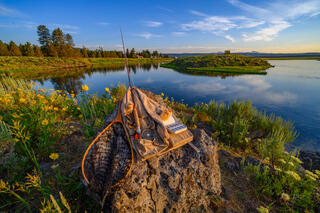
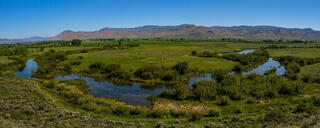
The Henry's Fork of the Snake flows gin-clear through the volcanic landscape of Island Park. Its famous Railroad Ranch (Harriman State Park) section offers public access to some of the most selective rainbow trout in North America — long, fine leaders and delicate presentations are the price of admission. Silver Creek, fed by cold desert springs and protected within ranch land, is the other masterpiece: meadow water so clear every rise is a test of nerve. The South Fork of the Snake rounds out the state with bigger, more forgiving freestone water and a famous October caddis emergence that turns fall afternoons electric.
How I photograph it
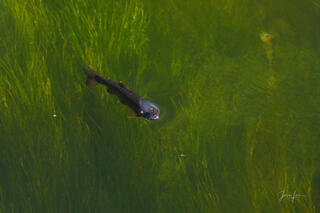
Clear water is the whole problem and the whole reward. A polarizer is mandatory — it cuts surface glare, reveals the structure beneath, and lets the trout and streambed read instead of disappearing into reflection. I expose carefully to hold detail in both the bright water and the shaded bank, and I favor soft, slightly overcast light, which renders the creek's color far more honestly than harsh midday sun. Then it comes down to patience: waiting for the rise form or the loaded cast, because on the Henry's Fork the decisive moment lasts a heartbeat.
Henry's Fork guide · Silver Creek guide · Idaho waters · Shop Idaho prints →
Colorado's High Country: South Platte, Frying Pan & Roaring Fork
Where & when to fish it
The South Platte below Cheesman Dam is Colorado's technical proving ground — tiny flies, perfect drifts, sophisticated tailwater trout, and a mysis-shrimp food source that rewards anglers who match the small stuff. It fishes year-round thanks to the tailwater's steady temperature. The Roaring Fork tumbles out of the Elk Mountains as classic freestone pocket water, best in autumn when the aspens turn and trout key on terrestrials. The Frying Pan below Ruedi Reservoir is the gold-medal tailwater, famous for oversized rainbows and browns in emerald pools beneath the Sawatch Range.
How I photograph it
High altitude changes the light — thinner air gives cleaner air clarity and deeper color saturation than you get lower down, and it's unforgiving of blown highlights, so I expose for the bright water and let the shadows sit. Autumn on the Roaring Fork is the set piece: I time it for the aspen turn and use the gold foliage as a warm frame against the cool blues and whites of the moving water. On the tailwaters I shoot tighter, letting the emerald pools and a single working angler tell the story rather than the grand landscape.
Colorado locations & techniques · South Platte, Frying Pan & Roaring Fork guide · Shop Colorado prints →
Yellowstone National Park: The Firehole & the Madison in the Park
Where & when to fish it
Inside the park, the Firehole is unlike any other trout river in the world — geothermally warmed, it fishes early and late in the season when other waters run too cold, winding past steam vents and grazing bison. The wade-only Madison in the Park, formed where the Gibbon and Firehole meet near Madison Junction, offers classic Yellowstone water in a setting that's pure postcard. Both reward anglers who get there at first light, ahead of the crowds and the heat.
How I photograph it
The Firehole gives you something almost nowhere else does: geothermal mist rising off the water at dawn, which I backlight to silhouette a casting angler against glowing steam. Cold mornings are the prize — the bigger the temperature gap, the heavier the mist. I shoot low and into the light, expose for the highlights in the steam, and let the figure go dark, which is how the black-and-white frames in this collection came to be. Bison in the meadow beyond add scale and a distinctly Yellowstone sense of place.
Yellowstone National Park guide · Shop Yellowstone prints →
The Snake River: Headwaters to the South Fork
Where & when to fish it
The Snake is really many rivers in one. Its uppermost reaches inside Yellowstone offer a true backcountry experience — solitude earned by a long hike from the South Boundary Trailhead, and an overnight needs a backcountry permit. Downstream, the South Fork is broad, powerful freestone water holding wild rainbow and cutthroat, with that famous autumn caddis bringing fish up to substantial dries on fall afternoons.
How I photograph it
The South Fork's scale calls for a drift-boat perspective and wide compositions that show the channels braiding through autumn color. I shoot from water level to keep the horizon low and the sky and cottonwoods working together, and I let the boat or a single angler anchor the eye inside all that space. In the backcountry headwaters the subject is solitude itself — I frame small figures in large wilderness to make the remoteness the point.
Snake River guide · Shop Snake River prints →
Plan by Water
Each destination has its own in-depth guide — access, timing, hatches, and the images that came out of fishing and shooting it:
Bring the water home. Every location here is represented in my limited-edition print collection — signed, numbered, museum-quality, in TruLife Acrylic, Metal, and Fine Art Paper.
Shop fly fishing photography prints →