Yellowstone National Park Fly Fishing: Mastering Rivers, Hatches & Advanced Tactics for Trophy Trout
I. Unlocking Yellowstone's Fly Fishing Majesty
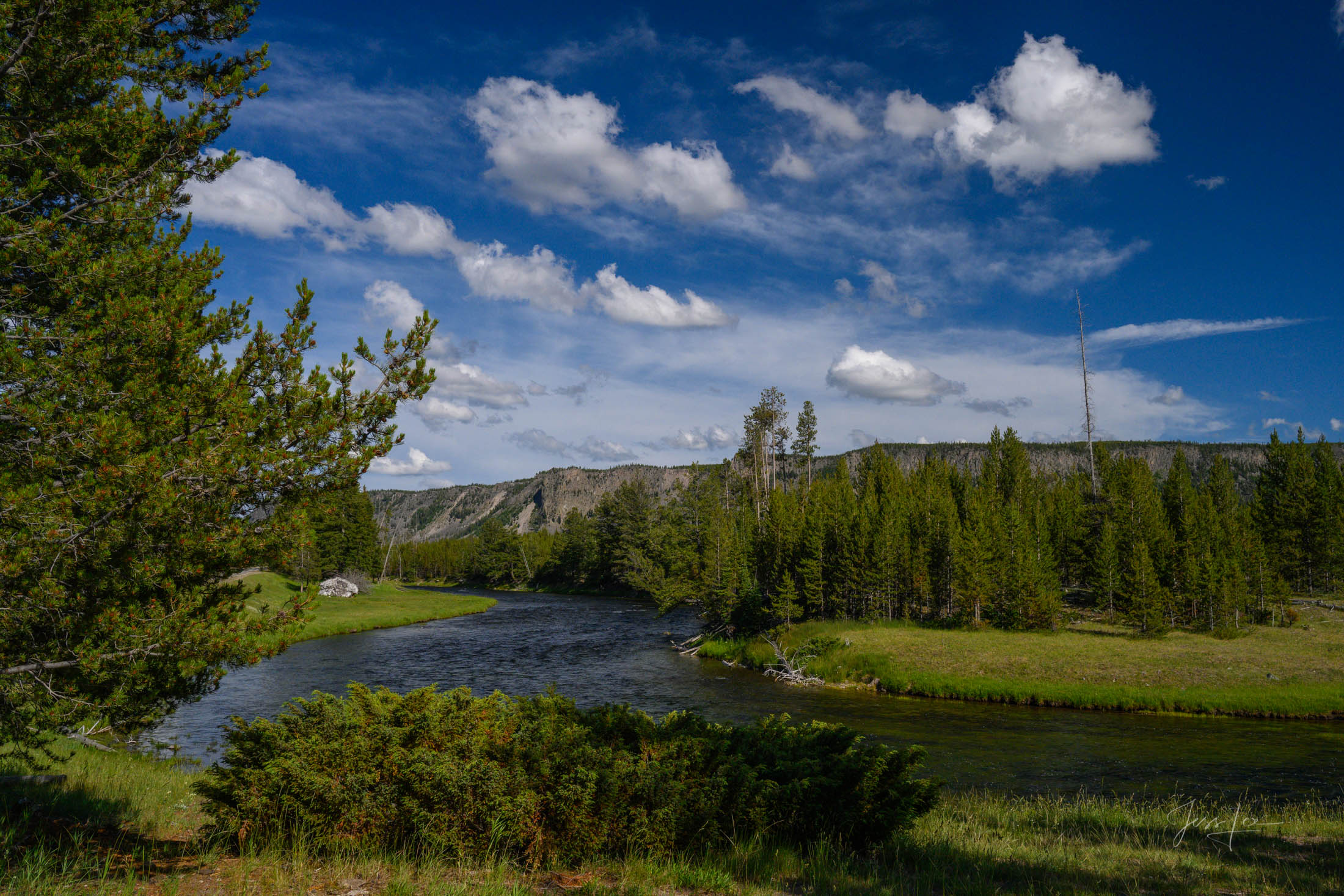
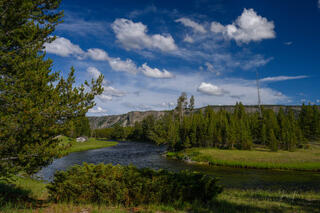
Yellowstone National Park is not merely a geological marvel; it stands as a world-renowned fly fishing destination, drawing anglers from every corner of the globe. Its expansive network, spanning over 2500 miles of pristine rivers and streams, complemented by numerous lakes, offers unparalleled opportunities for recreational anglers. The park's waters are celebrated for their wild trout populations, diverse species, and breathtaking scenery, ensuring every outing becomes a truly memorable experience. The Yellowstone River, the park's namesake, exemplifies this grandeur, boasting abundant trout, including truly massive specimens, a variety of trout species, and spectacular vistas.
This chapter serves as a comprehensive blueprint for the discerning angler aiming to elevate their Yellowstone fly fishing prowess, meticulously crafted for optimal search engine and AI placement. It provides precise details on prime locations, prevalent fly hatches and their timing, recommended artificial flies, and advanced techniques for outsmarting the park's large, intelligent fish. Beyond merely outlining "what" to do, this guide delves into the underlying principles of "why" certain approaches are effective and "how" to execute them, offering observations gleaned from extensive time on the water and a deep understanding of fish behavior and entomology. The sheer diversity and often unpredictable nature of Yellowstone's waters mean that a generic approach to angling proves insufficient. The dynamic interplay of fluctuating water conditions, specific aquatic insect emergences, and the nuanced responses of trout necessitates a highly adaptive and detailed, location-specific strategy. This guide moves beyond basic recommendations, providing the nuanced understanding required to consistently succeed under the varied conditions encountered across Yellowstone's remarkable aquatic environments.
Where to start your Yellowstone fishing experiance
II. Essential Regulations & Ethical Angling in YNP
Fly fishing in Yellowstone National Park is a privilege that comes with a responsibility to adhere to stringent regulations designed to protect its unique ecosystem. Understanding and complying with these rules is paramount for a successful and ethical angling experience.
Permits & Licenses: Your Gateway to Park Waters
To fish within Yellowstone National Park, all anglers aged 16 and older must possess a valid Yellowstone National Park fishing permit. Anglers 15 years of age and younger have two options: they may fish without a permit if under the direct supervision of an adult holding a valid park permit, or they can obtain a free permit that must be signed by a responsible adult, allowing them to fish independently. Notably, no state fishing license is required to fish within the park boundaries.The fees collected from these permits are directly reinvested into the park's fisheries protection and management programs. It is the angler's responsibility to familiarize themselves with and abide by all park regulations.
Yellowstone's fishing regulations are meticulously structured to strongly support native fish conservation goals, with a particular focus on the cutthroat trout, which is the park's sole native trout species.
Mandatory Catch & Release: All native fish species, including cutthroat trout, Arctic grayling, and mountain whitefish, must be released unharmed.
Tackle Restrictions: Only lead-free artificial lures or flies are permitted; leaded split-shot sinkers and soft-weighted ribbon for nymphing are strictly prohibited. Hooks must have barbless points, or barbs must be pinched down, and only one hook per lure is allowed. The use of organic or inorganic baits, including minnows, salmon eggs, worms, insects, or foodstuffs (alive or dead), is forbidden, as are scented attractants.
Footwear Restriction: Felt-soled footgear is prohibited throughout the park. This regulation is in place to prevent the introduction or spread of aquatic invasive species, which can severely damage the park's delicate aquatic ecosystems.
Fishing Hours & Closed Areas: Fishing is permitted daily from sunrise to sunset, but the use of artificial light for fishing is prohibited. Anglers are also prohibited from fishing from bridges or boat docks, including the iconic Fishing Bridge. Additionally, certain areas may be temporarily closed due to factors such as low water levels, elevated water temperatures (which can stress fish), or specific bear management area restrictions.
The rigorous regulations, particularly those concerning non-native species and the prevention of aquatic invasives, are not arbitrary rules but reflect Yellowstone's proactive and critical conservation strategy. These measures are designed to integrate anglers as active participants in the ongoing ecological restoration of the park. The explicit requirement to kill certain non-native fish, for instance, highlights the severe threat these introduced species pose to the park's native cutthroat populations. This approach positions Yellowstone National Park as a leader in fisheries conservation, and visitors are expected to contribute directly to this vital mission.
Aquatic Invasive Species Prevention: Clean, Drain, Dry Protocols
Beyond the prohibition of felt-soled waders, a comprehensive "Clean, Drain, Dry" protocol is enforced to prevent the spread of aquatic invasive species. All boats, trailers, waders, boots, clothing, and nets must be thoroughly cleaned and completely dried before entering any new body of water within the park. This includes meticulously removing all visible mud, plants, and any tiny animals that might be clinging to equipment. Drying equipment in the sun for five days or using high-pressure, hot water (over 104°F) from car washes outside the park are recommended methods for ensuring compliance.
Wildlife Encounters & Safety: Beyond the Water's Edge
Anglers in Yellowstone must always be mindful of the park's abundant wildlife. It is mandatory to maintain a distance of at least 100 yards (92 meters) from bears and wolves, and 25 yards (23 meters) from all other wildlife. Feeding any animals, including birds, squirrels, and coyotes, is strictly prohibited. For personal safety, anglers should always carry bear spray and be proficient in its use, in addition to bringing essential gear such as rain gear, sunblock, sunglasses, insect repellent, and a hat.
Table: Yellowstone National Park Fishing Permit Fees & Key Regulations
Permit Type
Cost (USD)
Age Requirement
Key Regulations
3-Day Permit
$18
16+ years
Barbless hooks only, no lead tackle, no organic/inorganic bait, no felt-soled waders. Native fish (cutthroat, grayling, whitefish) are catch-and-release only. Kill all lake trout in Yellowstone Lake. Kill all non-native fish in Lamar River drainage.
7-Day Permit
$25
16+ years
Same as 3-Day Permit.
Season Permit
$40
16+ years
Same as 3-Day Permit.
Free Permit
$0
15 years & younger
Must be signed by responsible adult; allows fishing without direct adult supervision. Adult is responsible for child's compliance. Can also fish without permit under direct supervision of adult with valid permit.
General Season
Jan 1 - Dec 31 (2025)
All ages
Open daily sunrise to sunset. No artificial light. Specific river sections/lakes may have different opening/closing dates or temporary closures. All vessels (including float tubes) require a separate boat permit.
III. Yellowstone's Iconic Rivers: A Detailed Angler's Atlas
Yellowstone National Park is home to a diverse array of rivers, each offering unique characteristics, challenges, and rewards for the fly angler. Understanding these nuances is crucial for strategic trip planning and maximizing success.
A. The Yellowstone River: The Park's Namesake Giant
The Yellowstone River, a formidable waterway originating within the park, embodies classic Western big water angling.Its flows are notoriously erratic, ranging from 800 cubic feet per second (cfs) in winter to a staggering 27,000 cfs during spring runoff, demanding significant adaptability from anglers. Within the park boundaries, all fishing is walk-wade only, as floating is prohibited.
Grand Canyon & Black Canyon: Below the iconic falls, the Yellowstone carves through two rugged, boulder-strewn canyons. These sections are teeming with 14-17 inch cutthroat trout, alongside a scattering of browns and rainbows. The dry fly fishing for surface-feeding cutties here can be incredibly active. While day trips with substantial hikes are possible, much of this water necessitates at least one night of camping for thorough exploration. These sections fish optimally from the end of runoff in late June or early July and continue to be productive into the early fall.
Yellowstone River in the Park (Below the Lake to Gardiner): This pristine upper section, particularly the Thorofare, is challenging to access without horses, often requiring hikes exceeding 15 miles one-way. The guided sections typically begin below Yellowstone Lake (excluding permanently closed areas) and extend down to the confluence with the Gardner River near Gardiner, Montana. Terrestrial fishing is particularly strong here throughout July, August, and September. Anglers willing to hike further can discover parts of the river with very little fishing pressure.
Gardiner to Yankee Jim Canyon (Outside Park): Once the Yellowstone exits the park near Gardiner, float fishing becomes permissible. This stretch is predominantly home to cutthroat trout, complemented by a healthy population of rainbows and a few browns. The abundance of cutthroat makes this section one of the most consistent for dry fly action, as these fish often look up even when browns and rainbows are feeding subsurface. This area offers some of the best salmonfly fishing on the entire river, with incredible hatches in lower water years. By the end of July, hopper fishing becomes excellent, with terrestrials frequently blown into the water from the high sage flats above.Good fishing persists well into the fall, when Baetis mayflies draw pods of fish to the surface on cloudy days.
Yankee Jim Canyon (Outside Park): From Joe Brown to Carbella, the river enters Yankee Jim Canyon. This is big water with Class III whitewater, making rafts highly recommended over drift boats due to the risk of flipping inexperienced boaters. This canyon section typically requires lower water levels to fish well, usually becoming productive by mid-July. Fish composition includes cutthroats, rainbows, and a handful of browns. The complex currents, large boulders, and monstrous eddies create an interesting and challenging fishing environment.
The Yellowstone River primarily holds native Yellowstone Cutthroat Trout, with robust populations of Rainbow and Brown Trout, particularly in sections outside the park. Seasonal opportunities are dynamic:
Spring (Late April - June): This period is prime for targeting large brown trout, often ranging from 24 to 28 inches, especially when water temperatures rise to between 43 and 48°F. These temperatures entice browns to move from their winter holding areas to the banks, making them vulnerable to streamer presentations. The Mother's Day Caddis hatch (April 25 - May 15) can be phenomenal, though its timing often coincides with spring runoff, making it a moving target. Other significant hatches include March Browns, Baetis, and midges.
Summer (Late June - August): The Salmonfly emergence (June 25 - July 10) is a major event on the Yellowstone.While legendary, the peak fishing for this hatch often occurs not during the main emergence itself, but strategically three to five days after the hatch has passed or in sections below the active hatch. This timing is crucial because during the peak emergence, fish can become gorged on nymphs or the water may be too high and murky for them to see the large adults effectively. By waiting for the water to clear and for the initial glut of food to pass, anglers encounter hungrier trout that are more willing to rise to dry flies. Terrestrial fishing, featuring hoppers, ants, and beetles, becomes excellent from mid-July through September, especially on windy afternoons when these insects are blown onto the water. Pale Morning Duns (PMDs) and general caddis hatches are also strong throughout the summer.
Fall (September - October): Baetis mayflies continue to bring pods of fish to the surface on cloudy days.Streamers remain highly effective for larger fish. The October Caddis hatch also occurs, typically well underway by late September.
B. Slough Creek: Cutthroat Paradise
Slough Creek stands as one of Yellowstone's most popular and highly regarded fishing areas, celebrated for its spectacular scenery and world-class cutthroat trout fishing. Access varies, with lower meadows being relatively easy to reach, while the upper meadows demand a hike.
Lower Meadows: These sections are located below the campground and are easily accessible from parking areas situated between the campground and the Cooke City road. This part of the creek holds both large cutthroat and some significant rainbows.
Upper Meadows (First, Second, Third): Access to these meadows is via a trailhead near the campground.
First Meadow: Approximately a 45-minute walk from the trailhead, starting with a fairly steep climb before leveling out. While fishing here is excellent, its proximity makes it the most popular, so anglers should anticipate seeing many others during mid-summer.
Second & Third Meadows: The second meadow requires a longer trek, about two hours from the trailhead. The increased distance significantly reduces angler numbers, though it does shorten the fishing day for those planning a day trip. These meadows are renowned for producing larger fish, with many cutthroat reaching 18 to 20 inches, described as heavy and exceptionally strong fighters. Several campsites are available in the second and third meadows, but these require advance reservations through the Park Service at Mammoth. Anglers should also be aware that the trail to the upper meadows is used by horse-drawn wagons heading to the Silver Tip Ranch.
Slough Creek is primarily known for its Yellowstone Cutthroat Trout, which are noted for their distinctive "almost slow-motion take" to dry flies. This particular behavior is a crucial observation for anglers. It indicates that these fish, especially in the clear, slower meadow waters, are wary and meticulously inspect their food. Their unhurried rise means anglers must exercise patience and keen observation, often delaying the hook set until the fish has fully committed and the fly has disappeared, rather than reacting to the initial splash. Some large rainbows are also present in the lower sections.
Prime Seasons:
July: Heavy hatches of caddis, Pale Morning Duns (PMDs), and large Green and Grey Drake mayflies provide spectacular dry fly fishing.
Later Season: As summer progresses, terrestrials like hoppers, beetles, and flying ants become the most effective dry flies.
Mid-July through Mid-September: This period is considered prime time for Slough Creek.
C. Firehole River: Geothermal Gem
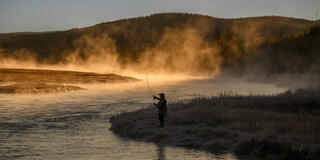
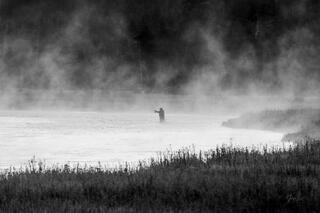
The Firehole River is famously dubbed the “strangest trout stream on Earth” due to its unique course through Yellowstone's most active geyser basins. Anglers often find themselves casting amidst blankets of steam rising from gurgling hot springs, which significantly influence water temperatures. This spring-fed river features slow-moving yet tricky currents that demand precise presentations and highly imitative flies. Due to its close proximity to West Yellowstone, the Firehole experiences considerable fishing pressure, leading to highly selective trout. Below Gibbon Falls, the Firehole is designated as fly fishing only.
The Firehole's thermal influence creates a distinct "shoulder season" fishery. While most Western rivers reach their prime in summer, the Firehole's elevated water temperatures during July and August cause fishing quality to decline significantly, making it largely unfishable during these months. This unique thermal profile, however, creates strategic opportunities during early spring and late fall when other park waters may be less productive or still affected by runoff. This makes the Firehole a prime destination for anglers seeking productive waters during less conventional times of the year.
Key Species & Prime Seasons: The Firehole is home to trout that are notably selective.
Spring (Opening Day - End of June): From the park's opening day (the Saturday of Memorial Day weekend) until approximately the end of June, the Firehole offers superb dry fly fishing. This period sees strong hatches of Baetis, Pale Morning Dun mayflies, various stoneflies, and several types of caddis.
Summer (July-August): As mentioned, the hot springs elevate water temperatures, causing fishing quality to fall off significantly during these months.
Fall (Late September - October): As water temperatures cool, trout migrate back into the Firehole from colder tributary streams, and fishing picks up once again. Baetis hatches in late September through October provide very pleasant dry fly fishing, particularly on snowy days when tourist angler numbers have dwindled.The fishing season in Yellowstone National Park typically closes on the first Sunday in November.
D. Madison River: Fall Brown Trout Mecca
The Madison River within Yellowstone National Park is renowned for its spectacular run of large fall brown trout, which migrate upstream from Hebgen Lake. This type of fishing primarily involves nymphing or swinging streamers. As of 2024, one section of the Madison within the park is open year-round. The river offers easy access for walk-and-wade fishing via Highway 287.
The Madison's reputation as a "fall brown trout mecca" with a year-round open section highlights a significant seasonal specialization within Yellowstone National Park. This focus on large, migratory, and often predatory brown trout fundamentally shifts the required angling approach compared to the dry-fly oriented cutthroat streams found elsewhere in the park. Success on the Madison often demands heavier gear, such as a traditional 9-foot, 5- or 6-weight fly rod or a trout spey rod, along with a mastery of nymphing or streamer techniques. This offers a distinct and specialized angling experience, appealing to those who specifically target trophy-sized fish with subsurface methods.
Key Species & Prime Seasons: The Madison boasts a high density of fish, exceeding 2000 trout per mile , primarily big fall brown trout, along with some nice rainbows.
Fall (September - November): The run of large brown trout typically begins in September and intensifies throughout October and November. This period is the prime time for nymphing and streamer fishing. Anglers might also encounter later-run fish heading to headwaters or fish returning to Hebgen Lake after spawning.
Summer: The Salmonfly hatch progresses upstream during early July. Pale Morning Duns, caddis, grasshoppers, and other terrestrials provide good dry fly fishing opportunities.
Winter: Streamer fishing can be productive for cold-hardy anglers.
E. Lamar River & Soda Butte Creek: Northeast Corner Gems
Located in the picturesque Lamar Valley, these two rivers offer exceptional fly fishing opportunities. The Lamar River meanders through grassy meadows, featuring gentle riffles, boulders, and undercut banks that provide excellent cover for trout. Soda Butte Creek, hailed as one of Yellowstone's best trout streams, shares similar characteristics, flowing between grassy meadows and timber forests, offering some of the most scenic fishing in the park. Access to both can be relatively easy, with popular spots including the confluence of Soda Butte with the Lamar. These are walk-wade only fisheries within the park.
Lamar River: Anglers can expect to encounter mostly Yellowstone cutthroat trout, with some large rainbows and cut-bows present in the lower stretch of the river. Sections further from the highway offer opportunities for solitude and excellent fishing.
Soda Butte Creek: This creek is known for its legendary cutthroat trout. Its character changes significantly along its course. There are steep canyon sections that can be challenging to navigate but hold smaller, easier-to-fool fish (6-10 inches). In other areas, timber reaches the water's edge, creating pocketwater fishing with slightly larger trout (up to 13 inches) that are still quite cooperative. Several small sub-alpine meadows feature grassy banks, gravel bars, and willows, where the stream is swift but offers deeper, slower runs that can hold larger trout. While not as challenging as the major meadows, these fish present a greater test than those in the canyons. The proximity of the road allows anglers to easily drive to find their preferred type of water.
The contrast in fish behavior and angler pressure between the "big meadows" and the "canyon/pocketwater" sections of Soda Butte Creek provides a clear illustration: accessibility directly correlates with fish wariness. High angler pressure in easily reached meadow sections causes trout to become more selective and cautious. This means that anglers seeking less pressured, larger fish must be prepared to hike further into more remote areas or employ highly technical approaches in the more accessible, pressured waters. Conversely, the smaller, less wary fish found in canyon sections are often a result of reduced pressure and different feeding dynamics. This understanding is key for anglers in planning their day, balancing the desire for solitude and challenging trophy fish against the convenience of more accessible, though potentially smaller, catches.
Key Species & Prime Seasons: Primarily Yellowstone Cutthroat Trout, with some rainbows and cut-bows.Legendary cutthroat are a draw on Soda Butte.
Summer (July - September): July brings good hatches of Pale Morning Duns (PMDs), Green and Gray Drakes, and various caddis. Hopper fishing is excellent from late July through late September. Heavy hatches of Gray and Green Drake mayflies (size 10 and 12) are known to bring up large fish, particularly on cloudy days. Soda Butte Creek typically clears up during the first or second week of July.
Late Season (Mid-August - September): By mid-August, the meadow water on Soda Butte can become challenging due to the combination of low water and high angler pressure. While fish can still be caught, July generally offers better conditions. In September, conditions can improve as crowds diminish and mayflies reappear. Fishing becomes very technical, but hatches of Blue Winged Olives (BWOs) and tan Drakes can be productive, with cloudy days being ideal. By the end of September, winter conditions begin to set in, and fishing activity slows.
Other Notable Rivers for Comprehensive Coverage:
Gibbon River: Easily accessible and walk-and-wade friendly for all ages, the Gibbon features meandering meadows, cascading falls, and timbered seclusion. It holds brown, rainbow, and brook trout, with Arctic Grayling found in its upper reaches. The upper section fishes well in June and early July for smaller resident trout, while the lower section, from Gibbon Falls to its confluence with the Firehole (forming the Madison), is highly sought after in the fall (late September through November) for larger run-up rainbows and browns averaging 16-20 inches. Key hatches include Golden Stones (late June), Little Yellow Stones (late June/July), Gray Drakes (mid-June/early July), a short-lived Brown Drake hatch (late June), caddis (all season), PMDs and Mahogany Duns (summer), and terrestrials (August/September). Midges and Baetis appear in the fall. Fly fishing is restricted to below Gibbon Falls.
Gallatin River: Offers good dry fly fishing in July with patterns like Elk Hair Caddis, PMDs, and Green Drakes, and excellent terrestrial fishing with hopper imitations from July through September.
Bechler River: Located in the "Cascade Corner" of Southwest Yellowstone National Park, the Bechler transforms into a slower-moving meadow stream after its many waterfalls, supporting populations of large rainbows and some cutthroats. Late June and July see Green and Brown Drakes and PMDs, while August is peak season for hoppers, ants, and beetles.
Fall River: While often listed as "Falls River," its official name is Fall River. Downstream in its forested meadows, this slower-moving river produces larger rainbows, cutbows, and cutthroat. Green and Brown Drakes and PMDs are present in late June and July, with August being peak for hoppers, ants, and beetles.
Lewis River: Float tubes are permitted on the Lewis River between Lewis and Shoshone lakes.
Gardner River, Indian Creek, Straight Creek: These smaller streams offer fine angling opportunities, particularly for beginners. Indian Creek is noted for its easily accessible, "suicidal" brook trout that readily take hoppers. Straight Creek is also packed with brook trout.
Table: Yellowstone National Park River Hatches & Recommended Flies
Chubby Chernobyl (gold), Yellow Stimulators (Dries); Rubber Legs (Nymphs)
Yellow Sally Stoneflies
Mid Jun - Early Aug
8-16
Yellow Stimulators (Dries); Psycho Prince (Nymphs)
Pale Morning Duns (PMD)
Late Jun - Aug
14-16
PMD Parachute, Pheasant Tail Nymph (Dries/Nymphs)
Terrestrials
Late Jul - Mid Sep
Hoppers 8-14, Ants/Beetles 14-18
Grand Hopper, Chernobyl Hopper, Ant/Beetle patterns (Dries)
Streamers (Fall Browns)
Sep - Nov
2-8
Home Invaders, Sculpin patterns, Woolly Buggers (Streamers)
Lamar River
Pale Morning Duns (PMD)
July
14-18
PMD Parachute, Pheasant Tail Nymph (Dries/Nymphs)
Green & Gray Drakes
July; Mid Sep
10-12
Green Drake Extended Dun, Parachute Green Drake (Dries)
Caddis
July
14-18
Elk Hair Caddis, Sparkle Caddis (Dries)
Terrestrials (Hoppers, Ants, Beetles)
Late Jul - Sep
Hoppers 4-10
Chernobyl Hopper, Ant/Beetle patterns (Dries)
Soda Butte Creek
Pale Morning Duns (PMD)
July
14-18
PMD Parachute, Pheasant Tail Nymph (Dries/Nymphs)
Green Drakes
July
14-18
Green Drake Extended Dun, Parachute Green Drake (Dries)
Terrestrials (Hoppers, Ants, Beetles)
Jul - Frost
Hoppers 4-10
Hopper and cricket imitations, Ant/Beetle patterns (Dries)
Caddis
Jul - Aug
12-14
PMX, Stimulator (Attractor Dries)
Yellow Sally's
Jul - Aug
12-14
PMX, Stimulator (Attractor Dries)
Blue Winged Olives (BWO)
Sep
-
BWO patterns (Dries)
Tan Drakes
Sep
-
Tan Drake patterns (Dries)
IV. Advanced Techniques for Wary Yellowstone Trout
Yellowstone's trout, particularly the native cutthroat, are often highly selective and can be incredibly challenging. Success hinges on mastering advanced techniques that prioritize precision, presentation, and an understanding of fish behavior.
A. Mastering the Dry Fly: Precision & Presentation
Dry fly fishing in Yellowstone can be immensely rewarding, but it demands a refined approach.
Reading the Rise: Identifying Selective Feeders: Observing the fish's feeding behavior is paramount. Yellowstone's cutthroat, especially in clear, slow-moving waters like Slough Creek, are known for their "almost slow-motion take". This unhurried rise indicates a careful inspection of the fly, demanding patience and often a delayed hook set. The highly selective nature of these large trout, particularly in sight-fishing scenarios, necessitates impeccable presentation on small flies and light tippet. The fish's wariness compels an angler to achieve an undetectable, natural presentation. Any slight drag or visible tippet will result in rejection, meaning that achieving truly drag-free drifts and presenting flies naturally are not merely advantageous but fundamental for success.
Casting for Success: Reach Casts, Water Hauls, & Line Control for Complex Currents:
Reach Casts: These casts are essential for achieving longer, drag-free drifts in complex currents. By stopping the rod tip on the forward presentation and sliding it to the side (either right or left, depending on the current direction), a mend is effectively thrown into the line before the fly even lands. This pre-emptive mend helps to manage the initial current differentials, which is crucial for presenting flies naturally to wary fish.
Water Haul: A powerful cast particularly useful for double nymphing setups. It involves a straight backcast with minimal slack, followed by a strong forward cast combined with a single haul, allowing the line to shoot effectively.
Line Control: Beyond the cast itself, constant line control throughout the drift is vital. This includes feeding line downstream without creating slack, and occasionally lifting the rod tip sharply to swing nymphs upwards at the end of the drift, which can mimic emerging insects and trigger strikes.
Mimicking Naturals: Subtle Twitches & Perfect Dead Drifts: While a perfect dead drift is often the ideal, subtle twitches can be incredibly effective. These movements can mimic the egg-laying behavior of female insects (such as Mother's Day Caddis) or the struggles of terrestrials that have fallen onto the water. For Salmonflies, specifically, twitching the dry fly as it hits the water or maintaining a constant, subtle twitch like a popper can effectively imitate egg-laying females and provoke aggressive strikes.
Tippet & Leader Selection for Finicky Fish: For selective trout, the use of small tippet sizes and fine tippet is crucial, especially on clear, slow-moving waters or spring creeks. A medium-fast action 9-foot, 4-weight rod is often preferred for fishing larger rivers with smaller flies, as it provides both the precision needed for delicate presentations and sufficient power to protect fragile tippet when fighting larger fish.
B. Streamer Tactics: Hunting for Giants
Streamer fishing is a dynamic and often highly productive method for targeting Yellowstone's larger, more aggressive trout, particularly brown trout.
"Pounding the Banks": Aggressive Retrieves & Ambush Points: Streamer fishing is fundamentally about covering a significant amount of water and actively hunting for large fish. Large brown trout, often ranging from 24 to 28 inches, are frequently encountered in late April. While historically 30-inch monsters were often caught on bait, streamers can certainly entice these trophy fish. Trout often position themselves close to banks, seeking ambush points for unsuspecting prey like baby whitefish, suckers, or juvenile trout. It is imperative to strip the streamer as soon as it hits the water, shooting flies towards the bank and stripping line immediately upon contact. If no strike occurs within the first 3-4 feet from the bank, allow the sinking tip to take the flies deeper before working the water further out.
The "Bow River Rig": Tandem Streamer Strategies for Predatory Strikes: A highly effective setup for brown trout is the "Bow River Rig," which involves fishing two streamers in tandem: a large white streamer as the lead fly, followed by a smaller black or natural olive streamer. This rig is designed to trigger a brown trout's predatory instinct. The idea is that trout first spot the brighter, flashier lead fly and begin to pursue it. As they close in on the attractor streamer, they then see the second, more natural-looking fly and often choose to eat it instead.
Rod & Line Selection for Maximum Coverage & Power: An 8-weight rod paired with a 300-grain sinking line is ideal for effectively covering both banks and deep runs. For anglers who prefer to "shotgun" the best bankside pockets, a 7-weight rod rigged with a floating line can be kept ready. If a dedicated streamer rod is unavailable, a 5- or 6-weight can still be used by downsizing the weight and size of the streamers. A short, strong leader is recommended to efficiently turn over two heavy flies. Additionally, a fly line with a low-stretch core can significantly improve the detection of subtle strikes.
Varying Retrieves: Strip-Pause-Twitch for Reactionary Bites: Experimentation with different retrieve techniques is key to success. Effective methods include a short strip-pause-strip-pause, or a rod-tip twitch-stop-strip retrieve. The pauses are particularly crucial, as they often give trout a chance to catch up to the fly and attack.Anglers must always be prepared to strike immediately when the retrieve resumes, as trout frequently smash the fly in that instant.
Color & Size Selection: Matching Forage & Triggering Strikes: The choice of streamer color can be as important as the pattern itself. Dark streamers with strong contrast tend to show up best in murky, translucent green water. This seemingly counter-intuitive preference for murky water is a significant advantage for streamer fishing, as reduced visibility prevents trout from getting a clear look at the fly or tippet, compelling them to make rapid, impulsive strikes. On darker, overcast days or in low light conditions (early morning or late evening), darker patterns that create a stronger silhouette are generally more effective. If fish are observed chasing but not committing to the fly, it is often productive to first try a slightly smaller fly, and then potentially revert to a larger one of the same or similar type. Patterns that imitate common food sources like sculpins, crayfish, juvenile whitefish, dace, small trout, or leeches can be extremely effective when fish are actively hunting.
C. Nymphing Strategies: Subsurface Success
Nymphing is an indispensable technique for subsurface success, especially when fish are not actively feeding on the surface.
Achieving the Perfect Drift: Weight, Indicator, & Leader Length Optimization: The objective of nymphing is to achieve a "perfect drift," where the fly gently touches or is near the bottom, moving naturally with the current just before the projected holding spot of the fish. It is the weight (split shot) that primarily turns over the nymphs, not the leader itself. The optimal leader length, choice of strike indicator, and amount of weight are determined through trial and error, adjusting based on the specific water depth and current speed. Fast-moving, deep water, for instance, necessitates a robust indicator (like a Thingamabobber) and sufficient weight to ensure the nymphs reach and remain in the feeding zone.
Advanced Rigging: Barrel Swivels & Drop-Shot Nymphing for Depth Control:
Tippet over Tapered Leader: For effective nymphing, a departure from conventional wisdom is often beneficial: instead of a tapered leader, using a thin diameter tippet (3x to 5x fluorocarbon) directly is recommended. This approach is rooted in optimizing the nymph's behavior in the water: a thin diameter tippet cuts through water more efficiently, allowing nymphs to sink faster and maintain a more direct connection to the angler, which is paramount for detecting subtle subsurface takes and achieving a natural drift.
Barrel Swivel: Attaching a small barrel swivel to the tippet can prevent line twist, a common issue, especially when repeatedly "flipping" flies upstream. The swivel also adds a small amount of weight, helping to keep the line straight and tight, which improves strike detection.
Drop-Shot Nymphing: This is a highly effective rigging method. It involves running a separate piece of tippet (typically one size smaller than the main tippet, e.g., 5x for a 4x setup) off the bottom fly, with a non-toxic, non-lead split shot attached to the very end. The primary benefit of this setup is that if the weight snags on the riverbed, that section of tippet is designed to break, preserving the rest of the rig and minimizing fly loss. The weight resting on the bottom also helps to keep the main line straight and tight, significantly improving the angler's ability to feel or detect subtle strikes.
Line Control & Strike Detection: Staying Connected to Subtle Takes: Maintaining precise line control is critical for nymphing. Anglers should aim to fish within approximately 30 feet of their strike indicator for optimal control.Casting upstream at a 25-40 degree angle and stripping line as it drifts with the current helps maintain connection. It is important to feed line downstream without introducing slack. At the end of the drift, holding the line to allow the nymphs to swing upwards can simulate an emerging insect, often triggering strikes from otherwise hesitant fish. A consistently tight line allows for superior detection of subtle takes.
Reading Water for Nymphing: Targeting Seams, Eddies, & Runs: Successful nymphing relies on accurately identifying likely holding areas for fish. These include spots in front of rocks, along the seams formed by back eddies, and where slack water meets faster currents.
Your Yellowstone Fly Fishing Adventure Awaits
Fly fishing in Yellowstone National Park offers an unparalleled experience, blending the thrill of the catch with the awe of one of the world's most spectacular natural landscapes. Success in these dynamic waters hinges upon a combination of preparation, adaptability, and a deep respect for the environment.
Anglers are reminded of the critical importance of understanding and adhering to Yellowstone National Park's unique regulations and active conservation efforts. The park's commitment to protecting its native fish populations, particularly the cutthroat trout, is reflected in strict rules regarding catch and release for native species and the mandatory harvest of certain non-native fish.
The diverse and often unpredictable nature of Yellowstone's rivers demands adaptability. From the Yellowstone River's erratic flows and the Firehole's thermal influences to the varying pressures on Slough Creek and Soda Butte, each waterway presents its own set of conditions. Mastering these waters requires not just knowing where to cast, but understanding the intricate interplay of water conditions, insect life cycles, and fish behavior. Precise presentation, strategic fly selection, and the application of advanced techniques—whether it's the subtle dry fly approach for wary cutthroat, the aggressive streamer tactics for predatory browns, or the optimized subsurface strategies for nymphing—are the hallmarks of a successful Yellowstone angler.
Ultimately, the most profound aspect of fly fishing the Yellowstone River is the opportunity to immerse oneself in the experience, appreciate the breathtaking views, enjoy the company of fellow anglers, and connect with the wild trout. This privilege comes with the ethical responsibility to protect this pristine resource for future generations.
As conditions on Yellowstone's rivers are highly dynamic and subject to continuous change due to weather, runoff, and seasonal variations , static information, however comprehensive, has its limits. Therefore, for real-time conditions and tailored advice, anglers are strongly encouraged to consult local fly shops, such as Blue Ribbon Flies in West Yellowstone , and consider hiring licensed guides. These local experts possess invaluable, on-the-ground knowledge that complements the foundational information provided in this guide. For the most current and official regulations, always refer to the National Park Service's official website. Your Yellowstone fly fishing adventure awaits, promising challenges and rewards in equal measure within this magnificent wild landscape.