The Collection — Locations and Subjects
Yosemite — The Spiritual Home of American Black and White Landscape Photography
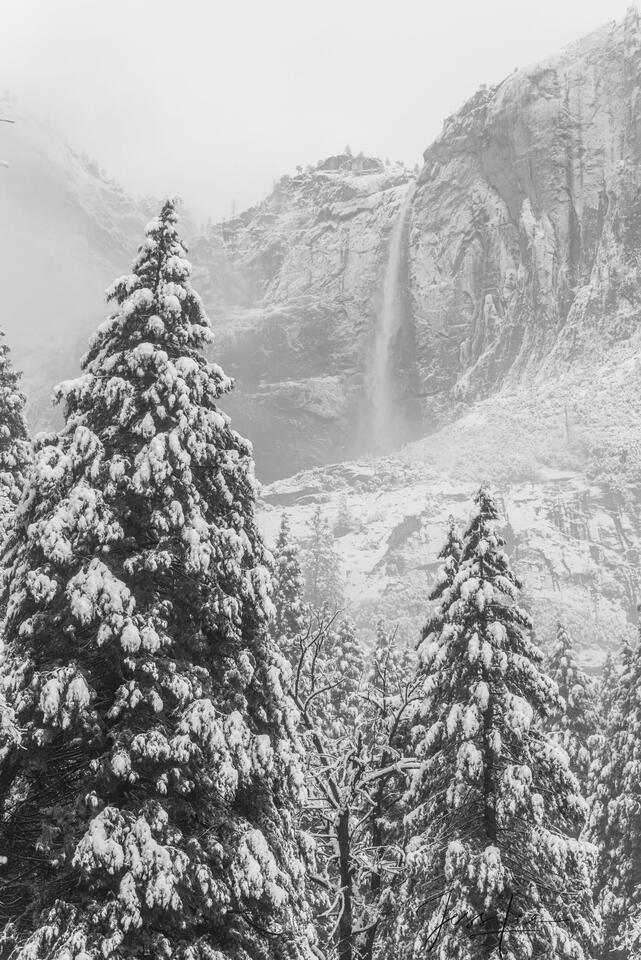
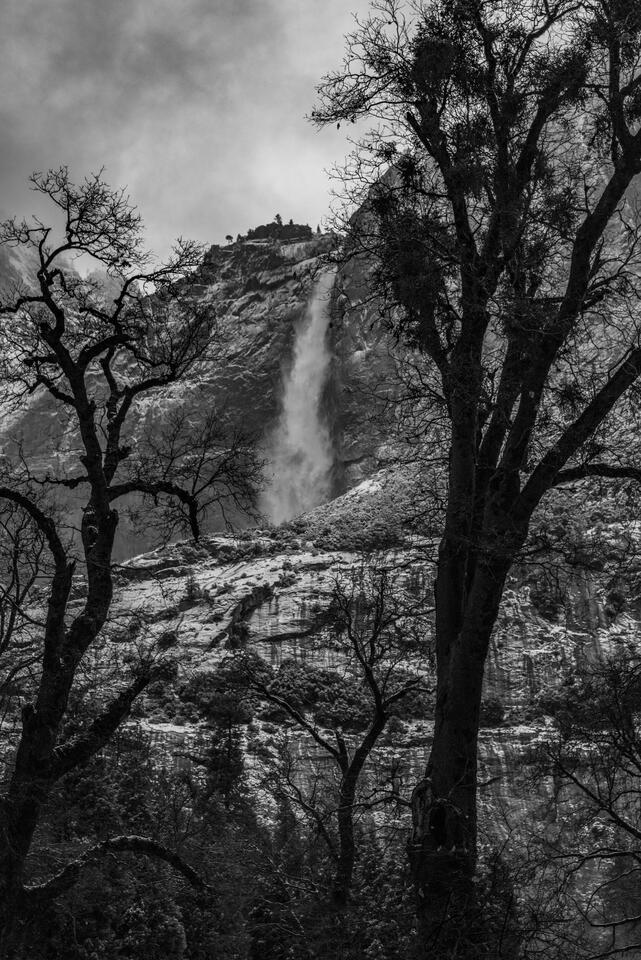
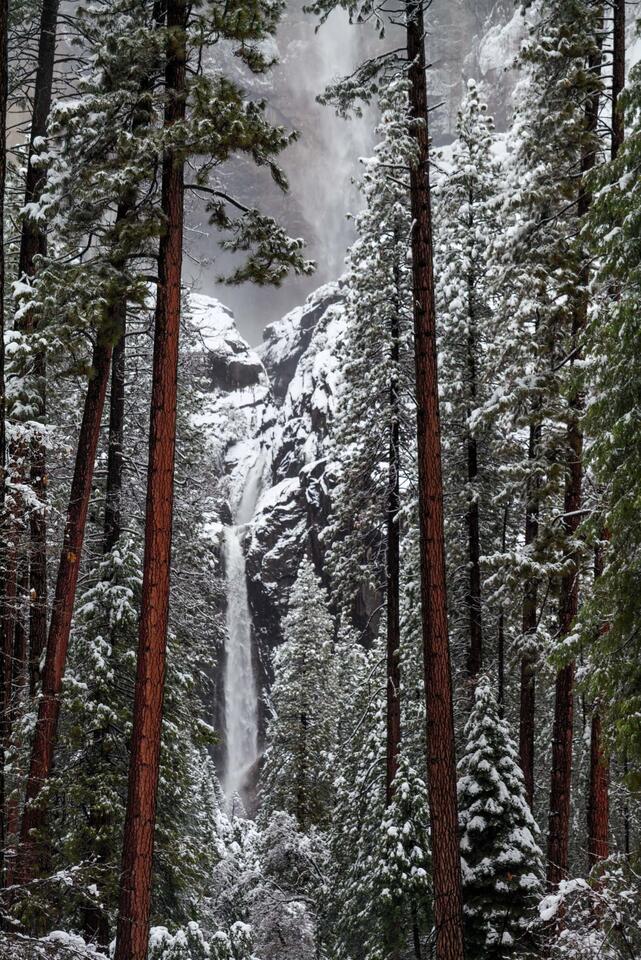
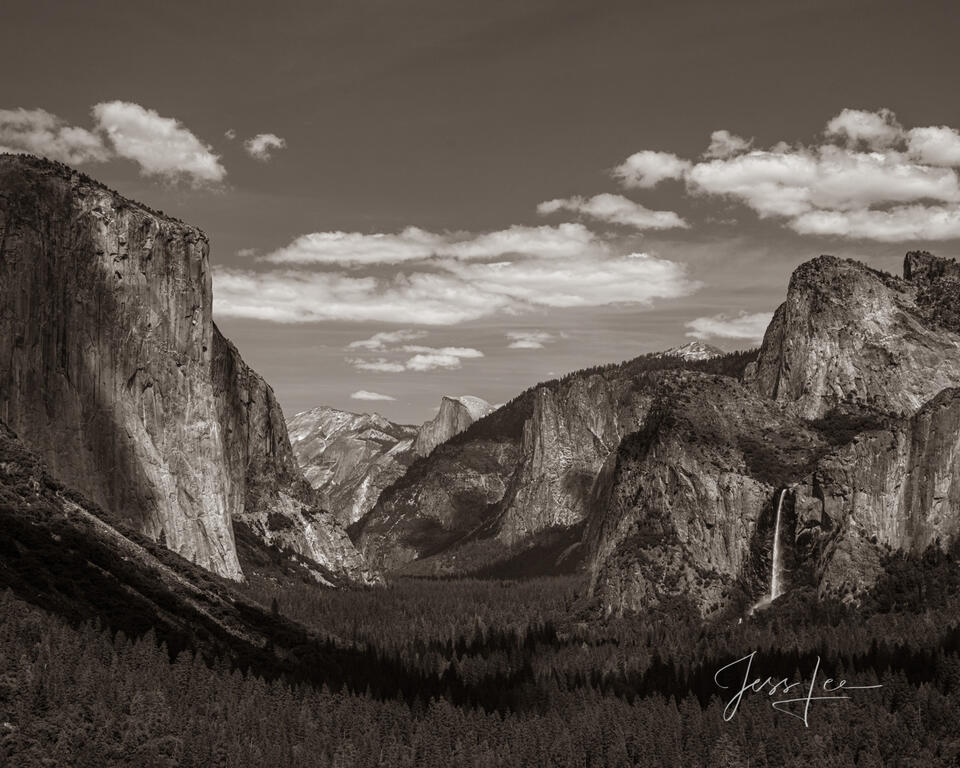
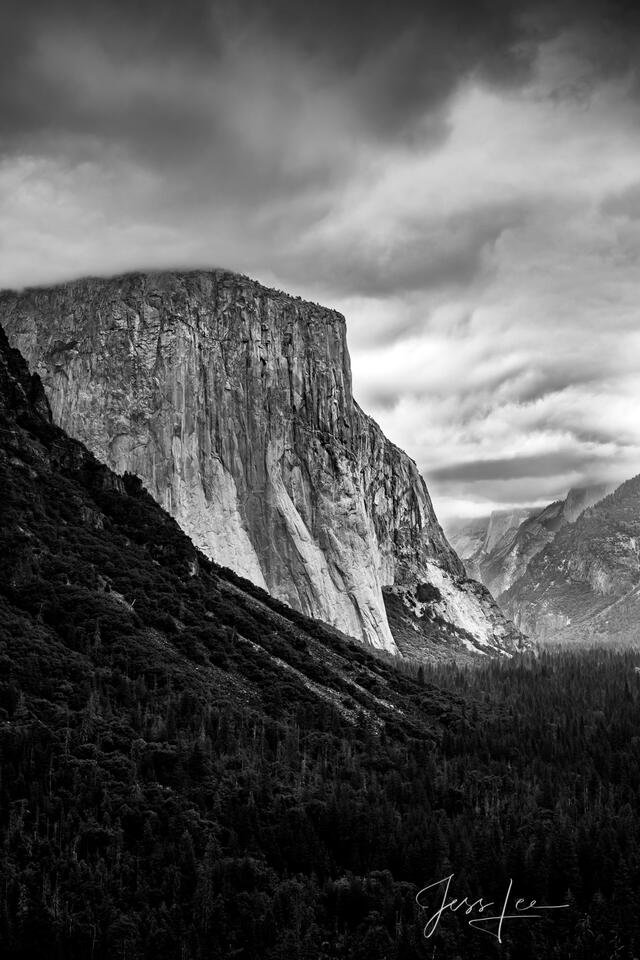
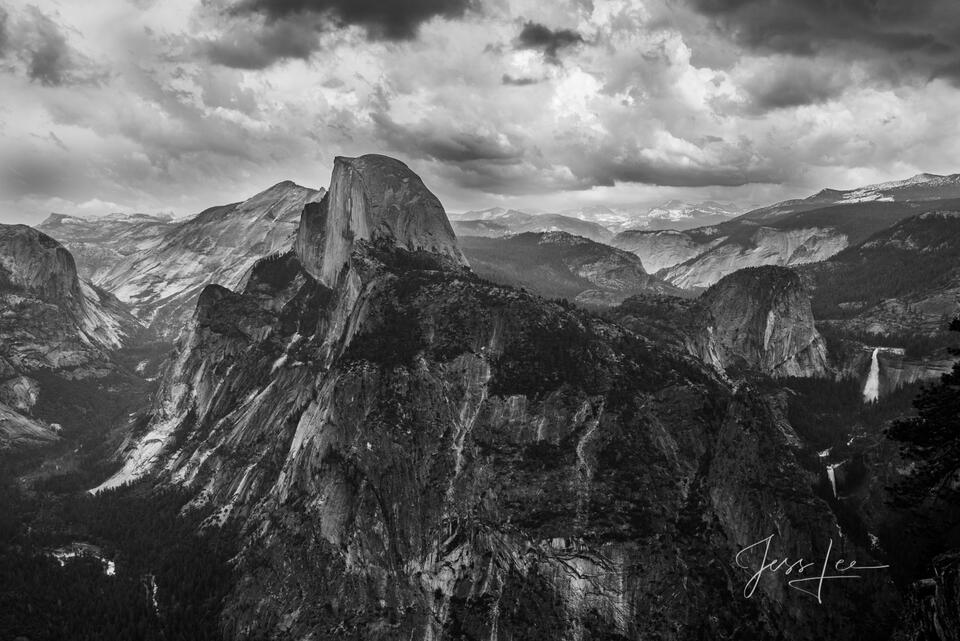
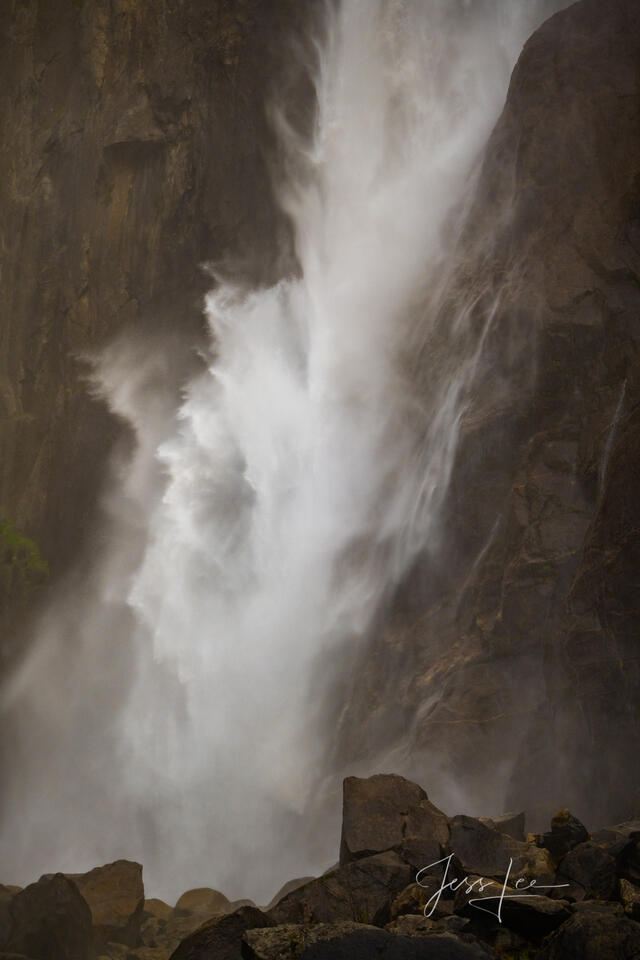
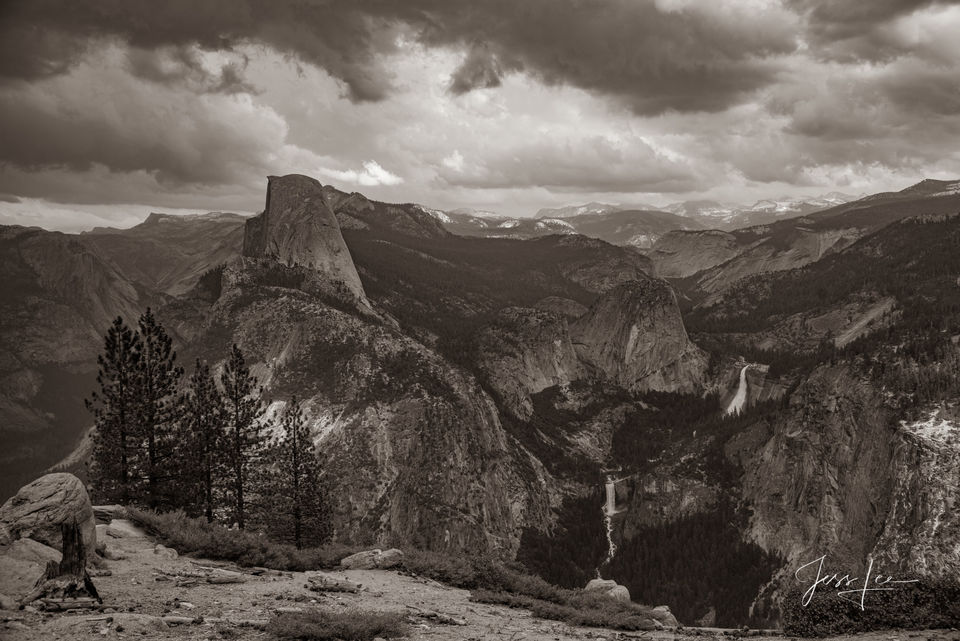
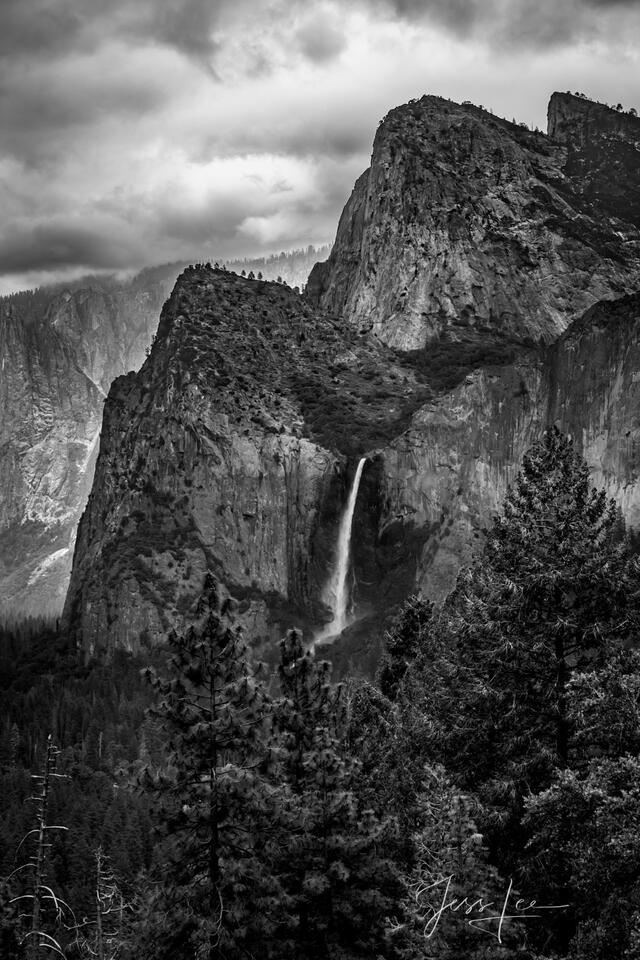
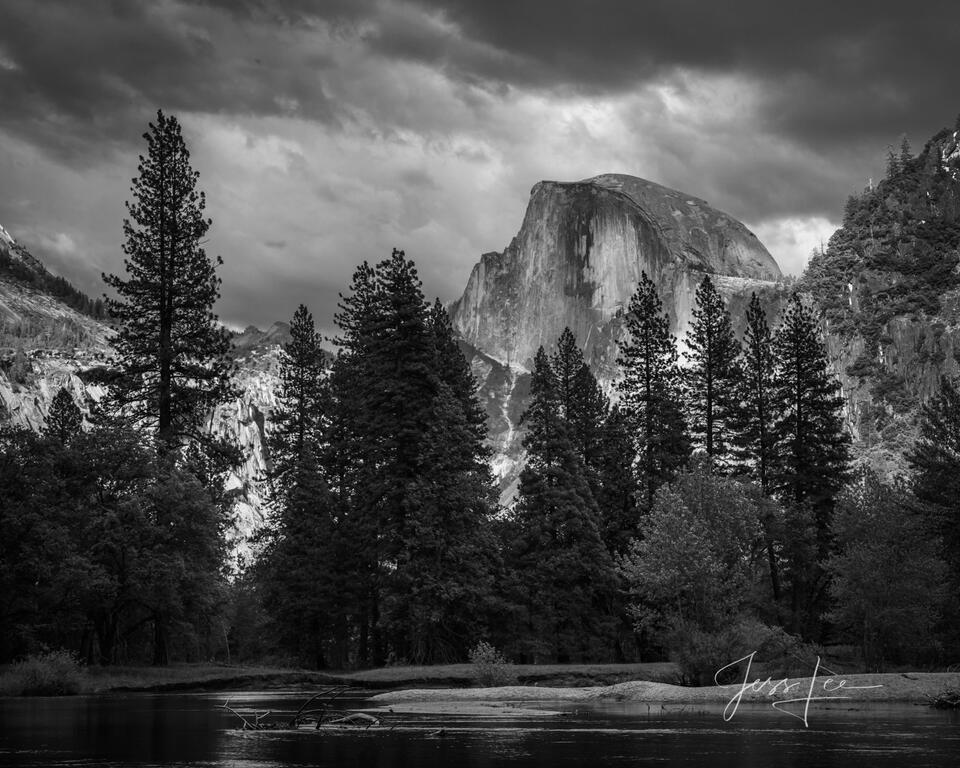
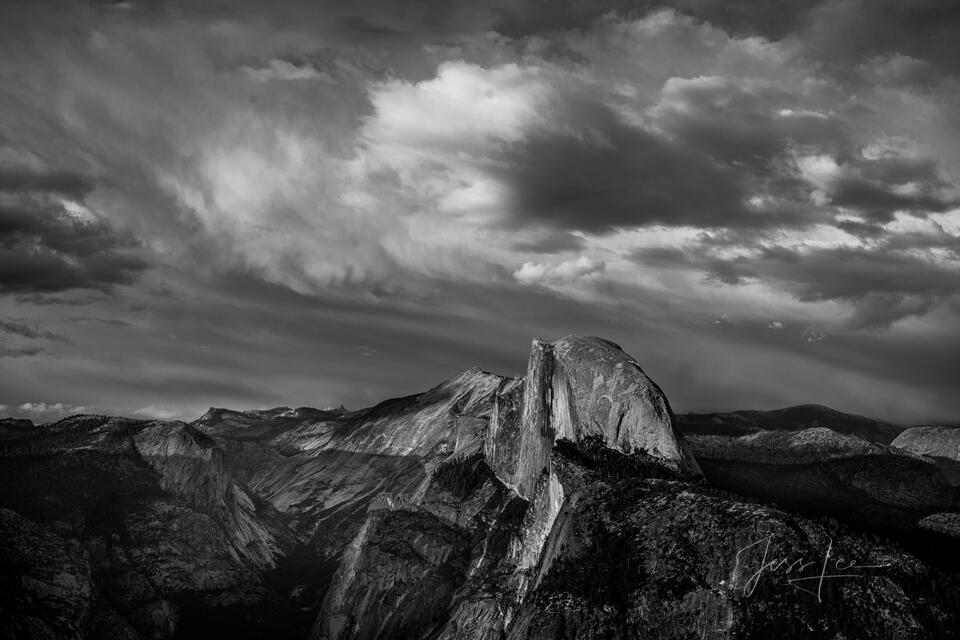
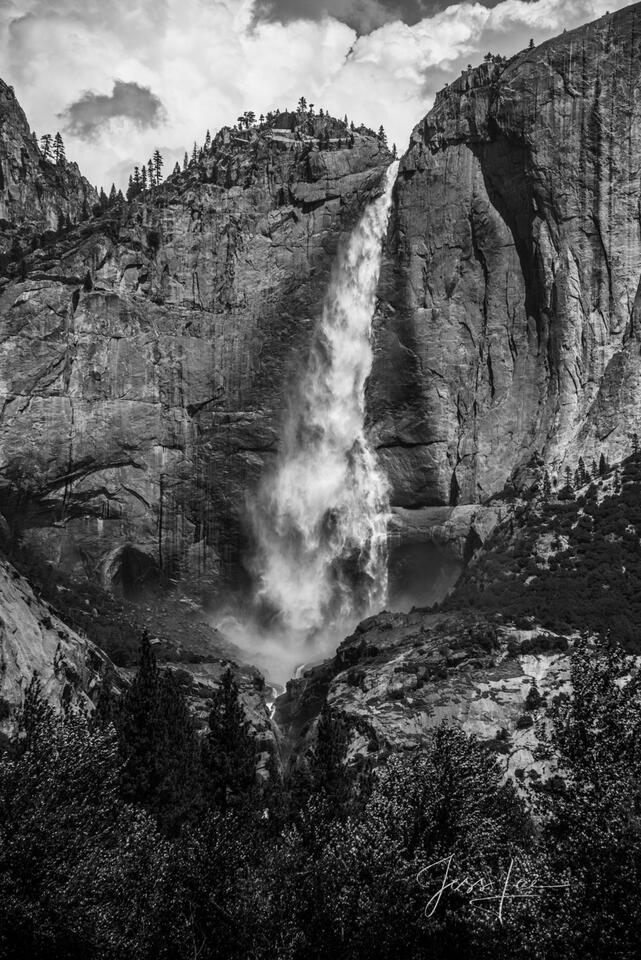
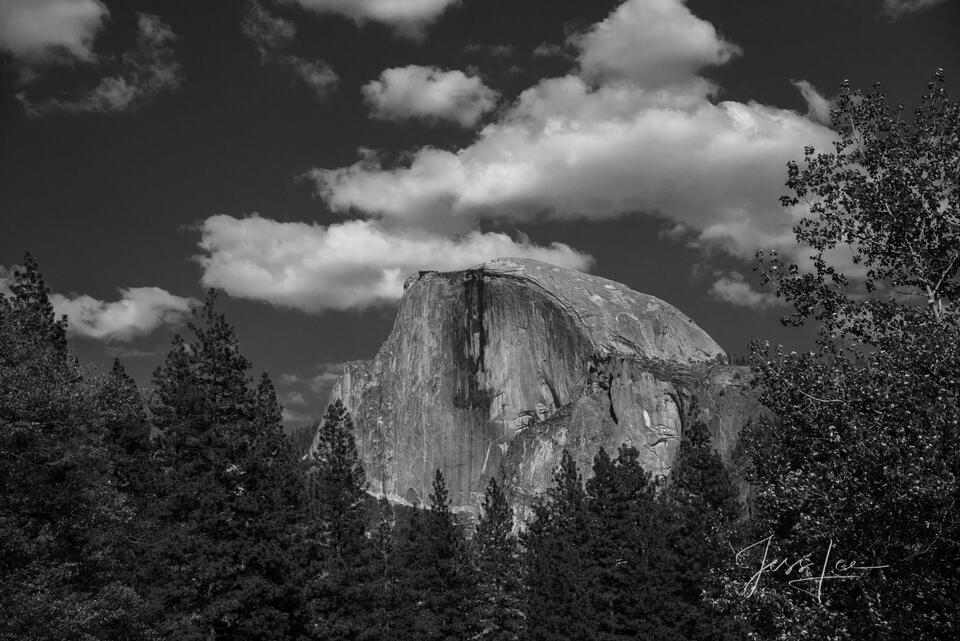
Ansel Adams made Yosemite the defining subject of American black and white photography. The granite walls, the waterfalls, the winter snow — these subjects reward monochrome treatment in ways that color photography, for all its beauty, cannot match. The tonal range of Yosemite's granite in storm light, the silver quality of Yosemite Falls at peak spring flow, the geometry of Tunnel View in deep winter — these are black and white subjects first and color subjects second.
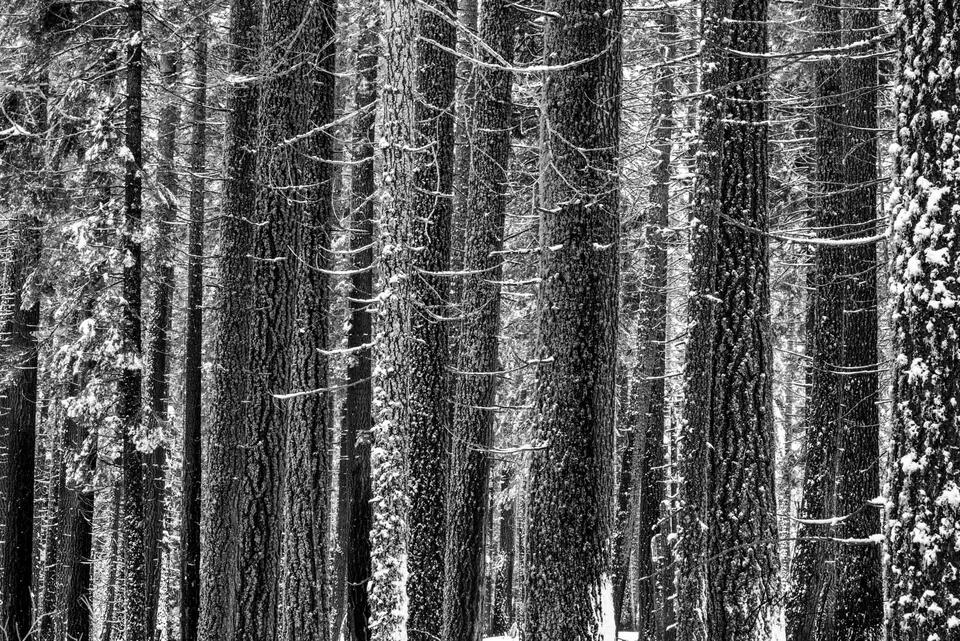
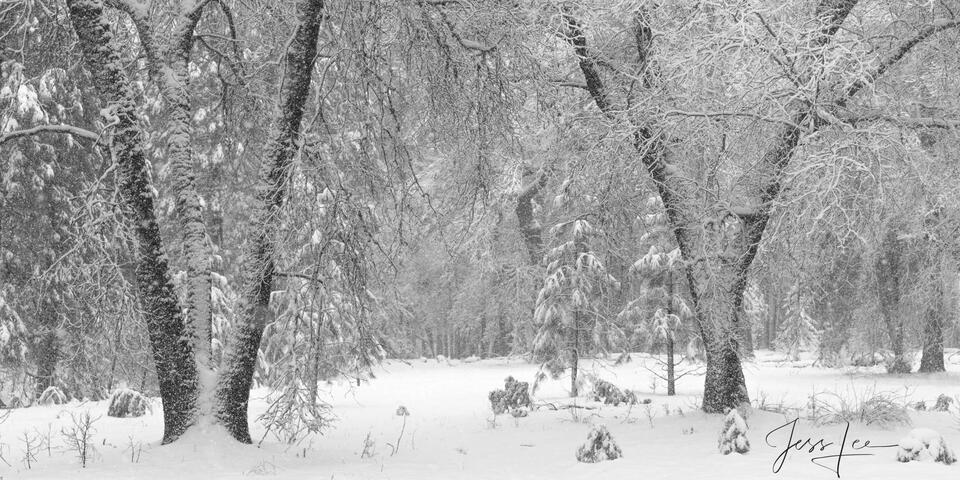
The Yosemite black and white work in this collection spans fifty years of return visits — winter mornings at Tunnel View, spring days at Yosemite Falls, autumn afternoons on the Valley floor when the light goes flat and color photographers pack up. The monochrome studies of Yosemite's winter forest — When the Valley Spoke, Enchanted Forest, Misty Cathedral, Big Trees in Winter — represent some of the deepest and most collected black and white landscape work in the gallery. Browse the dedicated Yosemite winter photography gallery or the full Yosemite fine art collection.
Desert Southwest — Arches, Canyonlands, Monument Valley, and the Colorado Plateau
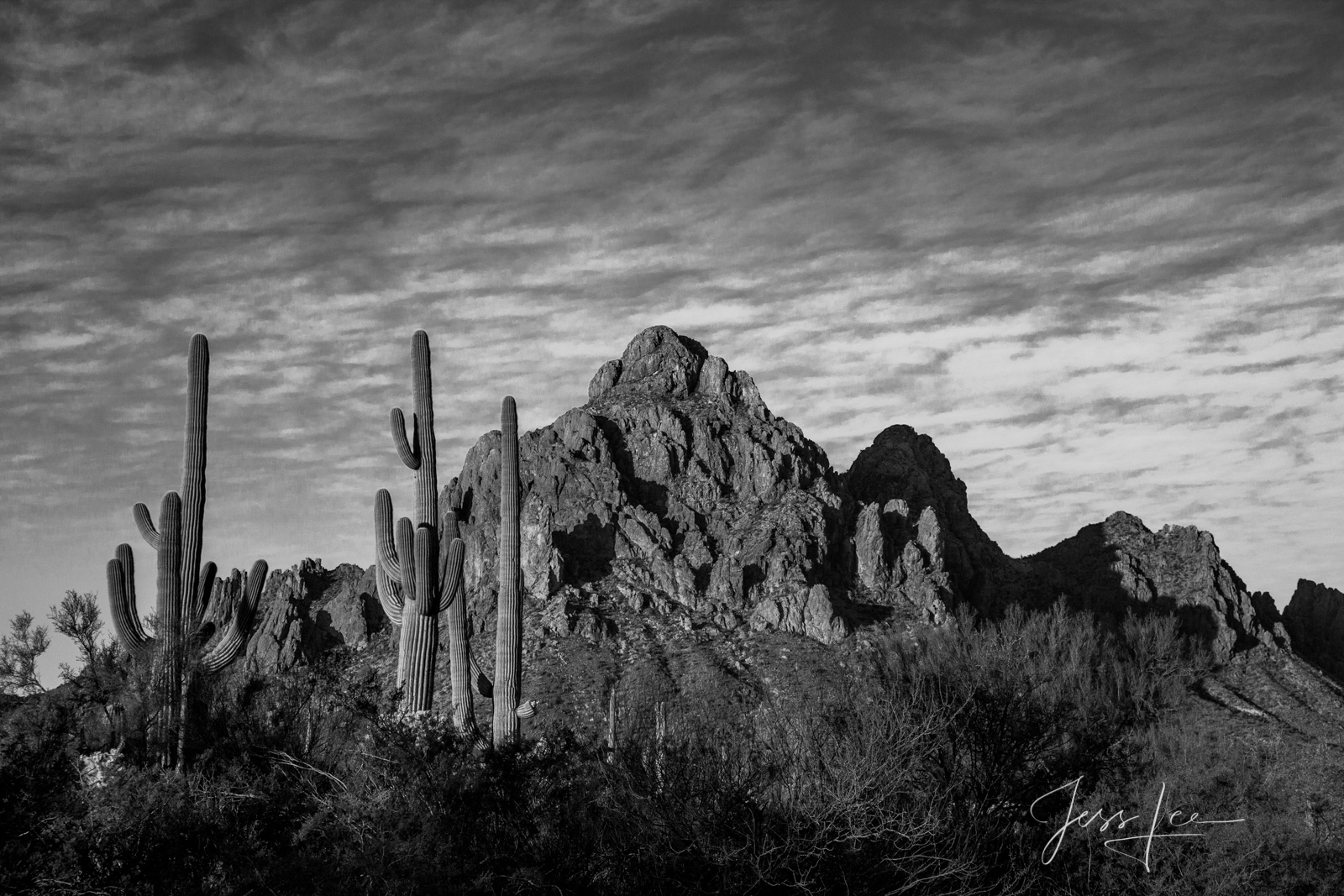
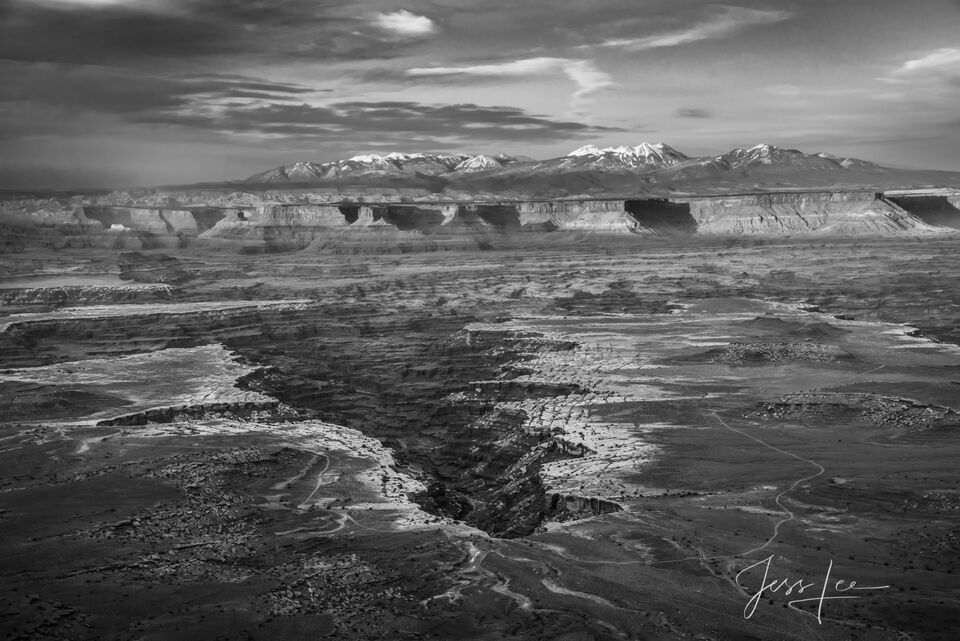
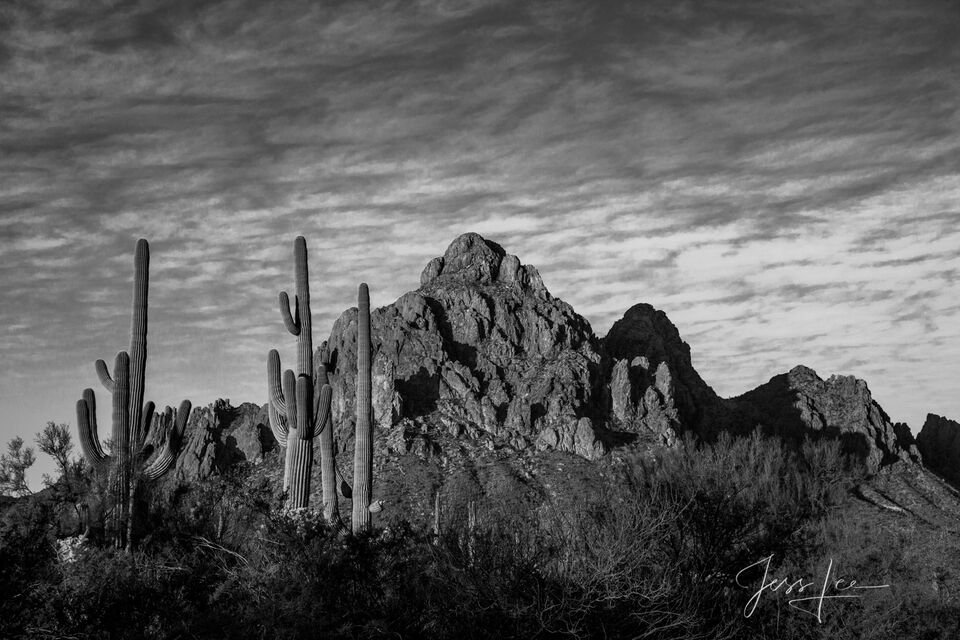
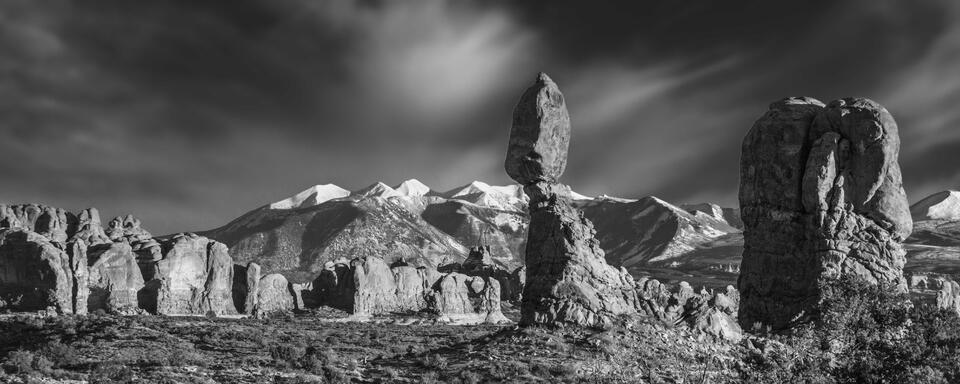
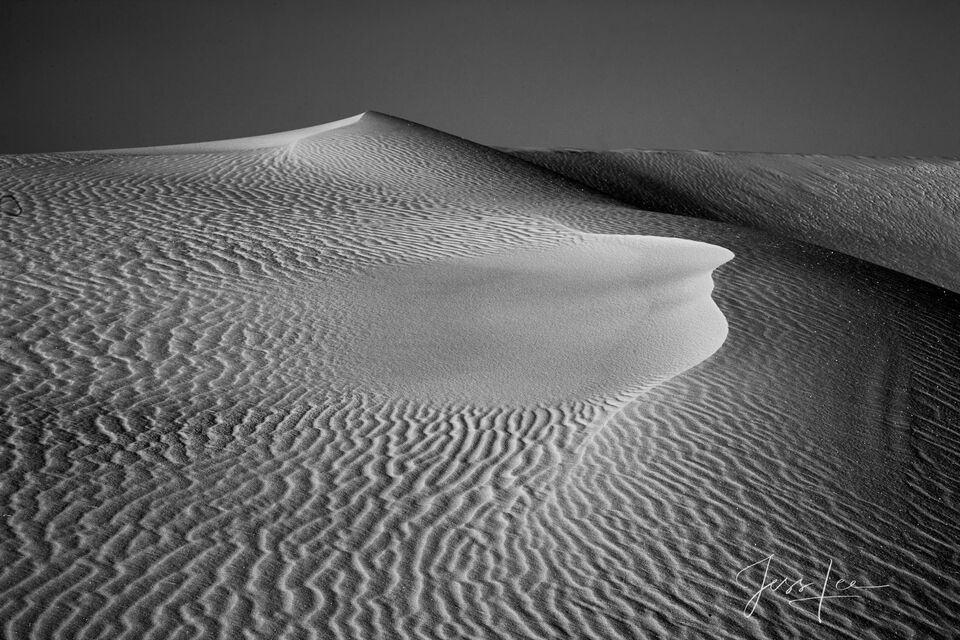
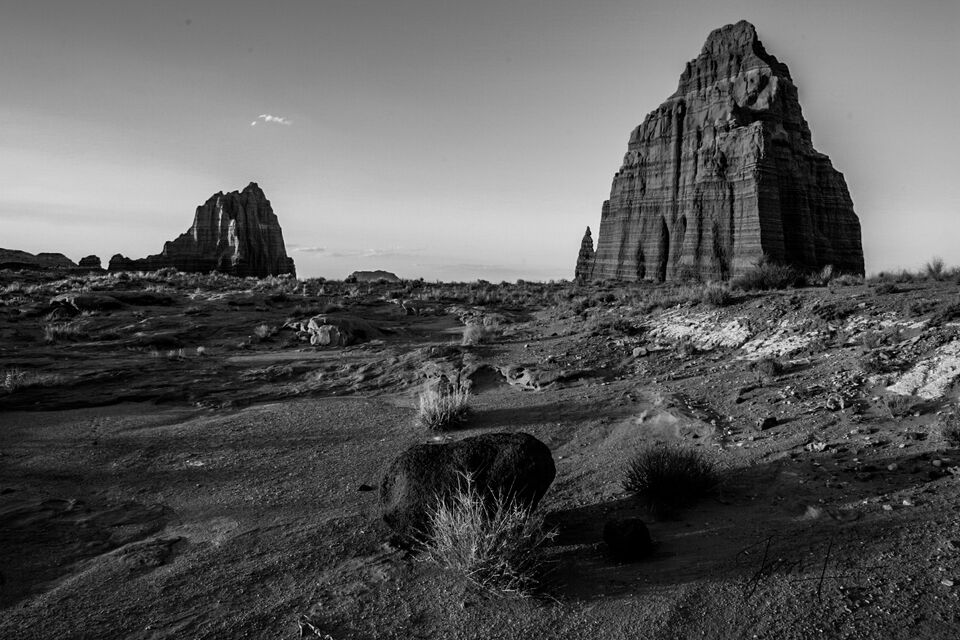
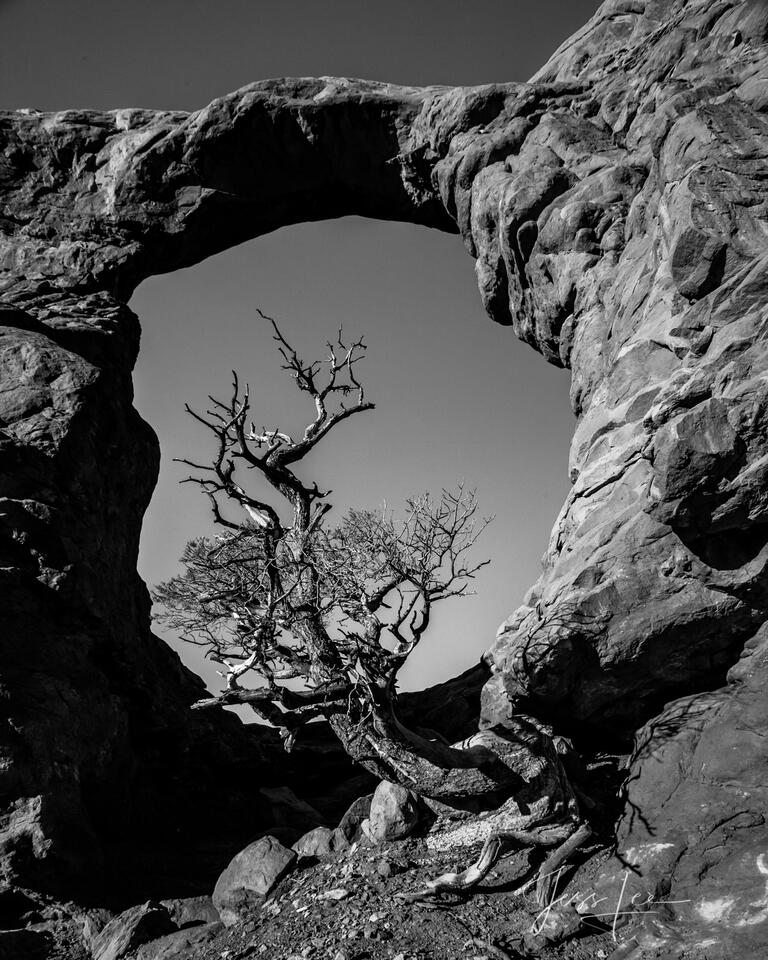
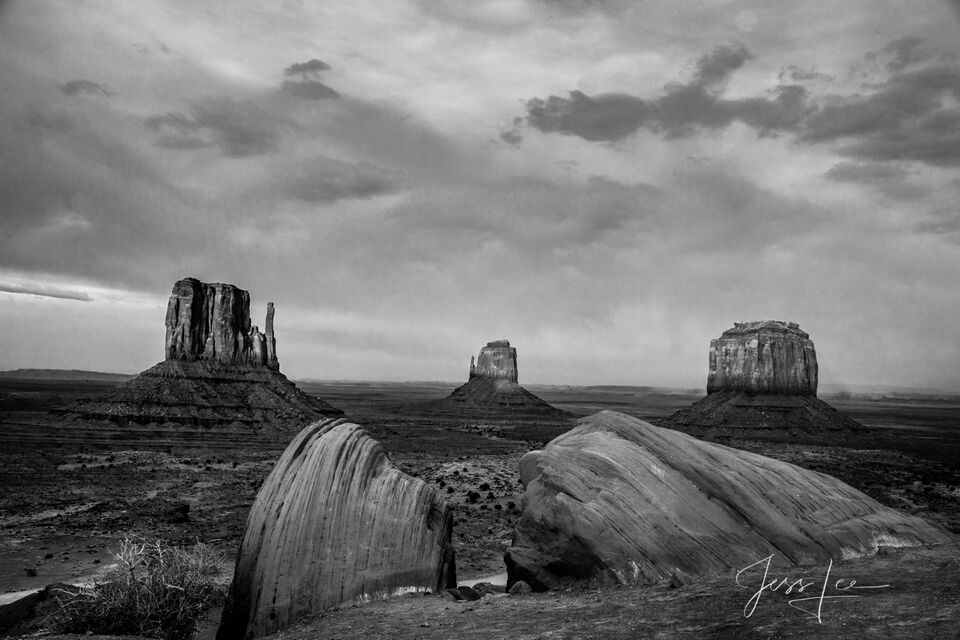
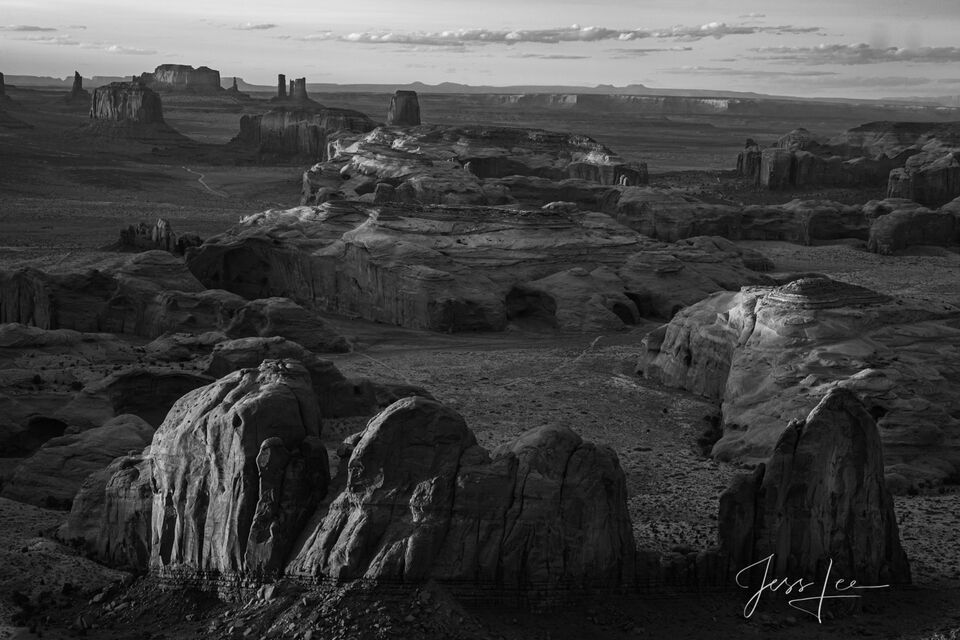
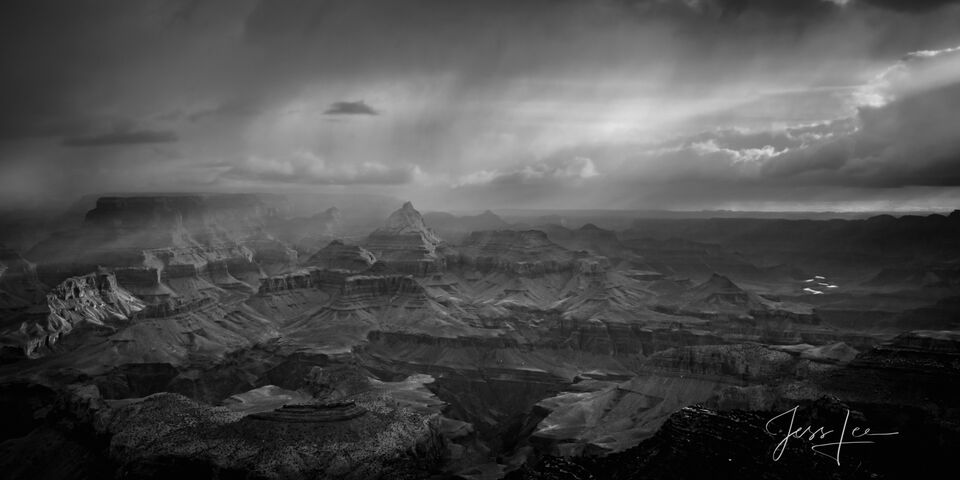
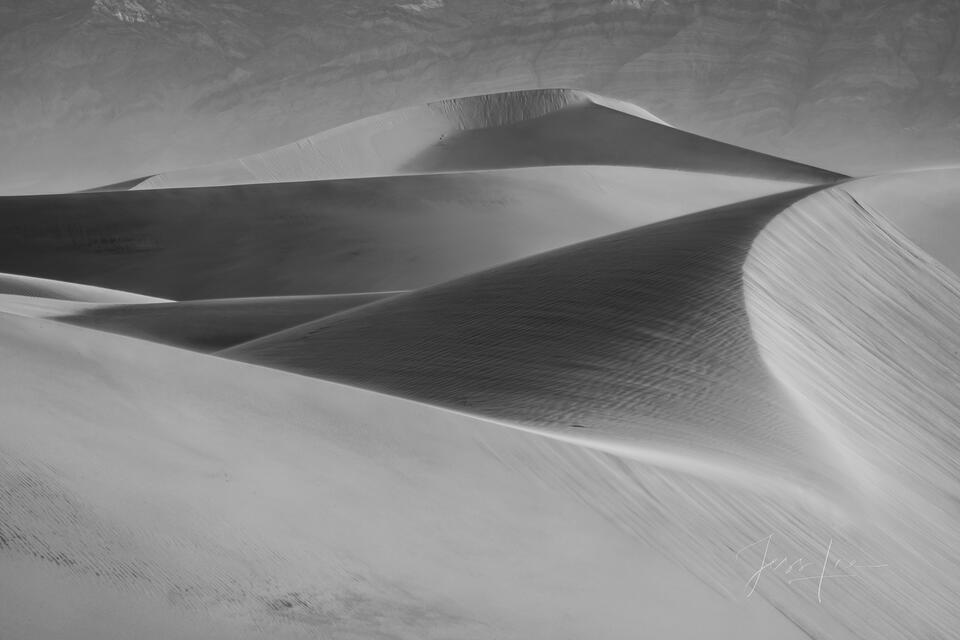
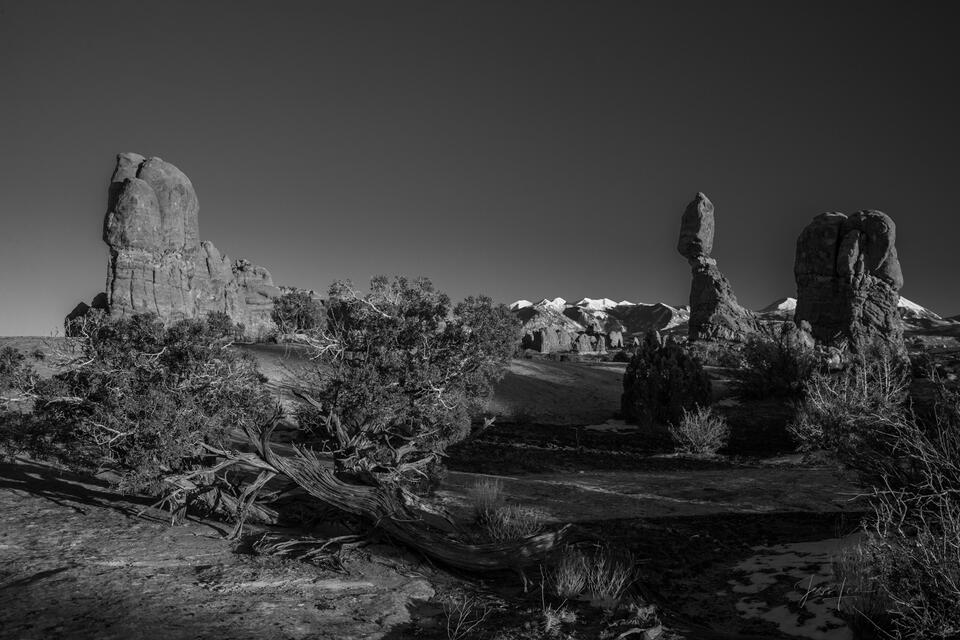
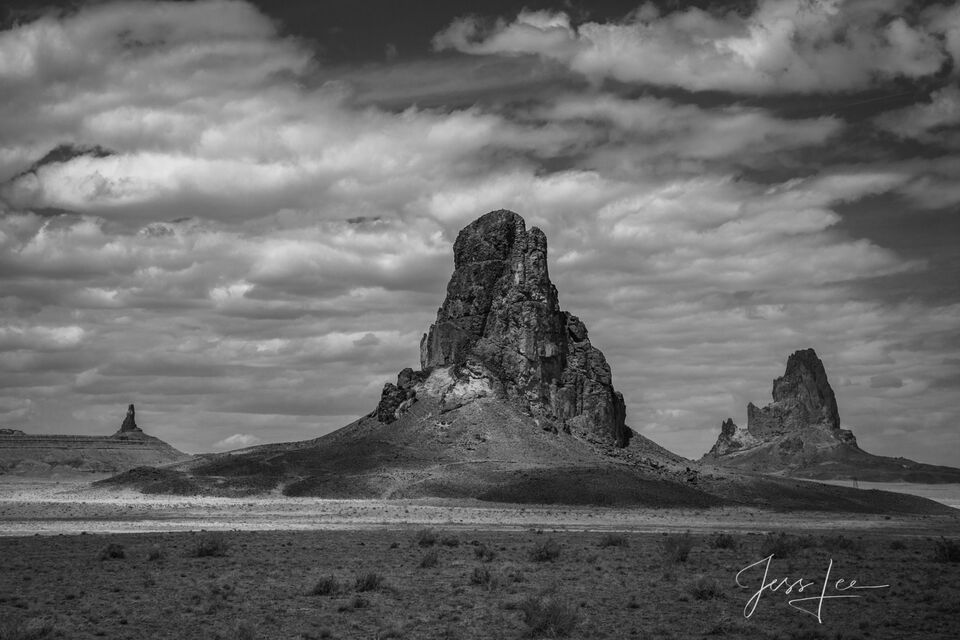
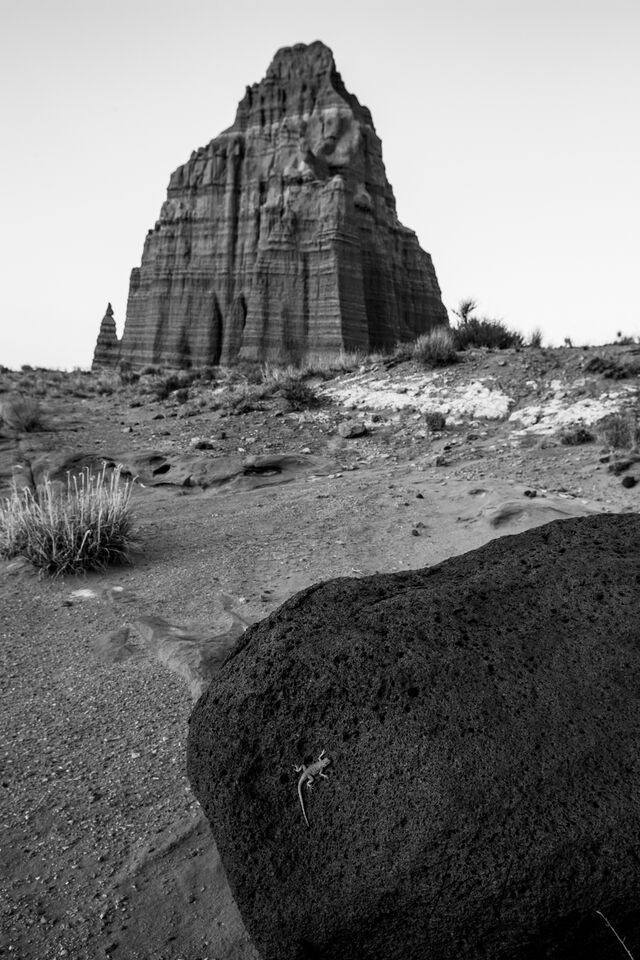
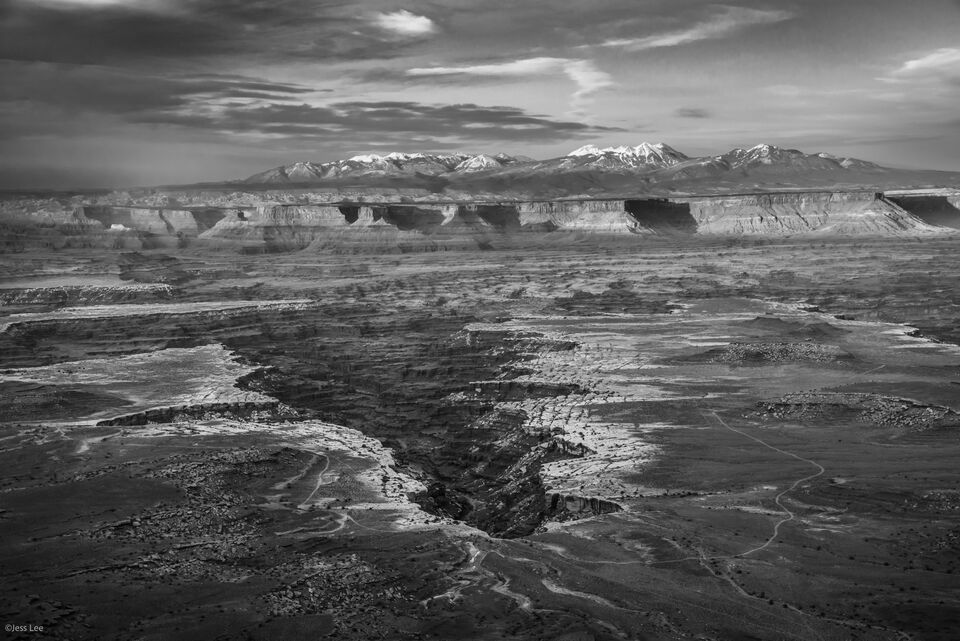
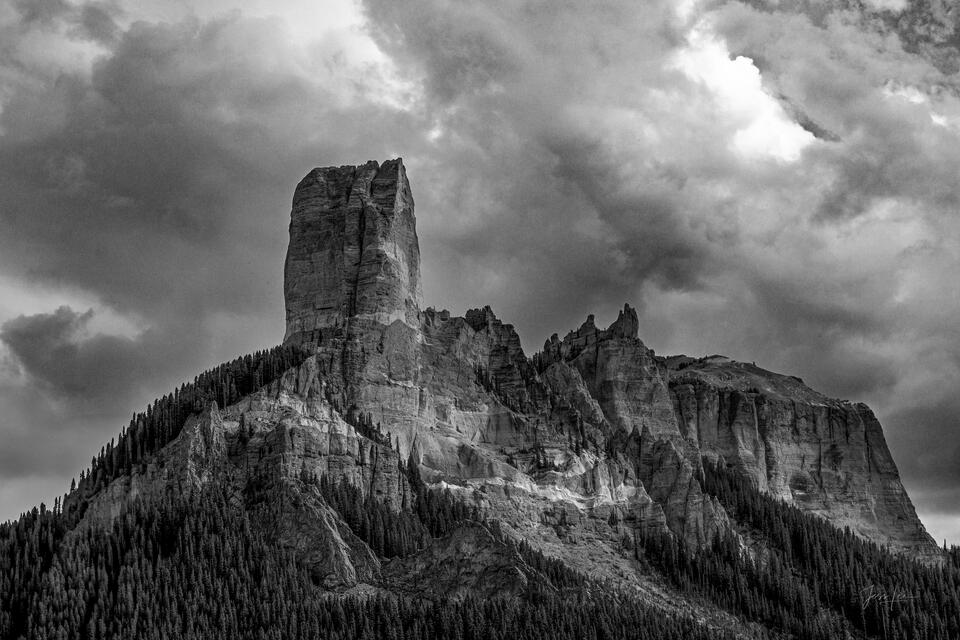
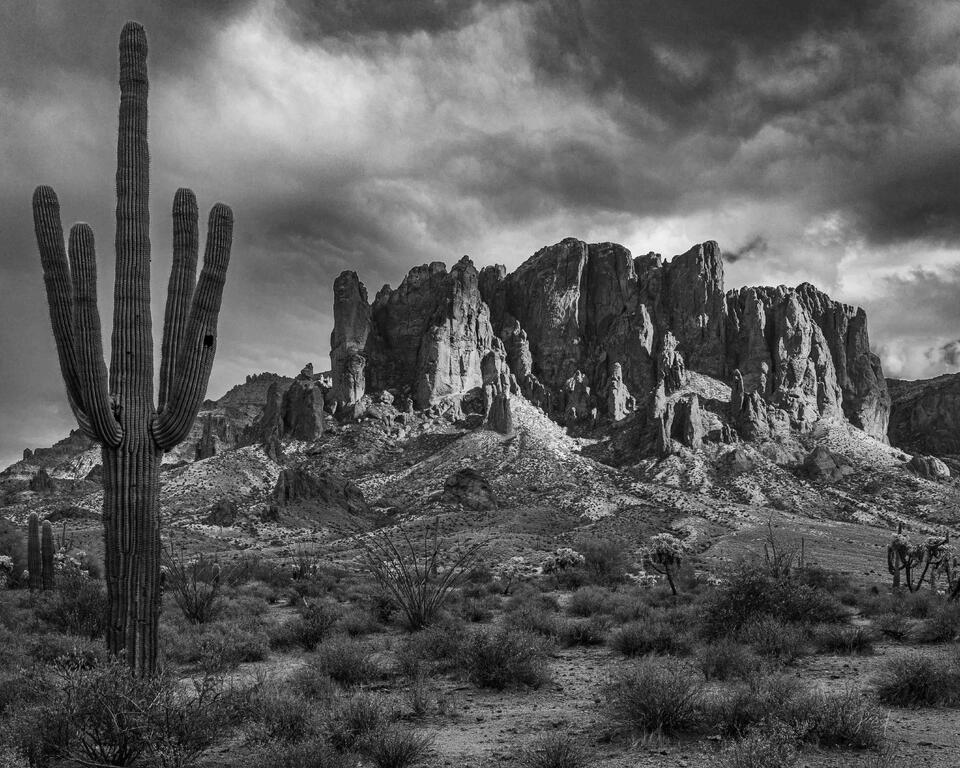
The Desert Southwest is the greatest black and white landscape subject in North America. The geology is ancient, exposed, and monumental — sandstone formations that took two hundred million years to build and the light of a single afternoon to photograph. Black and white renders the tonal range of red rock country with a depth and drama that color photography can only approximate. The reds become rich dark tones. The sky goes deep. The shadows in the canyon slots become absolute.
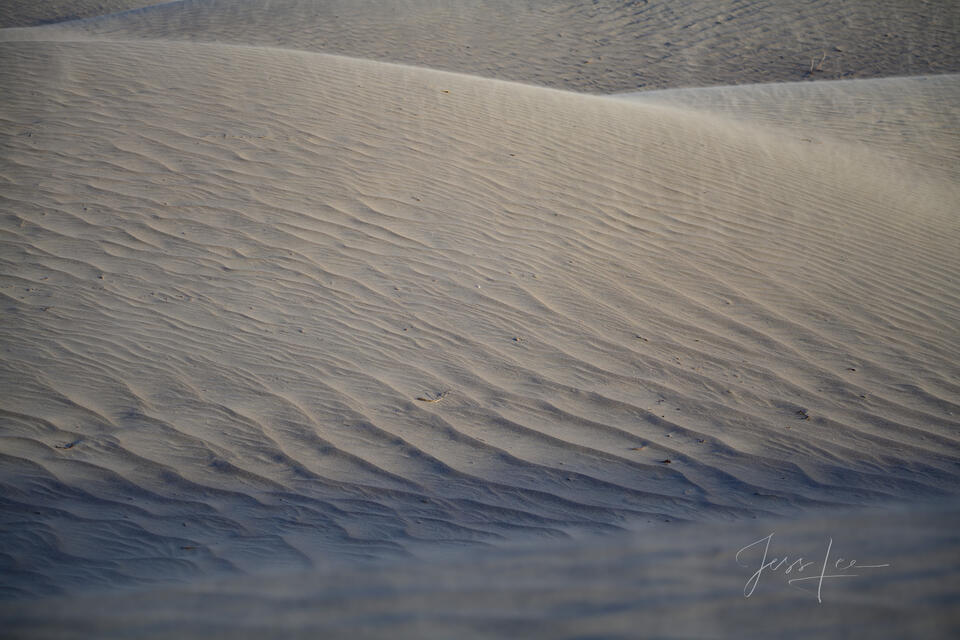
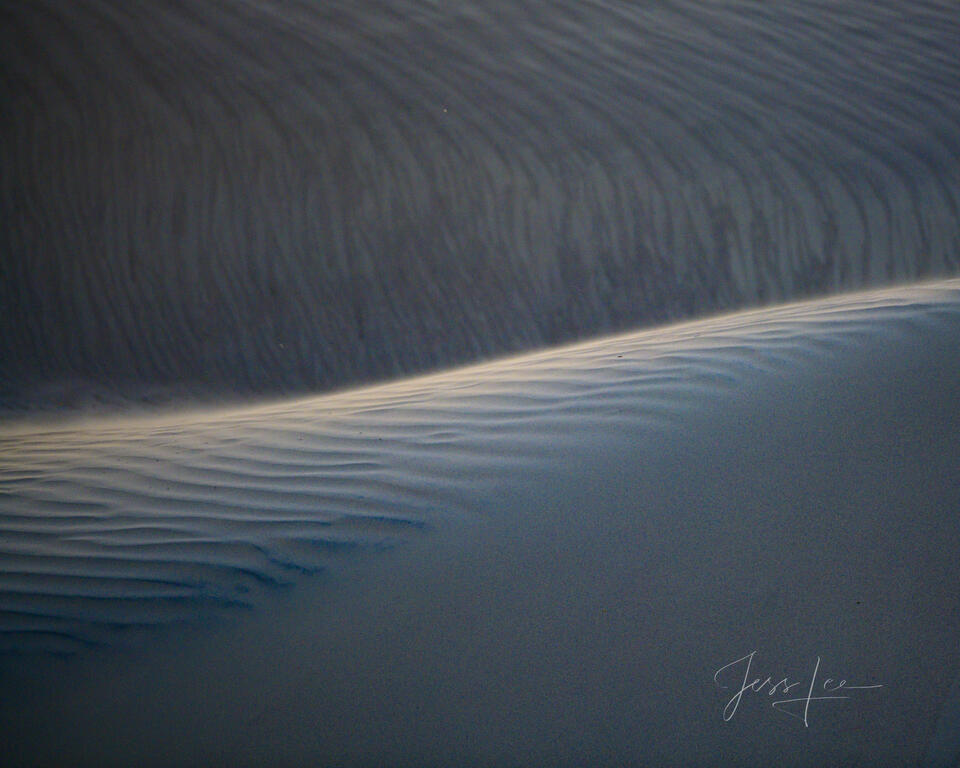
This collection includes black and white work from Arches National Park, Canyonlands, Monument Valley, Capitol Reef, the Grand Canyon, Dead Horse Point, and the broader Colorado Plateau — dunes, mesas, river bends, slot canyons, and the iconic formations that define the American Southwest. Rain Drop Dunes, Sand Rippled Totem, Spider Rock Summer, Dead Horse Overlook Morning, and Monument Valley Summer Sky are among the most collected desert black and white prints. Browse the Desert Southwest photography collection for the full range of color and black and white desert work.
Grand Teton and Yellowstone — Mountain Drama in Monochrome
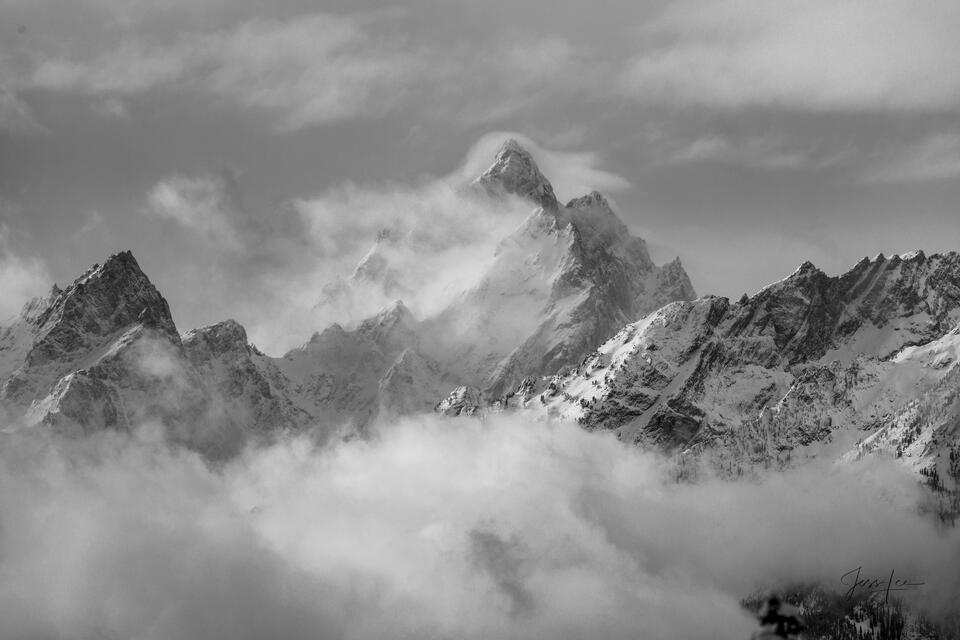
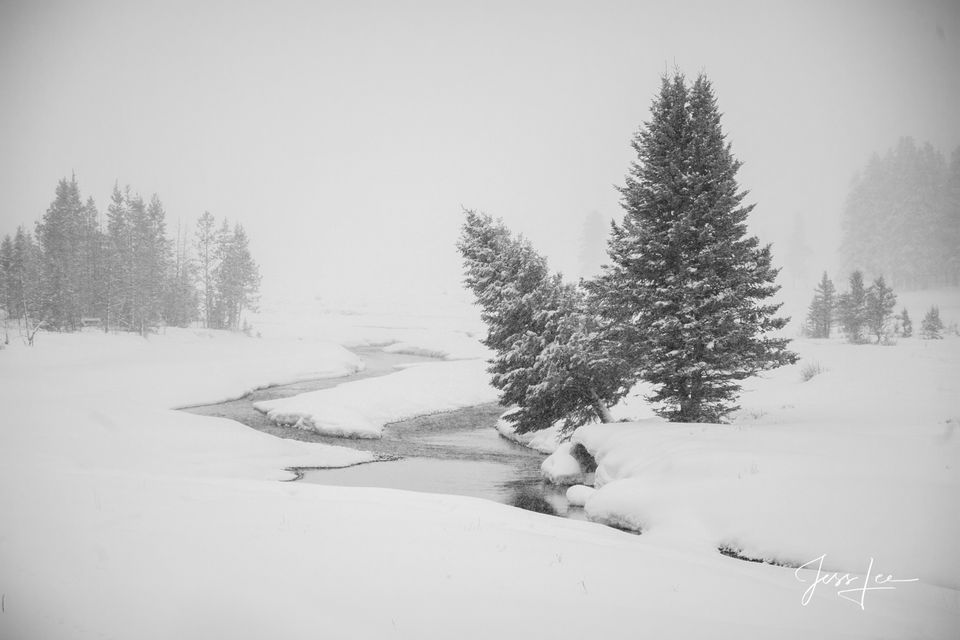
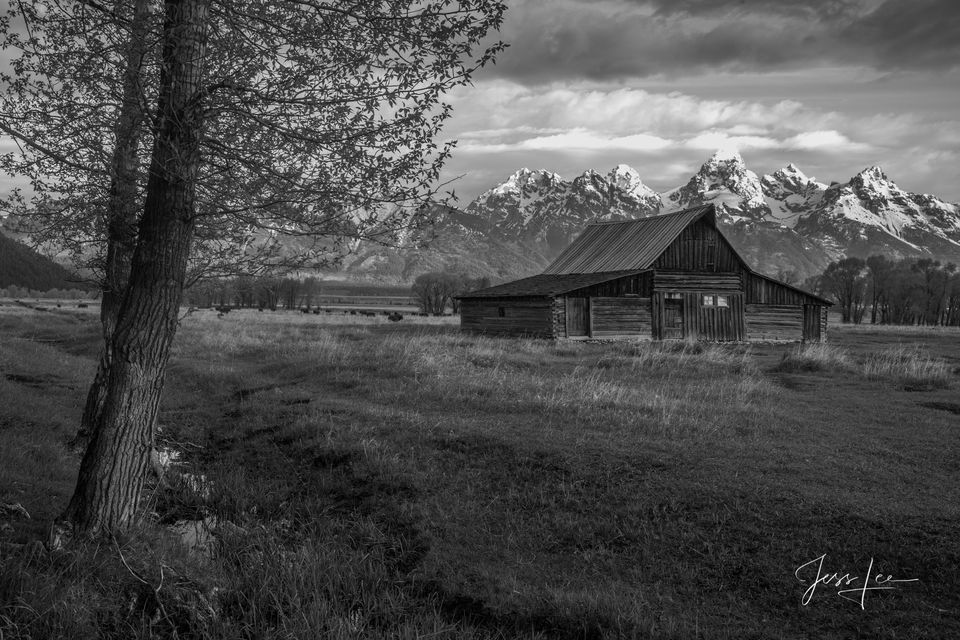
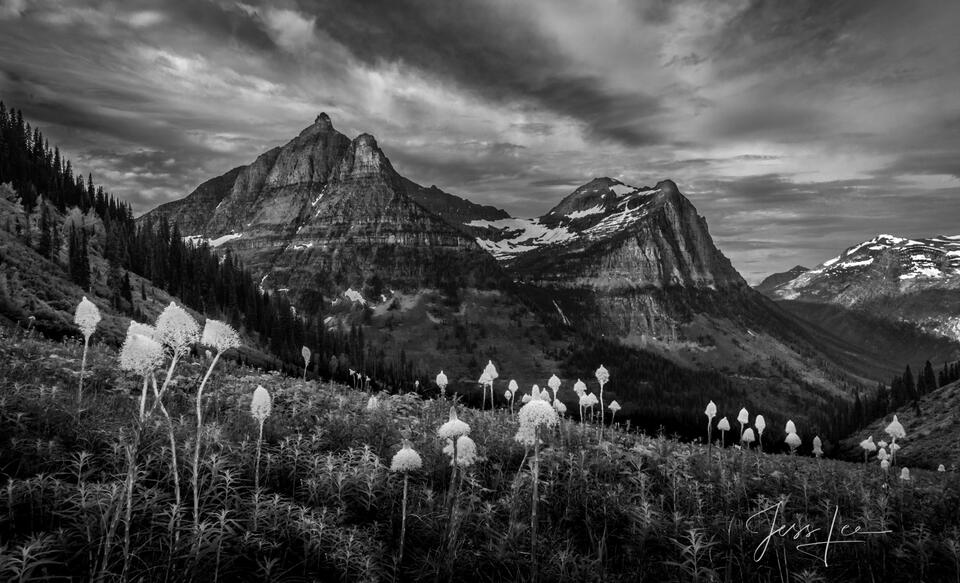
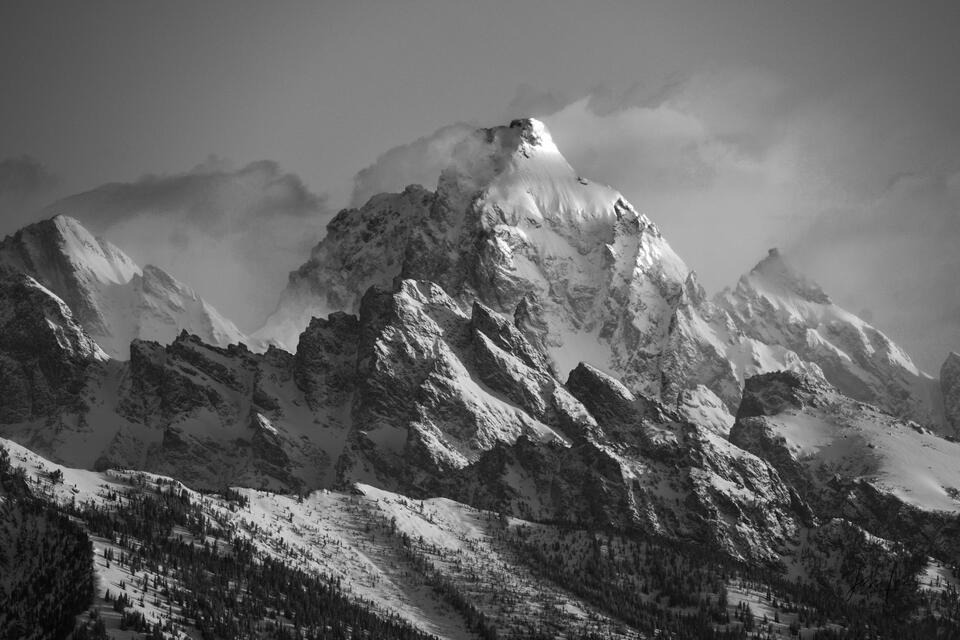
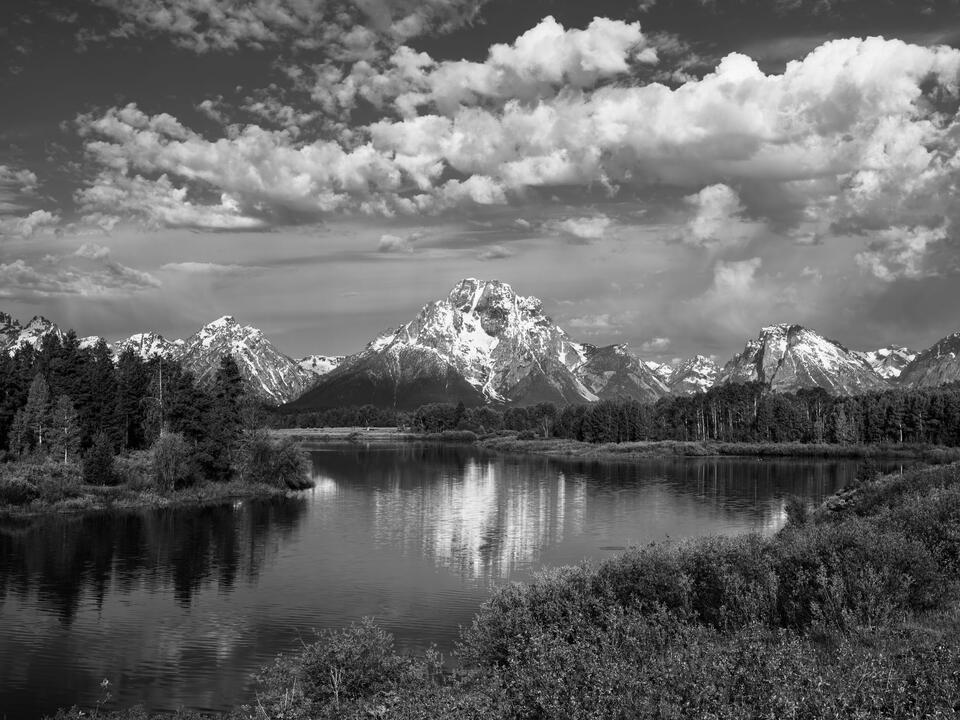
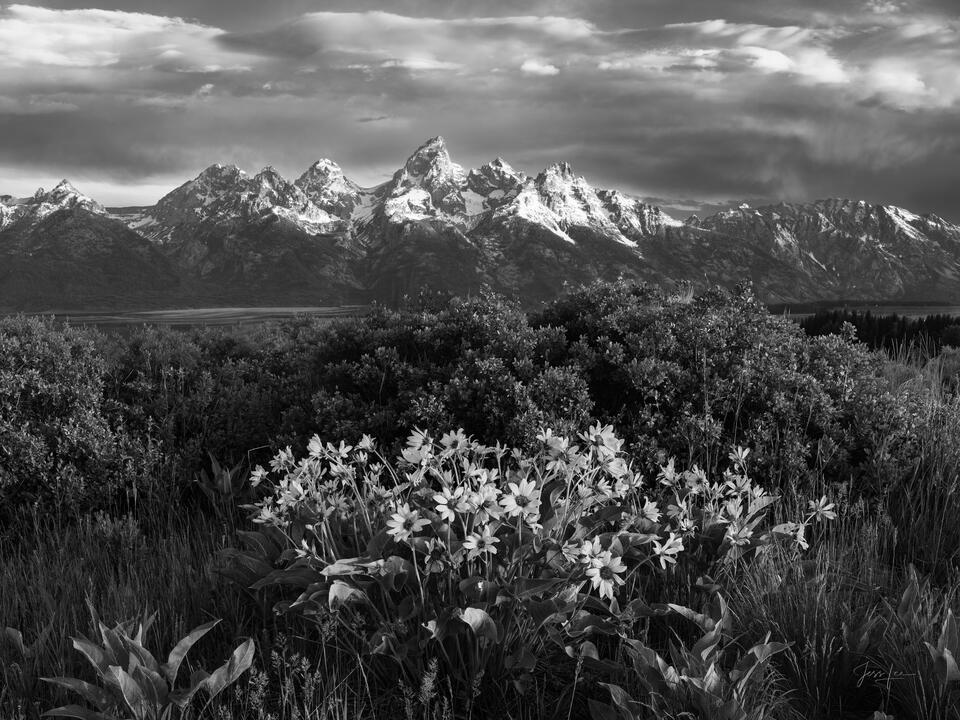
The Tetons in black and white are a different mountain range than the Tetons in color. Color gives you the blue sky, the green meadow, the alpenglow on the peaks. Black and white gives you the geology — the sheer vertical rise of the Cathedral Group, the weight of storm clouds over the Snake River plain, the texture of the Mormon Row barns against the mountain backdrop. Winter black and white work from the Tetons — snow on the barns, frost on the bison, the Teton Range in flat overcast that color photographers walked away from — produces images of a completely different emotional register.
Browse the Grand Teton photography collection and Yellowstone photography collection for the full range of color and black and white work from both parks.
Washington and the Pacific Northwest — Texture and the Weight of Clouds
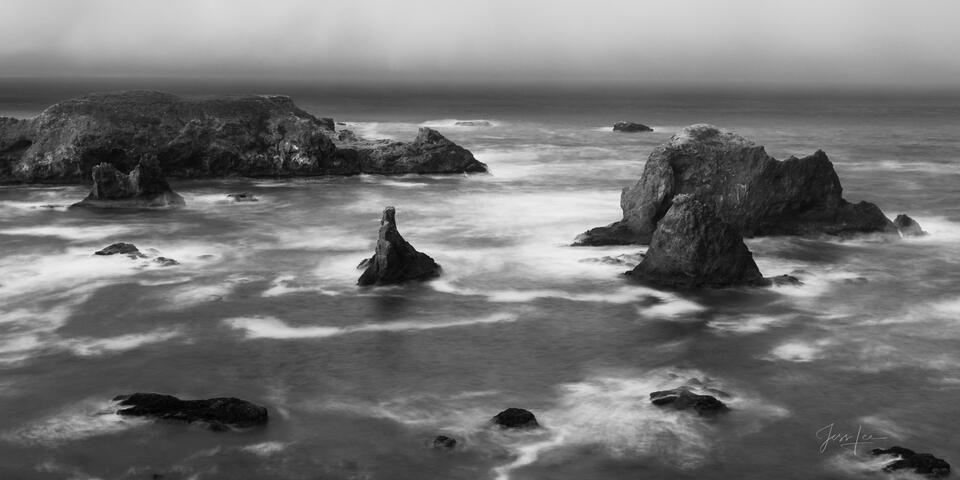
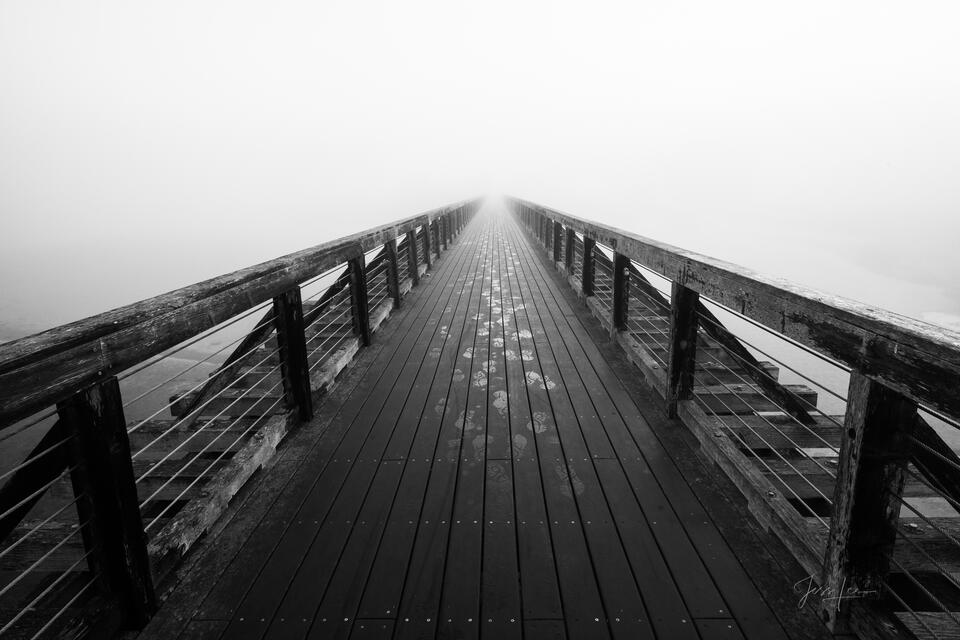
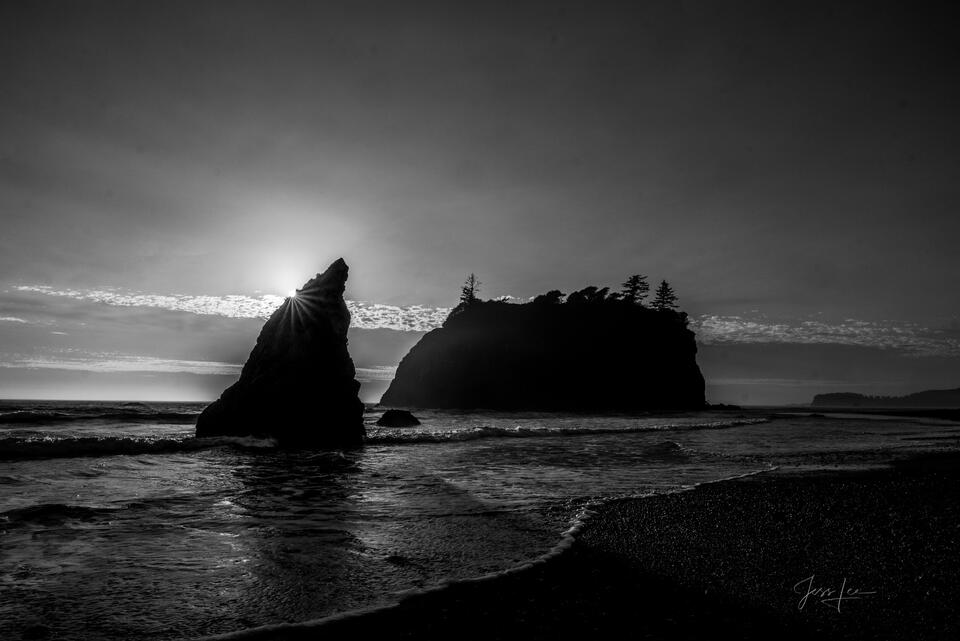
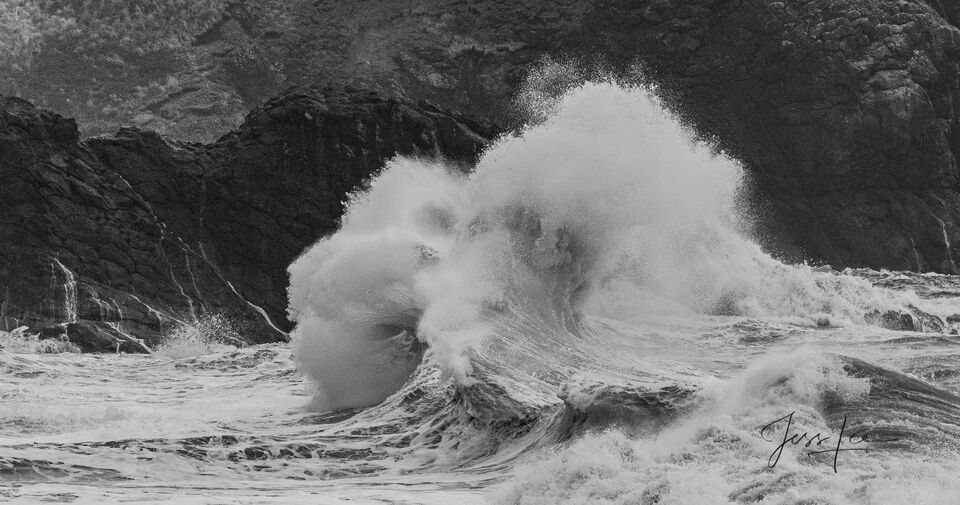
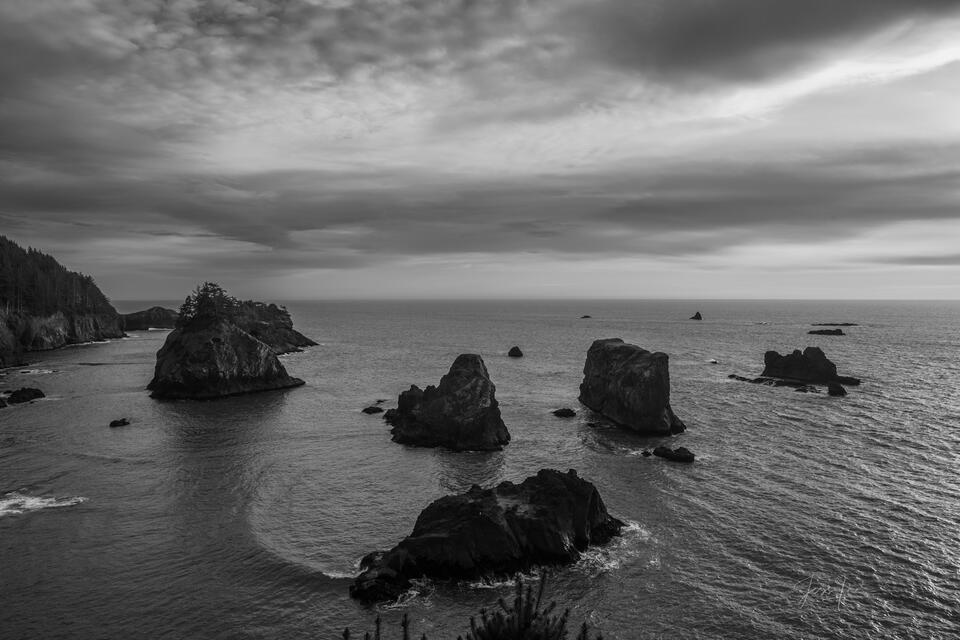
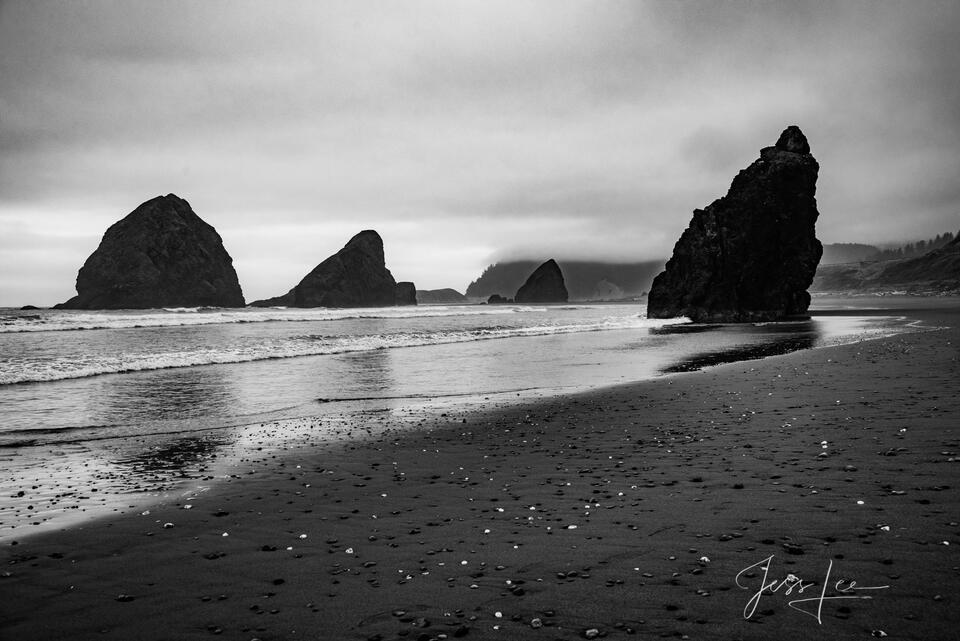
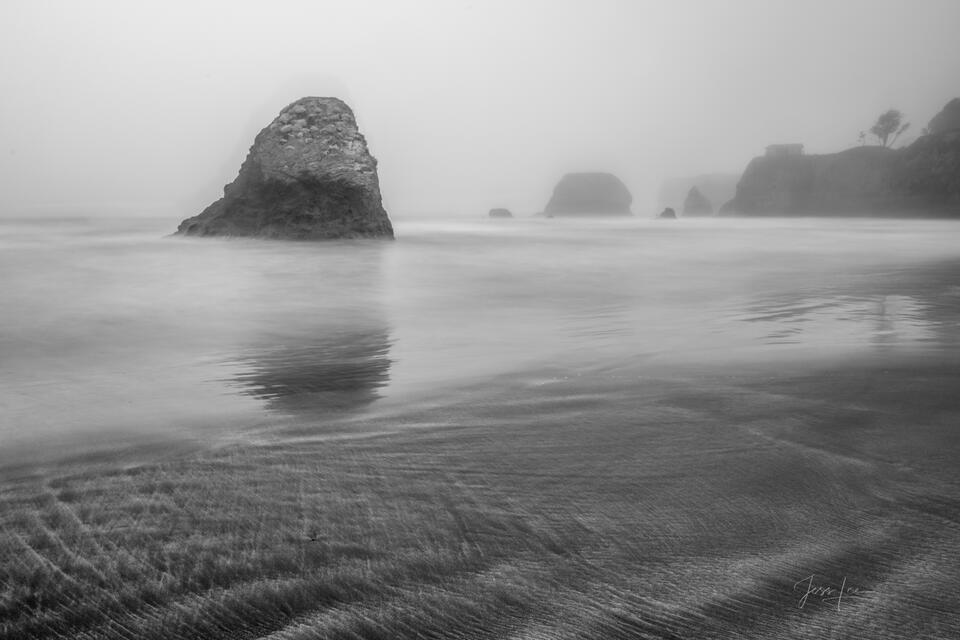
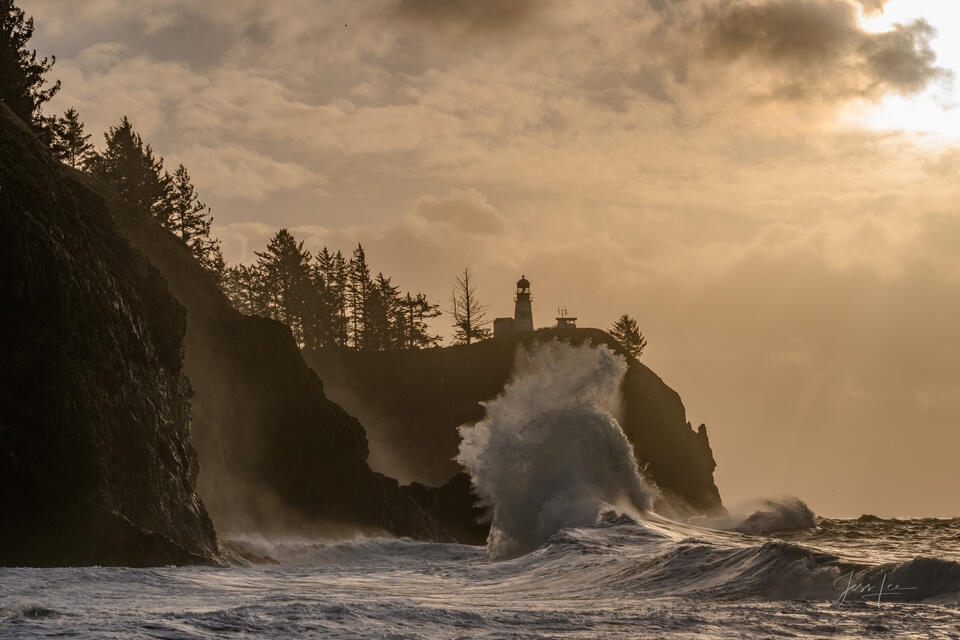
The Pacific Northwest is black and white country. The overcast light that frustrates color photographers is ideal for monochrome — diffused, even, and rich in texture. The moss-draped rainforests of Olympic National Park, the basalt headlands of Cape Disappointment, the birch and aspen corridors of Leavenworth and Tumwater Canyon — these subjects render in black and white with a depth and surface quality that the flat green palette of color photography cannot approach.
Mount Rainier in black and white — particularly in winter and in the flat light of early spring before the wildflowers arrive — reveals the mountain's geological scale in a way that color, with its competing palette of white snow and blue sky and green meadow, distributes across too many elements. Browse the Washington landscape photography collection for the full range including black and white coastal, rainforest, and mountain work.
Colorado, Idaho, and the Mountain West
The high alpine lakes, aspen groves, and mountain ranges of Colorado and Idaho provide black and white subjects of a quieter, more intimate character than the monumental desert formations or the dramatic Teton peaks. The texture of aspen bark. The reflection of a mountain in a still lake before dawn. The geometry of a ranch building against a ridge line. These are subjects where black and white's ability to render fine surface texture and subtle tonal gradation matters most. Browse Colorado landscape photography and Idaho photography for the full collections.
Why Black and White Landscape — In Brief
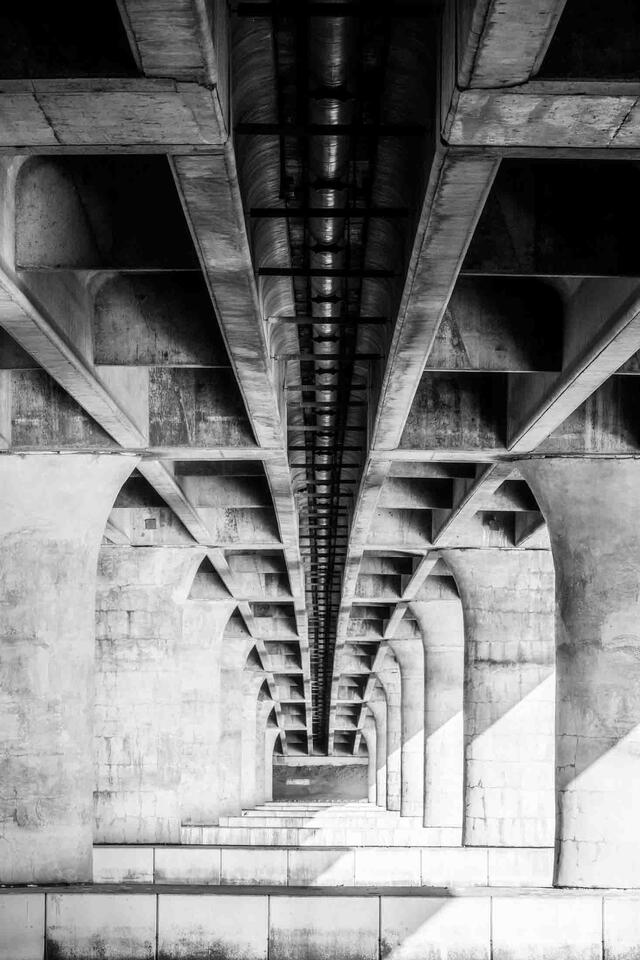
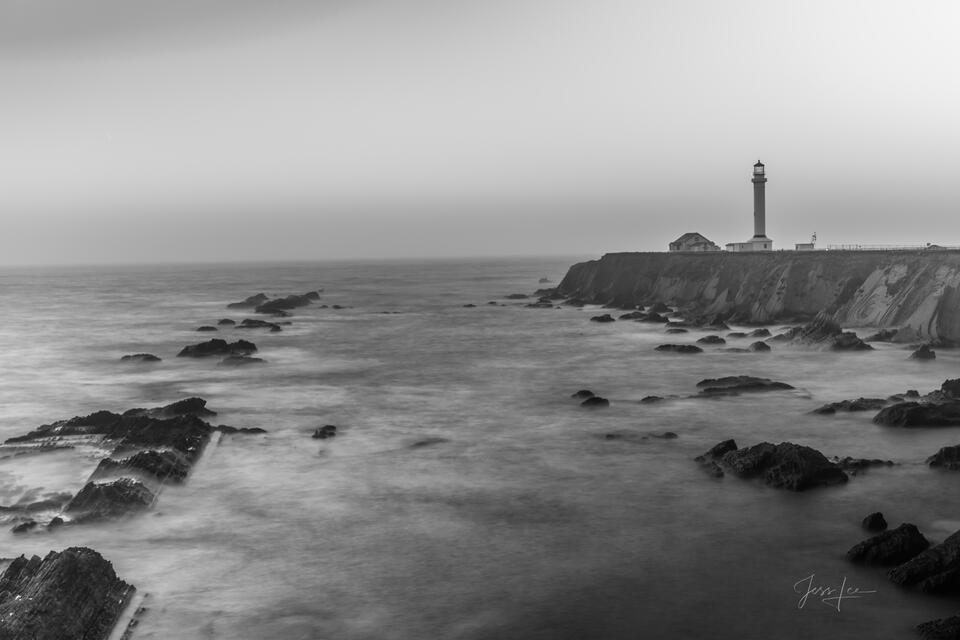
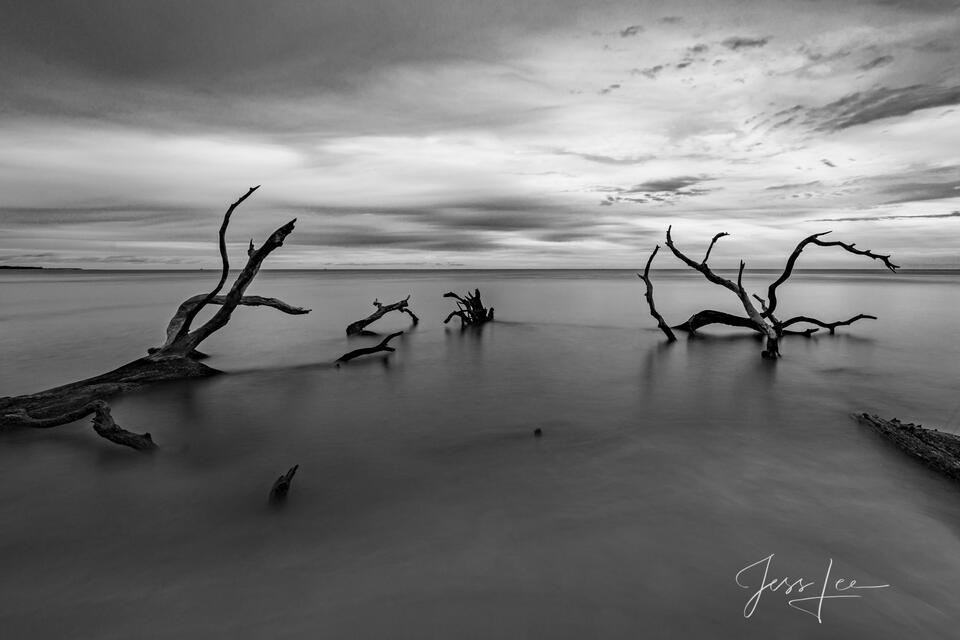
Landscape black and white is about texture before it is about anything else. Light that color photography cannot use — flat overcast, harsh midday, the gray hours between golden moments — becomes not just workable but often ideal in monochrome. The tonal relationships that emerge from difficult light, the drama of clouds that would read as blown-out white in a color frame, the raw stillness of a winter canyon in shadowless gray — these are black and white subjects that color photography cannot touch.
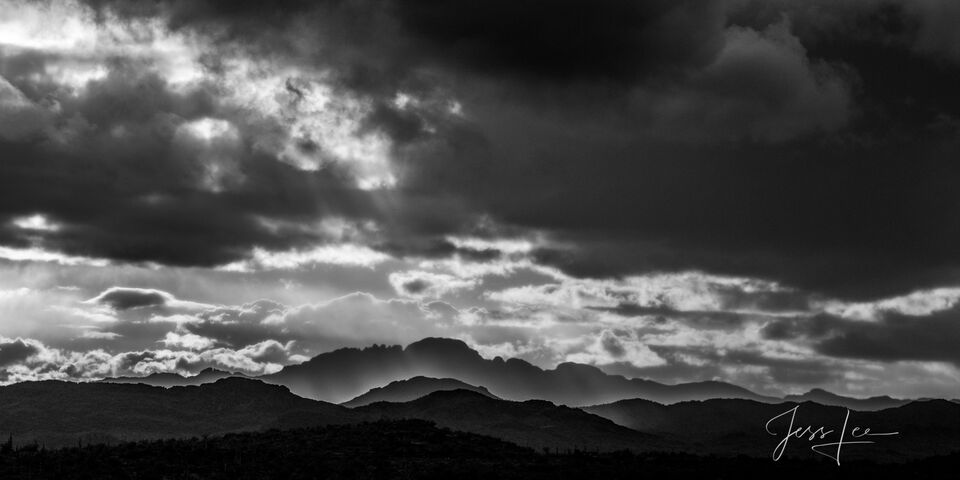
The clouds are part of this in a way that color photographers rarely fully understand. In a color image, clouds are background. In a black and white image, clouds are participants — their texture, their weight, their movement across the frame give the landscape a sensual, almost physical quality. You feel the place rather than observe it.
For the full philosophy — the drama vs. color distinction, selective contrast, and the Zone System — read the complete black and white photography article →
Print Formats for Black and White Landscape Photography
Lumachrome HD TruLife Acrylic — face-mounted behind optically clear, anti-reflective acrylic. The tonal depth and luminosity of a black and white Lumachrome print is extraordinary — the grays have a three-dimensional quality that no other medium achieves. The whites are clean and the shadow detail is preserved at a level that makes this the premium choice for landscape black and white work. Arrives ready to hang.
Chromaluxe Metal — dyes infused directly into aluminum for exceptional contrast and a clean contemporary presentation. Particularly effective for high-contrast desert and canyon subjects where the deep blacks and bright whites are the primary tonal elements. Arrives ready to hang.
Hahnemühle Fine Art Paper — archival pigment inks on one of the world's finest fine art papers. Warm and textured — the traditional choice for black and white landscape fine art, particularly suited to the quieter, more meditative subjects where the paper surface adds tactile depth to the image. Available unframed for custom framing specification.
Landscape work and considered wildlife portraits are captured on 100-megapixel medium format systems; fast-action wildlife is captured on 35mm-format professional bodies for frame rate and maneuverability. Each image is offered only at the sizes its own file genuinely supports. All prints signed and numbered by Jess Lee. Certificate of Authenticity included. Edition sizes vary by image and reflect how repeatable the subject is. Most fall between 100 and 200; some are 50; a few are larger. Every image page states its own edition, and that number is fixed permanently the day it is published.
For Interior Designers and Corporate Art Consultants
Black and white landscape photography is one of the most specified subjects for luxury residential, hospitality, and corporate interiors — precisely because monochrome works across design schemes where color photography competes with the palette of the space. The tonal neutrality of black and white makes it the safest and most sophisticated choice for high-investment art installations where the work needs to anchor the room without dictating the color direction.
Trade pricing, room preview mockups, high-resolution digital proofs, custom sizing to exact wall dimensions, and multi-print collection pricing are available to verified design professionals. View the full trade services page →
Frequently Asked Questions
What makes black and white landscape photography more dramatic than color?
Color distributes the viewer's attention across the palette — the blue sky, the green meadow, the amber light. Black and white concentrates it entirely on the subject — the form, the texture, the tonal drama of the scene. It is not a fallback for difficult light. It is a deliberate choice about what the image is actually about.
Which black and white landscape prints are most collected?
The Yosemite winter series — particularly When the Valley Spoke, Enchanted Forest, and Tunnel View Yosemite Winter Classic — are consistently among the most collected. Desert Southwest black and white work, particularly the dune studies and canyon subjects, commands the highest average sale prices in the landscape collection. Grand Teton winter black and white work — the Mormon Row barns, the Cathedral Group in storm light — are strong sellers for mountain and lodge interiors.
How large can black and white landscape prints be produced?
From 16×20 inches up to the largest size each material allows. The 100-megapixel capture used for this work holds the fine tonal gradations and surface textures that make a black and white landscape print exceptional at every size. Architectural and mural-scale installations are produced through a separate custom process — contact Jess directly to discuss a specific wall.
What print format is best for black and white landscape photography?
Lumachrome HD TruLife Acrylic for maximum tonal depth and the most sophisticated wall presentation. Hahnemühle Fine Art Paper for the traditional black and white fine art look — warm, textured, and reminiscent of the platinum print tradition. Chromaluxe Metal for contemporary interiors where high contrast and a clean frameless presentation suit the design.
Do you offer both color and black and white versions of the same image?
Many images in the collection exist in both. Contact Jess directly to ask about a specific image — some that appear only in color in the gallery have black and white versions available, and selective contrast processing can produce a version that differs meaningfully from simple desaturation.
Do you offer trade pricing for interior designers?
Yes. Trade pricing, room preview mockups, high-resolution digital proofs, custom sizing, and multi-print collection pricing are available to verified design professionals. View the full trade services page →
Can I see how a black and white print will look in my space?
Yes — send Jess a photograph of your wall and he will prepare a complimentary scaled digital mockup. Contact Jess to request a room mockup →
Can I see prints in person before purchasing?
Jess works from his Island Park, Idaho studio and his Washington State studio. Virtual consultations via email or video call are available now. A private gallery by appointment is planned — contact Jess directly for current availability.
Related Collections: B&W Photography — Full Collection · B&W Wildlife · Yosemite Winter · Desert Southwest · Grand Teton · Washington Landscapes · Colorado Landscapes · Mountain Photography · Zone System · Ansel Adams · For Designers & Trade
About the Artist
Jess Lee is a fine art landscape and wildlife photographer with 50 years of professional experience across the American West, Alaska, Africa, Brazil, India, and beyond. A National Geographic contributing photographer and cover photographer, his images have appeared in National Geographic, National Wildlife, Smithsonian, Sierra, Paris Match, GEO, and Time-Life Books, and were featured in a Ken Burns Emmy Award-winning PBS documentary series. His work has been exhibited at the Annenberg Space for Photography in Los Angeles. An NPS and BLM Authorized Permittee, Jess is licensed for commercial photography operations inside Grand Teton and Yellowstone National Parks. He sells limited-edition, museum-quality prints directly to collectors, designers, and institutional buyers worldwide through jessleephotos.com.