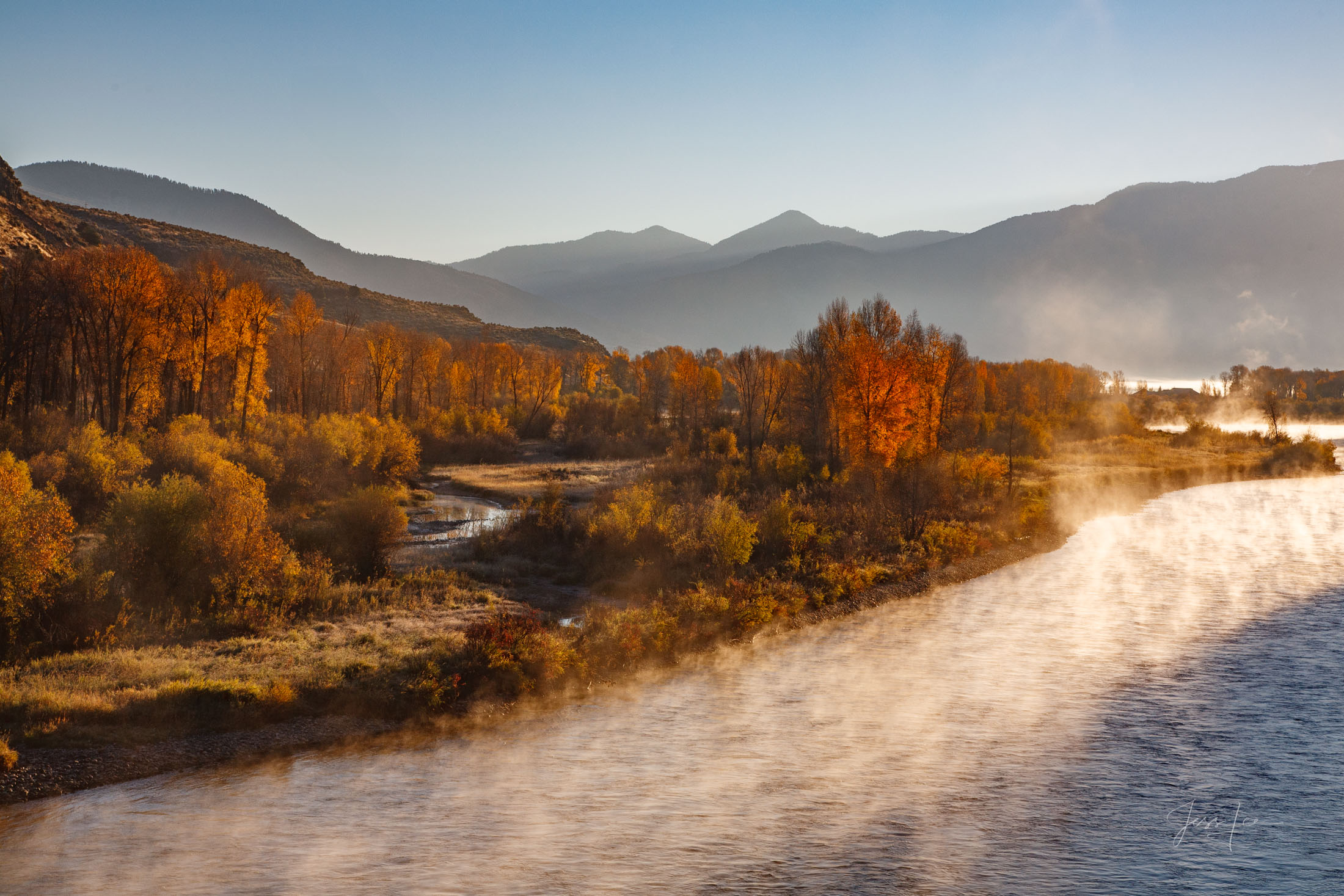
The Snake River Headwaters: Yellowstone National Park
Upper Snake River (South Boundary Trailhead & Tributaries)
The uppermost reaches of the Snake River within Yellowstone National Park offer a quintessential backcountry fly fishing experience, defined by its solitude and the wildness of its inhabitants. Access to this remote section is primarily achieved via the South Boundary Trailhead, located at the park's southernmost edge. Anglers should be prepared for a significant hike, often nine miles or more, to reach the main stem of the river and its most productive areas. For those planning an overnight stay, obtaining a backcountry permit is essential. The challenging nature of this access is precisely what contributes to the minimal fishing pressure, providing a rare opportunity for anglers to find true solitude amidst breathtaking wilderness.
The water characteristics in this upper section are typical of a high-country stream. The river is generally smaller and clearer, featuring an abundance of pocket water and riffles that provide excellent holding lies for trout. These dynamic stretches offer diverse fishing opportunities, from fast-moving runs to quieter pools. The dominant fish species encountered here is the native Yellowstone Cutthroat Trout. While these fish are typically smaller, averaging 8 to 10 inches in length , their vibrant colors and eagerness to take a fly make them incredibly rewarding to catch. Mountain Whitefish are also present in these waters. In alignment with Yellowstone National Park's stringent conservation policies, all native fish, including cutthroat trout, must be released unharmed.
The primary fishing season for the Upper Snake within Yellowstone aligns with the general park season, typically commencing in early July and extending through August, once the heavy snowmelt runoff has subsided. Hatches in these high-alpine waters are generally more sporadic and less predictable than in the richer, lower sections of the river. Therefore, a versatile approach is often most effective. Recommended flies include general attractor dry flies, which can draw strikes even when specific insects are not actively hatching, and small nymphs fished subsurface. Techniques should focus on carefully reading the water to identify prime holding lies within the pocket water and riffles. Maintaining a stealthy approach, even with less wary fish, will maximize opportunities and ensure a more productive outing.
The significant effort required to reach these remote headwaters, exemplified by the nine-mile hike, creates a unique trade-off for the angler: considerable physical exertion for an unparalleled reward. This reward is not measured in the sheer size of the fish, as the trout here are typically smaller, but in the profound sense of solitude and the opportunity to engage with naturally behaving, less-pressured wild fish. The "bright fish" in this context are defined by their inherent wildness and the purity of their habitat, offering a different kind of angling trophy—the experience itself, unmarred by crowds.
Heart River & Other Tributaries within YNP
Beyond the main stem of the Upper Snake, several smaller tributaries, such as the Heart River, Wolverine Creek, and Red Creek, contribute to the headwater system within Yellowstone National Park. Like the Upper Snake, these streams are remote and require hike-in access, appealing to anglers seeking deep wilderness immersion. The Heart River, for instance, spans approximately four miles, flowing from Heart Lake before joining the Snake River.
The water characteristics of these tributaries often present a varied fishing environment. Anglers can expect to encounter a mix of canyon sections, which typically feature faster, more turbulent water and brief, deep pools, alongside more gentle meadow sections characterized by riffle-pool structures. The Heart River, in particular, is known to hold cutthroat trout that average between 9 and 15 inches. The dominant fish species across these tributaries are primarily Cutthroat Trout and Mountain Whitefish. Consistent with park regulations, all native fish caught in these waters must be immediately released unharmed.
Fishing in these tributaries is generally best during July and August, aligning with the broader Yellowstone Park fishing season when snowmelt has receded and water conditions are optimal. While specific, heavy hatches may be less common, general attractor patterns and nymphs are highly effective. Angling techniques should adapt to the varied water types: focusing on targeting the seams and eddies in pocket water and riffles within canyon sections, and employing observant sight-fishing tactics in the clearer, slower meadow stretches.
These smaller streams are not merely isolated fishing spots but integral components of the larger Snake River ecosystem. Their role extends beyond providing individual angling opportunities; they serve as vital spawning and nursery grounds for the mainstem cutthroat population. The health and vitality of these tributary populations directly contribute to the overall robustness and abundance of the "bright fish" found downstream. This interconnectedness underscores the importance of protecting these smaller waterways, as their ecological well-being directly impacts the quality of the entire river system.
The Snake River through Grand Teton National Park & Jackson Hole
Jackson Lake Dam to Hoback (Grand Teton National Park & Teton County)
The Snake River, as it flows south from Jackson Lake Dam through Grand Teton National Park and into Teton County, Wyoming, transforms into a renowned fishery, particularly celebrated for its float fishing opportunities. Licensed guides have access to over 70 miles of this river below Jackson Lake Dam, offering anglers the chance to cast dry flies from precisely positioned drift boats amidst the spectacular backdrop of the Teton Range. Public access points, including the Wilson and South Park boat ramps, facilitate entry for private floaters. While wade fishing is possible in side channels and slower sections, the main flow of the Snake in this area can be powerful and dangerous, making careful navigation or guided trips highly advisable.
The water characteristics of this section are dynamic, heavily influenced by snowmelt runoff. Conditions for fishing improve significantly once runoff subsides, typically in late June or early July, when the river "really turns on" for dry fly action. The river's character can be large and aggressive, demanding patience and careful attention to currents. The primary fish species in this stretch is the native Snake River Finespotted Cutthroat Trout, which is particularly known for its willingness to take dry flies, making it an exciting target for anglers of all skill levels. Brown Trout and Mountain Whitefish are also present.
The fishing season here extends from late March through October, with distinct periods of activity:
Early Season (Late March-April): This period can be exceptionally productive. Anglers should look for Midges (sizes 14-18, in red, black, or brown) and Black Winter Stoneflies, which are micro stoneflies. The Skwala hatch, a medium-sized stonefly, typically commences in mid-March and is characterized by aggressive "slashing eats" from trout chasing the skittering adults across the surface.
Peak Dry Fly Season (Late June-October): Once runoff clears, the river becomes consistently productive. August and September are particularly popular months due to reliable fishing conditions.
Summer Hatches (July-August): Golden Stones, often the first significant dry fly hatch of summer, appear in size 10. These are followed by Yellow Sallies, smaller stoneflies. Pale Morning Duns (PMDs) become effective in riffles starting mid-July, with both nymphs and dries being productive. Terrestrials, including Grasshoppers, Ants, and Beetles, peak in August and remain a crucial food source through the end of the season.
Fall Hatches (September-October): This period sees the emergence of larger mayflies like Hecuba Mayflies (large, brown-green with red bands, offering great visibility) and Snake Drakes (cream-colored, thinner). Mahogany Duns (size 16, dark brown) and Blue-Winged Olives (BWOs, peaking in October, sizes 18-20, especially on cloudy days) are also significant. The large, orange-bellied October Caddis can provide excellent dry fly opportunities, particularly when floating.
A diverse fly box is essential for this section of the Snake River. Recommended dry flies include large foam patterns like Chubby Chernobyls , Circus Peanuts , and Water Walkers , which serve as excellent attractors. Specific patterns for hatches include Golden Stone dries , PMD patterns , Hecuba and Snake Drake dries , Mahogany duns , BWO patterns , and large orange October Caddis imitations.
For terrestrial fishing, Hopper-dropper rigs are highly effective , along with patterns like Parachute Adams, Split Flag Adams, Guide Chute, Film Critic, Purple Haze, Morrish Hopper, Skwala, and Grand Hoppers. When targeting wary fish in slow, clear water, realistic patterns are often more successful.
For subsurface action, effective nymphs include Pat's Rubber Legs , Copper Johns , Perdigons , Duracell's , Pheasant Tail , Psycho Princes , Squirmy Worms , size 12 brown stonefly nymphs , and various midge patterns such as emergers (size 18) and ice cream cone midges (size 14), often trailed by smaller red or brown midges.
Streamers are highly productive for larger trout, especially in fall or on overcast days, with patterns like Sex Dungeon , Rusty Trombone , Sculpzilla , Woolly Buggers , Sculpins , Leeches , Slumpbusters , Sparkle Minnows , Lil' Kims , J.J. Specials , Sparkle Yummies , Kreelux , and general black or olive streamers.
Float fishing from a drift boat is the most effective method for covering the vast and diverse sections of this river, providing access to prime water and allowing for strategic positioning. However, safe navigation requires intimate knowledge of the river's complex braiding and shallow sections.
Dry fly fishing is a hallmark of the Snake River. Large foam patterns are excellent attractors, and during specific hatches like the Skwala, "slashing eats" indicate aggressive surface feeding. For terrestrials, techniques like "twitching" the fly can significantly increase strikes.
Nymphing remains a productive technique year-round, particularly before runoff or when fish are not actively rising. Anglers commonly employ double or triple nymph rigs , targeting riffles, seams, troughs, parallel drop-offs, and eddies. Consistent adjustment of depth is crucial based on where fish are feeding in the water column. For fast pocket water, "short and heavy" nymph rigs are effective, while "long and light" rigs are better suited for slower, shallower areas.
Streamer fishing is highly effective for targeting larger brown and cutthroat trout, especially in the fall or on overcast days. Focus on casting tight to banks, structure, seams, eddies, and backwater side channels. Varying retrieve speeds and incorporating hesitations can imitate wounded baitfish, triggering aggressive strikes.
The Snake River's character undergoes significant transformations with varying flow regimes. The river can present a complex mix of smooth, shallow water, whitewater rapids, and long, deep pools. The assertion that the river "really turns on" for dry fly fishing once runoff subsides in late June or early July and that "nymphing will be your go to fishing tactic" during pre-runoff early spring highlights how successful angling here demands an adaptive approach. A deep understanding of how varying flow rates—from high spring runoff to clearer post-runoff conditions—influence fish behavior, their preferred holding lies, and the most effective techniques (dry flies versus nymphs versus streamers) is paramount. The ability to interpret the river's subtle cues and "read the water" is a critical skill for consistent success in this dynamic environment.
The spectacular scenery and abundant wildlife, including the majestic Teton Range, are significant draws to the Snake River, making it a highly requested float trip destination. This natural beauty, combined with excellent dry fly fishing, inevitably leads to high demand and increased angling pressure, particularly during peak months like August and September.
The challenge then becomes how to balance providing a "world-class visitor experience" with minimizing the impact on the fish and wildlife populations. This necessitates strict adherence to Leave No Trace principles and park regulations, ensuring that the pursuit of "bright fish" does not diminish the very qualities that make the Snake River so special. This also implies that anglers should be prepared for the presence of other recreational users and, at times, may need to seek out less-frequented spots to find truly unpressured fish.
Snake River System Key Hatches & Recommended Flies
July-August
General Attractors, Small Nymphs
Snake River (Grand Teton/Jackson Hole)
Snake River Finespotted Cutthroat Trout, Brown Trout, Mountain Whitefish
Midges, Black Winter Stones, Skwala, Golden Stones, Yellow Sallies, PMDs, Terrestrials (Hoppers, Ants, Beetles), Hecuba Mayflies, Snake Drakes, Mahogany Duns, BWOs, October Caddis
Varied (e.g., 14-18 Midges, 12 Skwala, 10 Golden Stones, 16-20 PMDs, 6-16 Hoppers, 18-20 BWOs)
March-April (Spring), Late June-October (Summer/Fall)
Chubby Chernobyls, Water Walkers, Skwala dries/nymphs, Golden Stone dries, PMD patterns, Hopper-dropper rigs, Hecuba/Snake Drake dries, BWO patterns, October Caddis, Sex Dungeon, Sculpzilla
South Fork Snake River (Palisades Dam to Henry's Fork Confluence)
Yellowstone Cutthroat Trout, Rainbow Trout, Cutbow, Brown Trout
Salmonflies, Golden Stones, Drakes, PMDs, Yellow Sallies, Caddis, BWOs, Midges, Tricos, Terrestrials
Varied (e.g., 4-8 Salmonflies, 4-12 Golden Stones/Rubberlegs, 16-20 PMDs)
Year-round (Prime May-Nov)
Gee's Supafly Stone Dry, TH Duracell Jig, Pat's Rubberlegs, Travis Extended Body Green Drake, Sex Dungeon, Tungsten Head Split Case BWO, Zebra Midges, Hoppers
The South Fork of the Snake River (Palisades Dam to Henry's Fork Confluence)
Palisades Dam to Swan Valley/Irwin (Upper South Fork)
The South Fork of the Snake River, originating directly below Palisades Dam, marks a transition into one of the most productive fisheries in the West. Highway 26 parallels much of this section, providing relatively easy access to numerous boat launch sites. This upper stretch, from the dam through Swan Valley and Irwin, is characterized as a cold, oxygen-rich tailwater fishery. The consistent release of cold, nutrient-rich water, including mysis shrimp, from Palisades Reservoir creates an incredibly stable and food-abundant environment, earning it the reputation of "big-fish water". The river initially flows through a narrow channel for about nine miles before widening into island complexes.
This section is home to a diverse population of trout, including native Yellowstone Cutthroat Trout, non-native Rainbow Trout, Cutbows (rainbow-cutthroat hybrids), and Brown Trout. Anglers frequently encounter fish exceeding 20 inches, though the average catch typically ranges from 15 to 17 inches. A critical aspect of angling here involves active participation in conservation efforts: anglers are explicitly encouraged, and in some cases mandated, to harvest all Rainbow Trout and Cutbow hybrids to mitigate their competitive and hybridizing impacts on the native Cutthroat populations. Conversely, all native Cutthroat Trout must be immediately released unharmed.
The South Fork offers year-round fishing opportunities, with prime conditions generally extending from mid-May through early November. Summer months, particularly July, are dominated by the highly anticipated Salmonfly hatch, where large 2-3 inch stoneflies emerge by the thousands, bringing a multitude of fish to the surface. This period is often followed by strong hatches of Golden Stones, various Drakes (including Green Drakes), Pale Morning Duns (PMDs), Yellow Sallies, and Caddis.
A well-stocked fly box for this section should include a variety of patterns. For dry flies, effective choices include Gee's Supafly Stone Dry (Salmonfly/Golden, sizes 4-8) , Sparkle Dun (PMD, sizes 16-20) , Travis Extended Body Green Drake (sizes 10-14) , and Schroder's Parachute Hopper (sizes 8, 10). For subsurface presentations, recommended nymphs include TH Duracell Jig (sizes 12-18) , Pat's Rubberlegs (Brown/Black/Orange, sizes 4-12) , Quill Body Jigs (Purple/Orange/Black, sizes 10-16) , Tunghead Pheasant Tail (sizes 14-18) , Pino Wine PMD (sizes 16-18) , Psycho May Nymph (sizes 14-18) , and Tungsten Head Split Case BWO (sizes 18, 20). For targeting larger, aggressive fish, streamers such as Kreelex (Black, sizes 4-6) and Sex Dungeon (sizes 2, 4) are highly effective.
Nymphing is a highly effective technique in the early summer, particularly for targeting large fish that are seeking substantial meals. Employing a double-fly rig with appropriate weight is a common and productive strategy. Anglers should consider "short and heavy" rigs for fast pocket water and "long and light" rigs for slower, deeper sections, constantly adjusting depth to match where fish are feeding in the water column. Streamer fishing is excellent in both early summer and fall for enticing aggressive brown trout. Casting streamers tight to the riverbanks can yield quality fish, though strikes may be less frequent. Dry fly fishing becomes prime by late June and continues through September , with the Salmonfly hatch providing particularly "scrappy dry fly action". Float fishing from a drift boat is the primary and most efficient method for covering the extensive and productive water of this section.
The consistent flow of cold, oxygenated, and food-rich water from Palisades Reservoir, characteristic of a tailwater fishery, creates an exceptionally stable and productive ecosystem in this upper section of the South Fork. This environmental stability directly contributes to the presence of large, healthy trout, with anglers frequently reporting catches exceeding 20 inches. This consistent productivity makes the South Fork a reliable destination, even when other rivers might be less productive due to seasonal factors like runoff or excessive heat. This stability is a key factor in consistently producing "bright fish" that are both large and vibrant.
The explicit encouragement to harvest non-native Rainbow Trout and Cutbow hybrids, while mandating the release of native Cutthroat Trout , elevates the angler's role beyond mere recreation. It positions the angler as an active participant in ecosystem management, directly contributing to the restoration and protection of native species. This approach highlights a sophisticated conservation strategy where past human interventions, such as the historical stocking of non-native fish , now require active human mitigation. Anglers on the South Fork are, in essence, on the front lines of this ongoing effort, embodying a critical ethical consideration that prioritizes ecological balance.
Swan Valley to Menan Buttes/Lorenzo (Lower South Fork)
Downstream from Swan Valley, the South Fork of the Snake River continues its journey towards its confluence with the Henry's Fork near the Menan Buttes. This section features numerous boat access points, including Byington, Conant, Lorenzo, and Menan, with Highway 26 continuing to parallel much of the river, offering convenient access. The river here widens and flows through a scenic canyon before transitioning into a dynamic flood plain characterized by broad gravel bars, slower-moving channels, and deep riffles. While fish densities may be somewhat lower than in the upper tailwater sections, this lower stretch is renowned for holding truly large and often more challenging trout.
The fish species in this section include native Yellowstone Cutthroat Trout, along with non-native Rainbow and Brown Trout. The presence of "truly large trout" in these lower reaches underscores the potential for trophy catches. Consistent hatches occur throughout the summer and fall, providing abundant feeding opportunities. The full spectrum of insect life is represented, including Blue-Winged Olives (BWOs), Salmon Flies, Golden Stones, Yellow Sallies, Western Green Drakes, Pale Morning Duns (PMDs), Caddis, Gray Drakes, Mahogany Duns, Midges, Tricos, and various Terrestrials.
Matching the hatch is crucial for success in this section of the river. General nymph patterns such as Zebra Midges and Pheasant Tails are consistently effective. Hoppers are particularly important, especially when twitched on the surface.Streamers also prove highly productive for enticing larger fish.
Dry fly fishing is exceptional in this section, especially when targeting fish with terrestrial patterns. Advanced techniques such as "twitching" and "wiggle-skating" hoppers are highly effective for enticing strikes from the warier, larger fish that inhabit these waters. Nymphing remains a productive method, often requiring the use of small split shot to ensure flies reach the appropriate depth. Streamer fishing is also highly effective for targeting the largest fish in the river. Float fishing remains the primary and most efficient method for exploring the extensive water of this lower section.
The observation that the lower stretch of the South Fork, while having fewer fish per mile compared to areas closer to the dam, often holds larger trout suggests that these bigger fish are more "educated" or wary due to their size and prolonged exposure to angling pressure. The detailed techniques described for presenting hoppers, such as "twitching" and "wiggle-skating" , are advanced presentations specifically designed to trigger strikes from these more selective, larger trout. This directly addresses the challenge of catching "large, bright fish" by emphasizing the need for sophisticated and nuanced presentations that mimic natural insect behavior to overcome their wariness.
While not explicitly detailed for this specific section, the general characteristics of "slow-moving streams" and "deep riffles" in the lower South Fork, combined with the "educated" nature of its larger trout , underscore the critical importance of reading and managing micro-currents. Paying close attention to subtle water dynamics that can cause drag on the fly is crucial for a truly drag-free drift. Adjusting one's position by even a step or two can significantly improve the presentation, allowing the fly to drift naturally and deceive these more discerning fish. This emphasis on finesse and understanding the nuances of water dynamics is a hallmark of expert-level angling and is often the key to success with these "bright fish."
Mastering the Fight: Techniques for Large, Bright Fish
Successfully landing large, vibrant trout in the dynamic currents of the Snake River system requires a combination of precise technique, quick reflexes, and an understanding of fish behavior. The fight begins long before the fish is netted, starting with a solid hook set and continuing through a series of tactical maneuvers designed to minimize stress on both the fish and the angler's tackle.
When a large fish strikes, the foundation of a successful fight is the hook set. Anglers should visualize the fish's upstream orientation, which is common for feeding trout. The hook should be set by pulling the rod tip in a downstream, sideways motion—for example, to the left if the current is moving right to left. This motion, executed with a low rod angle and controlled wrist and forearm movement, aims to securely place the hook in the corner of the trout's mouth, which offers the best holding power. It is crucial to avoid excessive power during the set, as this can lead to a broken tippet.
The initial moments after a hook set are critical, as a freshly hooked large trout will almost certainly bolt. During this "flight or fight" response, the angler should err on the side of caution, allowing the fish to run and the reel's drag system to manage the line. The rod should be lifted high and tilted at a shallow angle, preparing to react to the fish's powerful movements. It is imperative to keep the non-casting hand clear of the reel handle to prevent "knuckle busters" or inadvertently stopping the reel, which could result in a broken line.
Once the initial blistering run subsides, the angler can begin to apply more consistent pressure. Maintaining the rod tip up, ideally at a 45-degree angle or slightly less, is key. This angle allows the rod to act as a shock absorber, protecting the tippet from sudden surges or powerful head shakes from the fish. The rod angle should be adjusted to relieve pressure if the fish leaps or shakes its head violently.
Large trout, especially when hooked in strong currents, are incredibly difficult to bring back upstream. If a big fish makes a powerful downstream run, the angler must move quickly with it, often by walking or running downriver, to maintain a favorable angle and reduce strain on the line. If a large fish runs directly towards the angler, creating slack in the line, aggressive stripping is necessary to regain tension. Practicing a long, single strip motion—retrieving three to four feet of line per strip by pushing the rod away and swinging the stripping hand back—is an effective technique to quickly take up slack.
A reliable, smooth, and easily adjustable drag system on the reel is paramount for fighting large trout in swift currents.Anglers should test their drag by pulling line aggressively; it should release smoothly without backlash. High-quality reels feature drags that do not "creep," maintaining their setting throughout the fight.
The dynamic and often unpredictable nature of fighting a large fish, characterized by "flight or flight mode," "blistering runs," and "powerful head shakes" , necessitates an approach that is less about brute force and more about controlled management of the fish's power and movements. This "art of controlled chaos" requires the angler to react instinctively while maintaining strategic pressure, allowing the rod and reel to absorb shock and tire the fish efficiently. This skill is vital for successfully landing "bright fish" that are inherently powerful and wild.
Furthermore, the emphasis on bringing fish in quickly, rather than prolonging the fight to exhaustion, is not merely a matter of efficiency but an ethical imperative. Prolonged fights significantly exhaust trout, increasing their post-release mortality. Therefore, mastering efficient fighting techniques is a crucial component of responsible angling, ensuring that the "bright fish" remain healthy and vibrant after their release. This directly reinforces the overarching conservation ethic that should permeate every aspect of the angling experience in the Snake River system.
Ethical Angling and Conservation in the Snake River System
Fly fishing in the Snake River system, particularly within Yellowstone National Park and its surrounding waters, is inextricably linked to a strong ethic of conservation. Anglers are not merely participants in a recreational activity but active stewards of a fragile and vital ecosystem. Adherence to specific regulations and best practices is paramount to protecting native fish populations and preserving the natural integrity of these world-class fisheries.
Yellowstone National Park maintains a comprehensive set of regulations specifically designed to support native fish conservation. A valid Yellowstone National Park fishing permit is required for all anglers 16 years or older, as state fishing licenses are not recognized within the park boundaries. To minimize injury to fish, only barbless hooks are permitted, or barbs must be pinched down. The use of lead-free artificial lures or flies is strictly enforced, with leaded split-shot sinkers and weighted jigs prohibited to prevent lead poisoning in wildlife. Furthermore, felt-soled footwear is banned to prevent the introduction and spread of aquatic invasive species. Fishing is restricted from all road bridges, marinas, and boat docks , and certain streams, such as the Firehole, Madison, and lower Gibbon Rivers, are designated as fly fishing only, prohibiting the use of artificial lures.
The conservation of native fish is a cornerstone of management in these waters. The Yellowstone Cutthroat Trout is the park's primary native trout, alongside other important native species like Arctic Grayling and Mountain Whitefish. These native fish play a crucial ecological role, forming the base of natural food webs and serving as a vital food source for a diverse array of wildlife, including bald eagles, ospreys, pelicans, otters, and grizzly bears. To protect these populations, all native fish caught—cutthroat trout, mountain whitefish, and Arctic grayling—must be released unharmed immediately.
Conversely, non-native fish species, including brook, brown, lake, and rainbow trout, have historically had significant detrimental effects on native fish populations through competition for resources, predation, and hybridization. To mitigate these impacts, specific regulations require the harvest of non-native species in designated Native Trout Conservation Areas. For example, within the Lamar River drainage (which includes Slough and Soda Butte creeks) and Yellowstone Lake, all rainbow trout, brook trout, and identifiable cutthroat/rainbow hybrids caught must be killed; it is illegal to release them alive. Similarly, all lake trout caught from Yellowstone Lake must be killed.
Beyond regulatory compliance, practicing catch-and-release best practices is fundamental. Anglers should strive to minimize handling time, bringing fish in quickly to avoid exhaustion. Hands must always be wet before touching a fish to protect its delicate protective mucous film. Whenever feasible, the hook should be removed while the fish remains in the water. If a fish must be lifted for a photograph, it should be done quickly and gently, limiting air exposure to no more than 15-30 seconds. Using a rubber net, which is gentler on fish's skin and fins than traditional mesh nets, is highly recommended. When releasing a fish, it should be gently cradled, allowing it to swim away under its own power when ready. If a fish is deeply hooked, the line should be cut rather than attempting to pull the hook out, which can cause severe internal damage.
Responsible angling also integrates the core principles of Leave No Trace. This includes packing out all trash, leftover food, and discarded fishing line. Human waste must be disposed of properly—buried six inches deep and at least 200 feet from water sources—and all toilet paper packed out. Fish entrails should be disposed of within the waters where caught (but not within 100 feet of boat ramps or campsites) or packed out entirely. Respecting wildlife means observing animals from a distance (100 yards from bears and wolves, 25 yards from others), avoiding any actions that might entice them, and maintaining quiet to minimize disturbance. Anglers should stay on established trails and boardwalks to minimize erosion. Finally, stealthy approaches enhance both fishing success and minimize disturbance: wearing muted, earth-toned clothing , keeping the sun in front to avoid casting shadows , practicing soft, controlled casts to minimize splash , and wading slowly and quietly, or avoiding wading altogether if possible.
A critical environmental factor is water temperature. Anglers must be acutely aware of water temperatures, as elevated warmth can severely stress trout and significantly increase mortality rates. Fishing should be avoided when water temperatures exceed 65-70°F. The park implements daily fishing closures on some rivers, such as the Madison, Firehole, and Gibbon, specifically due to low flows and warm water temperatures.
The detailed regulations and conservation practices in place demonstrate that fly fishing in Yellowstone is not merely a recreational activity but a collaborative partnership with the National Park Service in managing and restoring a delicate ecosystem. The mandatory killing of non-native species, for instance, is a powerful example of this stewardship, directly addressing the "ruinous consequences" of past human actions, such as the widespread stocking of non-native fish. This approach implies a moral obligation that extends beyond personal enjoyment, where anglers actively contribute to preserving the "integrity, stability, and beauty of the biotic community."
The historical "contradictory origins" of the National Park Service, tasked with both conserving wildlife and providing visitor "enjoyment" , are evident in the ongoing evolution of fishing regulations. The current rules, particularly the mandatory harvest of non-native species and temperature-based closures , reflect a dynamic and adaptive management strategy aimed at reconciling these two objectives. This means that the concept of "sustainable angling" is not a static goal but a constantly evolving target, requiring continuous scientific monitoring and flexible management responses. Anglers must understand that their ability to enjoy these pristine waters is contingent upon the health of the ecosystem, and sometimes, this necessitates making difficult choices or accepting temporary limitations for the greater good of native fish populations and the continued vibrancy of the "bright fish" they seek.
Seasonal Considerations and Planning Your Trip
Effective trip planning for fly fishing the Snake River system, from its headwaters to the Henry's Fork confluence, requires a keen understanding of seasonal variations, water conditions, and safety protocols. The dynamic nature of this region means that successful angling demands continuous monitoring and adaptability.
The fishing season in Yellowstone National Park generally begins on the Saturday of Memorial Day weekend and extends through the first Sunday in November. However, the fishability of specific rivers varies significantly throughout this period. On opening day, many rivers remain unfishable due to heavy snowmelt runoff, but the Firehole River often clears first due to its thermal influences, offering good dry-fly fishing opportunities. By the second week of June, the Gibbon and Madison Rivers typically clear, and the ice recedes from larger lakes like Yellowstone and Grebe, expanding fishing possibilities. Most of the park's rivers become fishable by early July, once the snowmelt has largely subsided.
July and August represent the peak summer months, characterized by consistent hatches and favorable stream conditions, making it a favorite time for dry-fly anglers. However, it is important to note that the Firehole and Madison Rivers can become too warm during this period due to a combination of thermal activity and high air temperatures, which can slow fishing considerably. August is particularly prime for backcountry lake fishing, as mosquito and biting fly populations tend to thin out. As aquatic insect emergences wane later in the summer, terrestrial insects like grasshoppers, ants, and beetles play an increasingly important role in the trout's diet, becoming a mainstay in the angler's arsenal until the end of the season.
September and October mark the late season and fall, offering renewed opportunities as water temperatures begin to drop. The Madison and Firehole rivers, which may have been too warm earlier, become productive again. Large Fall Green Drakes may appear on the Lamar River and Slough Creek, alongside tiny Blue-Winged Olives and midges. October is often considered the best month for targeting large migrating fish, particularly brown and rainbow trout, in rivers like the Madison and Lewis, frequently using streamers or large nymphs as they become aggressive before spawning.
Snowmelt runoff, typically occurring from May through June, significantly impacts river conditions, rendering many rivers high, cold, and often muddy and unfishable. The precise timing and duration of this runoff dictate when rivers become fishable. Furthermore, summer showers, particularly rain in the steep, erosive headwaters of the Lamar and Soda Butte creeks, can quickly lead to muddy water conditions. Slough Creek, however, is generally less prone to becoming dirty after runoff.
Given the dynamic nature of river flows and temperatures, checking current conditions is paramount for successful trip planning. Real-time USGS stream gauge data provides invaluable information on water levels and temperatures.Additionally, consulting local fly shops is highly recommended for the most up-to-date hatch information, specific water conditions, and tailored fly recommendations. Their local knowledge is an invaluable resource for any angler.
Safety is a critical consideration when venturing into the Yellowstone ecosystem. The region is prime grizzly bear habitat, necessitating that anglers always carry bear spray and understand how to use it effectively. Maintaining safe distances from all wildlife—100 yards from bears and wolves, and 25 yards from other animals—is a mandatory park regulation. It is also advisable to avoid hiking or fishing alone. Anglers should be prepared for rapidly changing weather conditions, which can include sudden rain, snow, and cold temperatures, even during summer months. Packing appropriate rain gear, sunblock, sunglasses, insect repellent, and a hat is essential for comfort and safety.
The assertion that "There is no 'best' time to fish Yellowstone Park. Each month of the short season offers its own style of best fishing" encapsulates the imperative for dynamic planning and real-time adaptation. This, combined with detailed information on snowmelt runoff , the thermal influences that can lead to river closures , and the consistent advice to consult real-time USGS data and local fly shops , highlights that successful trip planning cannot be static. It demands continuous monitoring of conditions and a willingness to adjust plans on the fly, demonstrating a high level of preparedness and situational awareness. This adaptability is a critical skill for the expert angler seeking to maximize their experience in this unique and ever-changing environment.
Conclusions
The Snake River, from its headwaters in Yellowstone National Park to its confluence with the Henry's Fork, presents a fly fishing journey of remarkable diversity and challenge. The river's character evolves dramatically along its course, transitioning from the remote, pristine, and less-pressured headwaters of Yellowstone, home to smaller but genetically pure native cutthroat trout, to the expansive, highly productive waters of Grand Teton National Park and the South Fork, where larger, robust trout thrive. This gradient in the angling experience necessitates a corresponding adaptability in techniques, from delicate presentations for wary fish in clear, slow waters to aggressive streamer fishing for trophy browns in swift currents.
Success on the Snake River is not merely about casting a fly; it is about a deep understanding of entomology, hydrology, and fish behavior. The intricate dance of fly hatches, from early season midges and Skwalas to prolific summer stoneflies and mayflies, and the crucial fall terrestrial and BWO activity, demands precise fly selection and presentation. Mastering techniques such as controlled dry fly drifts, effective nymphing rigs, and strategic streamer retrieves is paramount for enticing the "bright fish" that define this fishery.
Crucially, angling in the Snake River system is an act of stewardship. The explicit regulations within Yellowstone National Park, including mandatory catch-and-release for native species and the required harvest of non-native fish, underscore the angler's role as an active participant in ecosystem management. Adherence to Leave No Trace principles, responsible fish handling, and awareness of critical environmental factors like water temperature are not just guidelines but ethical imperatives that ensure the long-term health and sustainability of these irreplaceable aquatic resources. The pursuit of "bright fish" in this region is therefore a testament to the angler's skill, patience, and unwavering commitment to conservation, ensuring that the majesty of the Snake River fishery endures for generations to come.