Ansel Adams Landscape Photography in Black and White
National Geographic Contributor & Cover Photographer · Ken Burns PBS Emmy Series · NPS & BLM Authorized Permittee · Former Gallery Owner · Annenberg Space for Photography
Ansel Adams — The Man Who Freed Photographers to Make Art Rather Than Just Take Pictures
Notes from fifty years of working in the same valley.
Every landscape photographer working today is operating inside something Ansel Adams built, whether they know it or not. Before him, a photograph of a mountain was a record of a mountain. After him, it could be a work of art with a point of view, made deliberately, by someone who decided in advance what it should say.
That is the whole inheritance, and it is larger than the Zone System or Yosemite or any single famous print.
He decided what the picture would be before he made it
Adams called it visualization. Stand in front of a scene, decide what the finished print needs to look like — not what the scene looks like, what the print needs to look like — and then work backwards to the exposure that will get you there.
It sounds obvious now. It was not. It moved the photographer from someone who reacts to light to someone who has an intention and executes it, and that is the difference between recording and making. Fifty years in, I still think it is the single most useful idea in landscape photography, and the one most photographers skip.
He gave it a craft you could actually learn
Adams and Fred Archer worked out the Zone System around 1940 to teach students the scales and chords of the medium — his phrase. It was a method for controlling the relationship between black, white, and the grays between them, so a photographer could predict a result rather than hope for one.
It transferred to digital intact. The tools changed; the problem did not. A sensor still cannot hold everything the eye sees, so a photographer still has to decide in the field which tones survive.
How the Zone System works, in plain language →
He proved a photograph could protect a place
This is the part of Adams that gets mentioned last and matters most. He was a Sierra Club man for decades, and his pictures went to Washington and did work there. Land got protected because people who would never walk into it saw what it was.
That is not a footnote to his career. It is the argument for the whole enterprise, and it is why I have spent fifty years pointing a camera at grizzlies before the endangered list, wolves before reintroduction, and desert country nobody had heard of. You cannot protect what you have never seen. Adams demonstrated that before most people understood it was true.
Fifty years of conservation photography →
What working in his valley teaches you
I photograph Yosemite. So does everyone. There is a particular trap that comes with a place this thoroughly photographed by a master, and it is worth naming: the temptation to make his pictures again.
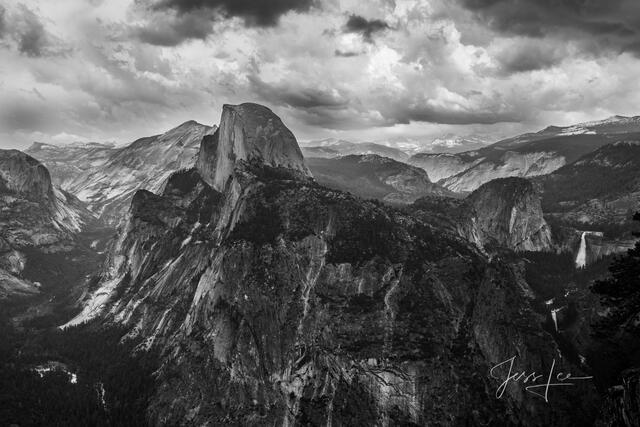
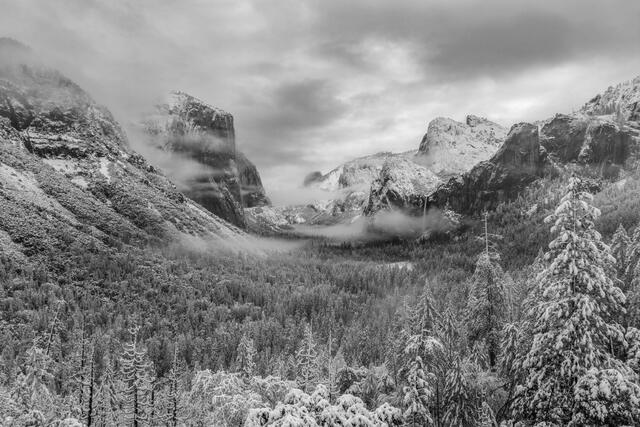
You cannot, and you should not want to. He had 8×10 sheet film, a darkroom he had mastered completely, and a valley with far fewer people in it. More to the point, he had already made those photographs. Standing at Tunnel View trying to produce a slightly worse Clearing Winter Storm is not a tribute to Adams. It is a failure to have learned the actual lesson, which was never about composition. It was about deciding what you have to say and then having the craft to say it.
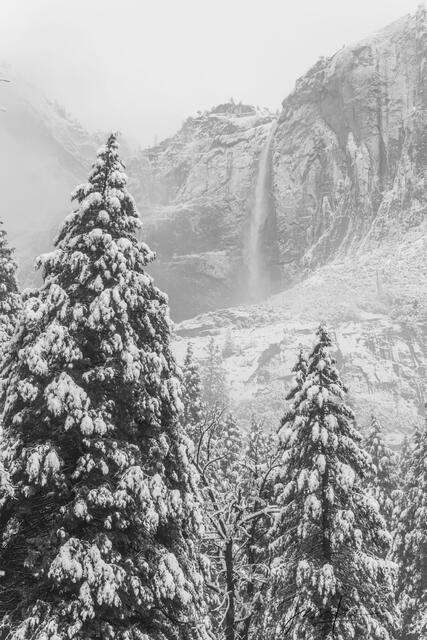
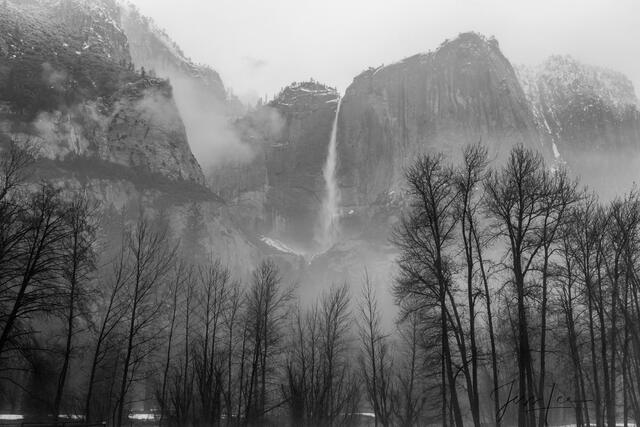
So the winter work in these galleries is not an homage. It is the same valley, a different century, a photographer with his own reasons for standing in the cold. Adams gave us permission to have those reasons. That is what he freed us to do.
Yosemite in winter → · Black & White Landscapes → · The full Yosemite collection →
Common questions
Why is Ansel Adams considered important?
Three things, in order of consequence. He established photography as a fine art rather than a documentary record. He built a teachable technical discipline — the Zone System — that gave photographers real control over tone. And he proved that photographs could change land policy, which made conservation photography a serious pursuit rather than a hobby.
What was Adams's approach to making a photograph?
Visualization: decide what the finished print must look like before releasing the shutter, then meter and expose to make that print possible. His summary rule was to expose for the shadows and develop for the highlights.
Do his methods still apply to digital photography?
Yes, more or less unchanged. The raw file replaced the negative and processing replaced the darkroom, but the essential decision — which tones to protect when the medium cannot hold them all — still has to be made while you are standing there.
Are these Ansel Adams prints for sale?
No. Every photograph on this site is an original work by Jess Lee, made on his own capture, and sold as a signed limited edition directly by the artist. Adams's prints are handled by his trust and by the galleries that represent his estate.
Which images here show his influence most clearly?
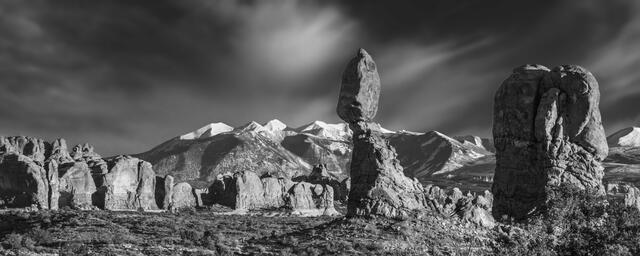
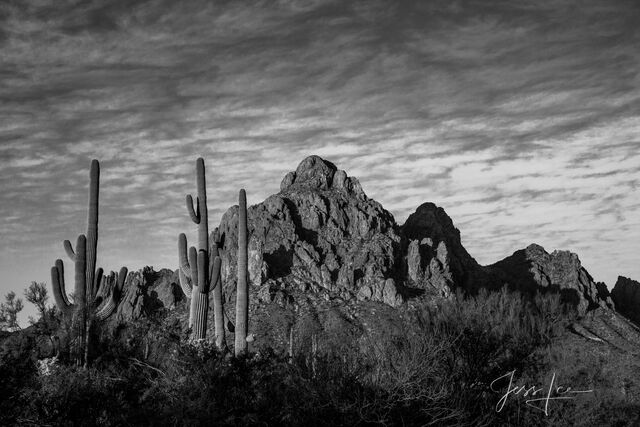
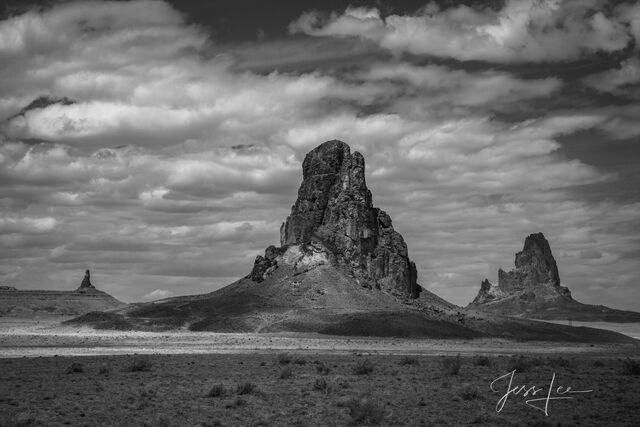
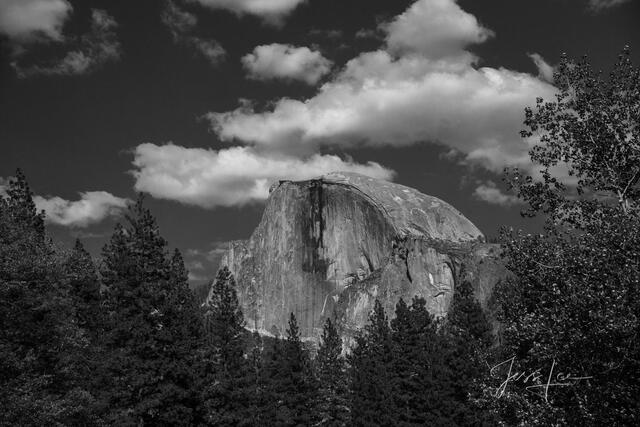
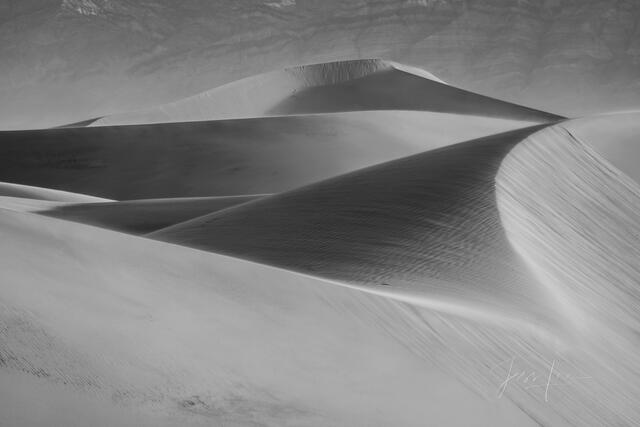
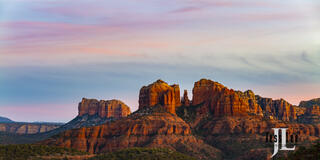
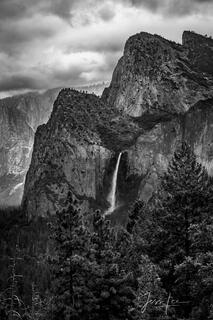
The Yosemite winter work, the Death Valley dune studies, and the desert and canyon black and white pieces — images built on tonal separation rather than color, in conditions where the exposure decision determines whether the picture exists.
Considering a black and white piece?
Send a photo of your wall and the image you have in mind. Jess will come back with a scaled room preview and an honest recommendation on size and material.
Free, and no obligation.
Related: The Zone System · Black & White Photography · B&W Landscapes · B&W Wildlife · Yosemite Winter · Conservation · For Designers & Trade