Articles : Guide To Buying Collectable Prints: Complete Collector's Guide To Fine Art Photography Prints
A Quick Collector’s Guide to Large-Format Photography Prints
The Art of the Installation: A Collector’s Guide to Large-Format Photography
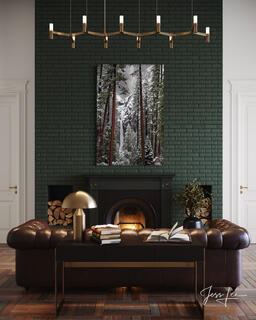
Acquiring a large-format fine art print is more than a purchase; it is an architectural decision. When you are placing a piece that defines a room, the difference between a "photo" and a "masterwork" lies in the technical execution. This guide is designed to help you navigate the nuances of scale, light, and medium to ensure your investment becomes a lifelong centerpiece.
1. The Architecture of Scale: Finding the Perfect Fit
The most common mistake in private collections is underestimating the power of scale. A print that is too small "floats" aimlessly on a wall; a print that is correctly sized anchors the room.
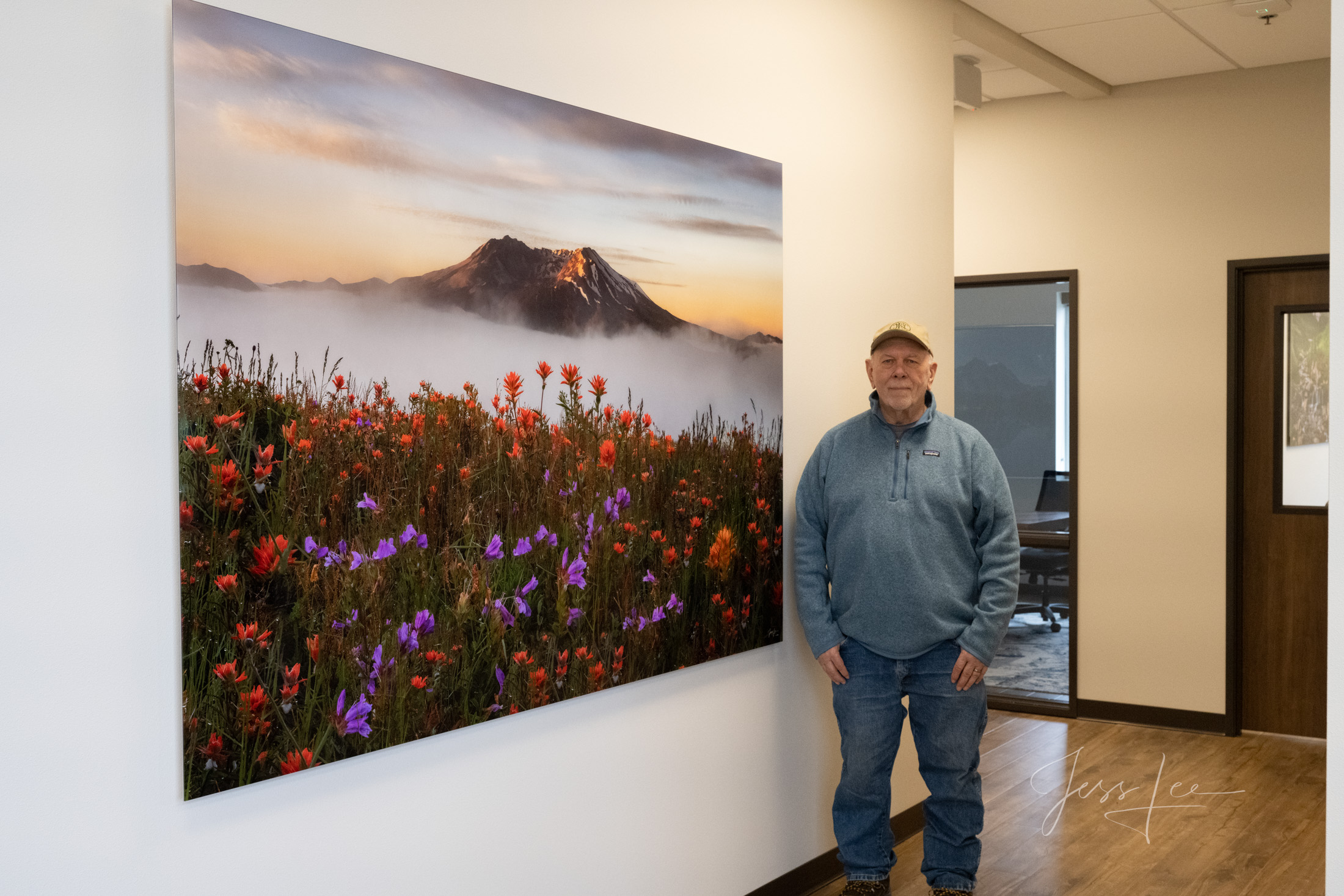
- The Designer’s Anchor: For a high-impact "Great Room" or corporate lobby, your art should occupy 60% to 75% of the available wall width.
- The Sofa Rule: If you are hanging a landscape above furniture, the print should be roughly two-thirds the widthof the piece below it. For a standard 84-inch sofa, a 60-inch print provides the balanced, "designed" look seen in architectural digests.
- The Perspective Height: In professional galleries, art is hung so the center point is 58 inches from the floor. This ensures the horizon line of the landscape meets the viewer’s eye naturally, creating an immersive "window" effect.
2. Why "Limited Edition" Matters to Your Legacy
In an era of mass-produced decor, provenance is the ultimate luxury. When you acquire a limited-edition masterwork, you are securing a piece of photographic history.
Every print in this collection is part of a strictly controlled edition (typically 50 or 100). Once the edition is closed, that image is retired forever in that format. Each piece is accompanied by a hand-signed Certificate of Authenticity, documenting the specific edition number and the archival standards used in its creation. This ensures your piece isn't just art—it’s an asset.
3. Engineering the Light: Bringing the Desert Home
Large-format mediums like Lumachrome® are engineered to interact with the light in your home. To truly see the "glow" I captured in the field, proper lighting is essential.
- The 30-Degree Rule: To minimize surface reflections while maximizing depth, position your ceiling lights or track heads at a 30-degree angle from the face of the print.
- Color Rendering (CRI): For the most accurate rendition of desert oranges and mountain blues, use LED bulbs with a CRI of 90 or higher.
- Atmospheric Interaction: One of the joys of high-end acrylic is how it changes throughout the day. As natural light moves through your room, the iridescent layers of the print will shift, mimicking the actual movement of the sun over the landscape.
4. Choosing Your Medium: Lumachrome® Acrylic vs. ChromaLuxe® Metal
This is the most critical technical choice for a collector. Both are museum-grade, but they serve different aesthetic and environmental purposes:
Lumachrome® HD Acrylic: The Iridescent Masterwork
If you want the absolute pinnacle of visual depth, Lumachrome is the choice.
- The Tech: This is a complex, multi-layer process where a transparent reflective layer is face-mounted to the acrylic.
- The Effect: It creates a holographic, 3D appearance. The light literally bounces off the back layer and returns to your eye, making the image appear to be backlit.
- Best For: Living rooms, primary suites, and spaces where you want a "statement" piece that glows in gallery lighting.
ChromaLuxe® Metal: The Modern High-Contrast Solution
For a sleeker, more resilient installation, ChromaLuxe offers incredible punch and durability.
- The Tech: Through a process called dye-sublimation, the image is infused directly into a specially coated aluminum sheet using extreme heat and pressure.
- The Effect: You get inky, deep blacks and vibrant saturation with a very slim, modern profile. Because the image is in the metal, not on it, it is remarkably durable.
- Best For: Modern offices, high-traffic corridors, and environments with higher humidity (like luxury kitchens or mountain cabins).
5. Technical Integrity: The 100-Megapixel Standard
Confidence in your purchase comes from the technical floor of the work. Every landscape in this guide is captured on 100-megapixel medium-format systems.
While a standard camera file might look "blurry" or "soft" when enlarged to 60 or 90 inches, my workflow ensures optical perfection. You can stand inches from a 90-inch Lumachrome print and see the individual grains of sand in a Mojave dune or the sharp needles of a Sonoran Saguaro. It is this level of detail that transforms a wall into an experience.