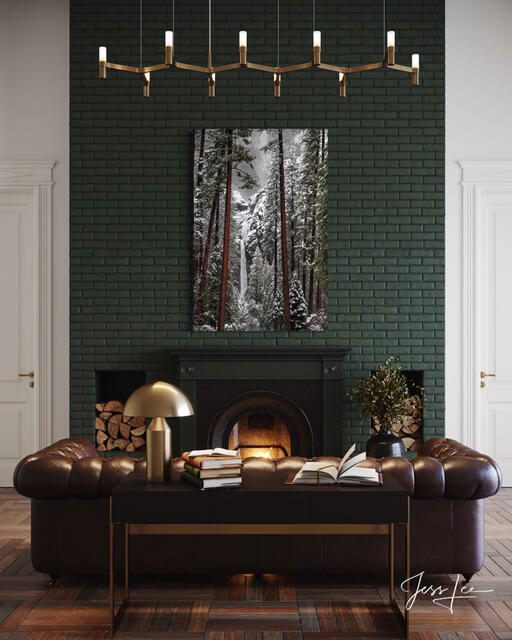
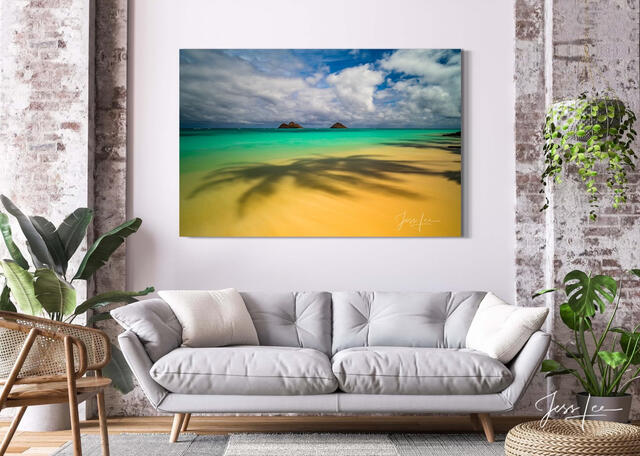
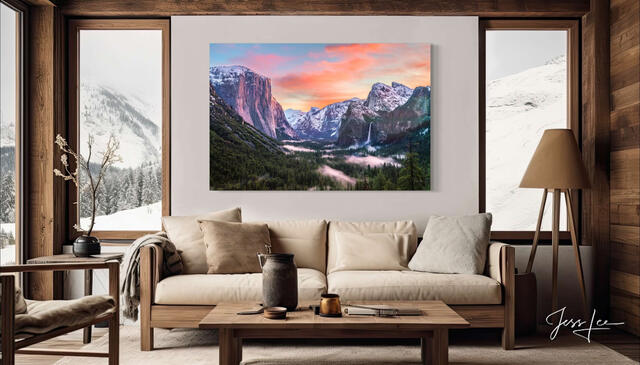
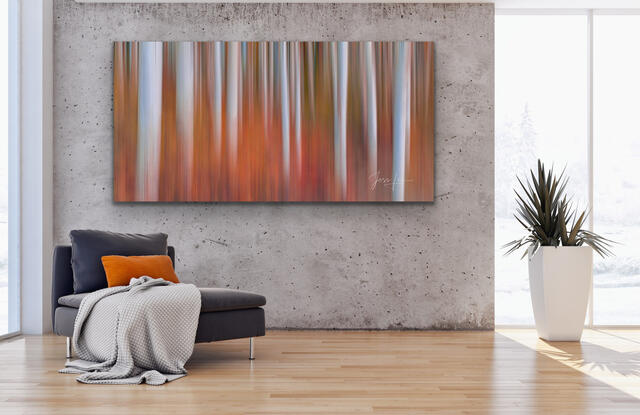
Why Nature Photography in your home can make your life better
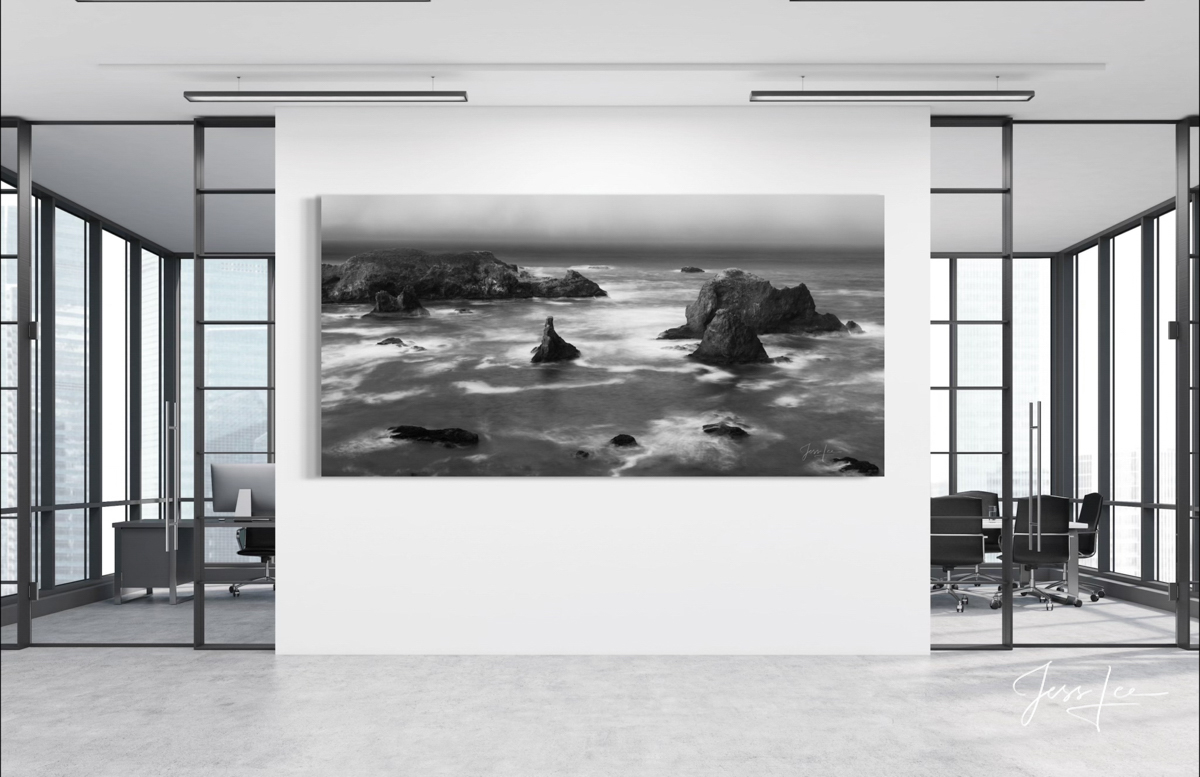
The Transformative Power of Nature Photography in Your Home: A Comprehensive Guide
In our increasingly digital and urbanized world, the human connection to nature has never been more vital—or more elusive. While we may not always have the opportunity to immerse ourselves in pristine wilderness, dramatic mountain ranges, or serene coastal scenes, there exists a powerful alternative: bringing museum-quality nature photography into our living spaces. Far beyond mere decoration, fine art nature photography transforms our homes in profound ways that affect our wellbeing, productivity, creativity, and even our physical health.
The Science-Backed Benefits of Nature Imagery in Living Spaces
The positive effects of integrating nature photography into our homes extend far beyond aesthetic appeal. Research in environmental psychology, neuroscience, and behavioral studies has consistently demonstrated that even viewing images of natural landscapes can trigger measurable physiological and psychological responses. Let's explore the evidence-based benefits that make nature photography an investment in both your home's beauty and your family's wellbeing.
Stress Reduction and Mental Restoration
In our high-stress modern environment, our homes should function as sanctuaries where we can recover from the constant demands on our attention. Studies published in the Journal of Environmental Psychology have shown that simply viewing nature images activates our parasympathetic nervous system—the "rest and digest" mode that counteracts stress responses.
When you display a photograph of a tranquil forest scene or a sweeping mountain vista in your living room or bedroom, you're creating a visual anchor that can trigger a micro-restoration experience each time you engage with it. These moments accumulate throughout the day, helping to lower cortisol levels (the primary stress hormone) and reduce subjective feelings of anxiety.
Unlike artificial decorations or abstract art, nature photography connects directly with our evolutionary programming. Humans evolved in natural environments for millions of years, developing what biologist E.O. Wilson termed "biophilia"—an innate affinity for nature. When we bring photographic representations of landscapes into our homes, we satisfy this deep biological need for natural connection, even when living in urban environments.
Enhanced Cognitive Function and Focus
The attention restoration theory, developed by environmental psychologists Rachel and Stephen Kaplan, suggests that natural environments—and by extension, images of them—help restore our capacity for directed attention and concentration. This is particularly relevant in today's world of constant technological distractions and information overload.
A 2015 study at the University of Melbourne found that interrupting a mentally fatiguing task to view a nature scene (even for just 40 seconds) resulted in significantly improved concentration upon returning to the task. Imagine having similar restorative "micro-breaks" available throughout your home in the form of compelling nature photographs.
Strategically placing nature photography in home office spaces, study areas, or anywhere requiring sustained mental effort can create regular opportunities for this cognitive refreshment. A dramatic photograph of a thunderstorm over the Grand Canyon or the delicate details of frost on autumn leaves requires what psychologists call "soft fascination"—a form of attention that engages the mind while simultaneously allowing mental resources to replenish.
Mood Enhancement and Emotional Wellbeing
Beyond stress reduction, nature photography actively contributes to positive emotional states. Research from the University of Essex found that viewing nature images can increase positive affect—feelings of joy, contentment, and serenity—while decreasing negative emotions like anger and anxiety.
The psychological benefits extend to clinical applications as well. Multiple studies have shown that nature imagery can reduce depression symptoms, with some hospitals and therapy centers now incorporating landscape photography into treatment environments. A 2010 study published in the Journal of Affective Disorders found that depressed patients showed significant mood improvements when exposed to nature photography compared to urban scenes or abstract images.
What makes this particularly valuable for home environments is the cumulative effect. Unlike a single visit to a natural setting, photography in your home provides consistent, daily exposure to these mood-enhancing visual stimuli. The soft light filtering through forest canopies, the expansive sense of possibility in mountain vistas, and the rhythmic patterns of ocean waves in coastal photography all speak to different emotional needs and can be selected to address specific mood states you wish to cultivate in your living space.
Improved Sleep Quality
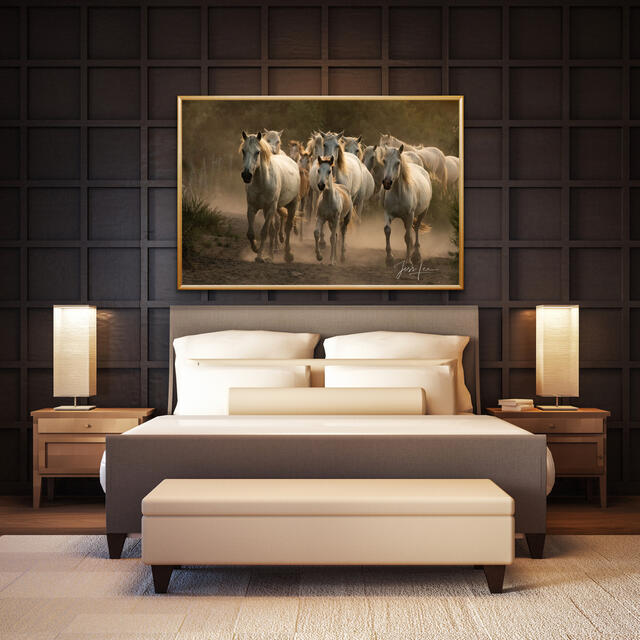
Bedroom environments play a crucial role in sleep hygiene, and nature photography can contribute significantly to creating spaces conducive to restful sleep. Research published in the Journal of Sleep Research indicates that exposure to natural scenes before bedtime can help reduce rumination (repetitive negative thinking) and promote the relaxation necessary for sleep onset.
Photographs of night skies, gentle water scenes, or peaceful woodland settings can create a visual environment that signals to your brain that it's safe to relax and rest. This is particularly important in modern homes where electronic devices and busy visual environments can contribute to sleep disruption.
Many sleep specialists now recommend creating "transitional zones" in bedrooms that help the mind shift from daily activities to sleep preparation. A thoughtfully chosen landscape photograph can serve as both a beautiful focal point and a psychological transition tool in this important space.
Nature Photography as Biophilic Design
The concept of biophilic design—incorporating natural elements and patterns into built environments—has gained tremendous traction in architectural and interior design communities. While living plants, natural materials, and daylight are common biophilic elements, fine art nature photography offers unique advantages in this design approach.
Creating Visual Connections to Nature
One of the core principles of biophilic design is establishing visual connections to nature. High-quality landscape photography accomplishes this with remarkable efficiency, creating what designers call "nature analogues"—representations that trigger the same psychological responses as direct nature experiences.
Unlike window views, which are fixed and dependent on your home's location, photography allows you to curate specific natural environments that resonate with you personally. Whether you're drawn to dramatic coastal storms, serene woodland interiors, or expansive desert landscapes, photography brings these distant experiences directly into your daily living environment.
The phenomenal detail captured by professional nature photographers allows these images to function as "surrogate windows" to the natural world. The textures of tree bark, the interplay of light on water, and the intricate patterns of geological formations in fine art photography engage our visual system in ways similar to direct observation, activating many of the same neural pathways associated with nature experiences.
Seasonal Dynamism and Nature's Rhythms
Our evolutionary biology is attuned to nature's cyclical patterns. The changing seasons, day-night cycles, and weather variations are deeply encoded in our physiological and psychological functioning. Fine art nature photography allows you to bring these natural rhythms into your home environment, creating a subtle but powerful connection to the larger patterns that govern the natural world.
Creating a rotating seasonal display of nature photography—spring wildflowers giving way to summer landscapes, autumn foliage transitioning to winter scenes—can help maintain a dynamic living environment that reflects the world outside. This seasonal alignment has been shown to improve mood and reduce the negative psychological effects of disconnection from natural cycles, particularly for those living in urban settings or locations with limited seasonal variation.
Fractal Patterns and Visual Comfort
Nature abounds with fractal patterns—self-similar shapes that repeat at different scales—from the branching structure of trees to the tributary systems of rivers and the geometric patterns of snowflakes. Our visual system has evolved to process these fractal patterns efficiently, creating what researchers call "perceptual fluency" that feels inherently satisfying and restorative.
High-quality nature photography captures these fractal elements with remarkable fidelity. A detailed photograph of fern fronds unfurling, wave patterns on sand, or the branching structure of lightning against a dark sky contains the mathematical complexity that our visual system finds simultaneously stimulating and comfortable.
Neuroscience research using fMRI has shown that viewing fractal patterns with the complexity levels commonly found in nature (what mathematicians call a fractal dimension between 1.3 and 1.5) reduces activity in brain regions associated with stress. By displaying nature photography rich in these patterns, you're essentially creating a visual environment optimized for your brain's processing preferences.
Strategic Placement of Nature Photography in Your Home
To maximize the benefits of nature photography, thoughtful placement throughout your home is essential. Different spaces serve different functions and can be enhanced by specific types of natural imagery.
Entryways and Transition Spaces
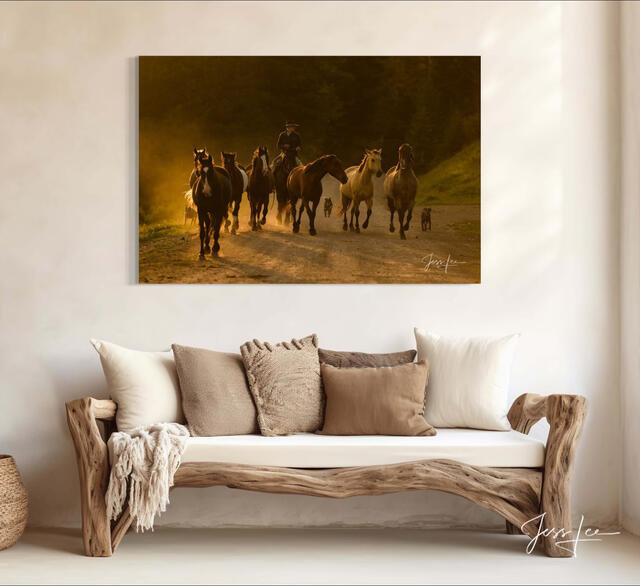
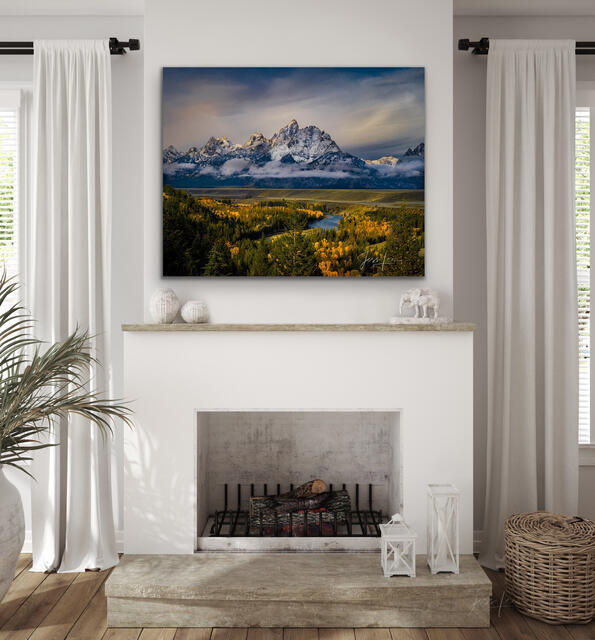
The entrance to your home represents a critical transition point between the outside world and your personal sanctuary. Large-scale landscape photography in foyers and entryways can create an immediate sense of expansiveness and possibility, setting a positive tone for the entire home experience.
Consider images that evoke a sense of welcome and arrival—winding paths through forests, mountain vistas with clear focal points, or serene water scenes that visually "draw you in" to the space. These transitional areas benefit from photography that suggests journey and discovery, themes deeply embedded in our psychological response to natural landscapes.
Living and Gathering Spaces
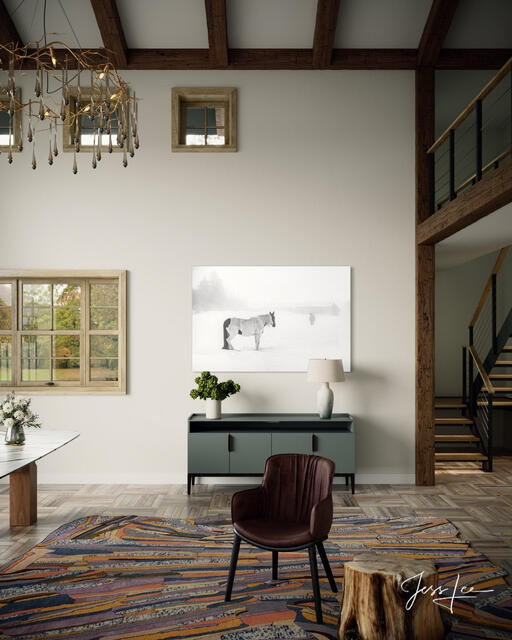
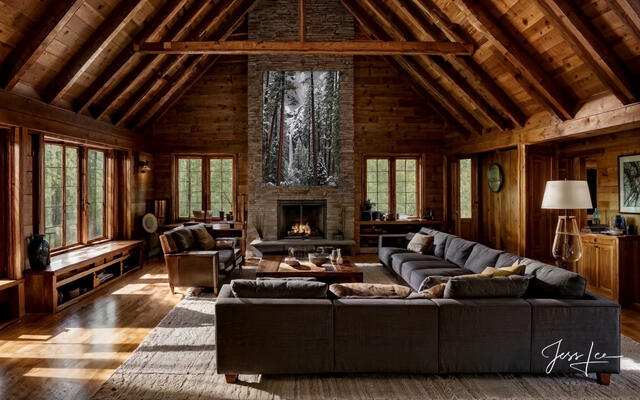
In areas where family and friends gather, nature photography can serve as both conversation starter and ambient mood regulator. These spaces benefit from images that promote social connection while maintaining a sense of calm.
Research in environmental psychology suggests that savanna-like landscapes—open spaces with scattered trees and visible horizons—universally appeal to humans across cultures, likely due to our evolutionary history. Photographs capturing these environments often work beautifully in social spaces, creating a sense of prospect (the ability to see opportunities) and refuge (feeling protected) that promotes both relaxation and engagement.
For living rooms specifically, consider how the emotional tone of the photography influences the space's function. Dynamic images with dramatic weather or lighting can energize a space used for active socializing, while more contemplative scenes might better serve a room intended for quiet conversation or reading.
Work Spaces and Areas Requiring Concentration
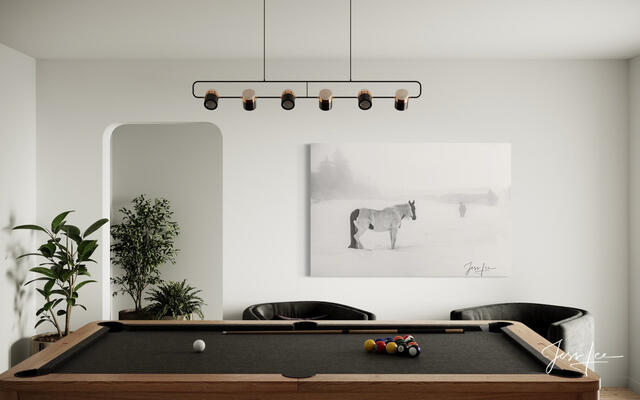
Home offices and study areas benefit tremendously from nature photography that supports cognitive function. Research indicates that images with a balance of complexity (engaging the mind) and coherence (providing order and pattern) best support focused attention.
Photographs featuring water elements have shown particular efficacy in improving concentration and creative problem-solving. The visual complexity of flowing water, reflections, or ocean patterns engages what neuroscientists call "effortless attention"—a state where the mind remains alert but not taxed, ideal for sustained mental effort.
Position these images at eye level when seated at your workspace, creating a natural sight line that allows for periodic visual breaks that refresh mental resources without requiring physical movement away from your work.
Bedrooms and Restorative Spaces
Spaces dedicated to rest and recovery call for nature photography with specific qualities that promote relaxation and sleep readiness. Research on attention restoration theory suggests that scenes with moderate complexity and high coherence work best for these environments.
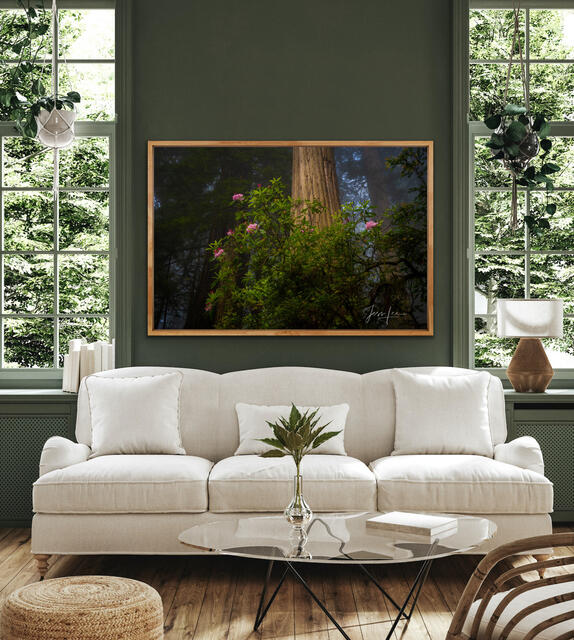
Consider photographs featuring gentle morning mist rising from valleys, twilight scenes with balanced light distribution, or intimate forest details rather than dramatic vistas. These images provide enough visual interest to momentarily engage attention without triggering the stimulating effects of more dramatic landscapes.
The color palette matters significantly in these spaces as well. Nature photography featuring the blue-green spectrum has demonstrated particular effectiveness in lowering heart rate and blood pressure, physiological changes conducive to relaxation and sleep onset.
Selecting Nature Photography for Psychological Impact
The specific content of nature photography significantly influences its psychological effects. Understanding these relationships allows you to curate your collection for maximum wellbeing benefits.
Expansive Landscapes and Psychological Freedom
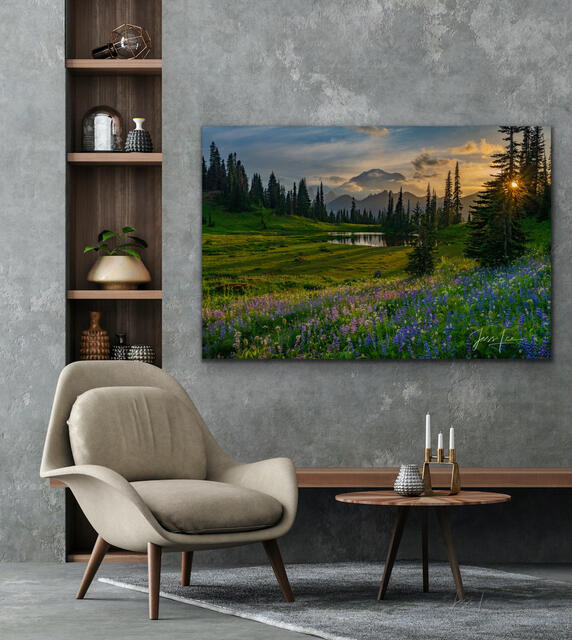
Panoramic vistas and open landscapes create what psychologists call an "expanded mental space"—a cognitive state associated with creative thinking, reduced rumination, and increased optimism. These images quite literally expand our perspective, counteracting the psychological narrowing that often accompanies stress and daily pressures.
Large-format landscape photographs of mountain ranges, vast deserts, or ocean horizons serve as visual reminders of possibility and perspective, particularly valuable in spaces where daily concerns might otherwise dominate your thought patterns. These images work through both conscious appreciation and unconscious peripheral awareness, gradually shifting mental states even when not directly focused upon.
Intimate Nature Details and Mindful Presence
While expansive landscapes expand our thinking, intimate nature photography—close-up details of flowers, patterns in stone, or the intricate structure of frost on leaves—promotes a different but equally valuable psychological state: mindful presence.
These detail-oriented images invite closer inspection, naturally drawing the viewer into a state of absorbed attention characterized by reduced self-referential thinking (the kind that fuels anxiety and rumination). Neuroscience research shows that this state of absorbed attention activates brain networks associated with present-moment awareness while quieting the default mode network linked to mind-wandering and worry.
Strategically placing these detail-rich photographs in areas where you might typically experience stress or hurried thinking—near home entrances, in bathrooms, or in transitional hallways—creates natural opportunities for micro-moments of mindfulness throughout your day.
Water Elements and Cognitive Fluidity
Water features prominently in many of the most psychologically impactful landscape photographs, and for good scientific reason. Research in cognitive psychology has demonstrated that viewing water scenes promotes what researchers call "blue mind"—a mildly meditative state characterized by calm, peacefulness, and a sense of general happiness.
This state has been linked to increased cognitive flexibility and creative problem-solving, making water-focused nature photography particularly valuable in home offices, creative studios, or anywhere that requires innovative thinking. The visual patterns in water photography—reflections, ripples, flowing streams, or crashing waves—engage our visual system in ways that activate multiple brain regions simultaneously, promoting neural connectivity associated with integrative thinking.
Seasonal Alignment and Circadian Wellbeing
Our bodies maintain complex internal timing systems—circadian rhythms—that regulate everything from hormone release to cognitive performance and emotional processing. These systems evolved in response to natural light patterns and seasonal changes. Modern indoor living often disrupts these rhythms, with negative consequences for mood, sleep, and overall health.
Nature photography featuring seasonal elements can help maintain healthy alignment with these natural cycles. Winter scenes with their cooler color temperatures and distinctive light quality signal different physiological responses than summer landscapes with warm golden tones. By selecting and rotating photography that corresponds to the actual seasons outside your windows, you create visual consistency that supports your body's innate timing systems.
Technical Qualities That Maximize Benefits
Beyond subject matter, the technical aspects of fine art nature photography significantly impact its psychological effects and longevity as an investment in your home environment.
Print Quality and Material Considerations
The substrate and printing process dramatically influence how nature photography functions in your space. Unlike mass-produced posters, museum-quality prints on archival materials capture subtle tonal gradations, color accuracy, and fine details that contribute significantly to the photograph's psychological impact.
Research in visual perception indicates that the human eye can detect extraordinary levels of detail and color variation—far more than standard commercial printing can reproduce. Higher-quality prints engage our visual system more completely, creating a more immersive viewing experience that amplifies the cognitive and emotional benefits.
Materials like archival cotton rag paper or modern metal prints with their luminous quality also influence how light interacts with the image throughout the day, creating a dynamic viewing experience that changes subtly with natural light conditions in your home. This variability helps prevent the adaptation effect where static visual elements eventually fade from conscious awareness.
Scale and Immersion Factors
The size of nature photography relative to viewing distance plays a crucial role in its psychological impact. Larger prints viewed from appropriate distances create what psychologists call "immersion effects"—partial activation of the neural pathways that process actual nature experiences.
Research using eye-tracking technology has shown that appropriately sized landscape photographs encourage similar scanning patterns to those we use when viewing actual landscapes, activating more comprehensive visual processing than smaller images. This expanded visual engagement correlates with stronger psychological benefits, particularly for stress reduction and attention restoration.
When selecting nature photography for key living spaces, consider prints large enough to create this immersion effect—generally at least 24 inches on the long dimension for typical room sizes, though larger spaces may benefit from even more substantial pieces.
Lighting Considerations for Maximum Impact
How you illuminate nature photography significantly influences its visual impact and psychological benefits. Natural lighting is ideal, as it changes throughout the day, creating subtle variations in how the image appears and preventing adaptation.
For spaces with limited natural light, choosing full-spectrum lighting with high color rendering indexes (CRI above 90) ensures that the photograph's colors and details are accurately represented. Dedicated art lighting that evenly illuminates the image without creating glare points maximizes both visual appreciation and the subtle psychological effects that make nature photography so valuable in home environments.
Integrating Nature Photography with Home Design
Fine art nature photography functions best when thoughtfully integrated with your overall interior design approach rather than treated as an isolated decorative element.
Color Harmony and Psychological Effects
The color palette of nature photography can either complement or productively contrast with your existing interior colors, with each approach offering different psychological benefits. Complementary integration—where the photography's dominant tones echo existing room colors—creates a sense of harmony and cohesion that many find calming and stabilizing.
Conversely, strategic contrast—such as warm-toned autumn landscape photography in a predominantly cool-colored room—can create focal points that energize the space and provide visual interest. This approach works particularly well in minimalist environments where the nature photography serves as a controlled element of complexity in an otherwise simple space.
The psychological literature on color perception indicates that neither approach is universally "better"—rather, the choice should align with the intended function of the room and your personal aesthetic preferences.
Compositional Flow and Visual Movement
The internal composition of landscape photography influences how we visually navigate a room. Images with strong directional elements—winding rivers, converging mountain ridges, or dramatic cloud formations—create what designers call "visual vectors" that can direct attention through a space.
This compositional flow can be strategically employed to enhance architectural features, draw attention toward or away from specific areas, or create a sense of expanded space in smaller rooms. A photograph with strong perspective elements like a diminishing path or receding coastline can create an illusion of depth that makes a room feel larger and more open.
Temporal Considerations: Rotating Collections
While some nature photographs may become permanent fixtures in your home, creating a rotating seasonal collection offers unique advantages. Beyond the circadian benefits mentioned earlier, regularly changing your displayed photography prevents the adaptation effect where images eventually recede from conscious awareness.
Research in environmental psychology suggests that novel stimuli receive more complete cognitive processing, reactivating the psychological benefits that may diminish with continuous exposure to the same imagery. A thoughtfully curated collection of nature photography that rotates seasonally or even monthly maintains these benefits while creating an evolving home environment that reflects the changing world outside.
Investment Considerations: Beyond Aesthetics
Fine art nature photography represents not just an investment in your wellbeing but often a financial investment as well. Understanding the factors that influence long-term value can help you make choices that satisfy both psychological needs and investment considerations.
Limited Editions and Provenance
Limited edition fine art photography generally maintains value better than open editions, particularly when accompanied by proper documentation of provenance and authenticity. The artificial scarcity created by limited editions supports value retention and potential appreciation, especially for recognized photographers with established exhibition histories.
When selecting nature photography as an investment, consider not just the immediate visual appeal but also the photographer's reputation, the size of the edition, and the quality of documentation provided. These factors significantly influence resale value should you choose to adjust your collection in the future.
Conservation Photography and Ethical Considerations
An emerging trend in fine art nature photography focuses on conservation storytelling—images that not only capture beautiful landscapes but also document endangered environments, raising awareness of preservation needs. These photographs often carry additional significance as historical documents of changing ecosystems.
Beyond potential investment value, conservation-focused nature photography connects your home to larger environmental narratives, creating opportunities for meaningful conversations with guests while supporting photographers whose work contributes to ecological awareness and protection effort.
The Living Relationship with Nature Photography
The relationship between fine art nature photography and its viewers evolves over time. Images that initially attract for their dramatic beauty often reveal subtler qualities through extended living presence in your home. Details previously unnoticed emerge, emotional responses deepen, and connections to the depicted landscapes develop increased significance.
This evolving relationship mirrors how we experience natural environments themselves—initial awe giving way to more nuanced appreciation and eventually a sense of connection and belonging. In bringing fine art nature photography into your home, you're not simply decorating walls but creating opportunities for ongoing discovery, restoration, and connection to the wider natural world that remains essential to human wellbeing.
As research continues to demonstrate the profound psychological and physiological benefits of nature connection, thoughtfully selected and displayed fine art nature photography offers a powerful, accessible means of bringing these benefits into daily life. In a world of increasing urbanization and nature disconnection, these photographic windows to the natural world serve not just as beautiful décor but as essential elements of a home designed for complete human flourishing.