Articles : Resources For Photographers, Where, When, To Improve Their Craft.: Favorite Photography Locations - : Making Great Landscape Pictures In Fun Places.
Oregon Photography Prints Locations Guide
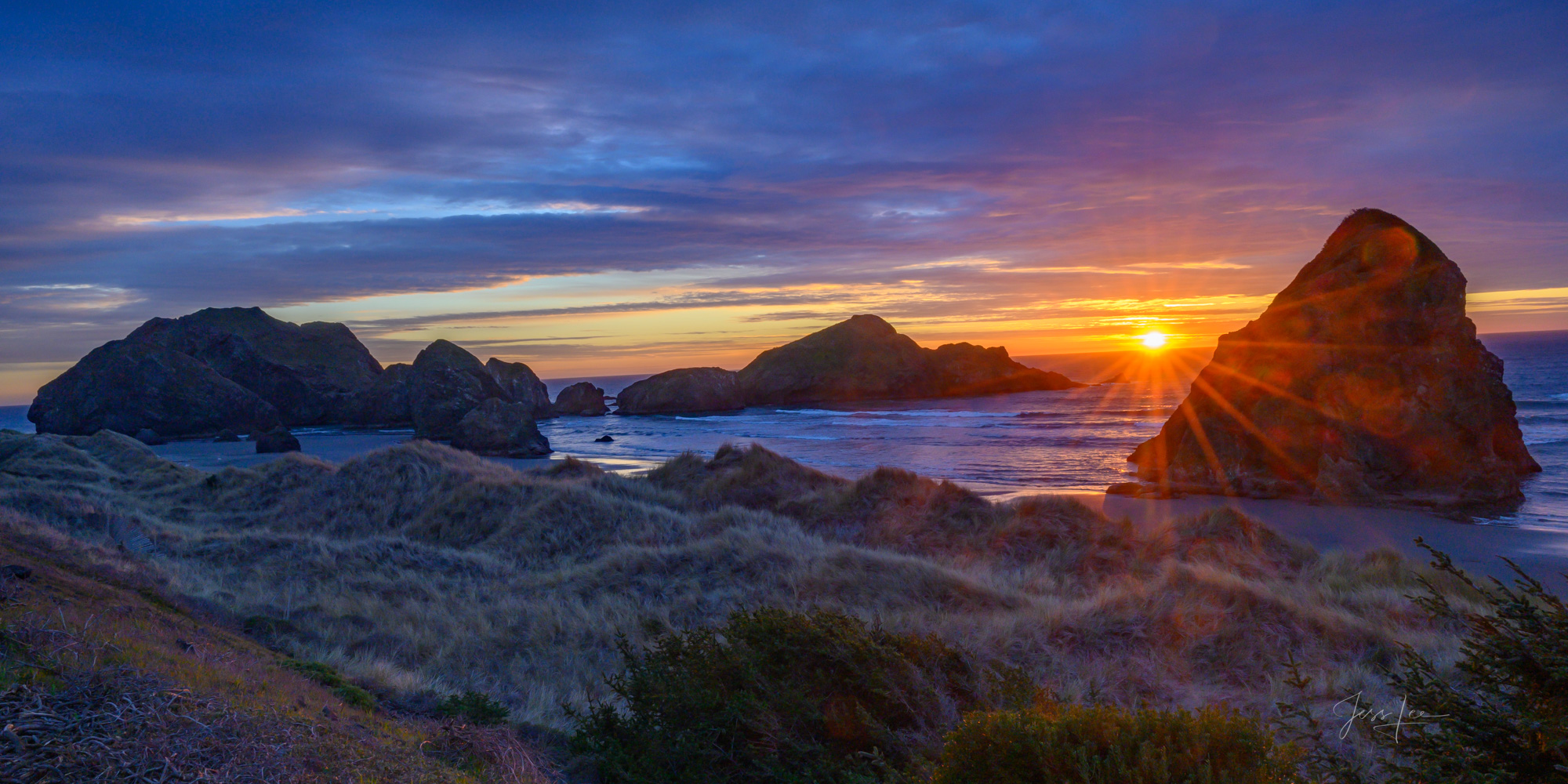
Fine Art Limited Edition Photography of the Oregon Coast.
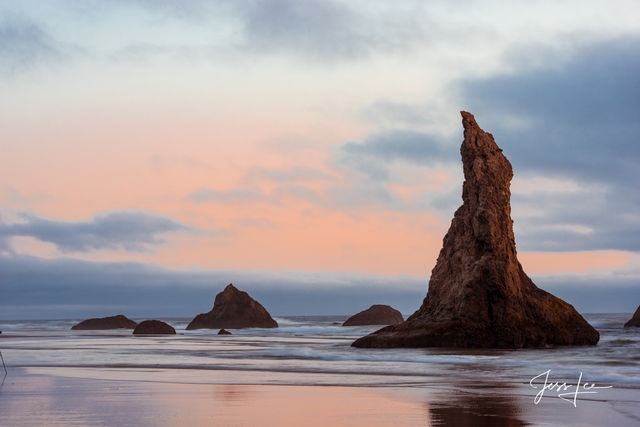
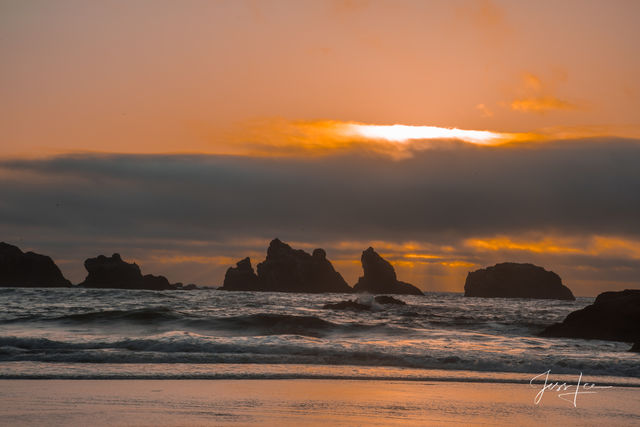
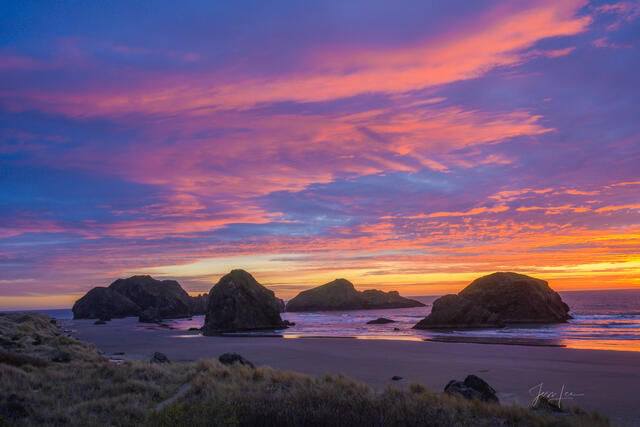
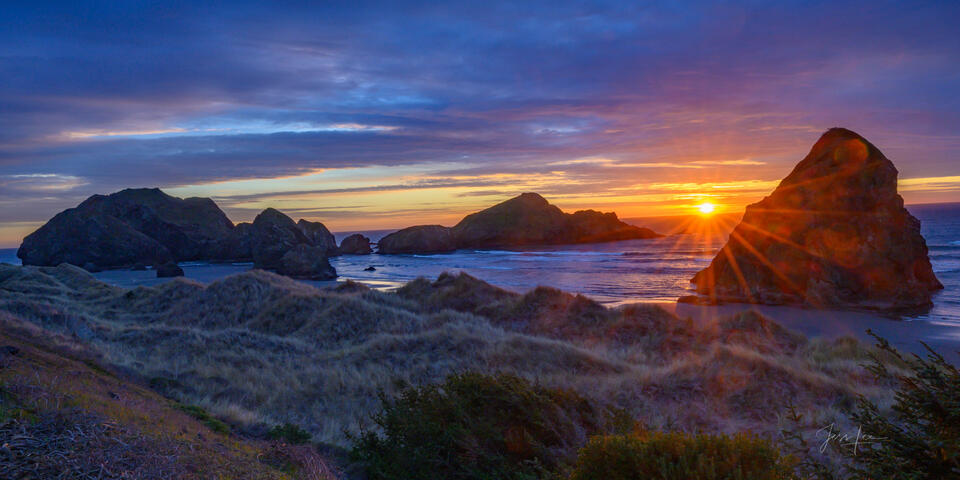
Sunset panoramic print at Pistol River, Oregon. Photos copyright © Jess Lee
The Ultimate Guide to Creating Stunning Photography Prints in Oregon's Coast and Mountains
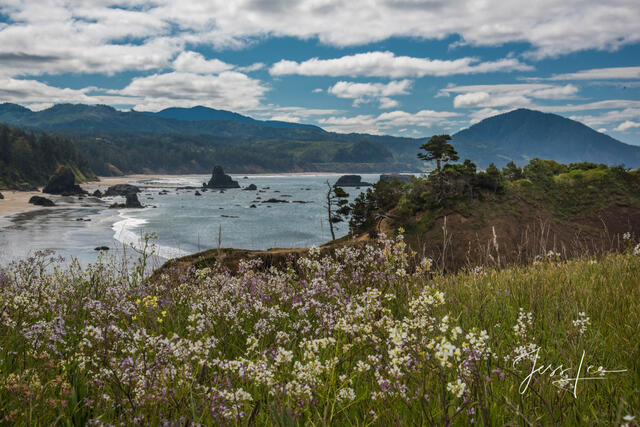
Oregon stands as a photographer's paradise, offering some of the most diverse and captivating landscapes in the United States. From the rugged Pacific coastline with its dramatic sea stacks and misty shores to the majestic mountain ranges crowned with ancient forests, Oregon provides endless opportunities for creating museum-quality fine art prints. This comprehensive guide will take you through the best locations to photograph across Oregon's coast and mountains, along with expert advice on capturing, processing, and printing these magnificent landscapes to create stunning wall-worthy art.




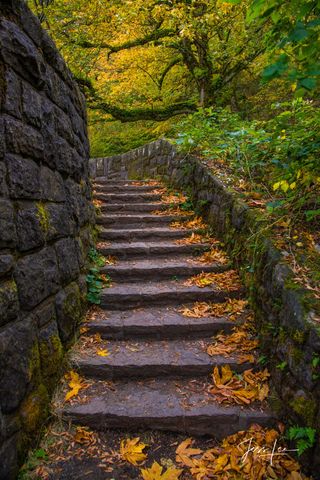
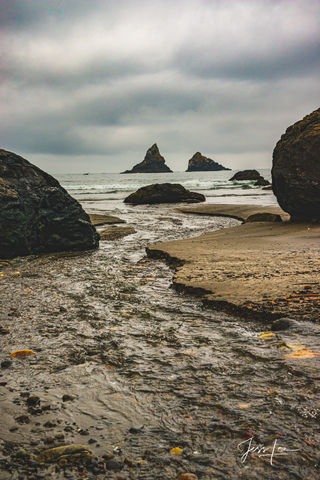
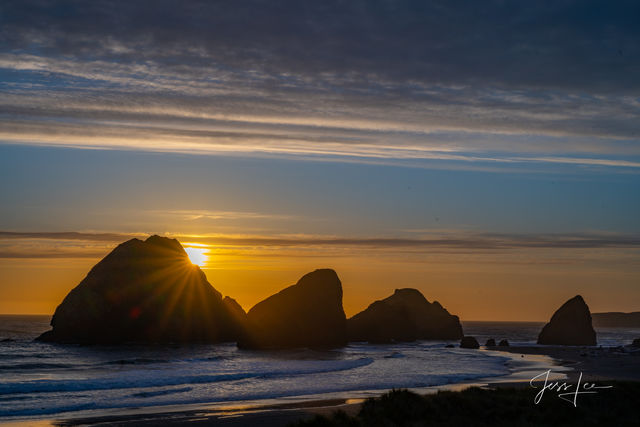
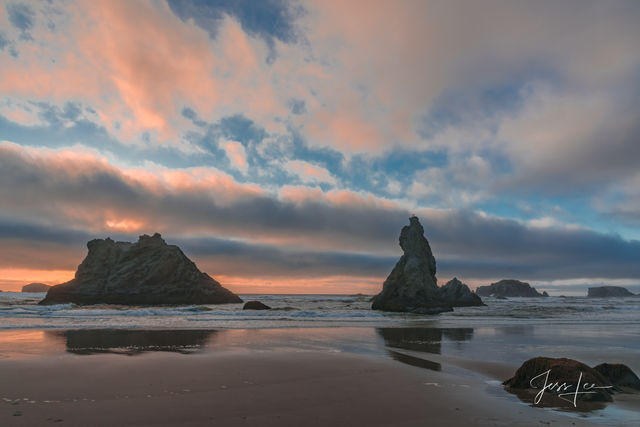
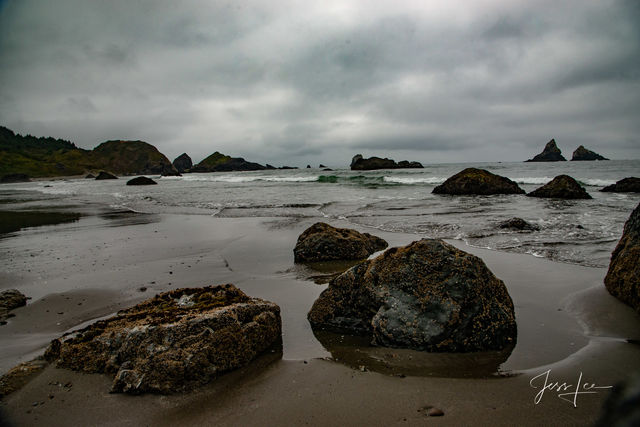
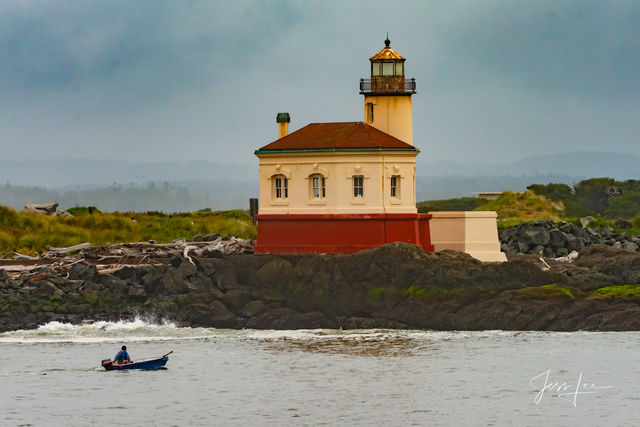

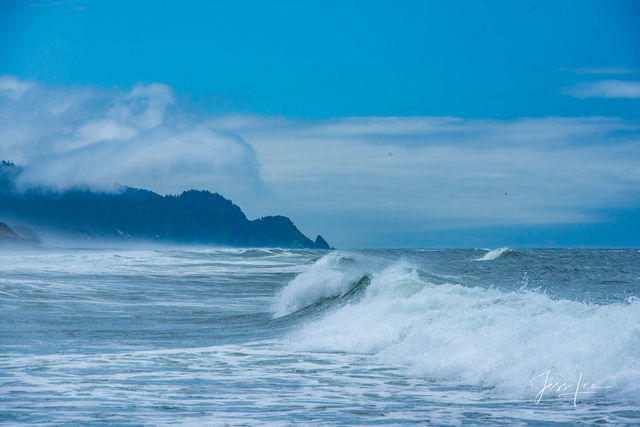



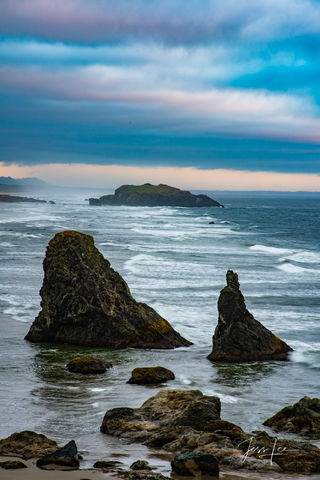
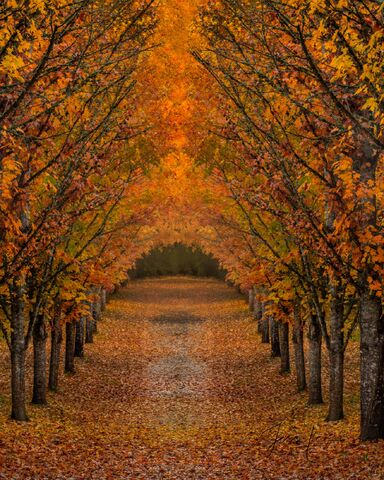
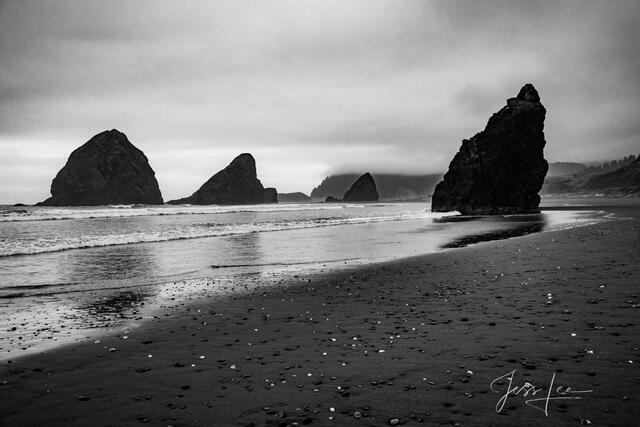
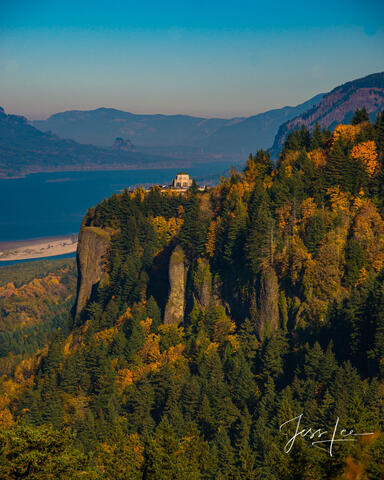


Best Coastal Locations for Fine Art Photography in Oregon
Cannon Beach and Haystack Rock
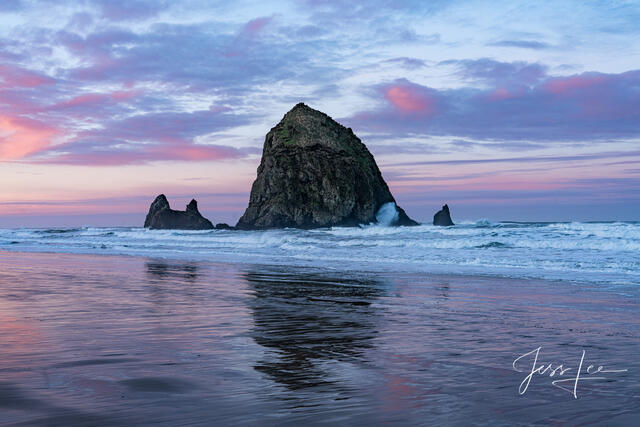
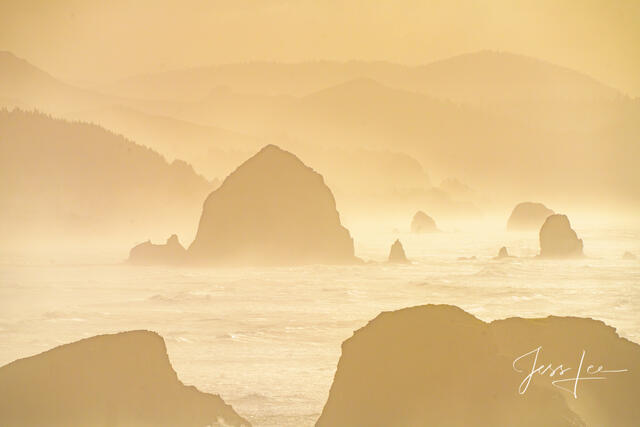
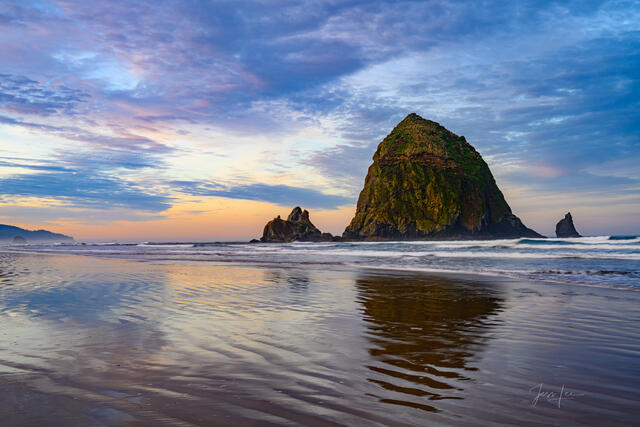
Haystack Rock stands as Oregon's most iconic coastal landmark and one of the most photographed natural features in the Pacific Northwest. This 235-foot sea stack creates a dramatic focal point against changing tides, colorful sunsets, and moody coastal weather.
Best Time to Visit: Year-round, with winter offering dramatic storms and summer providing colorful sunsets. Low tide allows access closer to Haystack Rock and reveals tide pools filled with colorful sea life.
Photography Tips:
- Visit during low tide to capture reflections on wet sand
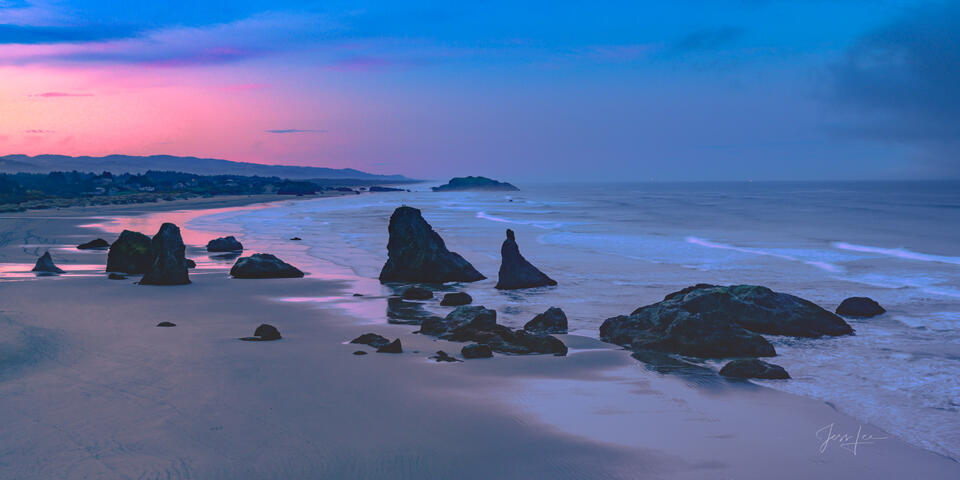
- Photograph during "blue hour" (30-45 minutes after sunset) for ethereal blue tones contrasting with the silhouetted rock
- Use a neutral density filter for long exposures that smooth the ocean water
- Include the distinctive Needles (smaller rock formations) in compositions for added interest
Print Considerations: The dramatic contrast between Haystack Rock and colorful skies produces prints that pop with vibrant oranges and magentas against deep blues. For maximum impact, consider metal prints that enhance color saturation or traditional fine art papers with a slight texture to capture the subtle gradients in the sky.
Bandon Beach
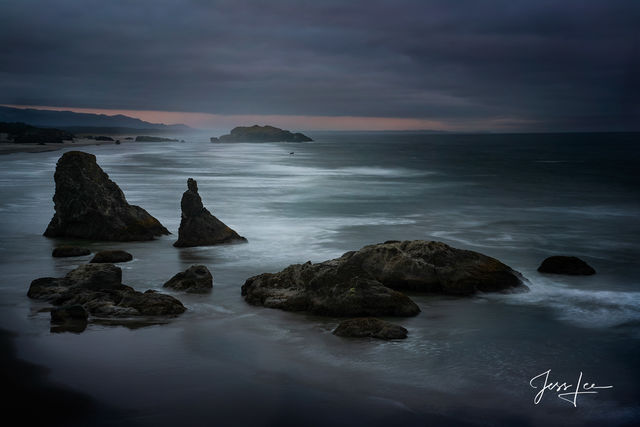
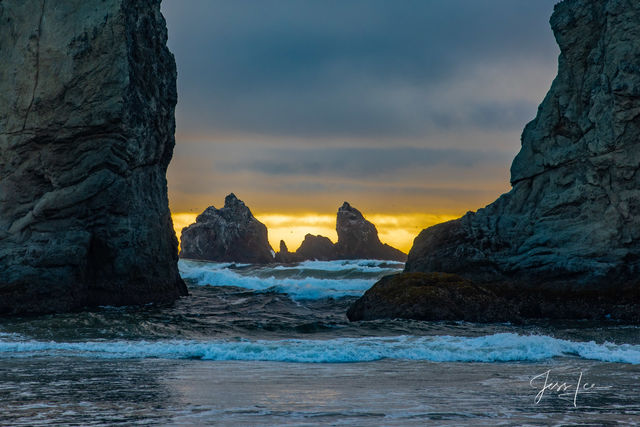
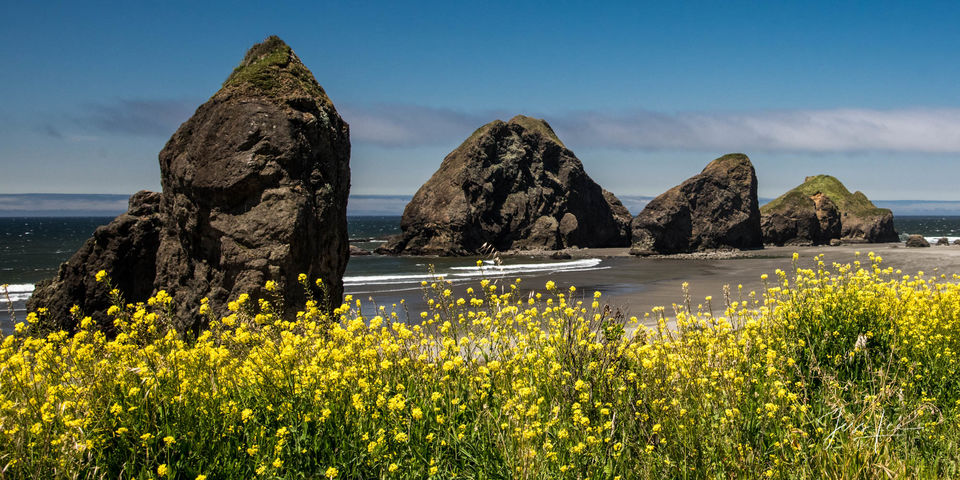
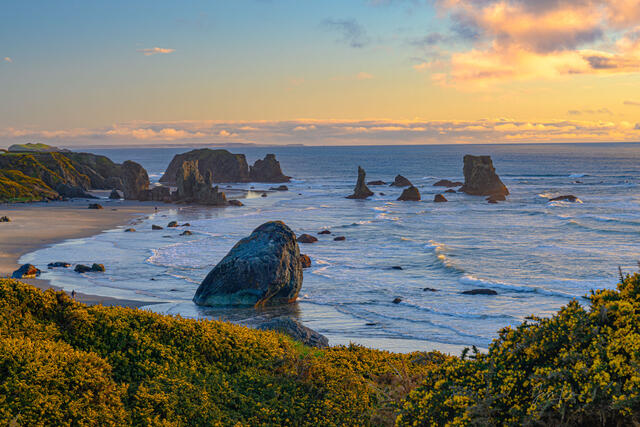
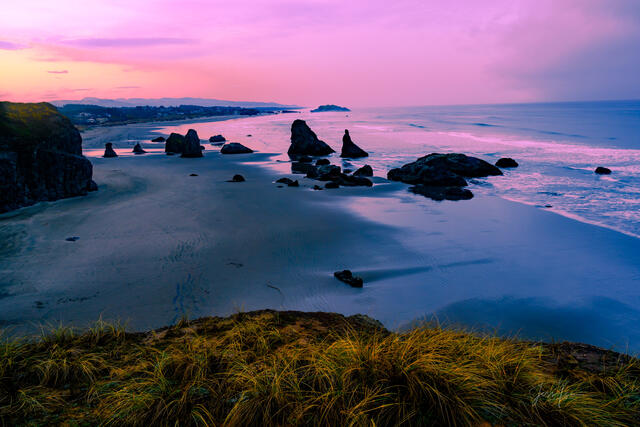
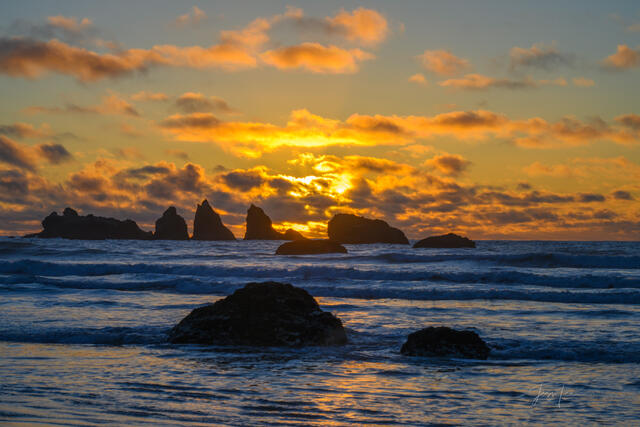
Renowned for its collection of sea stacks scattered along the shoreline, Bandon Beach offers some of the most dramatic coastal compositions in Oregon. Face Rock, Wizard's Hat, and numerous other distinctive formations create endless possibilities for unique fine art prints.
Best Time to Visit: September through November offers the best combination of favorable tides, dramatic light, and fewer crowds. Winter storms create dramatic wave action.
Photography Tips:
- Time your visit to coincide with low tide to access more of the beach
- The golden hour before sunset bathes the sea stacks in warm light
- Incorporate tide pools as foreground elements for added depth
- Use longer focal lengths to compress perspective and create layered compositions with multiple sea stacks
Print Considerations: The intricate details of Bandon's sea stacks and the textures of the surrounding beach make this location ideal for large-format prints that allow viewers to explore the scene's complexity. Consider Hahnemühle Photo Rag or similar textured fine art papers that enhance the dimensional quality of the rock formations.
Samuel H. Boardman Scenic Corridor
This 12-mile stretch along Highway 101 contains some of Oregon's most dramatic and photogenic coastal scenery, including Natural Bridges, Arch Rock, and Secret Beach. The combination of rugged headlands, offshore sea stacks, and hidden coves creates opportunities for unique and compelling fine art prints.
Best Time to Visit: Late spring through early fall provides the best access to trails and beaches. Fog conditions in summer months can create ethereal atmospheric effects.
Photography Tips:
- Natural Bridges is best photographed in late afternoon when light illuminates the arches
- Secret Beach requires timing with low tide for safe access
- Whaleshead Beach offers excellent sunset compositions with distinctive rock formations
- Thunder Rock Cove provides dramatic cliff-top perspectives
Print Considerations: The dramatic play of light and shadow throughout the Samuel H. Boardman corridor makes these scenes excellent candidates for black and white printing. Consider selenium-toned black and white prints that enhance depth in the shadows and clarity in the highlights.
Shore Acres State Park
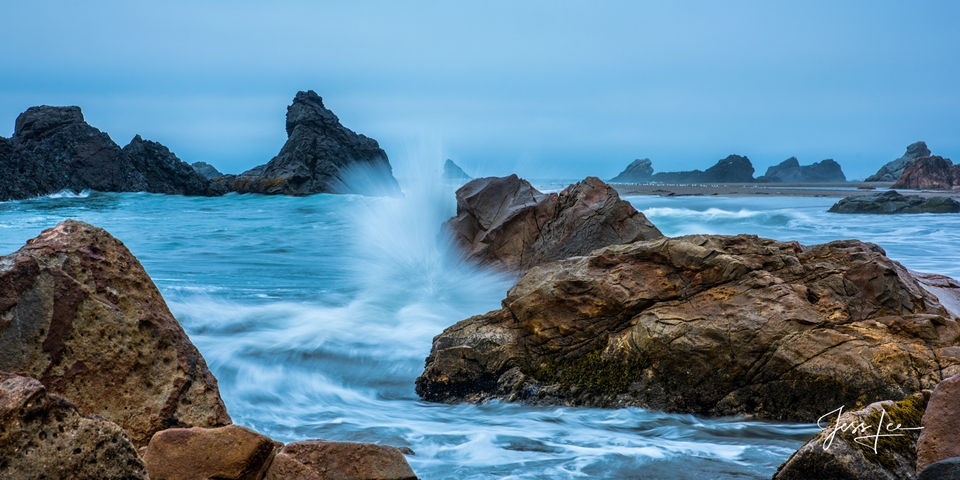
This unique coastal park features formal gardens alongside dramatic cliff views and a protected cove with crashing waves. During winter storms, waves can reach heights of 100 feet as they crash against the headlands, creating spectacular opportunities for dramatic seascape photography.
Best Time to Visit: November through February for storm watching; May through June for wildflowers and garden blooms.
Photography Tips:
- Use the designated storm watching area for safety during high seas
- A telephoto lens (70-200mm) allows compression of massive wave action
- Fast shutter speeds (1/500 sec or faster) freeze dramatic wave explosions
- Incorporate the sculpted sandstone formations for compositional interest
Print Considerations: The dynamic action of crashing waves at Shore Acres produces high-impact prints that benefit from high-contrast presentation. Consider Epson Legacy Platine or similar baryta papers that provide exceptional dynamic range and highlight detail.
Ecola State Park
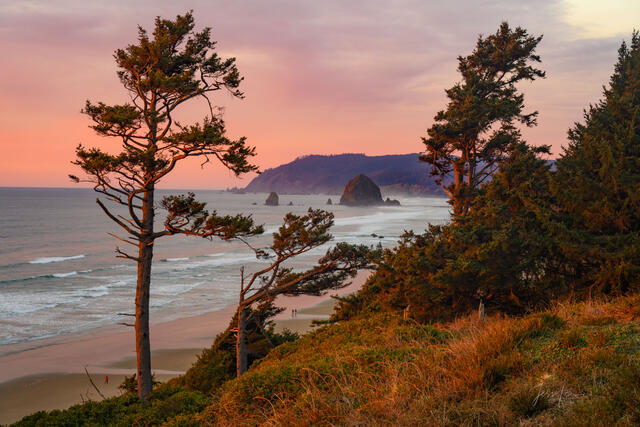
Offering sweeping views of the Oregon coastline from elevated perspectives, Ecola State Park provides panoramic vistas of Cannon Beach, Haystack Rock, and the lighthouse at Tillamook Rock. The park's viewpoints capture the quintessential Oregon coast experience in one frame.
Best Time to Visit: Spring and fall for clearest atmospheric conditions; summer mornings before coastal fog develops.
Photography Tips:
- Ecola Point provides the classic sweeping view of Cannon Beach
- Indian Beach offers intimate shoreline compositions with interesting rock formations
- The Clatsop Loop Trail leads to elevated viewpoints perfect for sunrise
- Foggy conditions create mood but require careful exposure management
Print Considerations: The expansive coastal views from Ecola State Park lend themselves to panoramic printing formats. Consider 2:1 or 3:1 aspect ratios that capture the sweep of the coastline on fine art papers with a semi-gloss finish to enhance the depth of foggy atmospheric conditions.
Cape Kiwanda
This sandstone headland near Pacific City offers some of Oregon's most colorful coastal landscapes. The golden cliffs contrasted against turquoise waters and topped with vibrant green vegetation create a color palette perfect for fine art prints with visual impact.
Best Time to Visit: Summer evenings for golden light on the sandstone; winter for dramatic wave action and fewer crowds.
Photography Tips:
- The view from the top of the dune captures the cape's distinctive profile
- Include Pacific City's own "Haystack Rock" (officially called Chief Kiawanda Rock) for scale
- The eroded sandstone formations create abstract compositional possibilities
- Use polarizing filters to enhance the color of water and reduce glare
Print Considerations: Cape Kiwanda's distinctive warm color palette renders beautifully on papers with warm undertones like Canson Infinity Baryta Photographique or Hahnemühle Bamboo. The natural yellow cast of these papers enhances the golden quality of the sandstone.
Mountain Photography Locations in Oregon
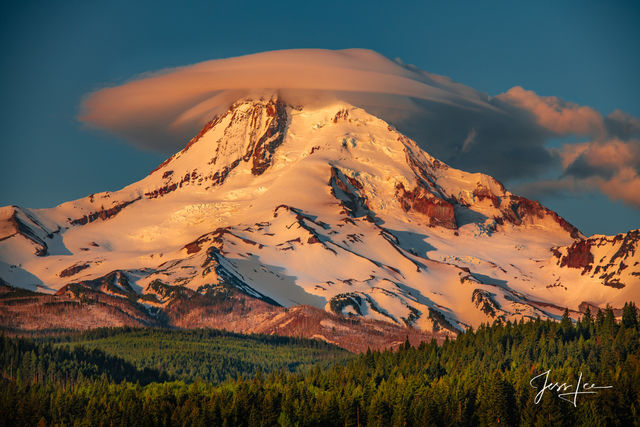
Mount Hood
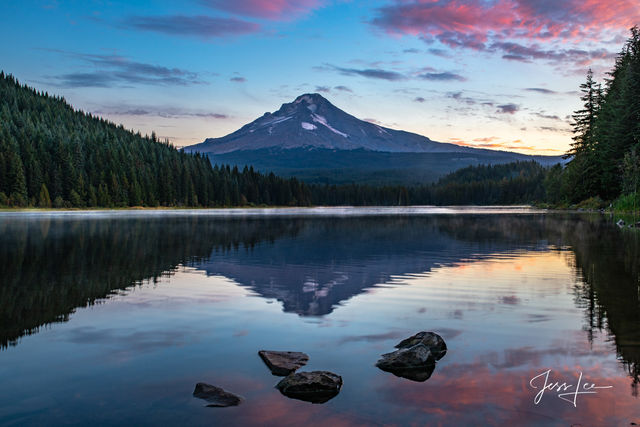
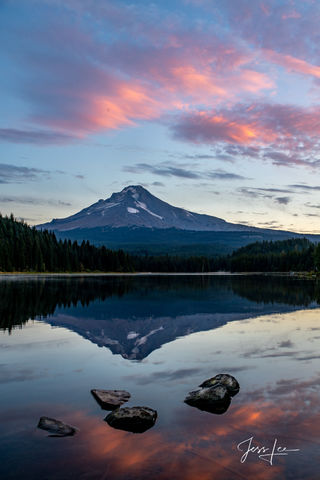
Oregon's highest peak and most recognizable mountain offers countless photography opportunities throughout the seasons. From reflecting in alpine lakes to standing majestic above wildflower meadows, Mount Hood provides iconic imagery for fine art prints.
Best Time to Visit: July through September for wildflowers and access to high-elevation viewpoints; winter for snow-covered landscapes and alpenglow.
Photography Tips:
- Trillium Lake provides perfect reflections of the mountain in still conditions
- Lost Lake offers another classic reflection composition with interesting foreground possibilities
- Tom Dick and Harry Mountain provides elevated perspectives above the treeline
- Hood River Valley orchards create spectacular foreground elements in spring bloom
Print Considerations: Mount Hood's distinctive triangular profile creates strong graphical compositions that work exceptionally well in large format prints. Consider printing on smooth fine art papers like Canson Infinity Platine Fibre Rag that render fine details in the mountain's glaciers and textures.
Columbia River Gorge
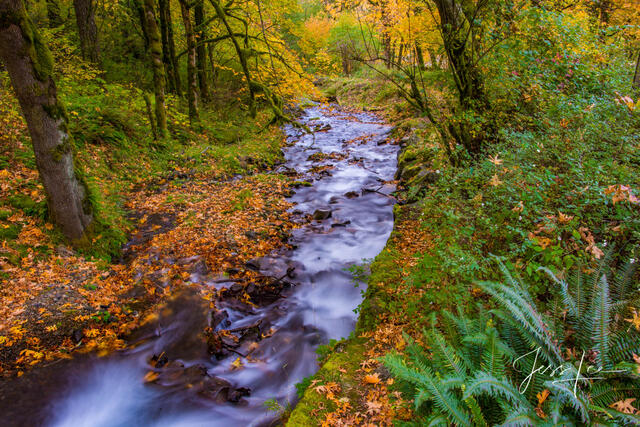
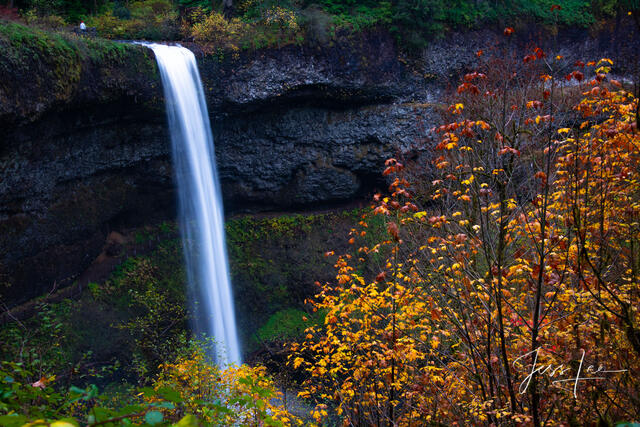
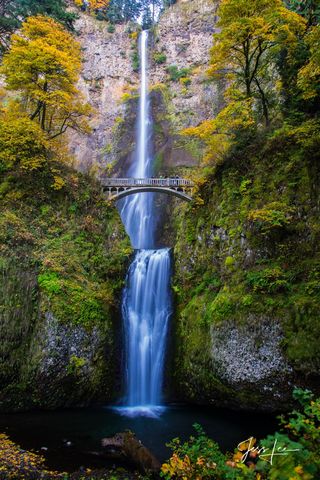
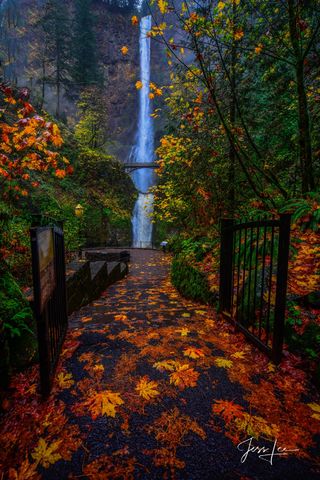
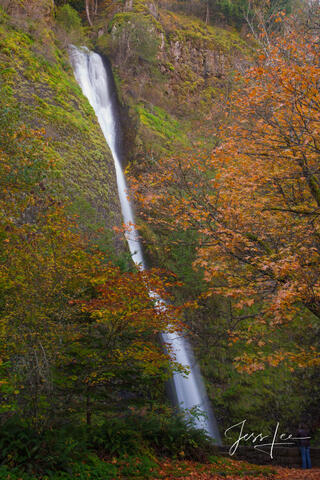
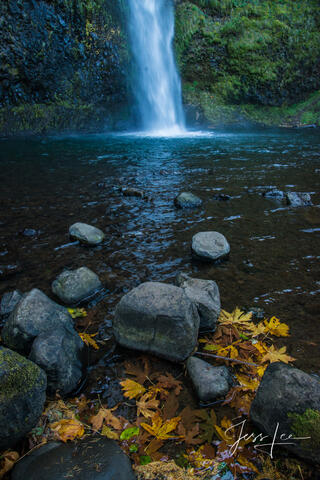
This dramatic river canyon cutting through the Cascade Mountains contains over 90 waterfalls on the Oregon side alone, along with spectacular views of the Columbia River and surrounding peaks. The diversity of photographic subjects makes this region a rich source for varied fine art print collections.
Best Time to Visit: Spring for peak waterfall flow and wildflowers; fall for colorful foliage; winter for frozen waterfalls and dramatic conditions.
Photography Tips:
- Multnomah Falls, Oregon's tallest waterfall, photographs best in early morning before crowds arrive
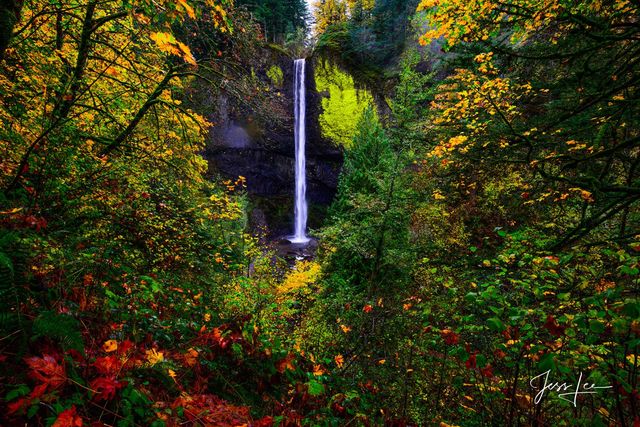
- Latourell Falls features distinctive columnar basalt formations alongside the waterfall
- Rowena Crest offers sweeping views of the gorge with a distinctive winding road as a compositional element
- Vista House at Crown Point provides historical architecture with panoramic backgrounds
Print Considerations: The lush greens and subtle tones of Columbia River Gorge waterfalls benefit from papers that render detail in shadows. Consider Moab Entrada Rag Bright or similar papers with a broader color gamut that accurately reproduces the rich spectrum of forest greens and subtle water tones.
Three Sisters Wilderness
This wilderness area in central Oregon features three volcanic peaks alongside alpine meadows, crystal-clear lakes, and ancient lava flows. The combination of high mountain terrain with accessible viewpoints makes this area perfect for dramatic landscape prints.
Best Time to Visit: July through September when high-elevation trails are snow-free and wildflowers are blooming.
Photography Tips:
- Sparks Lake provides perfect reflections of South Sister and Broken Top
- Green Lakes Basin offers intimate alpine scenes with the mountains as backdrop
- Proxy Falls creates waterfall compositions with unique textures
- McKenzie Pass provides volcanic landscapes with distinctive textures and patterns
Print Considerations: The clarity of mountain air in the Three Sisters Wilderness creates images with exceptional detail that benefit from high-resolution printing processes. Consider printmaking methods that maximize detail rendition, such as dye sublimation on metal for landscapes with dramatic skies or smooth fine art papers for scenes with subtle tonal transitions.
Crater Lake National Park
Oregon's only national park features the deepest lake in the United States, formed in the caldera of an ancient volcano. The intense blue color of the water, set against the surrounding caldera walls, creates striking compositions for fine art prints with immediate visual impact.
Best Time to Visit: July through September when all park roads are typically open; winter for snow-covered landscapes with limited access.
Photography Tips:
- Watchman Overlook provides classic views of Wizard Island
- Discovery Point offers perspectives of the caldera rim reflecting in the lake
- Phantom Ship overlook captures the distinctive rock formation at first light
- Sunrise from Garfield Peak creates dramatic sidelighting on caldera walls
Print Considerations: Crater Lake's extraordinary blue requires special attention to color management for accurate reproduction. Consider papers specifically designed for saturated color reproduction like Canson Infinity High Gloss Premium RC or Epson Legacy Fibre for prints that capture the lake's remarkable color.
Smith Rock State Park
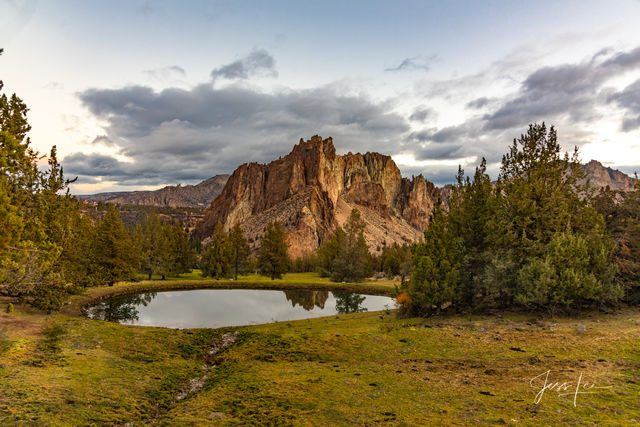
This high desert state park features dramatic volcanic tuff formations rising from the Crooked River canyon. The combination of angular rock formations, winding river, and desert vegetation creates compositions with strong graphical elements perfect for contemporary fine art prints.
Best Time to Visit: Spring and fall offer comfortable temperatures and favorable light; winter can provide unique opportunities with snow dusting the rock formations.
Photography Tips:
- Misery Ridge Trail provides elevated perspectives of the entire formation
- The river bend below Monkey Face creates a natural leading line
- Early morning light illuminates the eastern faces of the rocks with warm light
- Include climbers for scale when appropriate (with their permission)
Print Considerations: The textures and earth tones of Smith Rock translate beautifully to matte fine art papers that enhance dimensionality. Consider textured papers like Hahnemühle German Etching or Canson Infinity Rag Photographique that complement the rocky textures while maintaining detail.
Wallowa Mountains
Often called "Oregon's Alps," this remote mountain range in northeastern Oregon offers spectacular alpine scenery with a distinctive character different from the volcanic Cascades. Crystal-clear lakes, sharp granite peaks, and expansive meadows provide diverse subject matter for sophisticated landscape prints.
Best Time to Visit: July through September when high-elevation areas are accessible; mid-July for peak wildflowers.
Photography Tips:
- Wallowa Lake provides reflections of the mountains in calm conditions
- Ice Lake Basin offers high alpine compositions with dramatic peaks
- The view from the top of the Wallowa Lake Tramway provides panoramic perspectives
- Hurricane Creek Canyon creates intimate landscapes with flowing water and woodland scenes
Print Considerations: The Wallowa Mountains offer scenes with exceptional depth and dimension that benefit from printing processes that enhance these qualities. Consider Hahnemühle Photo Rag Pearl or similar semi-gloss papers that provide both detail rendition and depth in shadow areas.
Essential Gear for Oregon Landscape Photography
- Weather-sealed camera body: Oregon's varied conditions from coastal rain to mountain snow demand robust equipment
- Wide-angle zoom lens (16-35mm): Essential for capturing expansive coastal and mountain vistas
- Mid-range zoom (24-70mm): Versatile for varied landscape compositions
- Telephoto zoom (70-200mm): Ideal for compressing distant mountains and isolating details
- Solid tripod: Critical for low-light conditions and precise compositions
- Polarizing filter: Reduces glare on water and foliage while enhancing color saturation
- Neutral density filters: Enable long exposures for smooth water effects
- Graduated neutral density filters: Balance exposure between bright skies and darker foregrounds
- Remote shutter release: Minimizes vibration during long exposures
- Waterproof cover for camera and lens: Protection during coastal spray or mountain precipitation
- Extra batteries and memory cards: Limited charging opportunities in remote locations
Technical Considerations for Fine Art Printing
Capture Techniques for Print-Worthy Images
- Shoot in RAW format: Maximizes editing flexibility and tonal recovery
- Use base ISO whenever possible: Ensures maximum image quality and dynamic range
- Focus stacking: Consider for scenes requiring exceptional depth of field
- Panoramic techniques: Master for capturing the expansive Oregon landscapes
- Bracketing exposures: Useful for high-contrast scenes common in Oregon mountains
- Use a color checker passport: Ensures accurate color reproduction, especially important for Oregon's diverse vegetation tones
Post-Processing for Fine Art Prints
- Color space considerations: Adobe RGB or ProPhoto RGB provide wider gamuts for print reproduction
- Monitor calibration: Essential for accurate representation of Oregon's subtle coastal tones and vibrant mountain colors
- Soft proofing: Use printer/paper profiles to preview how Oregon's colors will translate to physical prints
- Resolution management: Optimize based on final print size (minimum 240ppi for fine art prints)
- Sharpening workflow: Implement a three-stage approach (capture, creative, output) for optimal detail
- Dodging and burning: Enhance depth and dimension in mountain scenes and coastal formations
Printing Service Selection in Oregon
Several Oregon-based printing services specialize in fine art reproduction of landscape photography:
Pro Photo Supply (Portland)
- Specializes in fine art reproduction using Epson and Canon large format printers
- Extensive paper selection including archival fine art papers
- Offers custom profiles for specific paper/printer combinations
- Provides in-person consultations for optimal print results
Pushdot Studio (Portland)
- Gallery-quality printing specializing in photography
- Master printmakers with extensive experience in landscape reproduction
- Custom pigment inkjet printing up to 44 inches wide
- Archival framing services available
Oregon Art & Technology (Bend)
- Central Oregon's premier fine art printing service
- Specializes in outdoor and landscape photography reproduction
- State-of-the-art Canon printers with 12-color pigment ink systems
- Offers metal, canvas, and traditional paper printing options
Reed Art & Imaging (Online with Portland pickup available)
- Extensive experience with Oregon landscape photographers
- Specialized fine art printing with Hahnemühle and Canson papers
- Digital imaging consultants to optimize files for print
- High-volume capabilities for gallery exhibitions
Presentation and Display of Oregon Landscape Prints
Framing Considerations
- Coastal images: Consider natural wood frames in driftwood tones that complement Oregon's beach environments
- Mountain scenes: Darker frames often enhance the drama of alpine photography
- Matting: Use archival, acid-free materials with a reveal that complements the scene's dominant tones
- Glazing: Museum glass reduces reflections while maintaining color accuracy for Oregon's vibrant landscapes
Exhibition Environments
- Avoid direct sunlight: Particularly important for preserving the subtle blue tones of coastal fog and mountain shadows
- Humidity control: Essential for prints displayed near the Oregon coast where humidity fluctuates dramatically
- Lighting: Consider LED lighting with high CRI (Color Rendering Index) values to accurately represent Oregon's distinctive color palettes
Oregon's diverse landscapes offer photographers an extraordinary canvas for creating compelling fine art prints. From the dramatic sea stacks of the coast to the majestic peaks of multiple mountain ranges, the state provides endless opportunities to capture images worthy of gallery walls. By understanding the unique qualities of each location, mastering the technical aspects of capture and printing, and developing relationships with local printing services and galleries, photographers can transform Oregon's natural beauty into enduring art that resonates with collectors and casual admirers alike.
Whether you're photographing the misty shores of Cannon Beach, the volcanic majesty of Mount Hood, or the pristine waters of Crater Lake, Oregon's landscapes offer rich visual material for creating prints that capture not just the visual appearance but the emotional essence of these extraordinary natural environments. With careful attention to both technical excellence and artistic vision, these landscapes can be transformed into fine art prints that bring the beauty of Oregon into homes and galleries around the world.