Wild, Not Controlled
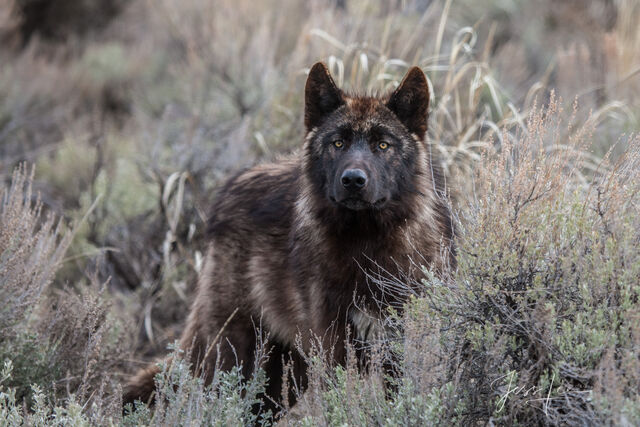
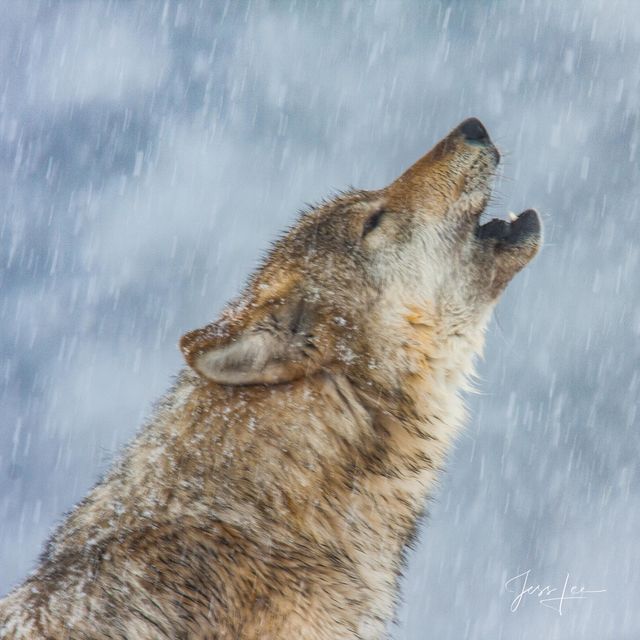
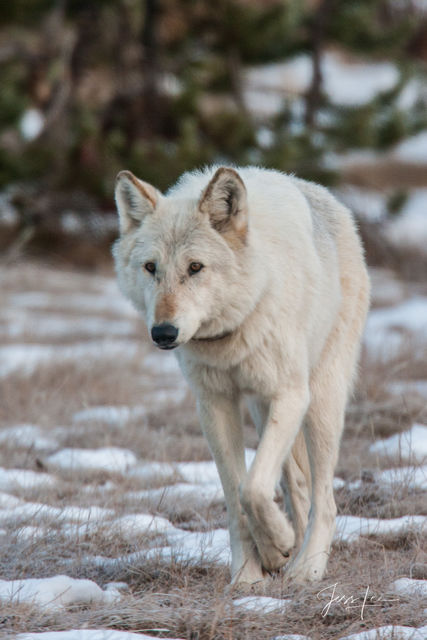
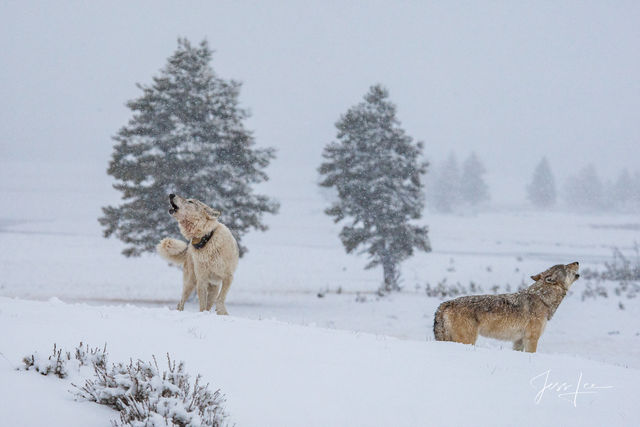
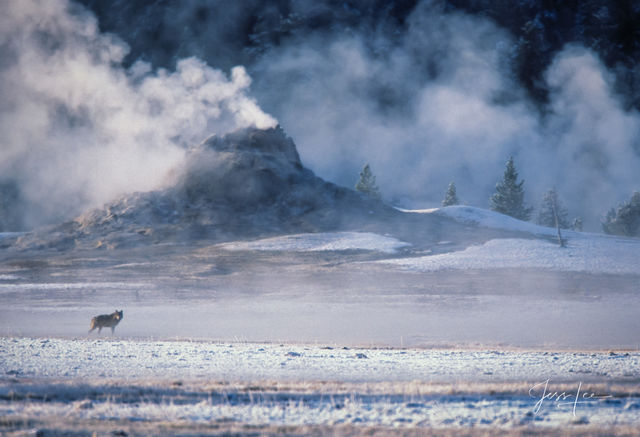
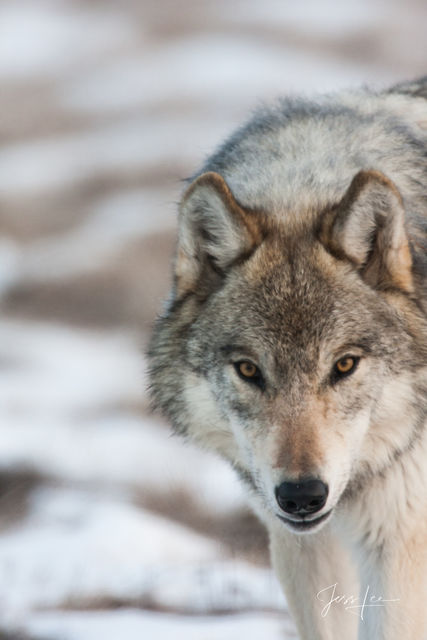
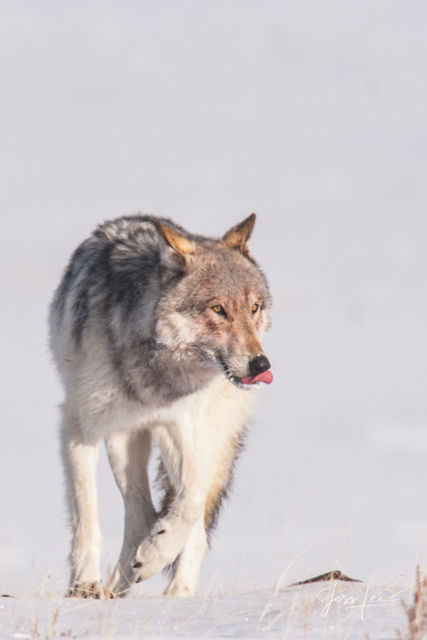
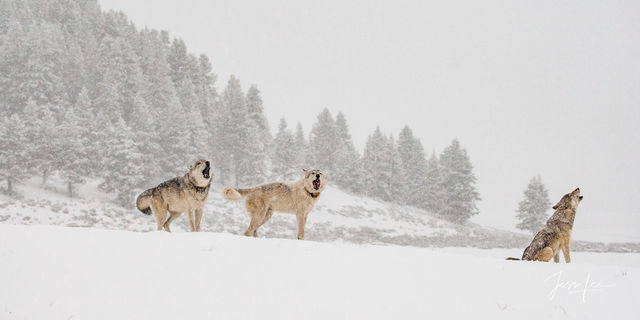
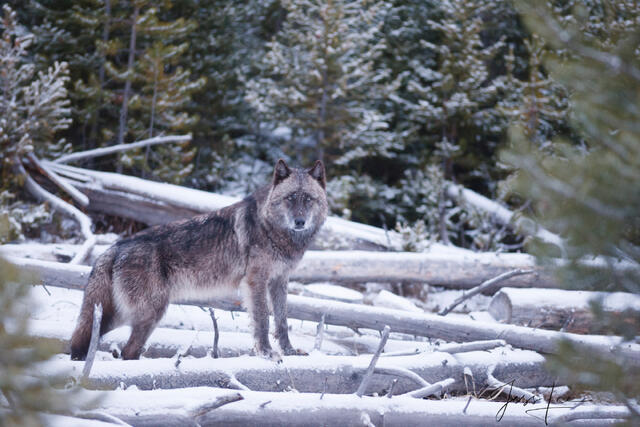
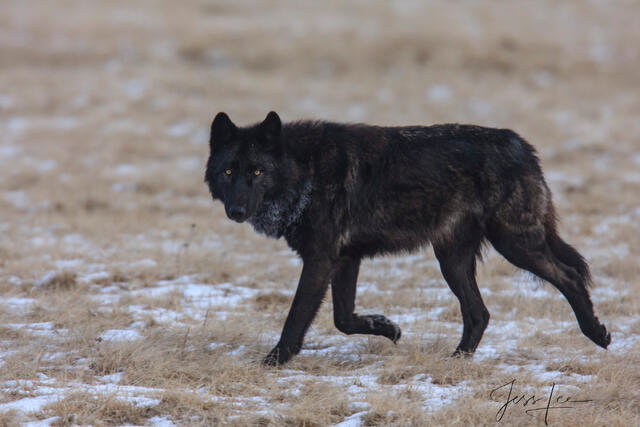
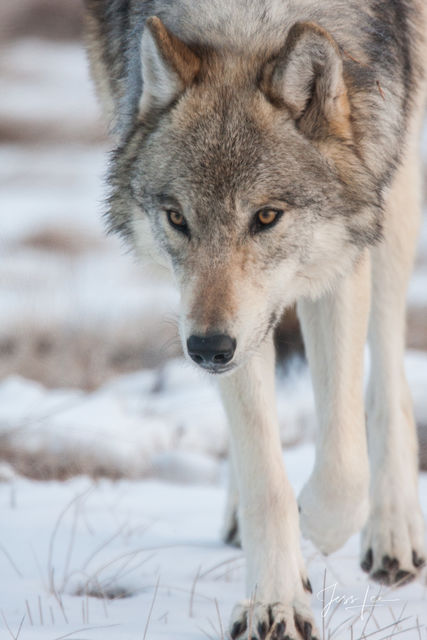
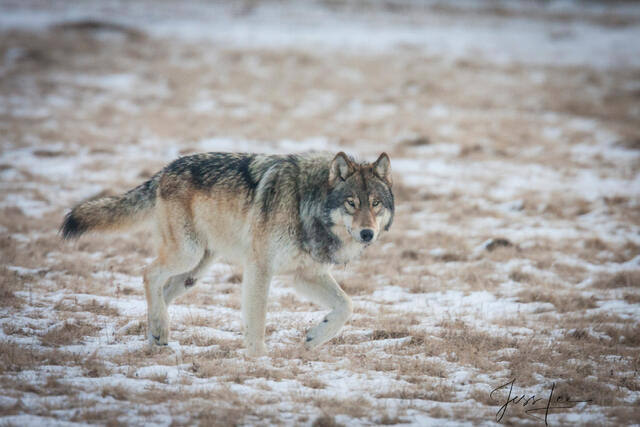
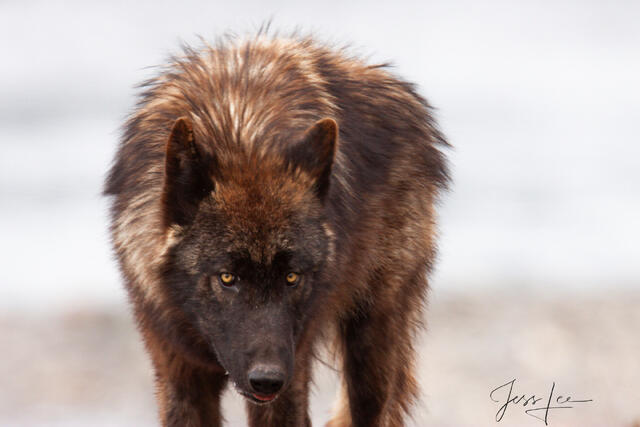
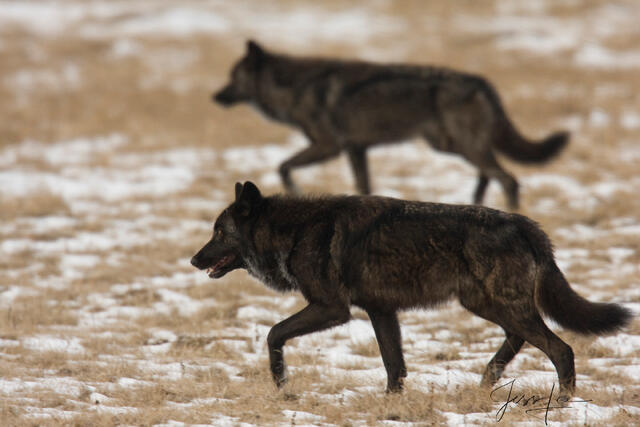
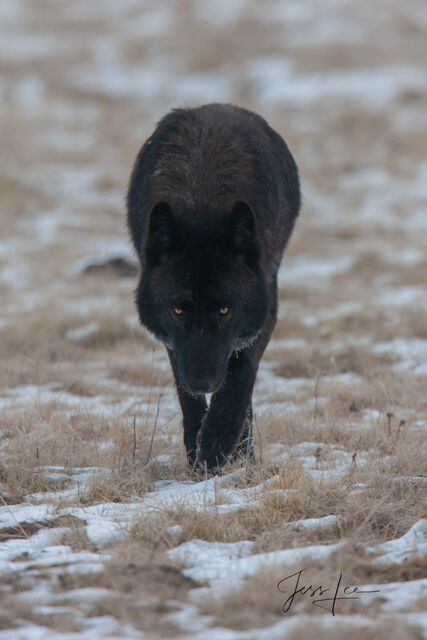
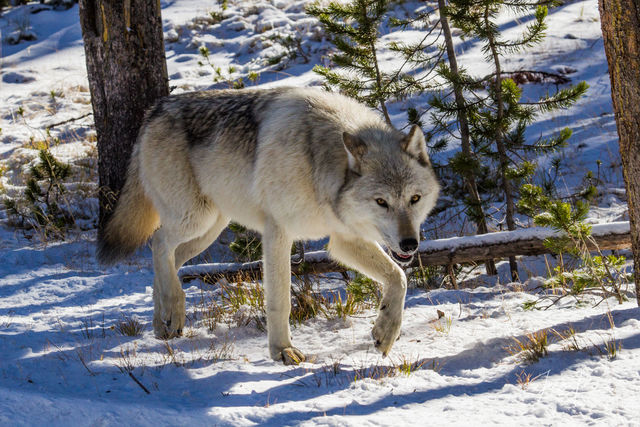
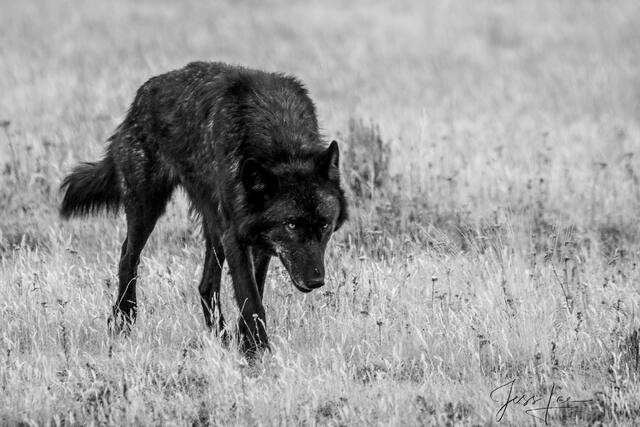
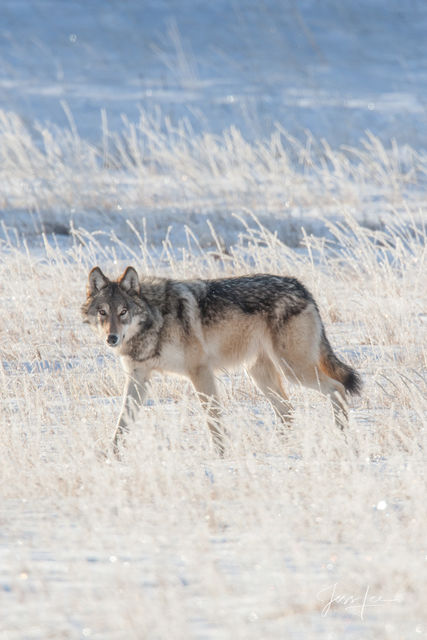
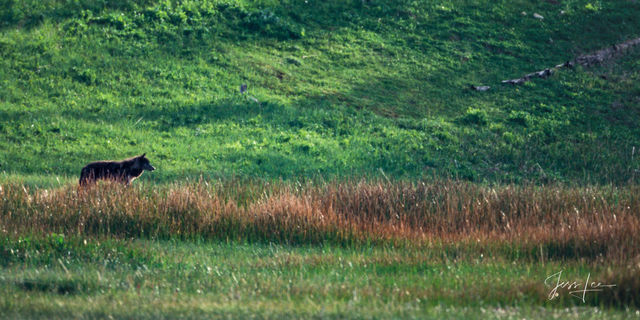
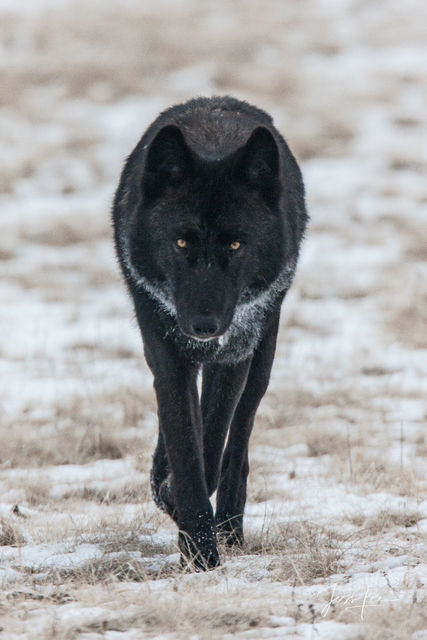
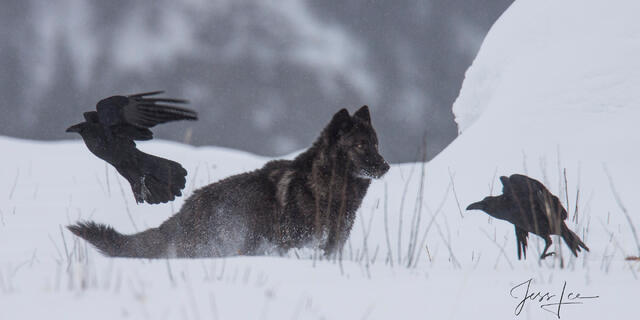
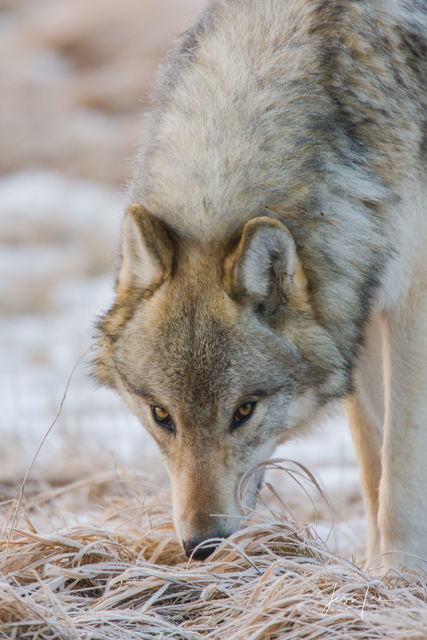
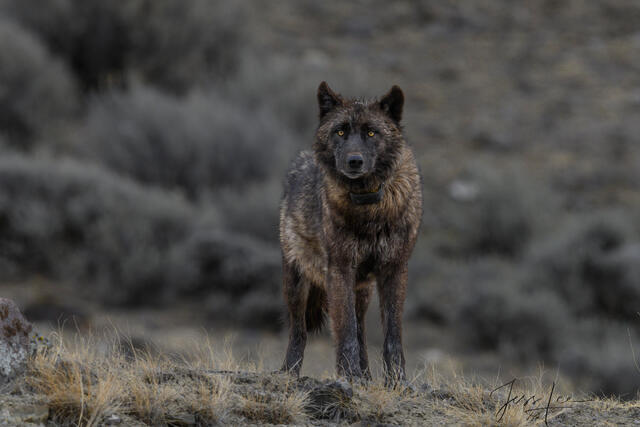
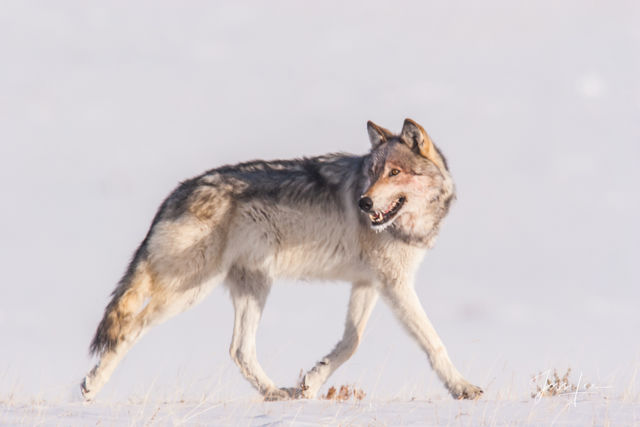
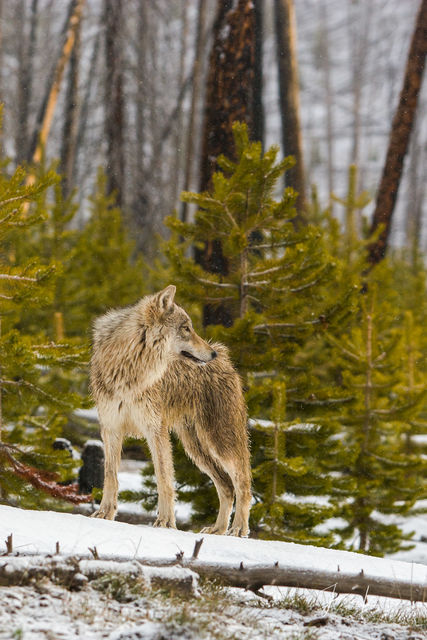
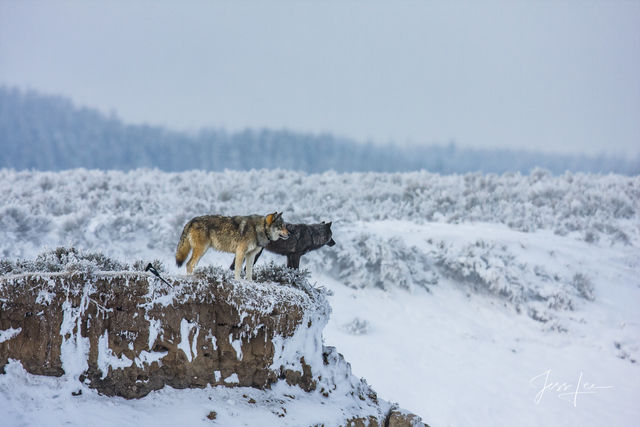
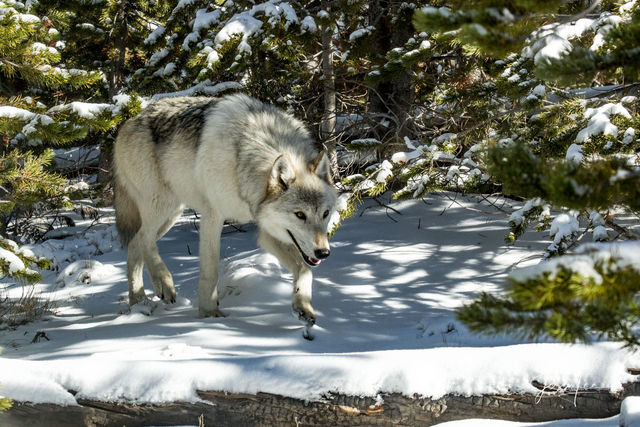
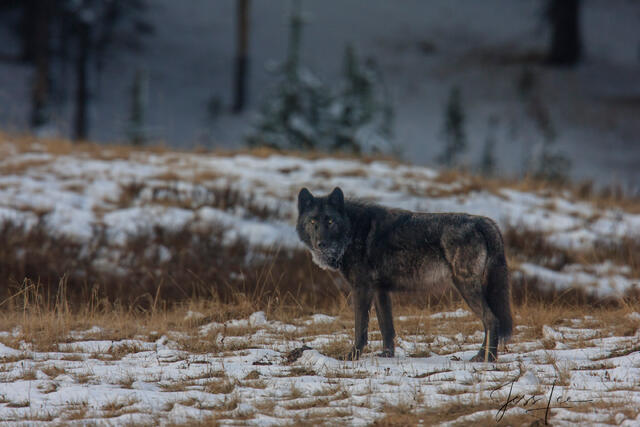
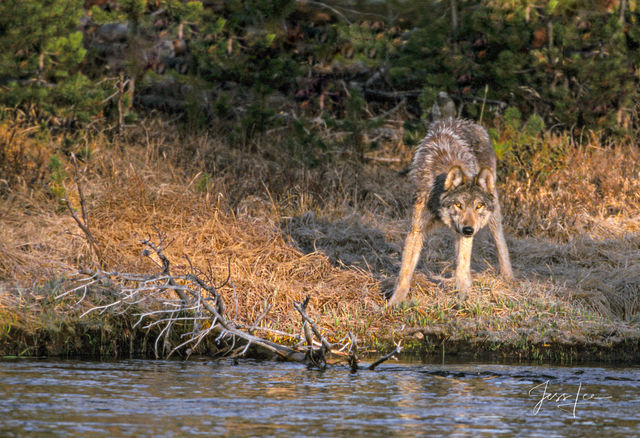
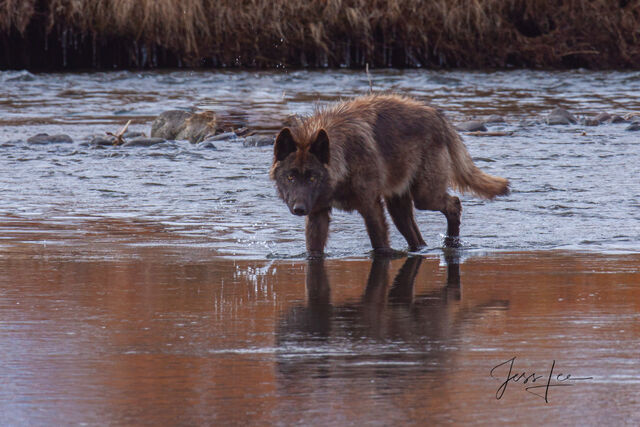
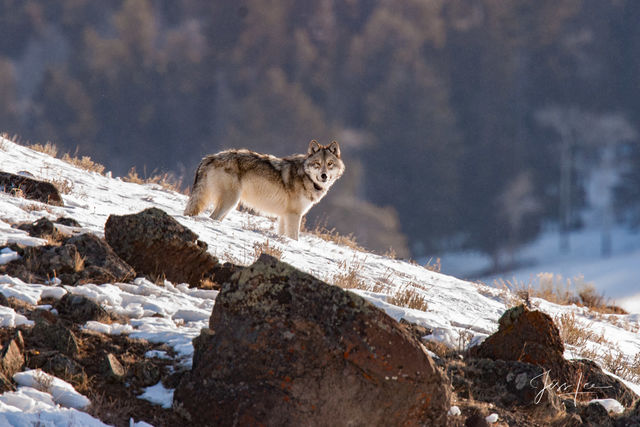
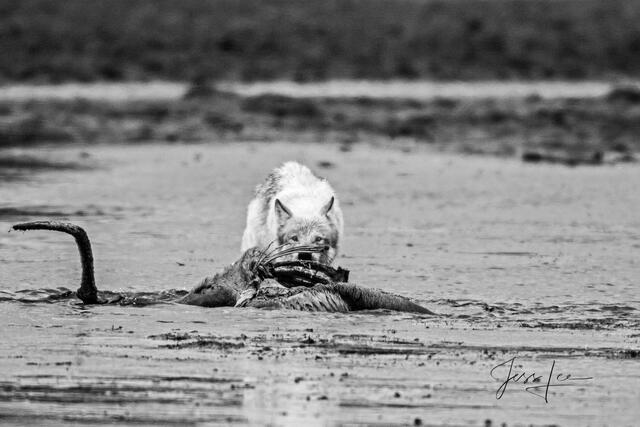
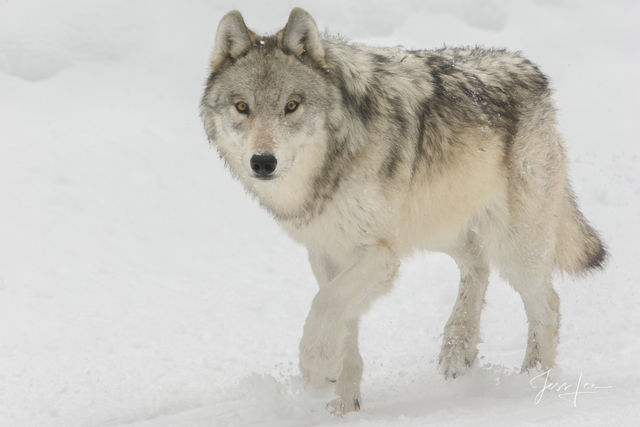
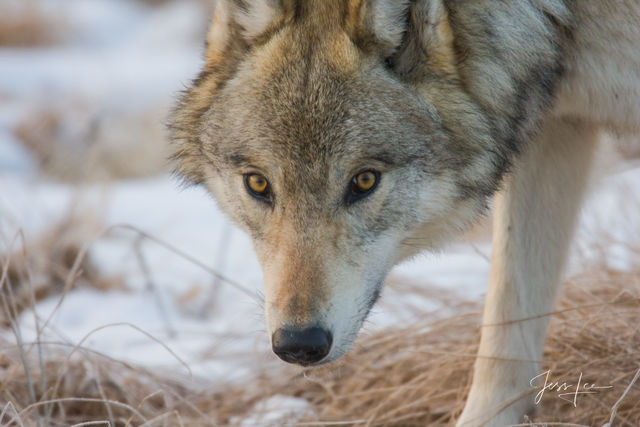
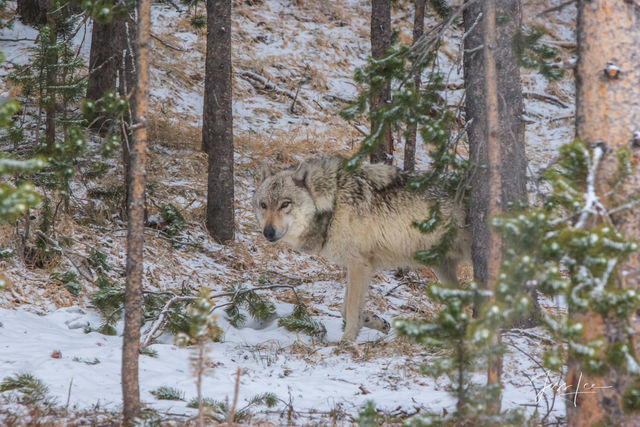
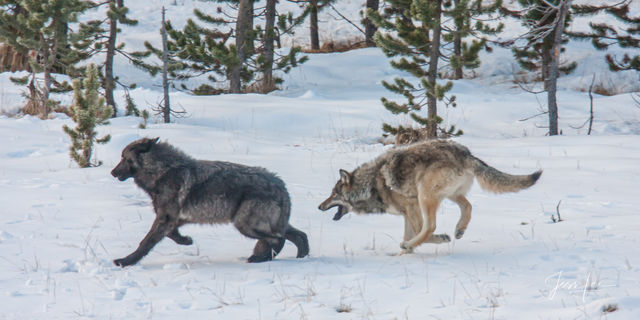
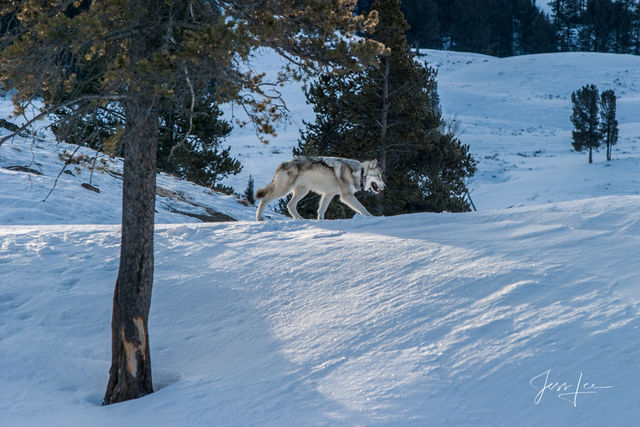
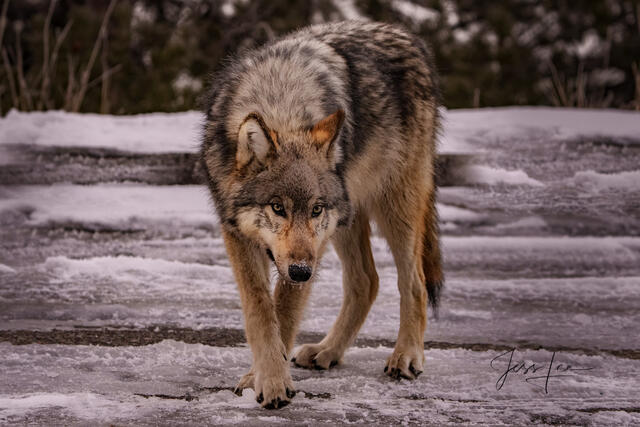
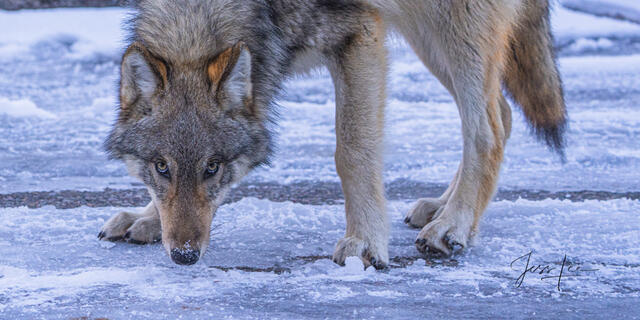
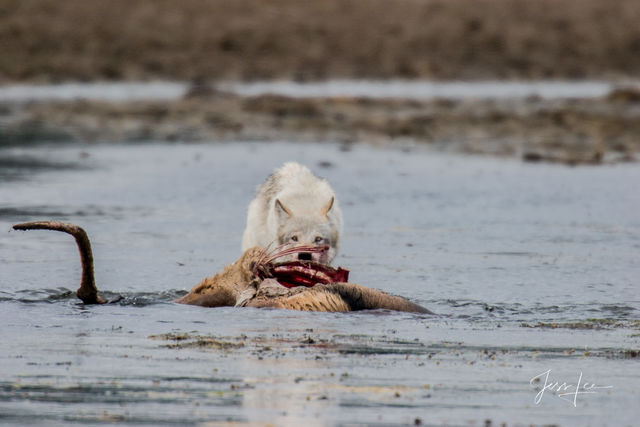
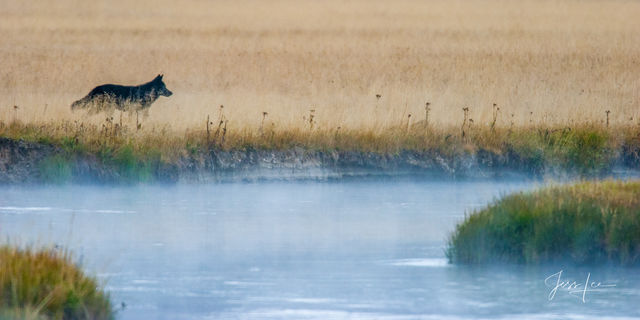
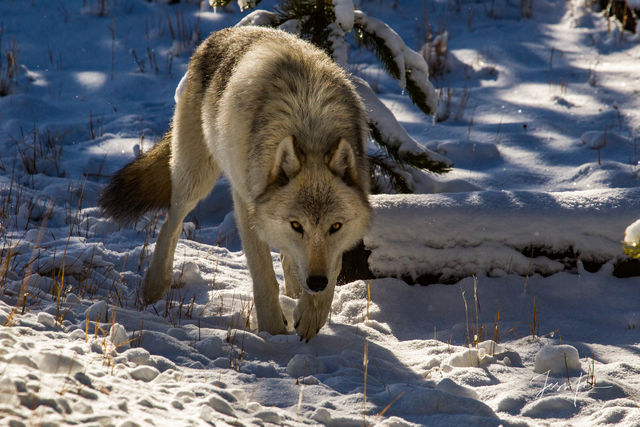
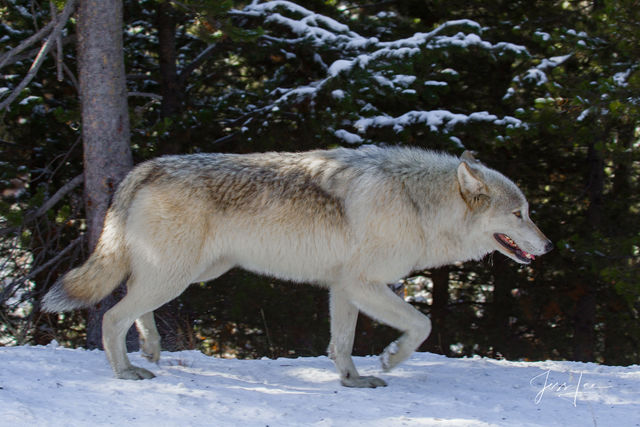
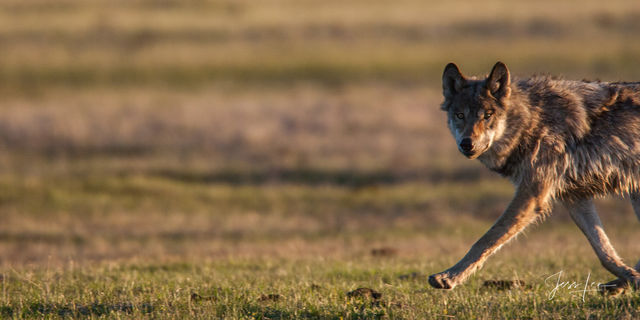
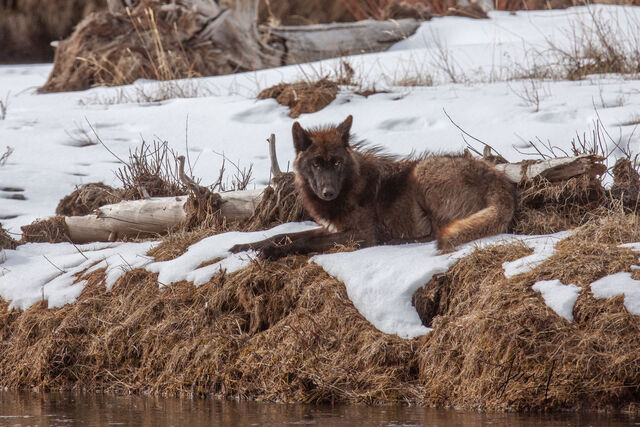
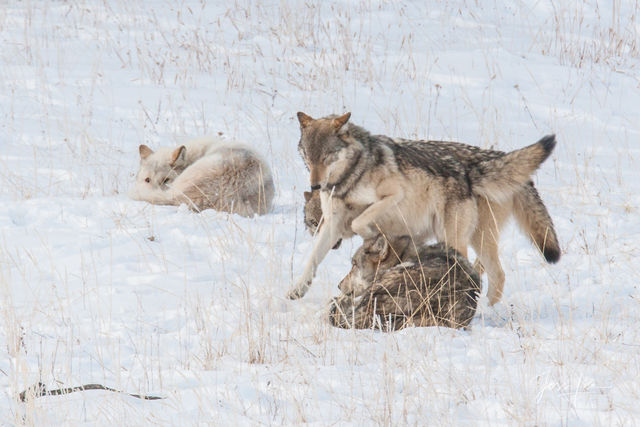
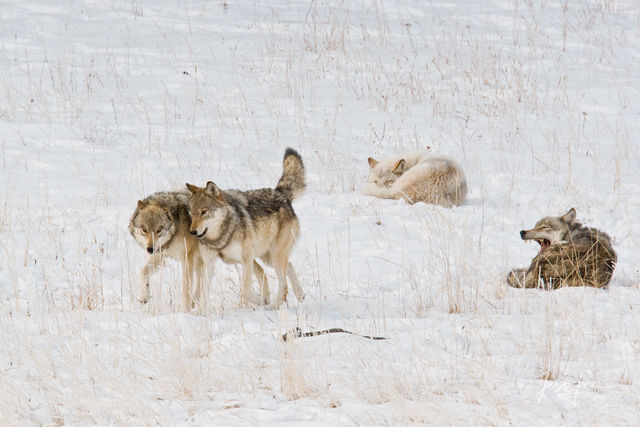
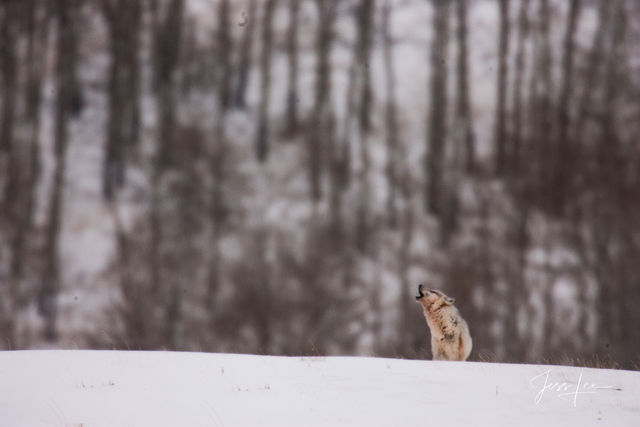
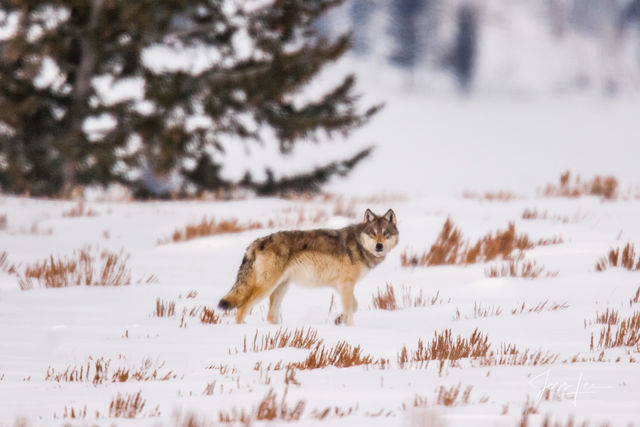
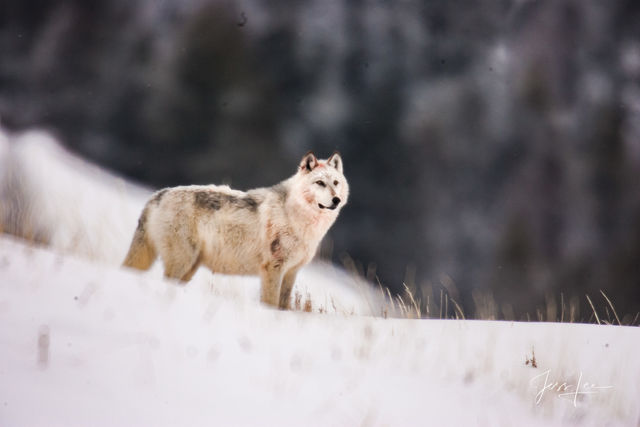
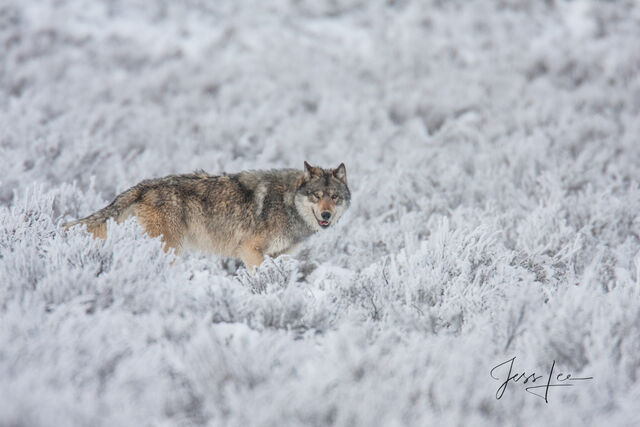
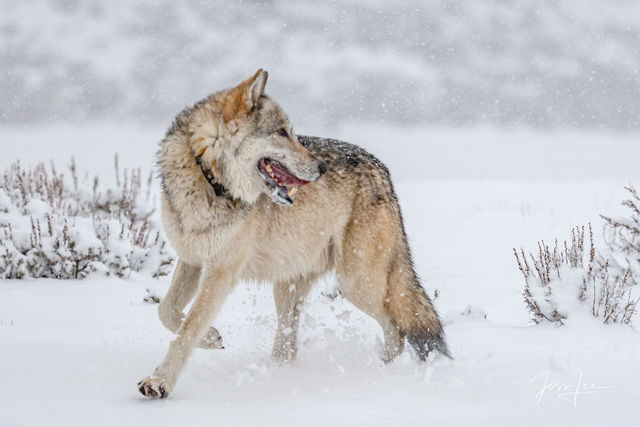
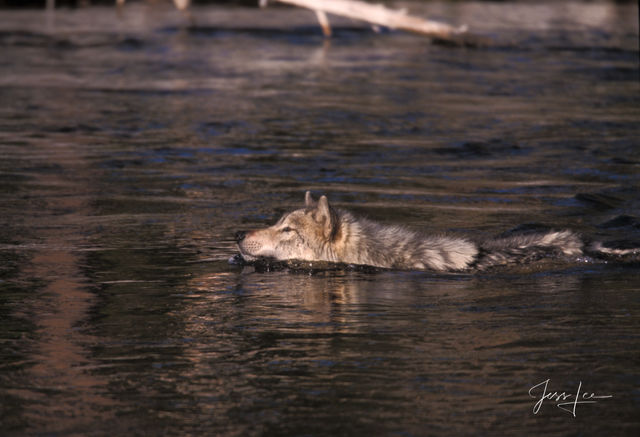
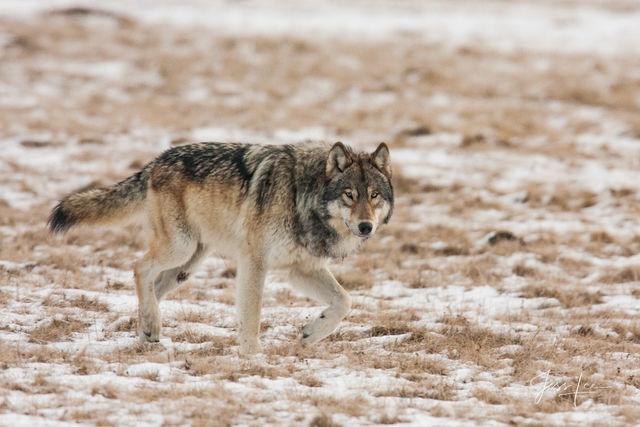
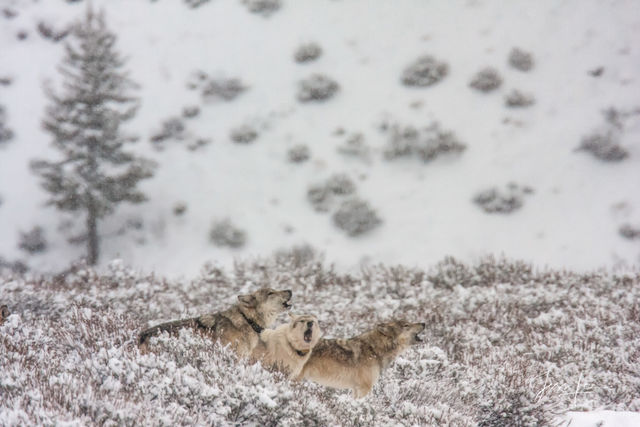
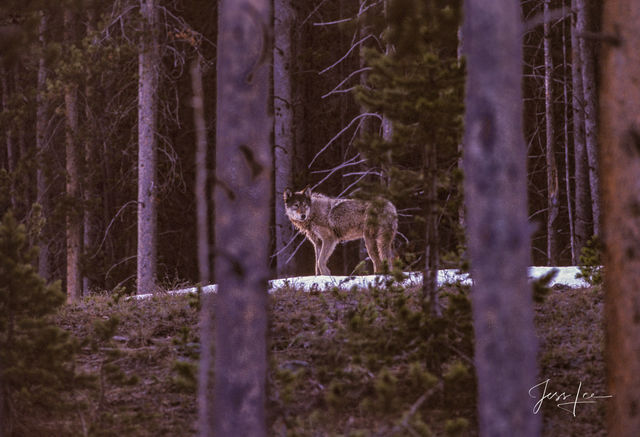
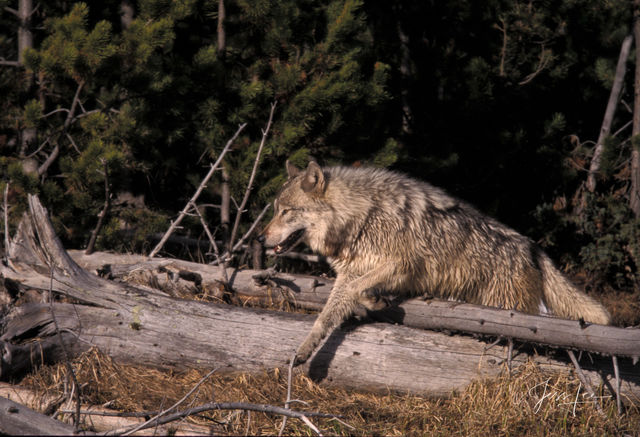
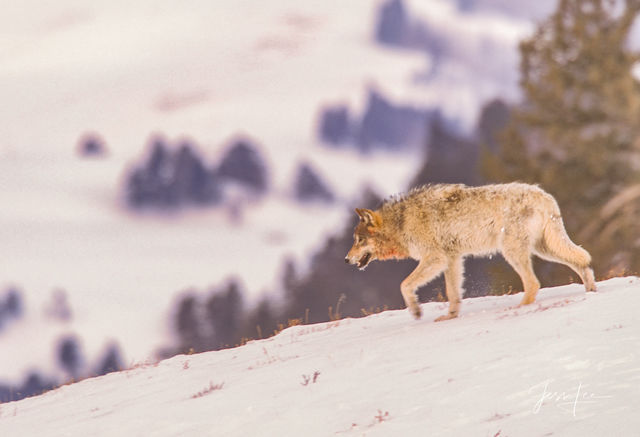
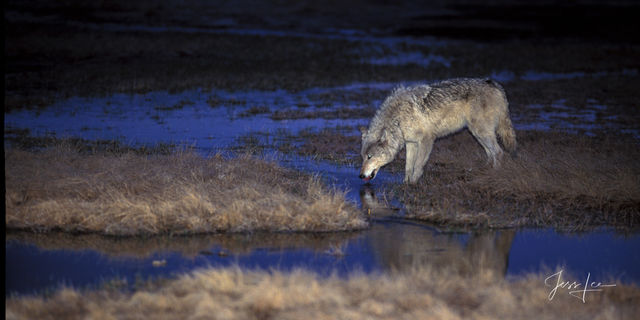
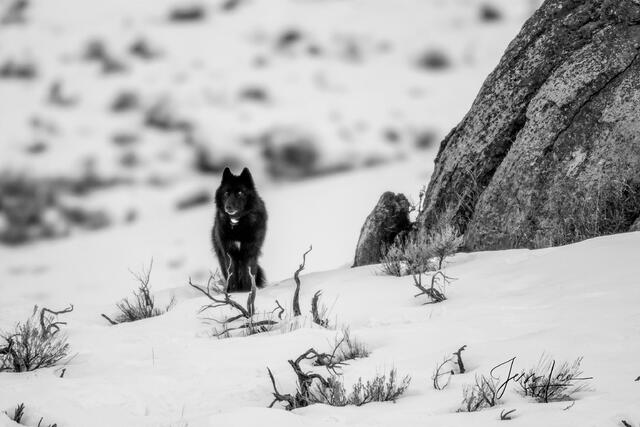
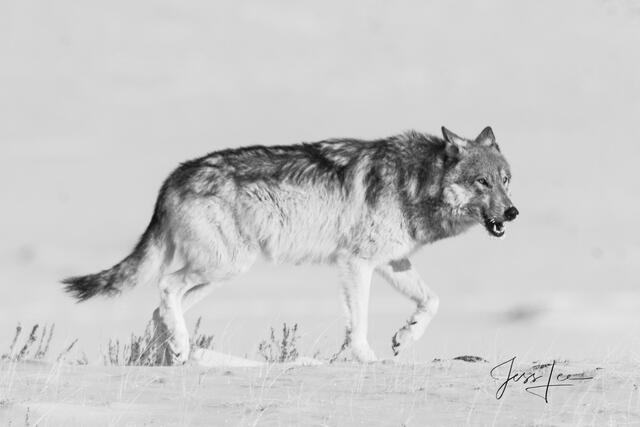
Every wolf in this collection was photographed in the wild, in its own country. No captive settings, no game farms, no facilities of any kind — not now, not ever, not one image. When reintroduction was still being argued over, most of what the public saw of wolves came from animals behind fences, and almost nobody in the business said so out loud.
National Geographic knew that too. When they selected one of my images for a cover, they came back and asked how the wolf could be proven wild — game-farm work was common enough that the desk assumed it by default. I told them to call Bob Landis. He was the only other person out there that day, running cinema while I shot stills, and he has been beside me in Yellowstone for the better part of fifty years. I don't know if they ever made the call. Bob didn't even know the picture was up for a cover. But it was a wild wolf, in conditions I have not seen again.
Working It the Hard Way
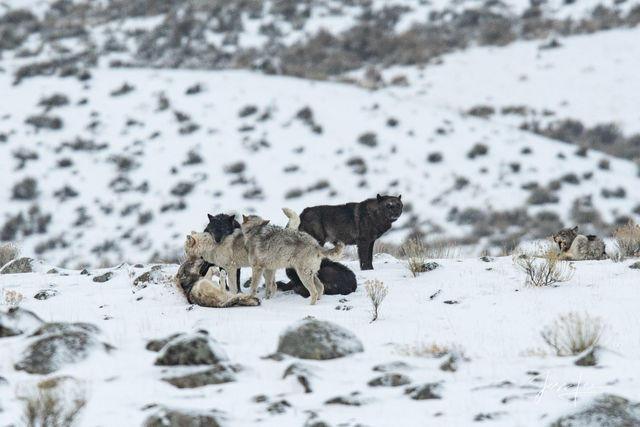
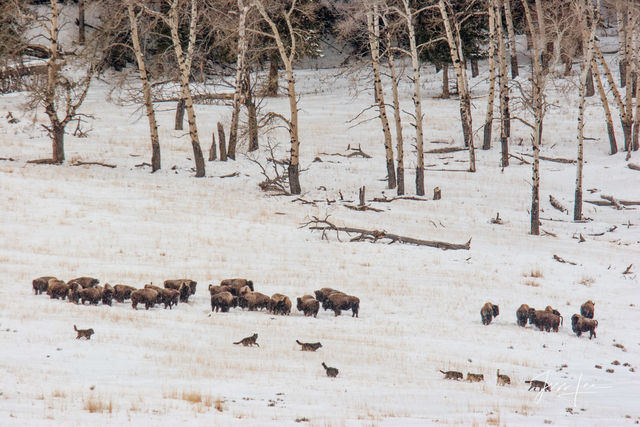
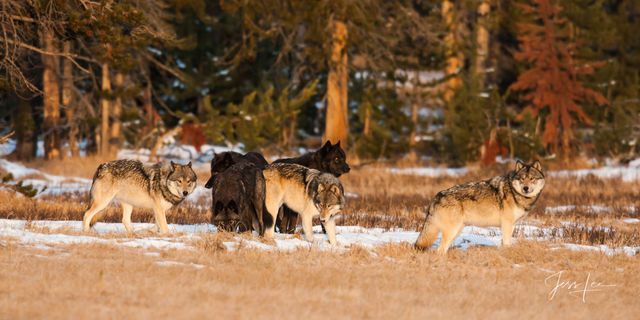
The standard approach was Lamar Valley — set up at distance, in a group, and wait for something to happen far away. I wanted the wolves close enough that you could see something in them, so I went to the places where that was possible instead, and paid for it in time. Two months once without a single frame worth keeping. Then two days with twenty-five wolves.
That patience is also what put me in the middle of the first serious book of entirely wild wolves. James Halfpenny wrote Yellowstone Wolves in the Wild, and the publisher was close to killing the project — there simply wasn't enough genuine wild-wolf material in existence to fill it. I sent in what I had. He wrote back that he could go ahead. Over half the images in the first printing were mine, and the book is still known for a simple fact most wolf books can't claim: not one wolf in it is captive.
Yellowstone and Beyond
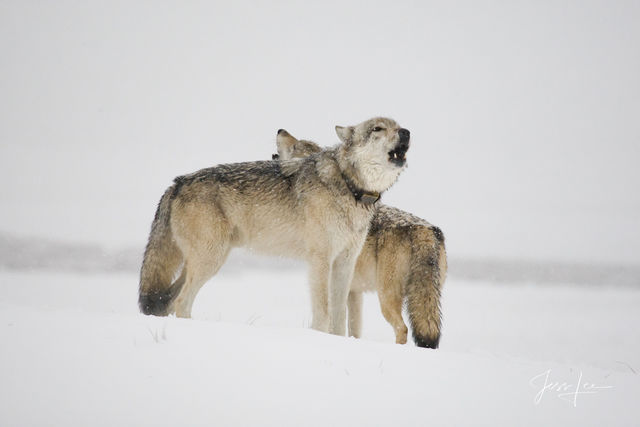
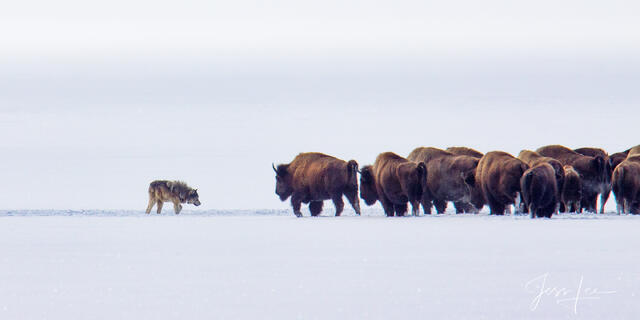
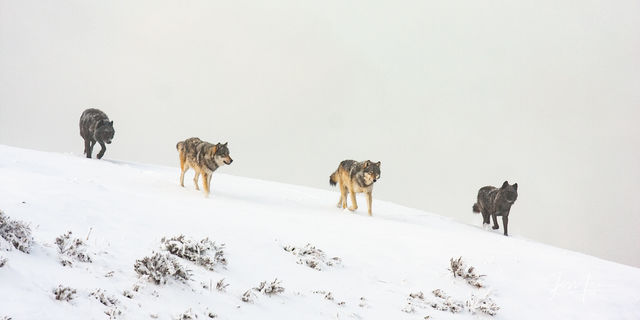
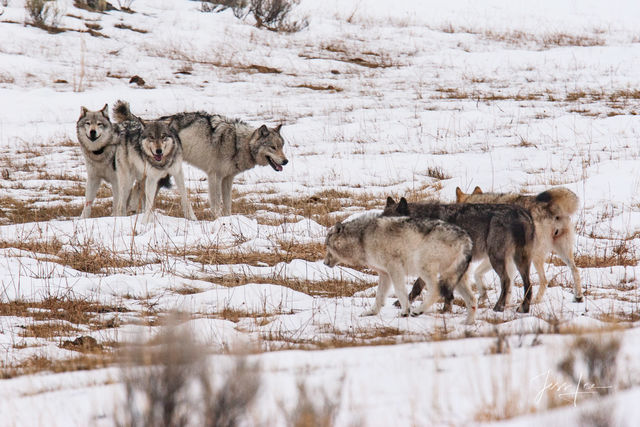
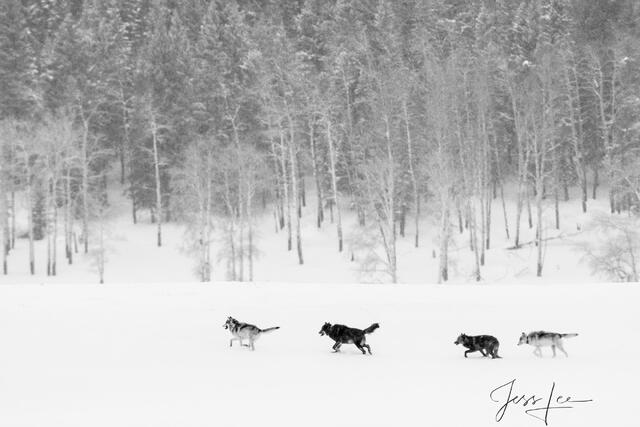
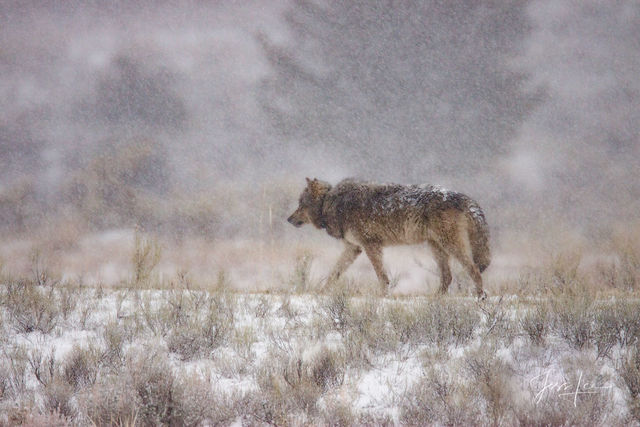
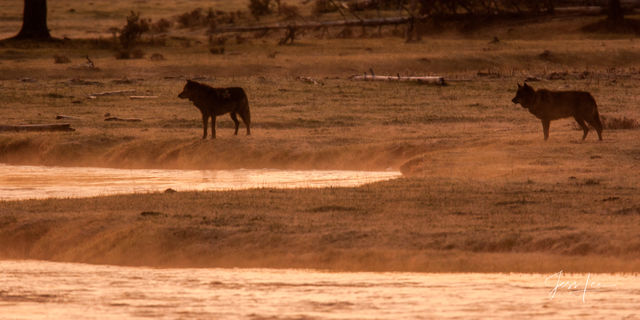
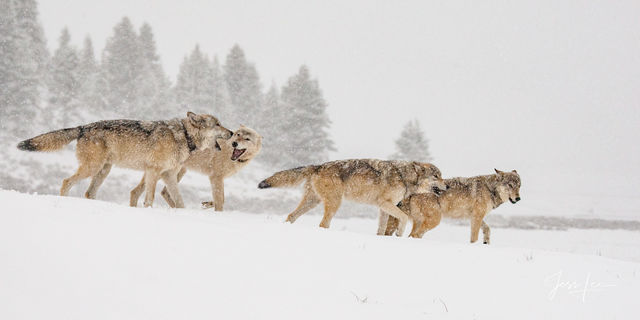
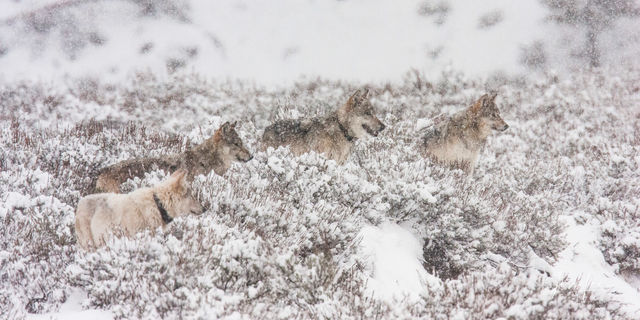
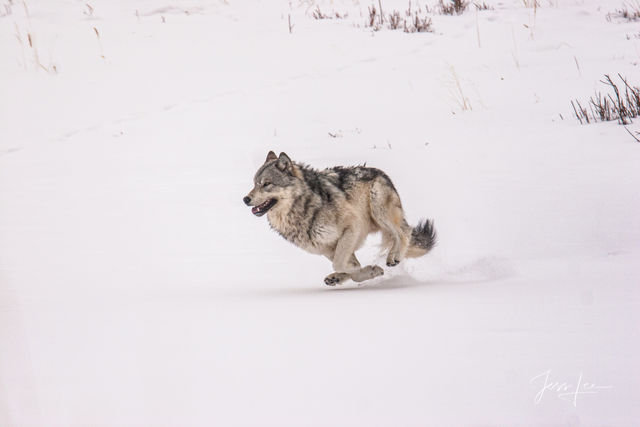
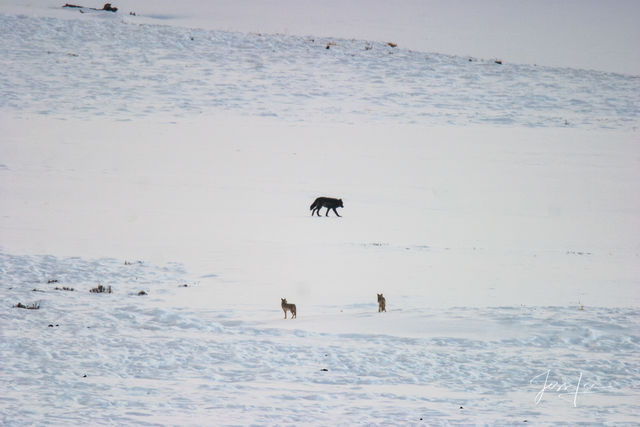
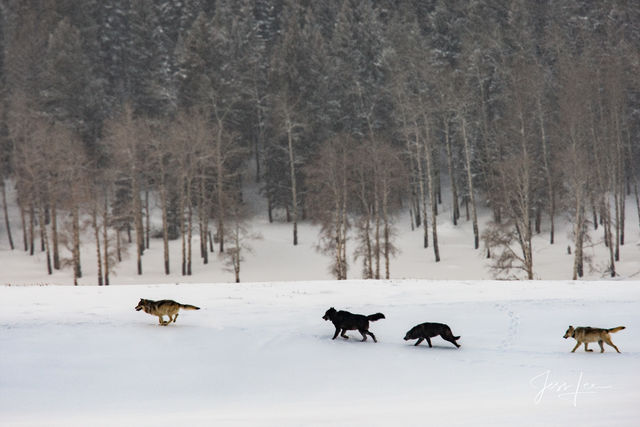
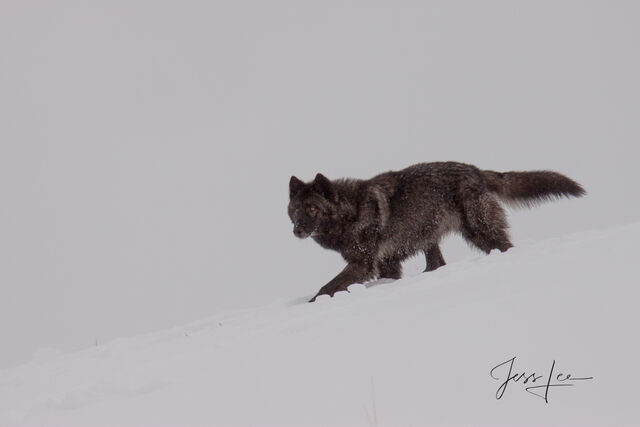
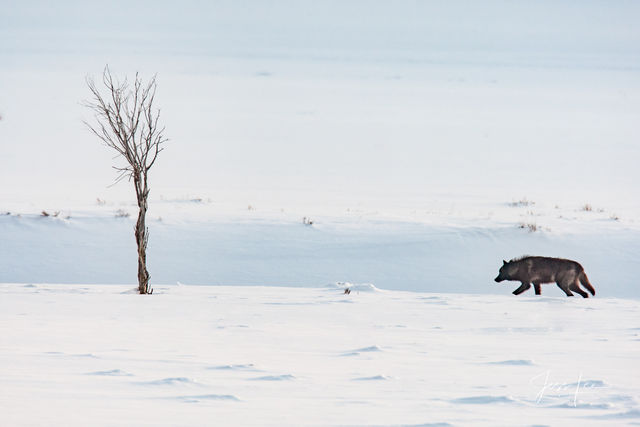
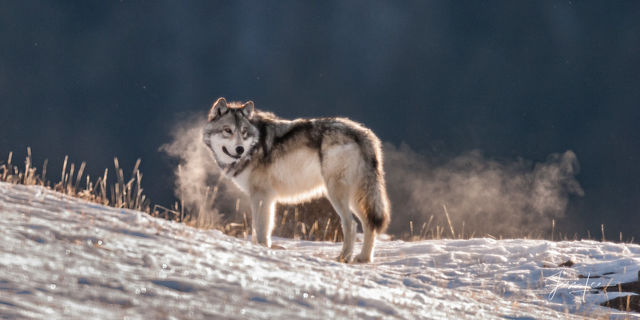
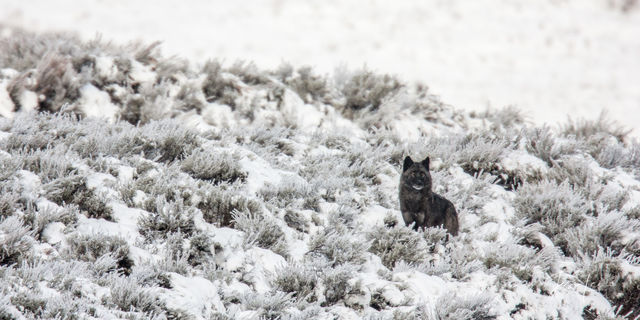
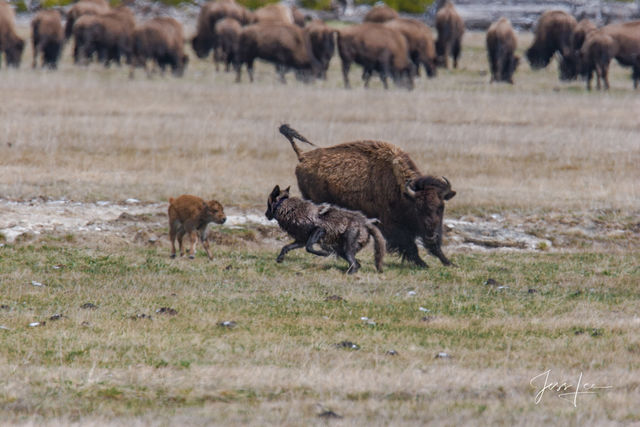
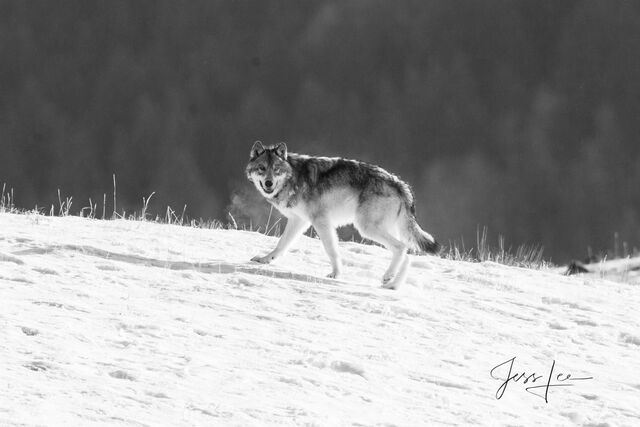
Most of this collection comes from Yellowstone and the Greater Yellowstone Ecosystem, where reintroduction made sustained wild-wolf photography possible for the first time in generations — packs moving through snow in the gray half-light before dawn, the tension of a hunt, the quieter moments of a pack simply being a family. Some of the work extends further north, into the borderlands where wolves cross down from Canada on their own terms, unrelated to any reintroduction program.
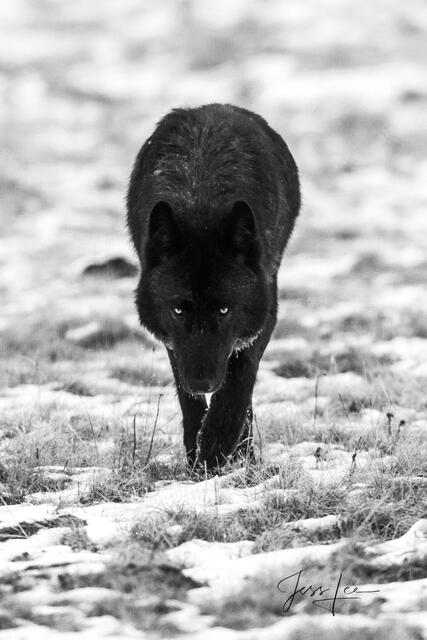
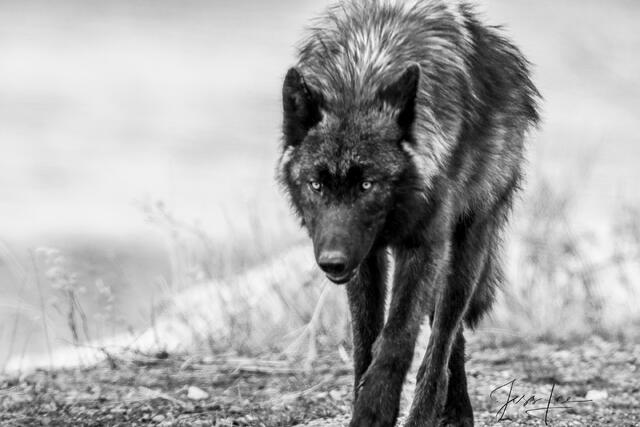
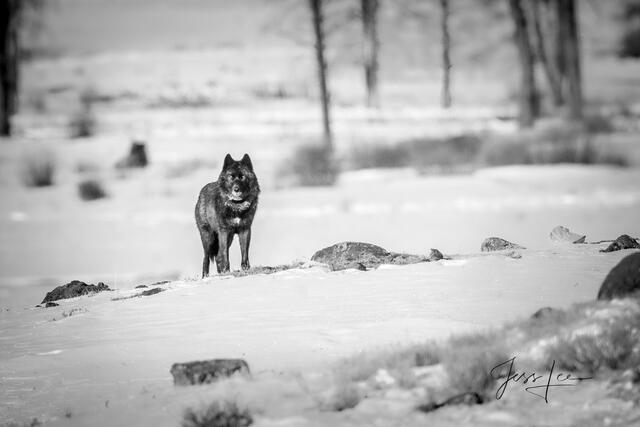
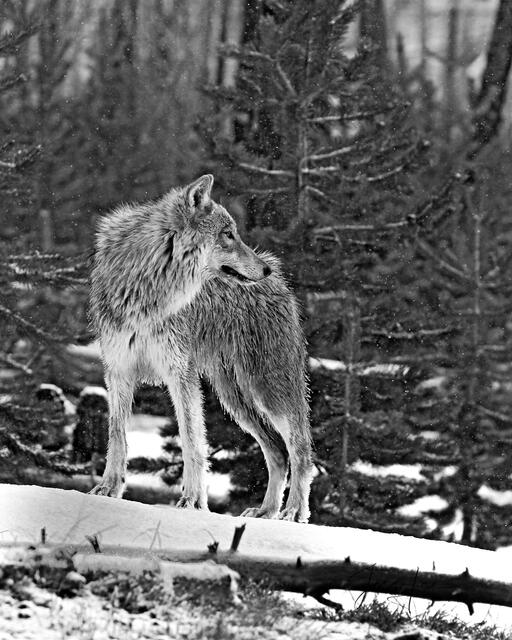
See the broader context of this work in the conservation collection, and the tonal studies of this same material in black and white wolf photography.
Print Formats
Lumachrome HD TruLife Acrylic — a transparency print face-mounted to museum-grade acrylic, producing depth and luminosity that gives a wolf portrait real presence on a wall. The TruLife face carries an anti-reflective coating and significant UV protection, which reduces glare and helps guard against fading in bright rooms. Arrives ready to hang.
Framed Lumachrome HD TruLife Acrylic — the same panel finished in museum-quality Roma Italian wood molding, for interiors where a frame suits the room. Arrives ready to hang.
Chromaluxe Metal — dyes infused directly into aluminum for exceptional contrast and a clean, contemporary presentation. Particularly effective for winter and snow images where deep blacks and clean whites carry the frame. Arrives ready to hang.
Museum-Quality Fine Art Rag Paper — heavyweight cotton rag with archival pigment inks, warm and textured. The traditional choice for the black and white wolf work. Arrives unframed for your own framing specification.
Considered portraits and open landscape wolf images are captured on 100-megapixel medium format systems. Fast action — a pack moving at speed, a hunt in progress — is captured on high-speed 35mm-format systems, chosen for the moment rather than the spec sheet. Each image is offered only at the sizes its own file genuinely supports. Architectural and mural-scale installations are produced through a separate custom process — contact me to discuss a specific wall.
Every print is signed and numbered and accompanied by a Certificate of Authenticity recording the title, date of capture, edition number, size, medium and materials. Everything ships fully insured. If a print does not arrive in perfect condition it is replaced immediately at no cost.
For Interior Designers and Corporate Art Consultants
Wolf photography is among the most requested wildlife subjects for lodge, ranch, and mountain-region interiors, and it carries a gravity in corporate and hospitality spaces that few other animals match. The black and white treatments in particular work across a wide range of design schemes without competing with a room's palette.
Trade pricing, room preview mockups, high-resolution digital proofs, custom sizing, and multi-piece collection pricing are available to verified design professionals. View the full trade services page →
Frequently Asked Questions
Are these wolves photographed in the wild, or at game farms?
In the wild, without exception. No captive settings, no facilities, no staged encounters — not now, not ever. When National Geographic selected one of these images for a cover, they specifically challenged whether the wolf was wild, which was routine practice given how common game-farm photography was at the time. The proof was an eyewitness who had been standing beside me.
Where were these images made?
Primarily Yellowstone National Park and the Greater Yellowstone Ecosystem, with some work from the borderlands where wolves cross down from Canada independent of any reintroduction program.
What makes this wolf collection different?
These images come from working close and working patiently rather than from a distance in a group — sometimes months between usable frames. That same body of work contributed more than half the images to the first printing of Yellowstone Wolves in the Wild, one of the earliest books built entirely from wild wolves.
Are these prints limited edition?
Yes. Edition sizes vary by image and reflect how repeatable the subject is — a specific wolf in a specific moment cannot be photographed again. Every image page states its own edition, and that number is fixed permanently the day it is published.
What sizes are available?
From 16×20 inches up to the largest size each material allows. Custom sizing is available, and architectural or mural-scale installations are produced through a separate custom process — contact me with your wall dimensions.
Can I see how a print will look in my space?
Yes — send a photograph of your wall and the image you're considering, and I will send back a scaled mockup showing it in your actual room. Free, no obligation. Request a room preview →
Do you offer trade pricing?
Yes — trade pricing, room mockups, high-resolution digital proofs, custom sizing and multi-piece collection pricing for verified design professionals. Trade services →
How long does production take?
Allow 4–6 weeks from order to delivery. Custom orders and the holiday season may run longer. Rush production is available at a 20–30% premium — contact me if you have a date to meet.
Can I see prints in person before purchasing?
I work from my Island Park, Idaho studio and my Washington State studio. A private gallery by appointment is planned — contact me for current availability. Virtual consultations by email or video call are available now.
Related Collections: Wildlife Photography · Black & White Wolves · Bear Photography · Yellowstone Photography · Conservation · Free Room Preview · For Designers & Trade