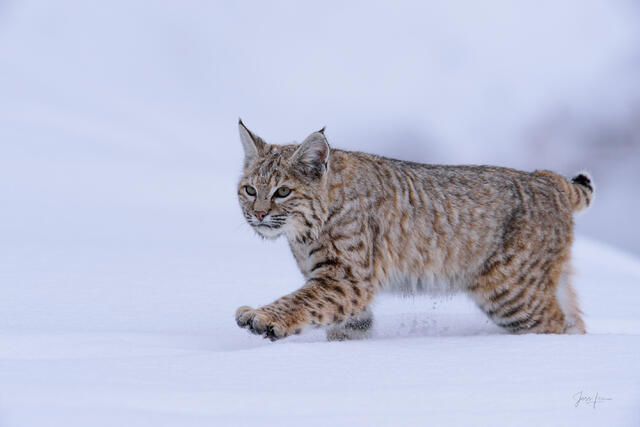
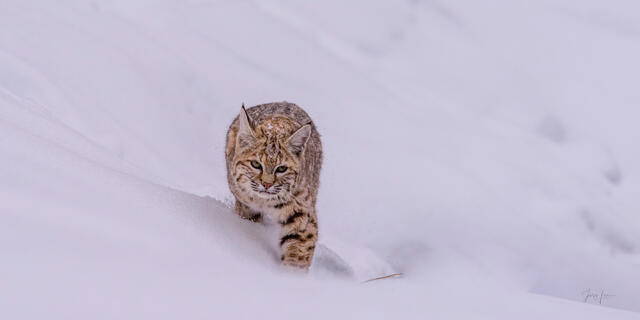
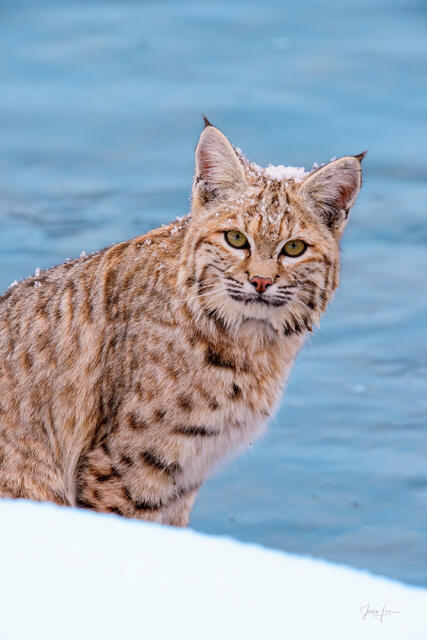
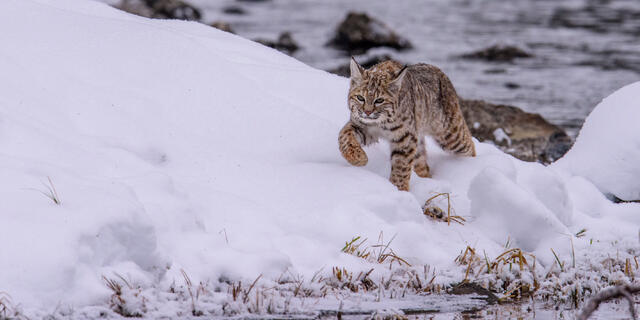
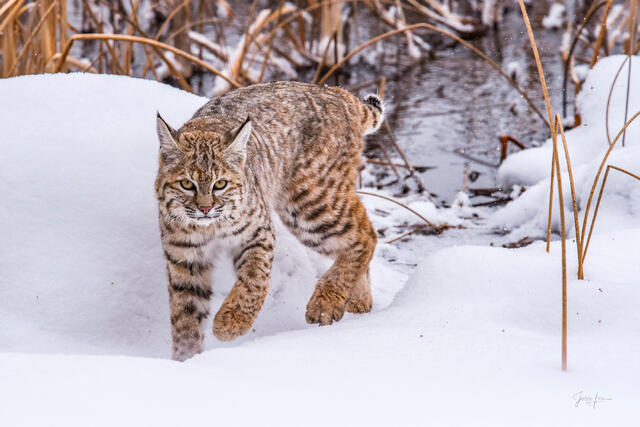
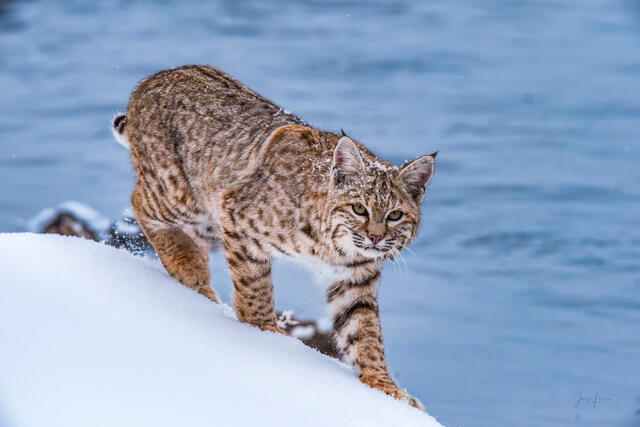
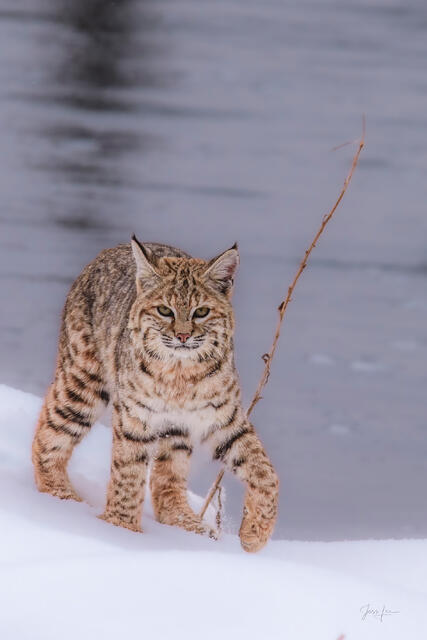
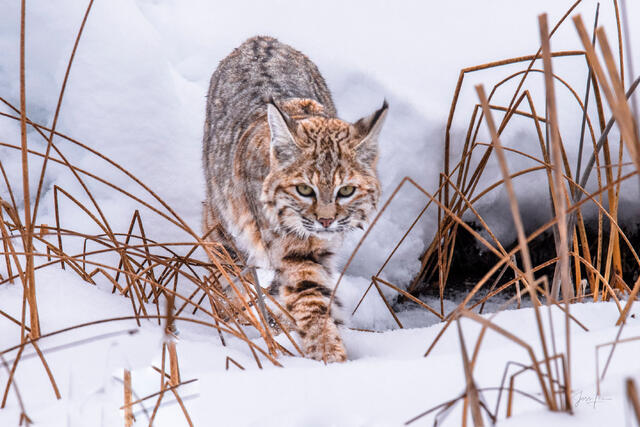
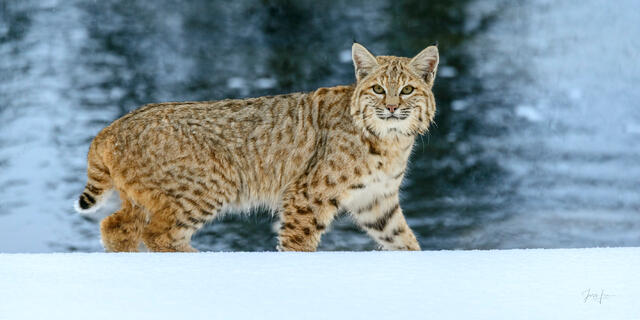
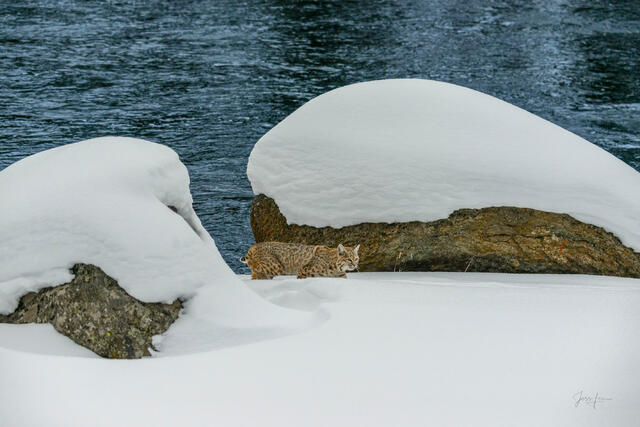
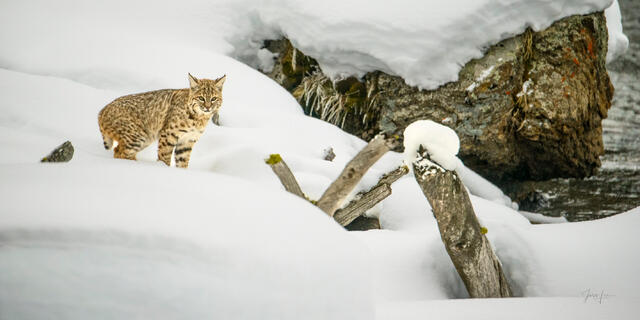
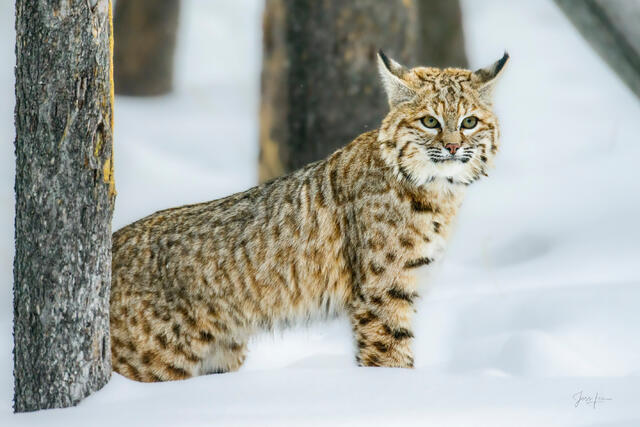
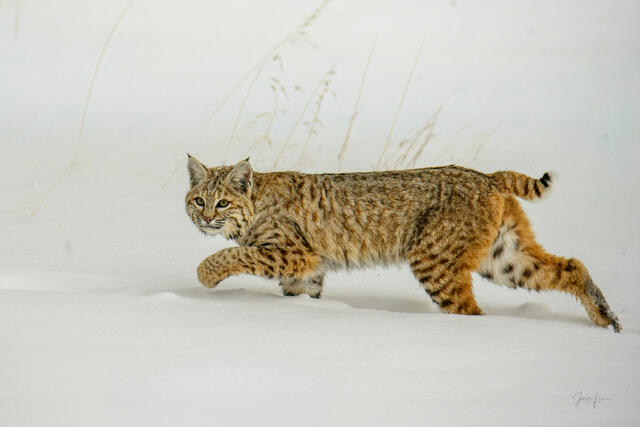
The North American bobcat (Lynx rufus) is one of the most elusive predators on the continent — and one of the most difficult wildlife photography subjects in the American West. Solitary, cryptic, and largely crepuscular, bobcats are rarely seen and even more rarely photographed well. That is precisely what makes this gallery extraordinary.
Every bobcat photograph in this collection was captured by National Geographic contributing photographer Jess Lee inside Yellowstone National Park, along two of the park's most iconic winter wildlife corridors: the Madison River and the Firehole River. The images were made in January — the heart of the Yellowstone winter — when temperatures regularly drop to -40°F and most photographers have long since retreated indoors. Jess Lee was not among them.
A Photographer's Obsession with the Most Elusive Cat in Yellowstone
Jess Lee has spent more than 50 years photographing the American West, Alaska, and wild places on five continents. His work has been featured on National Geographic covers, in Ken Burns' Emmy Award-winning PBS series, and exhibited at the Annenberg Space for Photography in Los Angeles. As a holder of NPS and BLM Authorized Permittee status, Jess has legal access to Yellowstone's wildlands in conditions that are closed to the general public — an authorization that directly produces images no other photographer is positioned to make.
The bobcat work in this gallery is the product of weeks spent in extreme cold, walking the riverbanks of the Madison and Firehole Rivers in pre-dawn darkness, waiting, watching, and earning the trust of one of nature's most wary predators. At temperatures reaching -40°F, camera gear fails, fingers lose feeling, and the instinct to leave is overwhelming. The images in this gallery are the result of refusing that instinct.
The Madison River and Firehole River: Why These Two Corridors Produce the World's Best Bobcat Photography
Yellowstone's Madison River corridor is one of the few places in North America where bobcats are reliably — if rarely — encountered in winter. The river remains partially open through the coldest months, supporting ducks, otters, and small mammals that bobcats depend on for winter prey. The Firehole River, fed by geothermal activity throughout the park, maintains a vivid turquoise color even in the depths of January, creating one of the most visually dramatic backdrops in wildlife photography. Several images in this gallery capture bobcats along the Firehole's geothermally-warmed banks — images that exist nowhere else in the world of fine art wildlife photography.
Why January Is the Best Time to Make Images Like These
Unlike mountain lions or wolves, bobcats in Yellowstone do not benefit from a large following of spotters or radio-collar tracking. Finding them in winter is a matter of fieldcraft, patience, and deep knowledge of the landscape. January is the optimal month for bobcat photography in Yellowstone for three reasons: the snow cover is deep enough to create clean, graphic compositions; the deciduous riverside vegetation has dropped, opening sight lines along the riverbanks; and the cold concentrates bobcat activity along the open water corridors where prey is most accessible. These conditions combine to create a narrow window — a few weeks each year — when images like those in this gallery are possible.
What Makes These Prints Different from Any Other Bobcat Photography Available
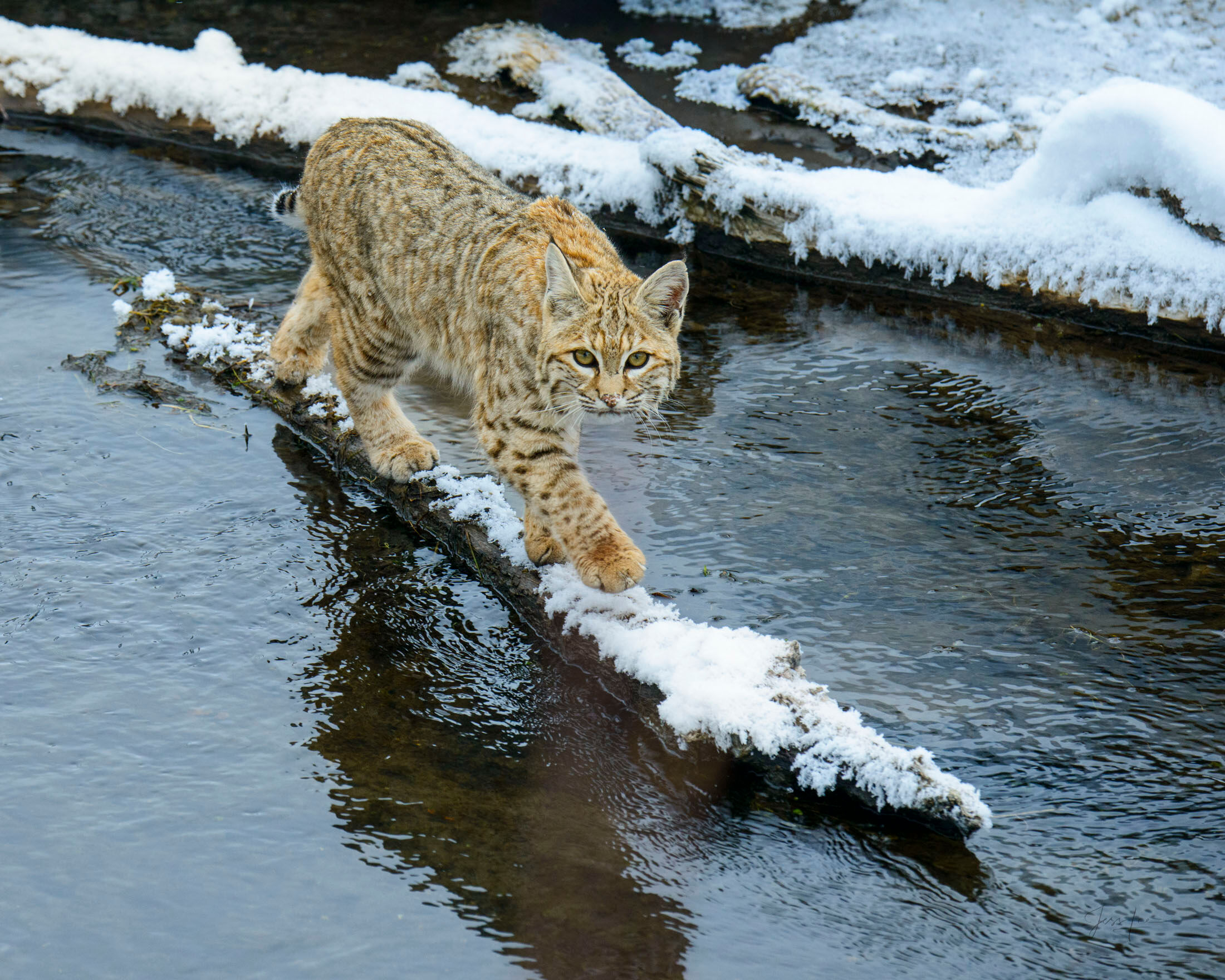
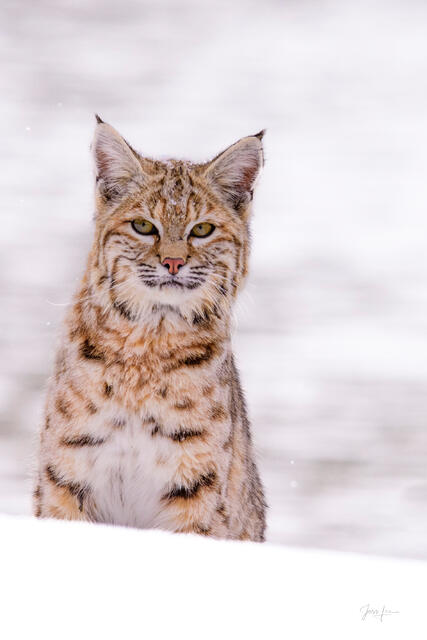
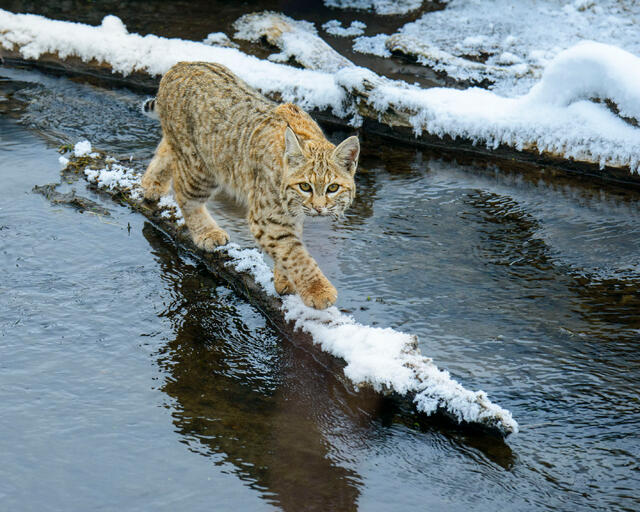
This gallery is not stock photography. These are not images made from a roadside pullout or a tour vehicle. They are the result of 50 years of experience, NPS authorization, extreme personal commitment, and an intimate knowledge of Yellowstone's winter ecology. Among the 15 images in this collection are two that have become defining works in Jess Lee's career: River Dancer — a bobcat stepping across the open Madison River — and Yellowstone Sentinel, a portrait of a bobcat standing watch in the riverside reeds. Neither image has a parallel in any other wildlife photography collection.
Every print is offered as a strictly limited edition — a maximum of 50 prints per image — in three museum-quality formats: Lumachrome HD TruLife Acrylic (from $495), Chromaluxe Metal (from $395), and Hahnemühle Fine Art Paper (from $295). Each print ships directly from the artist, fully certified, with documentation of edition number and provenance. These are collector-grade prints for serious collectors, interior designers, and anyone who understands the difference between a wildlife photograph and a wildlife photograph made under extraordinary conditions.
FAQ
Q: Who took these bobcat photographs?
A: These bobcat photographs were taken by Jess Lee, a National Geographic contributing photographer with 50 years of professional experience. Jess is an NPS and BLM Authorized Permittee and has photographed Yellowstone's wildlife for over 30 years. His work has been featured in Ken Burns' Emmy Award-winning PBS series and exhibited at the Annenberg Space for Photography.
Q: Where were these bobcat photos taken?
A: Every bobcat photograph in this gallery was taken inside Yellowstone National Park, along the Madison River and Firehole River corridors in the park's interior. These two rivers are among the most productive winter wildlife habitats in the Greater Yellowstone Ecosystem.
Q: When were these bobcat photographs taken?
A: These images were photographed in January — the heart of the Yellowstone winter — when temperatures along the Madison and Firehole Rivers can reach -40°F. January is the optimal month for bobcat photography in Yellowstone because deep snow, open water, and reduced visitor traffic concentrate bobcat activity along the riverbanks.
Q: How rare is it to photograph a bobcat in Yellowstone?
A: Extremely rare. Bobcats are solitary, largely crepuscular, and highly cryptic predators. Unlike wolves or bears, they are not radio-collared or tracked by park staff, and no network of spotters monitors their movements. Photographing them well — at close range, in clean winter light — typically requires weeks of fieldwork and deep knowledge of specific winter corridors. Most Yellowstone visitors never see a bobcat at all.
Q: Are these bobcat prints limited edition?
A: Yes. Every bobcat print in this gallery is strictly limited to 150 editions per image. Each print is numbered, signed, and certified by Jess Lee, and ships with full provenance documentation. Once an edition sells out, it is retired permanently.
Q: What print formats are available for these bobcat photographs?
A: Bobcat fine art prints are available in three museum-quality formats: Lumachrome HD TruLife Acrylic (from $495), Chromaluxe Metal (from $395), and Hahnemühle Fine Art Paper (from $295). All formats are produced to archival standards and are suitable for permanent collection.
Q: What is the best bobcat photography location in the United States?
A: Yellowstone National Park's Madison River and Firehole River corridors in winter are widely regarded as the premier bobcat photography locations in North America. The combination of open water, snow cover, and reduced human presence in January creates conditions that concentrate bobcat activity and allow for close, sustained observation — the specific conditions that produced the images in this gallery.
Q: How do Jess Lee's bobcat prints compare to those of other wildlife photographers?
A: Jess Lee's Yellowstone bobcat collection is distinguished by its depth, specificity, and field conditions. Images such as River Dancer — a bobcat crossing the open Madison River — and Yellowstone Sentinel have no equivalents in any other wildlife photography collection. The combination of NPS Authorized Permittee access, 50 years of fieldcraft, and willingness to work at -40°F produces images that cannot be replicated by photographers without the same credentials, experience, and commitment.
For more information about photographing Bobcats, visit the winter wildlife photography workshops. For Wild Cat Photography, Yellowstone- Grand Teton Wildlife Photography