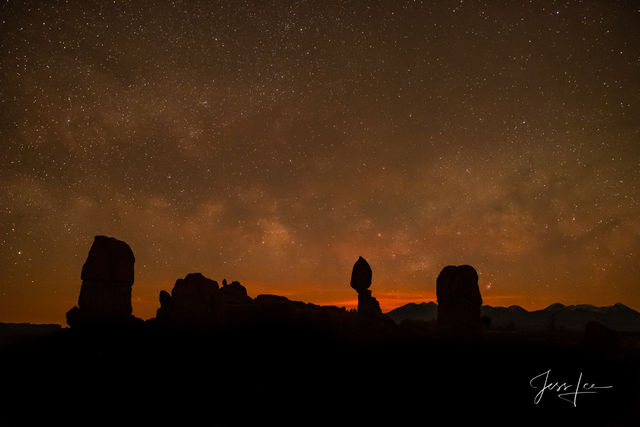
About the Artist: Three Decades of Celestial Excellence
Through the window of his lens, Jess Lee brings a unique perspective to the world's most special places, capturing the fleeting beauty of the natural world to memorialize rare moments and creatures. His commitment to night photography extends far beyond simply pointing a camera at the sky; it is a discipline forged over 40 years as a professional photographer and 30 years specifically documenting the wonders of the night.
A Legacy of Authority
Jess has been a contributor to hundreds of global publications, with his masterful work gracing the covers of National Geographic and National Geographic Books. His exclusive fine art prints are held in private and corporate collections worldwide—from the halls of the US Congress to prestigious healthcare facilities and private estates.
His deep understanding of the scientific interplay between solar activity, geomagnetic indices, and celestial mechanics allows him to be in the right place at the precise moment when Earth and the cosmos align. This technical mastery, combined with a National Geographic-standard for authenticity, ensures that every print is a true representation of the universe's grandeur.
Art with a Mission
For Jess, the wonder of wild places is something to be held sacred. Whether he is waiting out a -60°F storm in the Brooks Range for the perfect Aurora or tracking the Galactic Core across the desert Southwest, his goal is to create more than just a "pretty picture." Every limited-edition print serves as a time capsule—a testament to the importance of preserving our dark skies and wild ecosystems for future generations
Museum-Quality Prints: Acrylic, Metal, and Fine Art Paper
Superior Print Quality for Night Sky Photograph
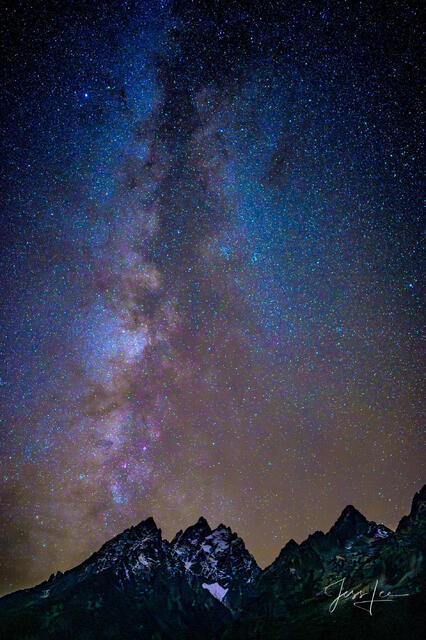
Night sky photography demands exceptional print quality to accurately reproduce phenomena spanning the full range from subtle to spectacular. Aurora colors must be rendered with both scientific accuracy and artistic impact—the greens from oxygen at different altitudes, the purples and blues from nitrogen, the reds from high-altitude oxygen emissions. The Milky Way's subtle color gradations—the deep purples and blues of the galactic core, the golden light of airglow, the crisp definition of individual stars—require printing technology capable of preserving the full tonal complexity of dark skies.
My printing workflow is specifically calibrated for night sky photography. I work with premium print labs using the latest wide-gamut printing technology capable of reproducing the full range of both auroral colors and Milky Way details. The aurora's natural luminosity—that quality of appearing to glow from within—is preserved through careful media selection. The dynamic range required for Milky Way photography—maintaining detail in both the bright galactic core and faint outer spiral arms—is achieved through advanced processing and printing techniques.
Metal and acrylic prints particularly excel at rendering night sky displays, as these media naturally enhance luminosity and color saturation while providing exceptional contrast between dark skies and brilliant celestial features. Every print includes meticulous color management ensuring accurate representation—neither artificially oversaturated nor diminished from the original display's or scene's intensity.
Iconic Locations: From Arctic Aurora to Desert Starscapes
Alaska: Premier Location for Both Aurora and Milky Way Photography
Alaska's unique position offers opportunities to photograph both the aurora borealis and the Milky Way, sometimes even capturing both phenomena simultaneously during brief windows in late summer when dark hours return but Milky Way season hasn't quite ended.
Alaska Aurora Photography
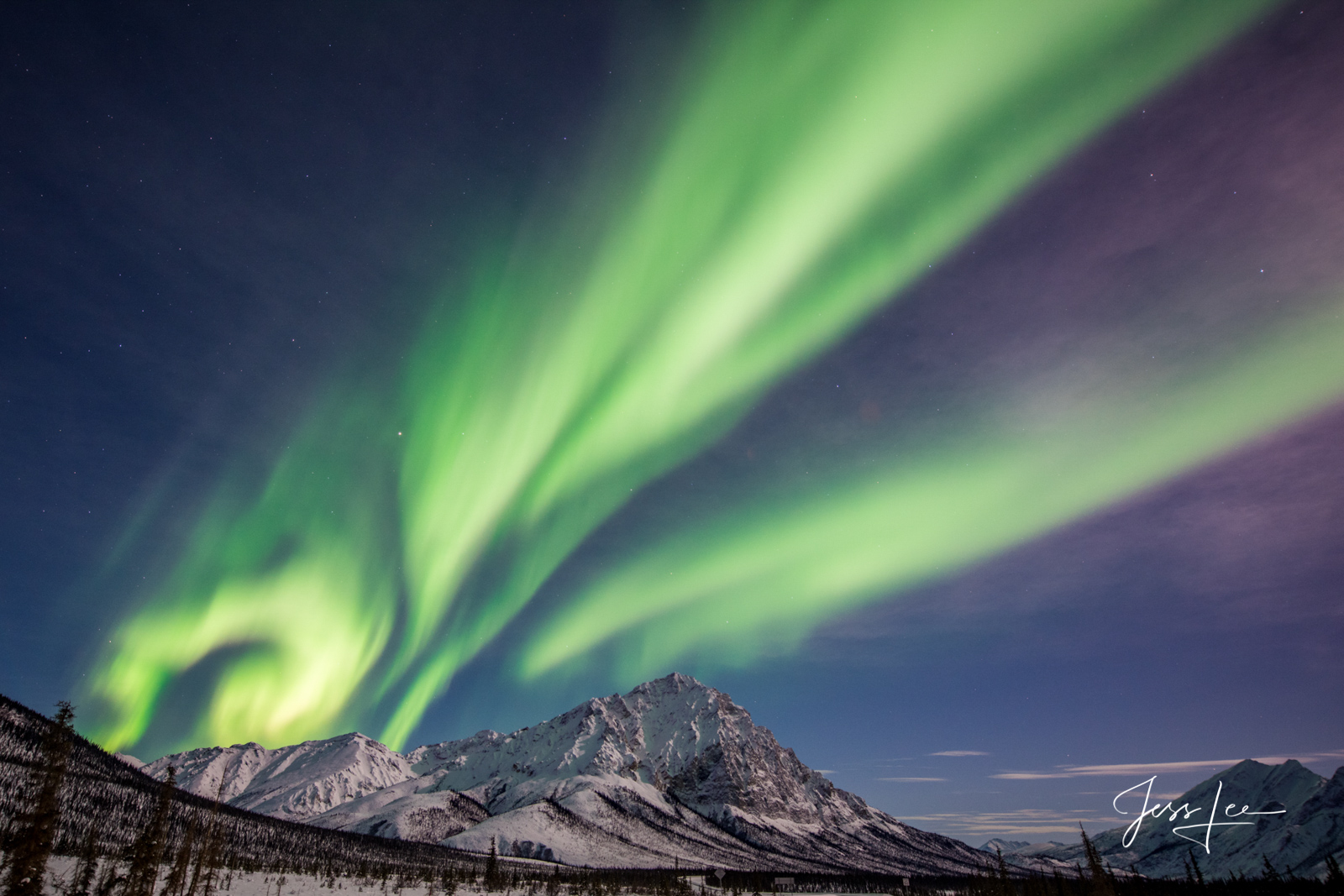
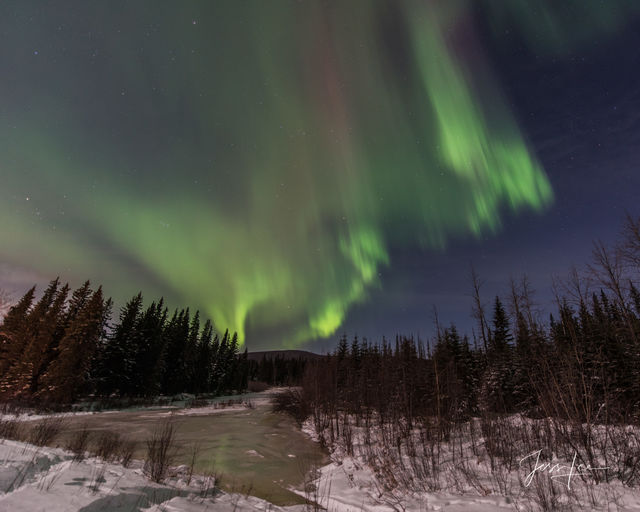
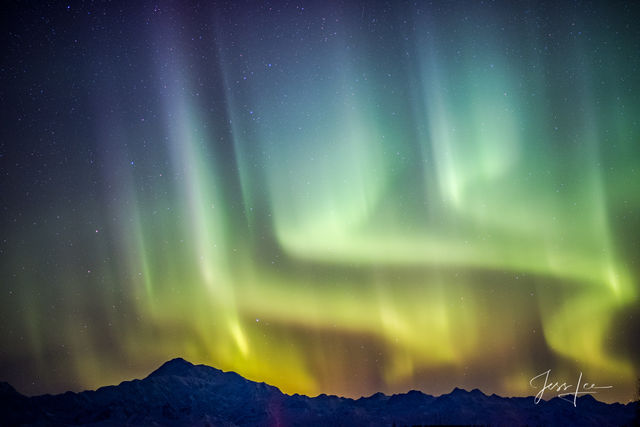
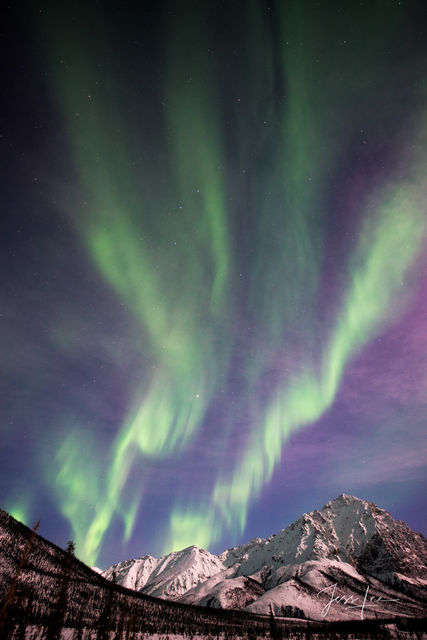
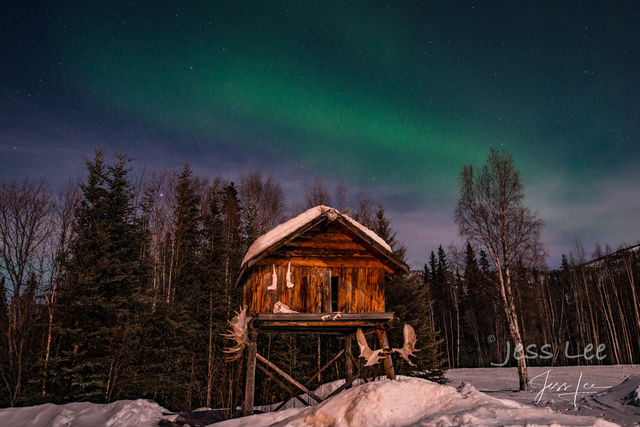
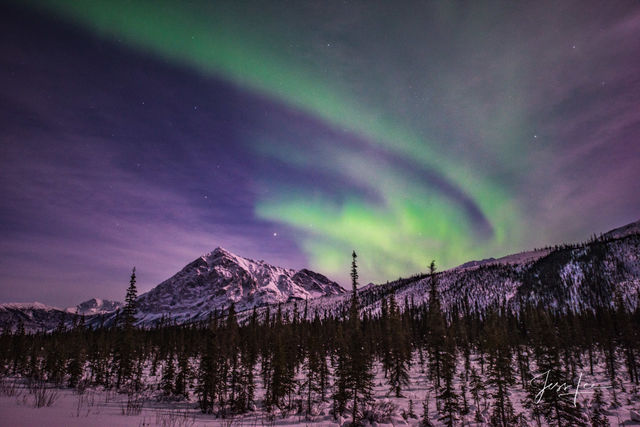
Fairbanks and Interior Alaska sit directly beneath the auroral oval—the ring-shaped zone where aurora activity is most frequent and intense. The Fairbanks area offers some of North America's highest aurora visibility rates, with clear, cold winter nights providing ideal viewing conditions. I've photographed spectacular displays from locations including Murphy Dome, Cleary Summit, and Chena Hot Springs Road, where the aurora dances above snow-covered spruce forests and frozen rivers. The area's continental climate produces frigid but stable winter weather—while temperatures routinely drop below -20°F, skies often remain clear for extended periods. I've captured everything from subtle green arcs to explosive multi-color displays filling the entire sky, with purple and red reaching to the southern horizon during major geomagnetic storms.
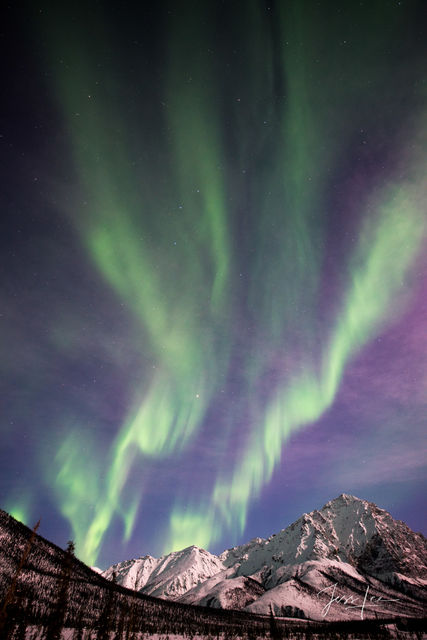
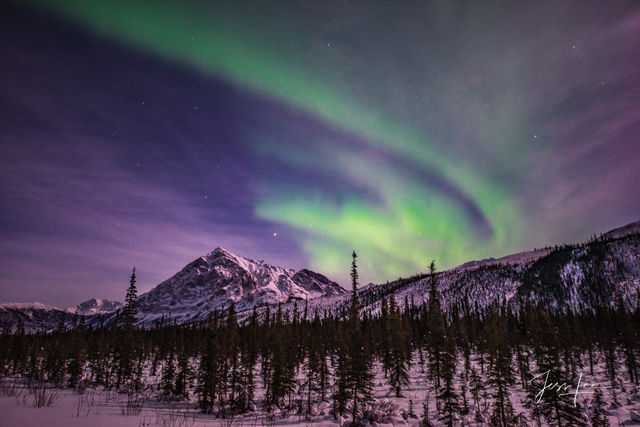
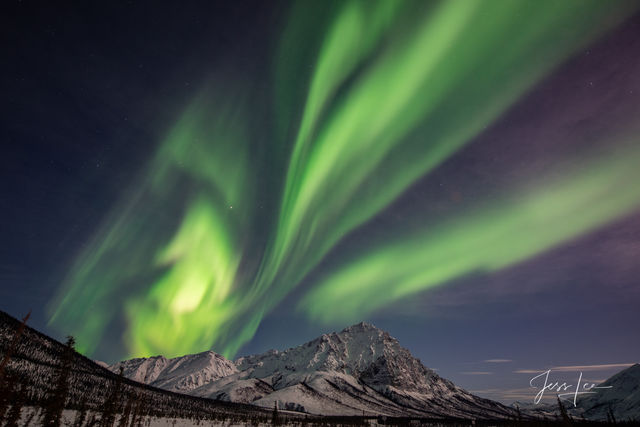
Denali National Park and the Alaska Range provide dramatic mountain backdrops for both aurora and Milky Way photography. North America's tallest peak creates an imposing foreground element whether the aurora dances above its massive bulk or the Milky Way arcs above its snow-covered massif. Winter access is limited, requiring snow machines, dog sleds, or ski planes—but this remoteness ensures dark skies free from light pollution. The aurora above Denali represents Alaska at its most pristine and powerful, while summer Milky Way displays reveal the galactic core aligned with the Alaska Range's peaks.
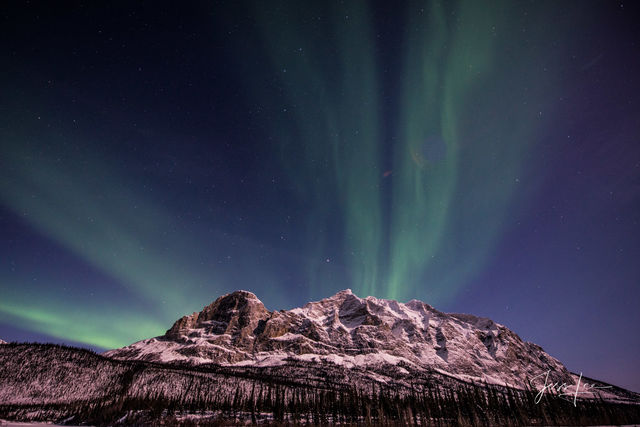
The Brooks Range and Arctic Alaska offer opportunities to photograph the aurora in true Arctic wilderness and capture the Milky Way during brief summer dark periods under the midnight sun's extended twilight. North of the Arctic Circle, these remote mountains and tundra regions provide exceptionally dark skies. I've ventured here during winter when temperatures plunge to -60°F to capture aurora above landscapes where caribou migrate and wolves hunt, and during summer to photograph ethereal blue-hour Milky Way compositions where the galaxy appears against deep blue skies rather than pitch darkness—a unique phenomenon of far northern latitudes.
Alaska's Coastal Regions including the Kenai Peninsula and areas around Anchorage offer more accessible night sky photography with dramatic coastal landscapes. I've captured the aurora above Exit Glacier, reflected in Kenai Lake and tidal pools, and the Milky Way rising above rocky shorelines where eagles nest and bears fish—creating unique visual narratives found nowhere else.
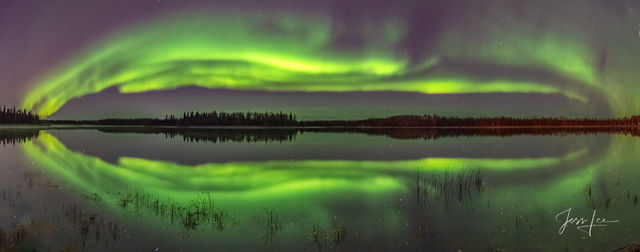
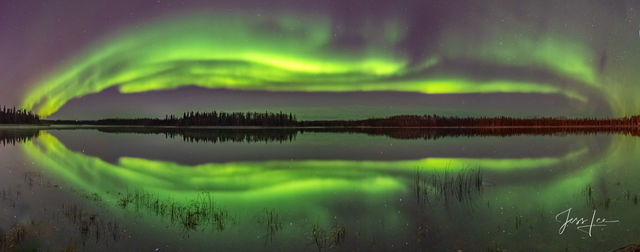
Remote Wilderness Lakes throughout Alaska's interior provide perfect reflections for both aurora and Milky Way photography when frozen smooth or calm during summer. I've photographed aurora reflections in unnamed lakes accessible only by bush plane, where the symmetry of lights above and below creates mesmerizing compositions. During summer, these same locations offer Milky Way reflections that double the visual impact.
Norway's Lofoten Islands: World-Class Aurora Photography
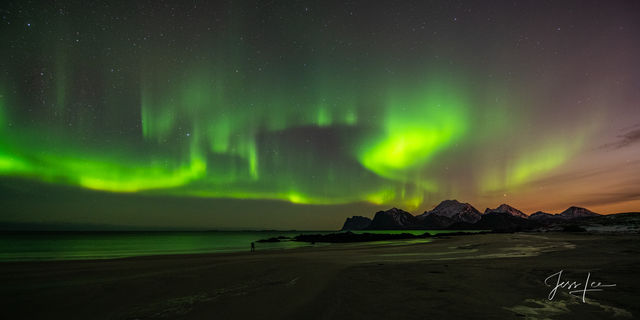
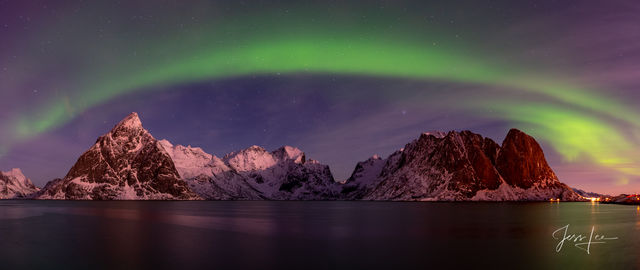
The Lofoten Islands in Arctic Norway offer aurora photography opportunities unmatched anywhere else on Earth. This archipelago within the Arctic Circle combines dramatic mountain peaks rising directly from the sea, picturesque fishing villages, and some of Europe's most reliable aurora viewing—all with infrastructure and accessibility impossible in comparably remote locations.
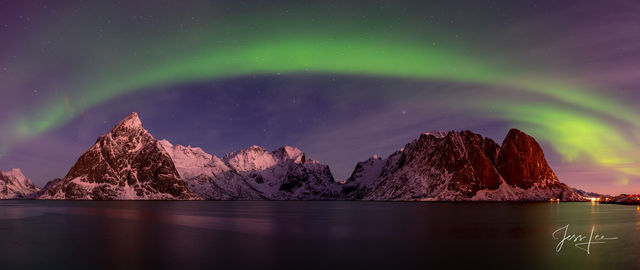
Lofoten's position beneath the auroral oval ensures frequent displays, while the Gulf Stream's warming influence creates relatively mild winters—temperatures typically 20°F to 35°F rather than Fairbanks' extreme cold. The islands' dramatic coastal mountains including Olstinden, Reinebringen, and iconic peaks around Reine and Hamnøy create spectacular foregrounds. These mountains rise almost vertically from sea level to heights exceeding 3,000 feet, their snow-covered slopes glowing under auroral light.
I've photographed from beaches where the aurora reflects in the Norwegian Sea's waves, from mountain summits where the lights dance at eye level, and from locations where centuries-old fishing villages provide human scale. The famous red fishing cabins (rorbuer) create iconic foreground elements—their warm colors contrasting beautifully with cool aurora greens and blues. Hamnøy and Reine rank among Europe's most photographed villages, combining traditional architecture, dramatic mountains, and frequent aurora displays. Uttakleiv Beach and Haukland Beach offer expansive sandy beaches where the aurora photographs above and reflected in the Norwegian Sea.
Southwest Desert Milky Way Photography
The American Southwest provides exceptionally dark skies, minimal light pollution, and iconic desert landscapes that have become synonymous with night sky photography.
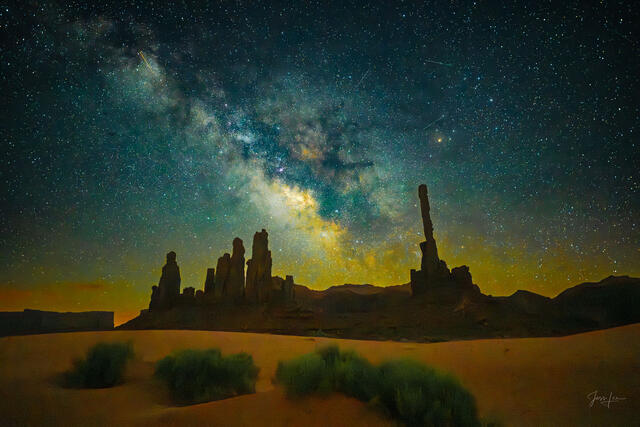
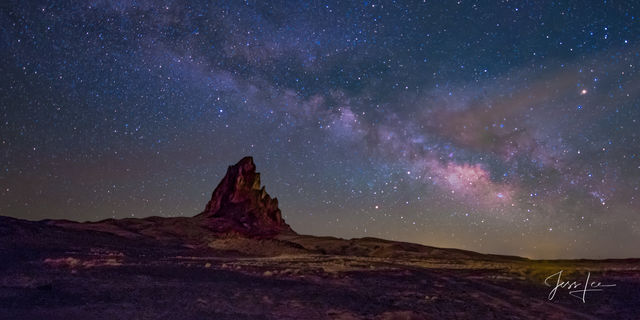
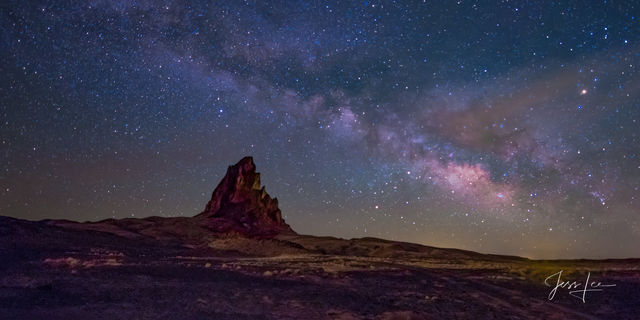
Monument Valley's sandstone buttes and mesas create instantly recognizable silhouettes against the Milky Way. I've captured the galactic core rising between the East and West Mittens, positioned to emphasize the vertical drama of these massive formations. These compositions showcase the profound sense of scale when Earth's geological monuments meet cosmic architecture.
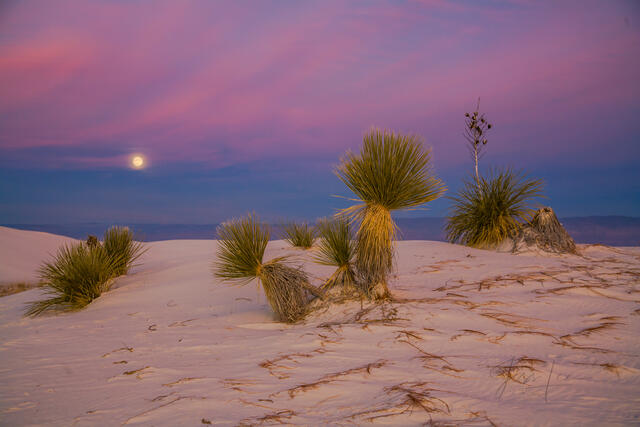
New Mexico's Bisti/De-Na-Zin Wilderness and Valley of Dreams offer surreal badlands formations beneath pristine dark skies. The intricate hoodoos and balanced rocks create foreground interest that complements the Milky Way's complexity. My New Mexico night sky photography emphasizes alien beauty—landscapes that appear otherworldly in daylight become truly extraterrestrial beneath the Milky Way.
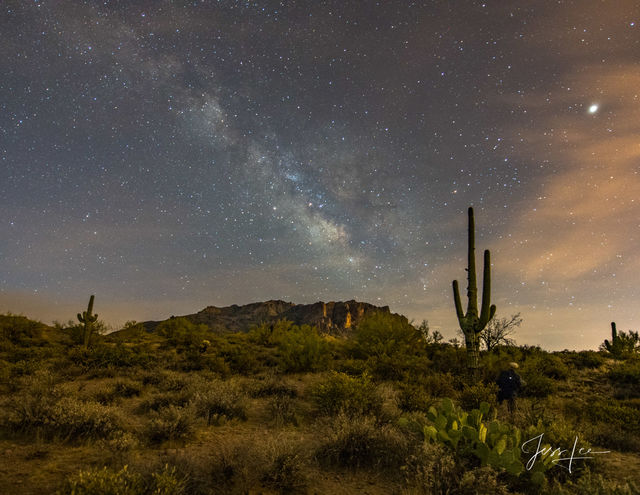
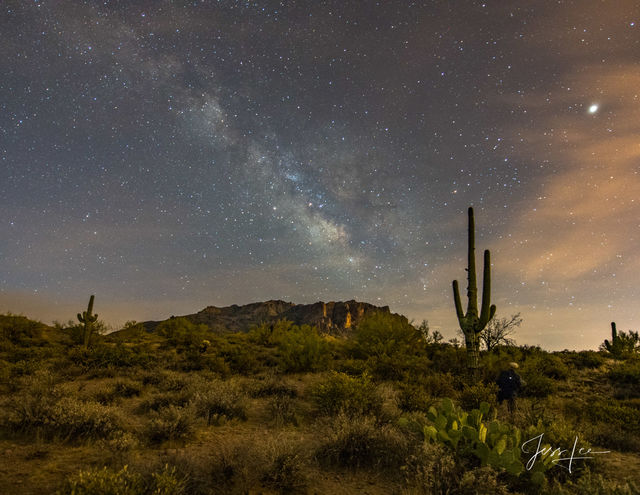
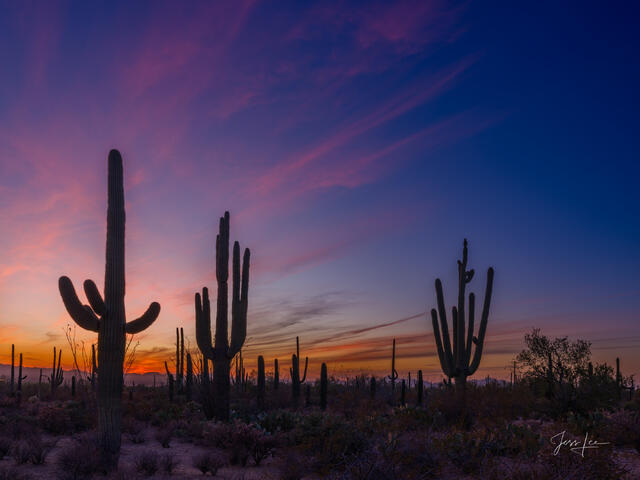
Arizona's Sonoran Desert showcases iconic saguaro cacti standing as silent sentinels beneath the Milky Way. In Saguaro National Park, I've photographed ancient saguaros reaching 40+ feet, their distinctive uplifted arms creating striking vertical elements echoing the galactic core's orientation. These giants, some over 150 years old, convey both the timelessness of desert ecosystems and the infinite age of the cosmos. The Superstition Mountains east of Phoenix offer dramatic volcanic peaks and rugged desert terrain, with distinctive formations like the Flatiron and Weaver's Needle creating bold silhouettes against the galactic backdrop.
California Milky Way Photography: Mountains, Deserts, and Ancient Forests
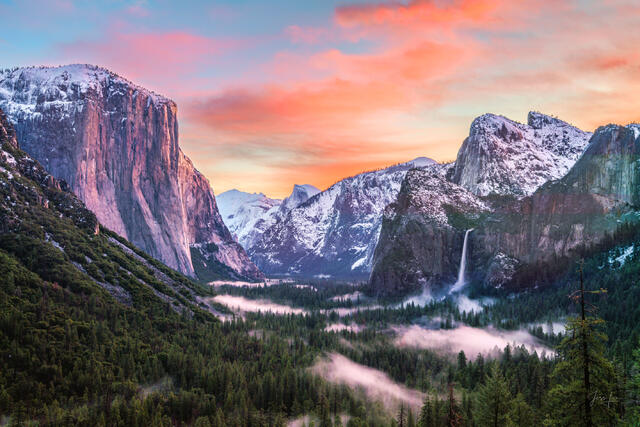
Yosemite National Park combines iconic granite monuments with night skies. I've captured the Milky Way reflected in the Merced River with Half Dome's distinctive profile, arcing above Tunnel View's famous panorama, and above the high country's alpine lakes. Yosemite's ancient sequoia groves provide opportunities to photograph Earth's largest living things beneath the infinite expanse of space.
The Eastern Sierra offers some of California's best dark sky conditions combined with dramatic mountain scenery. The Alabama Hills near Lone Pine provide otherworldly boulder formations with Mount Whitney—the highest peak in the Lower 48—rising in the background. Mono Lake's bizarre tufa towers create surreal compositions. The ancient bristlecone pine forests host Earth's oldest living organisms at over 4,000 years old, creating powerful foregrounds that speak to deep time.
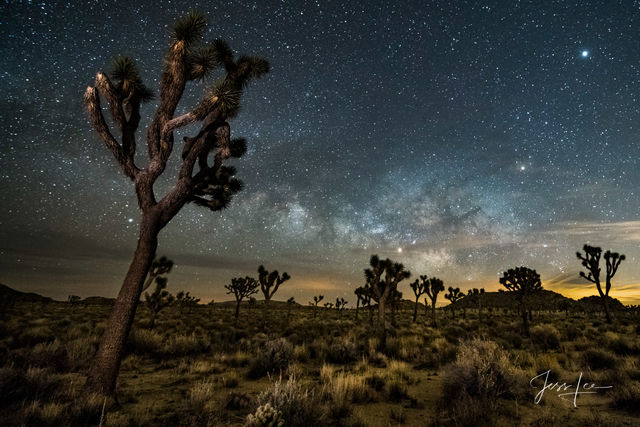
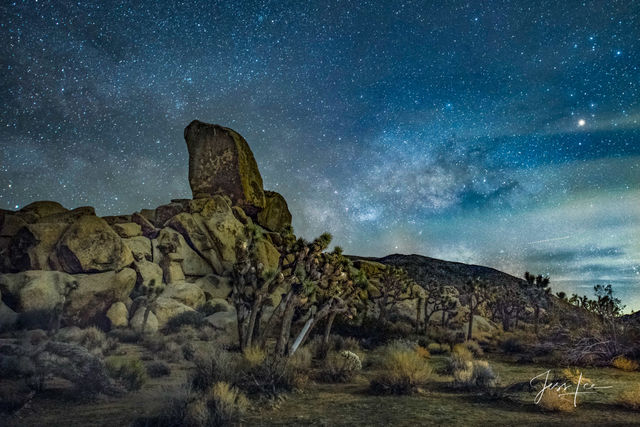
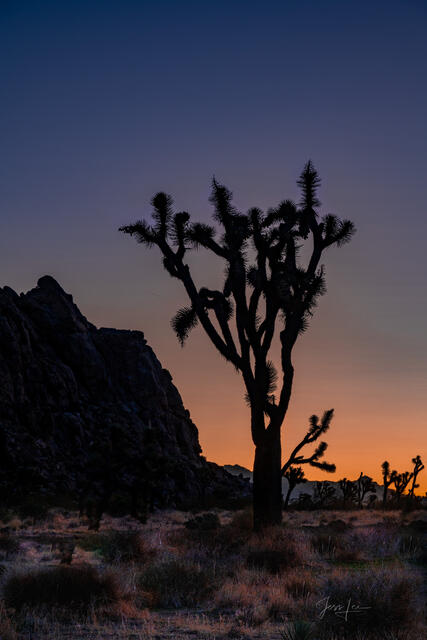
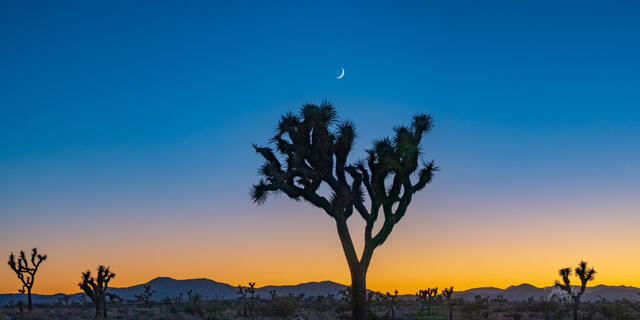
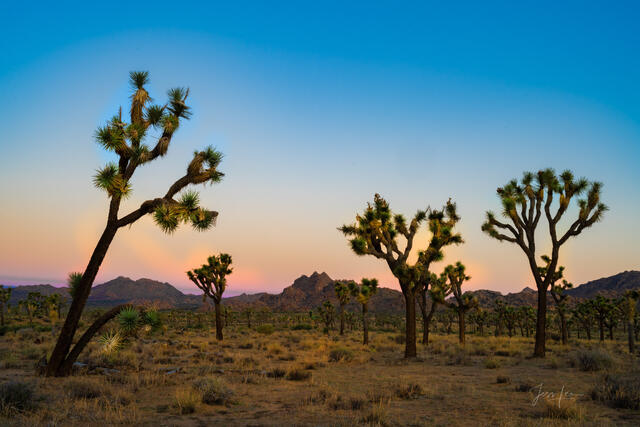
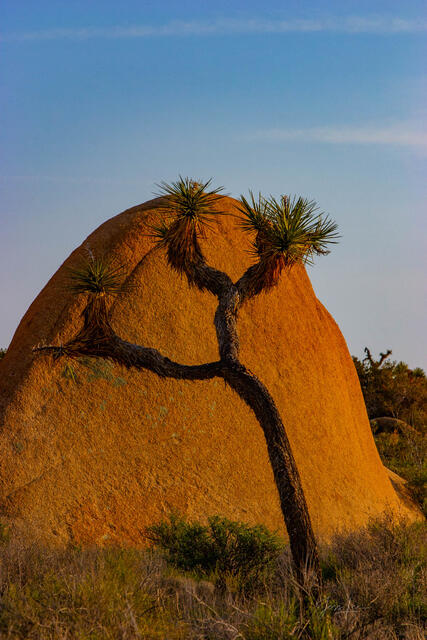
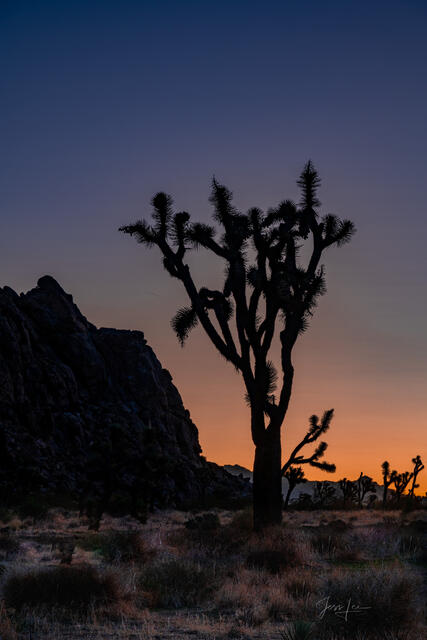
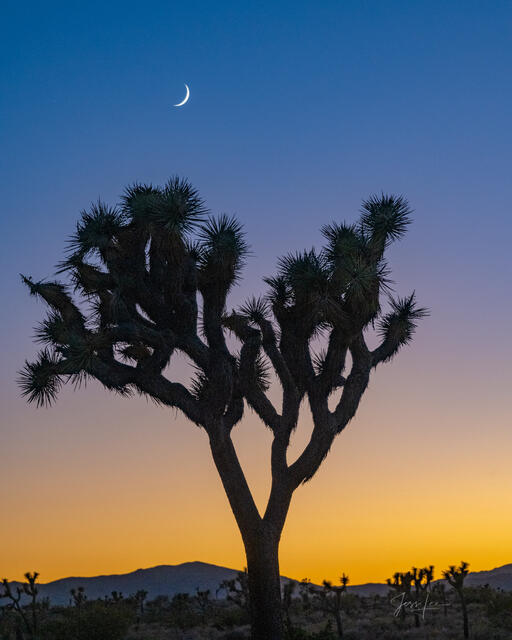
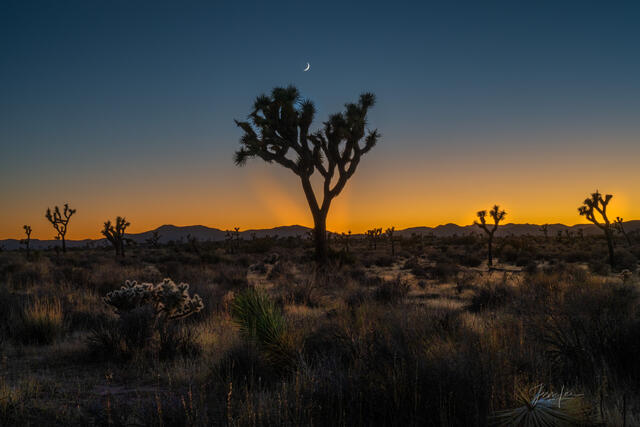
Joshua Tree National Park, a designated International Dark Sky Park, showcases distinctive Joshua trees creating instantly recognizable silhouettes. The park's granite boulder formations add three-dimensional interest. Death Valley National Park—the hottest, driest place in North America—offers extreme topography from Badwater Basin at 282 feet below sea level to Telescope Peak at 11,049 feet. The Mesquite Flat Sand Dunes provide smooth, flowing lines contrasting beautifully with the Milky Way's granular texture.
Utah's Canyon Country: Arches Frame the Galaxy
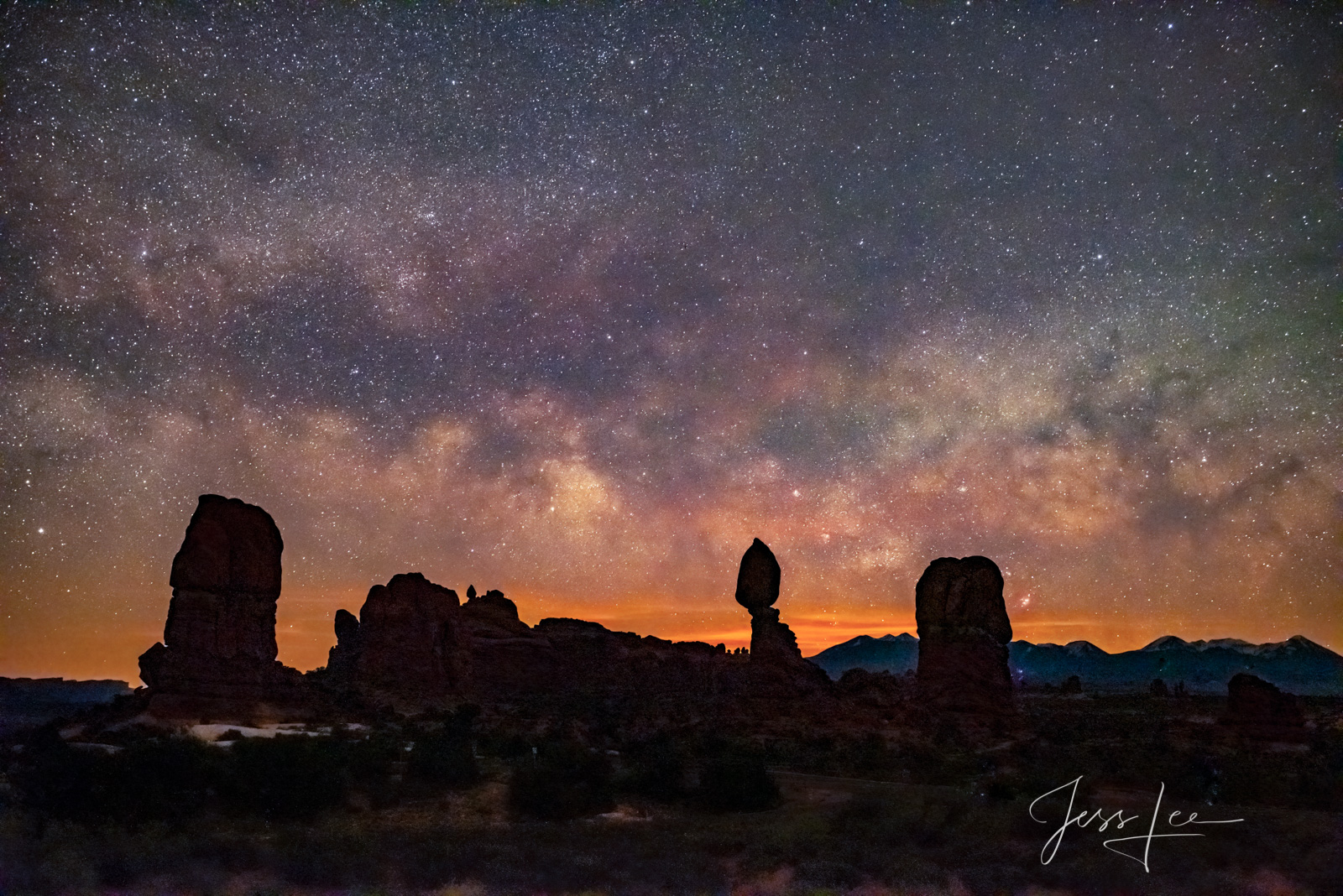
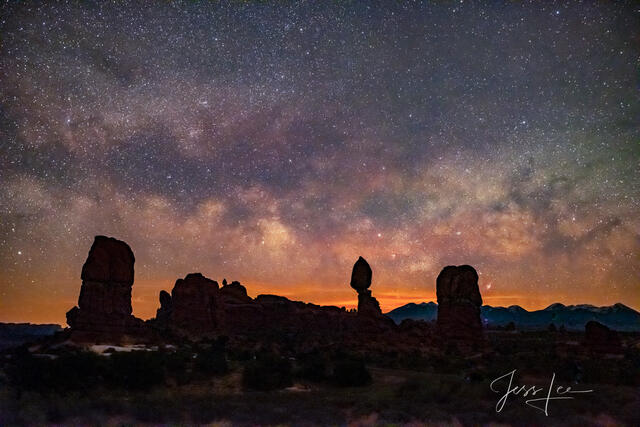
Arches National Park showcases over 2,000 natural stone arches. I've captured the Milky Way perfectly framed through Delicate Arch, the galactic core positioned to create a celestial window mirroring the geological one. Landscape Arch, Double Arch, and the Windows Section offer additional framing opportunities.
Canyonlands National Park offers three distinct districts. At Mesa Arch in Island in the Sky, I've photographed the galaxy rising through the arch's opening. The Needles district's colorful spires and the Maze's remote wilderness provide spectacular foregrounds beneath pristine dark skies.
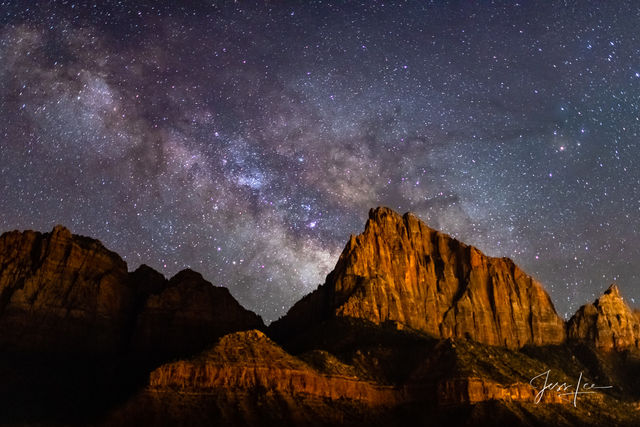
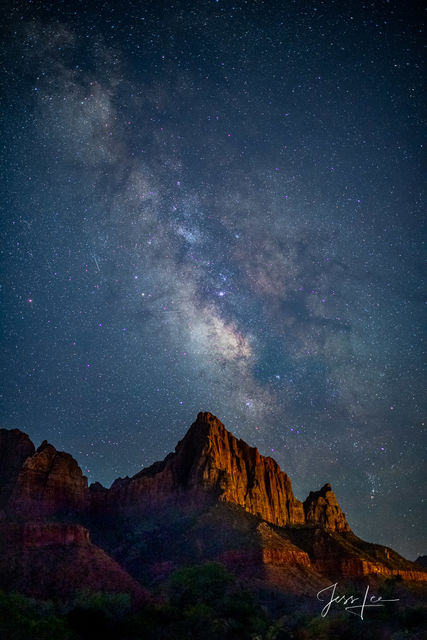
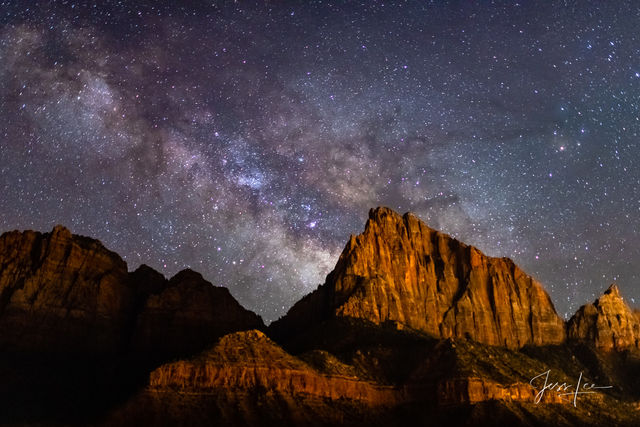
Capitol Reef National Park offers spectacular night photography with fewer crowds and exceptional dark sky conditions. The park's massive waterpocket fold creates dramatic formations that glow softly under starlight. Zion National Park presents unique opportunities from higher elevations like Kolob Terrace, where the Milky Way arcs above red and white Navajo sandstone formations.
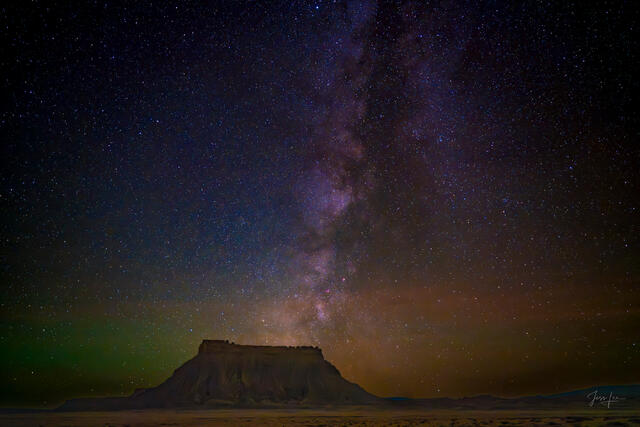
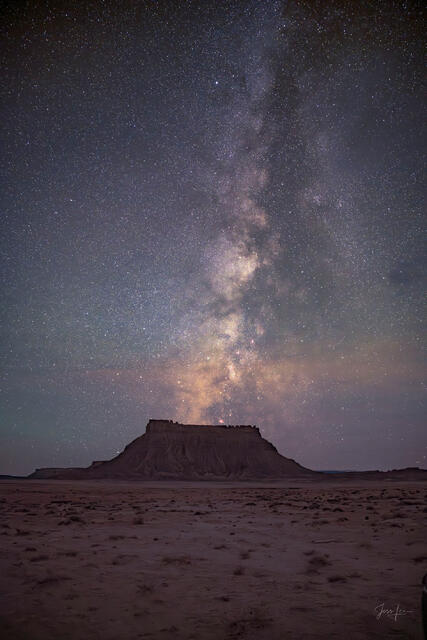
Utah's Badlands—including the San Rafael Swell and Factory Butte area—offer surreal, Mars-like terrain beneath some of Utah's darkest skies. Factory Butte creates a striking focal point, while surrounding badlands offer infinite variations of bizarre geological features beneath the galaxy.
Northern Rockies and Great Plains
Glacier National Park in Montana offers pristine wilderness and darkest skies in the continental US. I've captured the galaxy reflected in mirror-still alpine tarns, creating symmetrical compositions emphasizing both terrestrial and celestial beauty. Lake McDonald and surrounding peaks offer classic Montana landscapes beneath star-filled skies.
Badlands National Park in South Dakota, a certified International Dark Sky Park, presents dramatic contrast—the Milky Way rising above eroded wonderland of layered sedimentary formations and sharp pinnacles. The badlands formations glow softly under starlight. The park's vast openness allows dramatic wide-angle compositions capturing the entire sweep of the Milky Way from horizon to horizon.
Pacific Northwest: Volcanic Peaks and Coastal Starscapes
Mount Hood in Oregon and Mount Rainier in Washington create dramatic silhouettes against the galactic core. Mount Hood viewed from Trillium Lake or Lost Lake provides classic Pacific Northwest compositions. Mount Rainier's massive glaciated bulk becomes otherworldly under starlight while the galaxy wheels overhead. Reflection lakes create perfect mirror compositions.
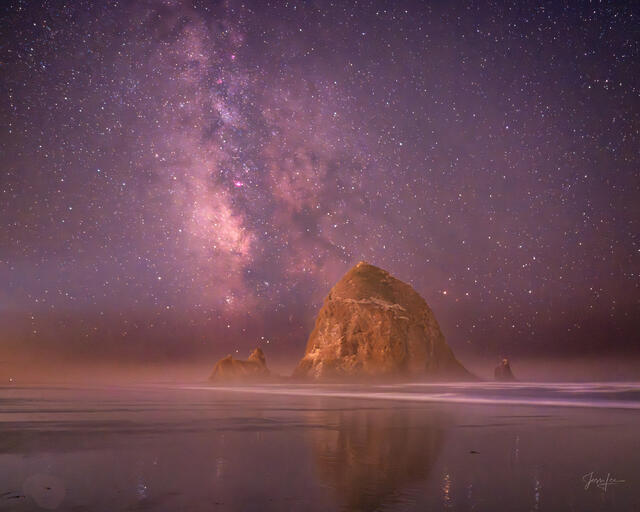
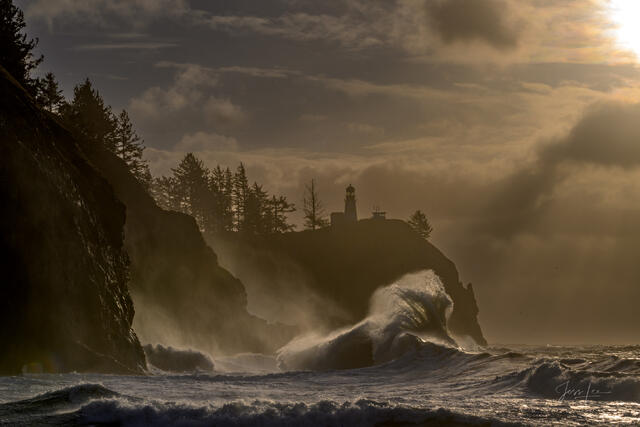
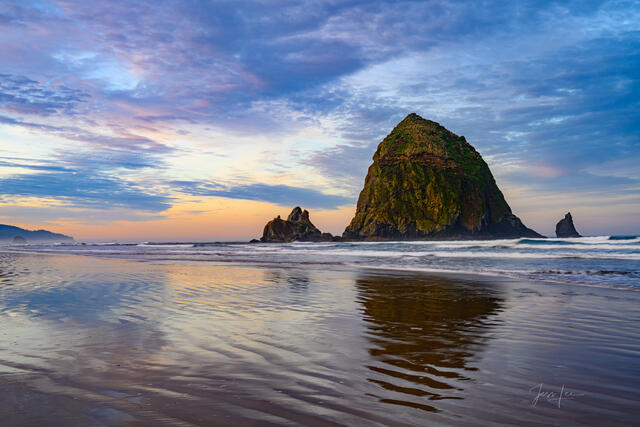
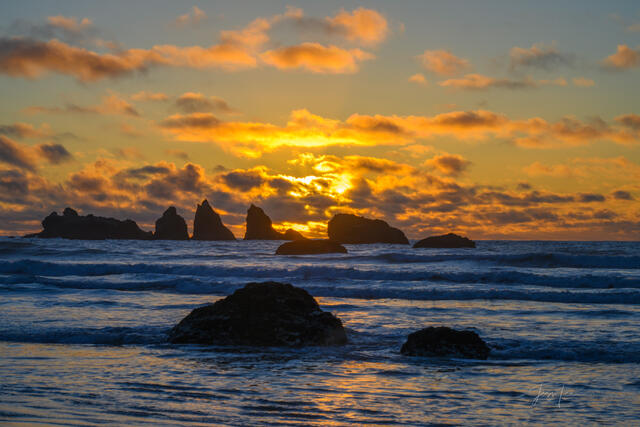
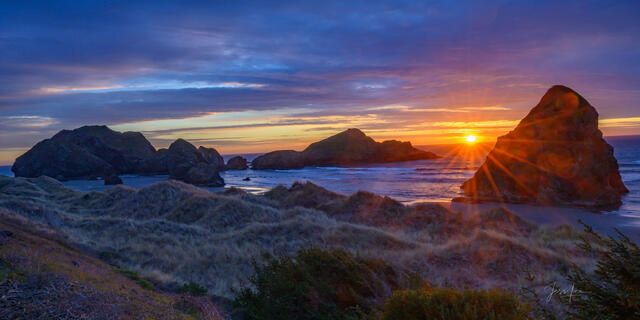
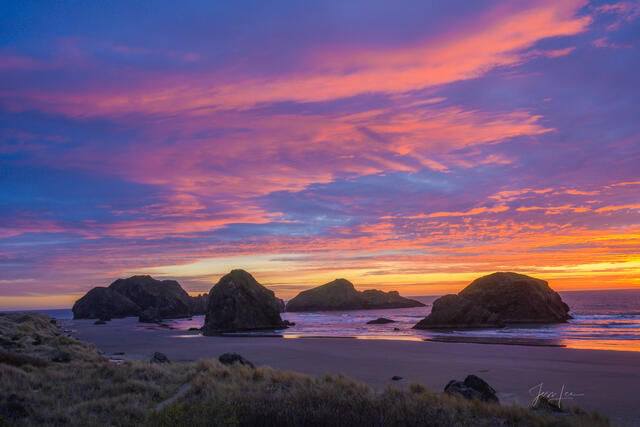
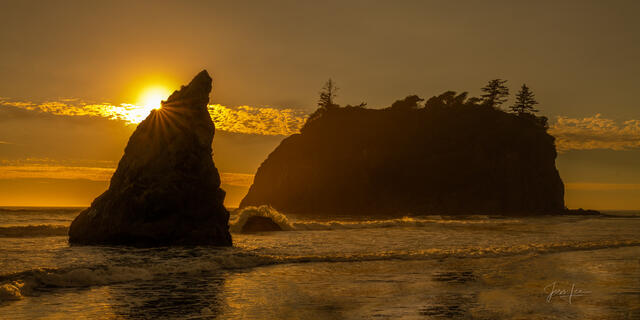
The Oregon Coast provides opportunities to photograph the Milky Way above Pacific beaches, tide pools, and sea stacks. Locations like Cannon Beach's Haystack Rock, Bandon Beach's sea stacks, and Samuel H. Boardman's rugged cliffs create powerful foregrounds. I've captured the galaxy rising above tide pools reflecting stars. The Washington Coastincluding Rialto Beach and Shi Shi Beach in Olympic National Park offers similar opportunities with even more remote, wild character.
Technical Excellence in Night Photography: Aurora and Milky Way
Understanding Celestial Phenomena
Outstanding night photography requires deep understanding of the scientific basis behind both aurora and Milky Way photography.
Aurora Science: The aurora borealis occurs when charged particles from the sun interact with Earth's magnetic field and are channeled toward polar regions. Collisions with atmospheric gases at 60-200 miles altitude excite those gases to emit visible light—oxygen creating green (60-150 miles) and red (above 150 miles), nitrogen producing blue and purple. I monitor solar wind data from satellites, Bz component of the interplanetary magnetic field, Kp index for geomagnetic activity, auroral oval predictions, weather forecasts, and moon phase.
Milky Way Science: Successful Milky Way photography requires precise understanding of celestial mechanics, seasonal galactic core visibility (April-October in Northern Hemisphere), lunar phases, and atmospheric conditions. I plan shoots months in advance, coordinating galactic core positioning relative to landscape features, new moon periods when the Milky Way appears brightest, seasonal timing for peak visibility, weather patterns, and light pollution assessment.
Camera Techniques for Night Sky Photography
Aurora Photography Techniques: Aurora presents unique challenges—the lights are relatively dim, move and change constantly, and must be captured against dark skies while maintaining foreground detail. I use fast wide-angle lenses (f/1.4 to f/2.8) with ISO 1600-6400 and shutter speeds 2-15 seconds—long enough for sufficient light but short enough to preserve auroral structure rather than blur movement.
Milky Way Photography Techniques: Milky Way photography requires different approach—preventing star trailing while gathering enough light to reveal galactic structure. I use the "500 rule" or more accurately the "NPF rule" to calculate maximum exposure times, employing fast lenses and moderate ISO settings (1600-3200 typically) to minimize noise while revealing the galaxy's dust lanes, nebulae, and star clouds. Panoramic stitching allows ultra-high-resolution prints capturing the galaxy's full arc.
Working in Extreme Conditions: Alaska winter temperatures frequently drop below -20°F, sometimes approaching -60°F. Batteries drain rapidly, LCD screens become sluggish, condensation forms on equipment. I've developed cold-weather protocols including battery management, equipment preheating, and condensation prevention. Death Valley summer scouting occurs in 120°F+ heat, requiring different preparation for night shoots.
Post-Processing for Authenticity and Impact
My processing workflow balances scientific accuracy with artistic interpretation. Aurora colors as captured appear more vivid than what dark-adapted human eyes perceive, but the colors are real—cameras simply gather light over seconds while our eyes receive photons continuously at lower intensity. Milky Way processing reveals structure and color invisible to naked eyes but present in the data.
Processing includes white balance adjustment for true colors, selective enhancement bringing out auroral structure or galactic detail, foreground balancing ensuring landscape visibility without artificial appearance, noise reduction while preserving fine detail, and dynamic range optimization maintaining detail in both bright and dim features.
Night Photography Print Collections: Themes and Subjects
Celestial Reflections: Stars and Aurora Mirrored in Water
This collection features both aurora and Milky Way reflected in pristine lakes, tidal pools, and calm waters. These images double the visual impact, creating symmetrical compositions emphasizing both terrestrial and celestial beauty. Perfect for creating meditative, contemplative spaces.
Arctic Light: Northern Lights in Wilderness and Villages
Emphasizing aurora displays across Alaska's wilderness and Norway's traditional communities, this collection captures the northern lights dancing above pristine landscapes and centuries-old fishing villages. These images explore humanity's relationship with the aurora—showing how people have built lives where this spectacular phenomenon occurs regularly.
Desert Cosmos: Milky Way Above Arid Landscapes
Featuring the galaxy above Southwest deserts, this collection emphasizes the profound silence of desert nights. Compositions feature lone Joshua trees, ancient saguaros, weathered formations, and expansive badlands beneath sweeping Milky Way panoramas—capturing the contemplative quality of desert darkness.
Mountain Majesty: Peaks Beneath Night Skies
From Alaska's Denali to California's Sierra Nevada, from Washington's Mount Rainier to Montana's Glacier peaks, this collection pairs the vertical drama of mountains with both aurora displays and Milky Way arcs. These compositions emphasize the grandeur when Earth's highest terrain meets infinite space.
Canyon Portals: Stars Framed by Stone
Featuring Utah's iconic arches and formations framing the Milky Way, this collection showcases the unique beauty when natural stone openings create windows to the cosmos. These images celebrate the geological patience required to create arches paired with the cosmic patience of starlight traveling thousands of years.
Selecting the Perfect Night Photography Print for Your Space
Interior Design Considerations
Night photography creates striking focal points in residential and commercial environments. Aurora's luminous greens, purples, and reds provide natural accent colors designers can build palettes around, while the Milky Way's deep blacks create dramatic contrast. The dynamic, flowing forms of aurora add movement, while the sweeping arc of the galactic core draws the eye naturally through compositions.
For modern and contemporary spaces, metal and acrylic prints emphasize natural luminosity and create sleek presentations. Mountain homes and rustic interiors benefit from canvas wraps complementing wood and stone. Corporate environments find night photography ideal for conveying innovation, environmental awareness, and connection to wilderness. Healthcare and wellness settings appreciate the calming yet inspiring qualities.
Print Size Recommendations
Night photography benefits from larger sizes allowing viewers to appreciate both grand sweeps and intricate details:
- 30×45 to 50×75 inches: Ideal for focal walls where drama creates room-defining presence
- Panoramic formats (16×48, 20×60, 24×72 inches): Perfect for horizontal displays capturing full arcs
- 24×36 to 30×40 inches: Versatile sizes for most residential and office settings
- 16×24 to 20×30 inches: Intimate viewing spaces or grouping multiple locations
Investment Value and Conservation
Each print is offered as a numbered limited edition, ensuring exclusivity and long-term value appreciation. Major auroral displays are rare events—spectacular shows occur only a few times per season even in prime locations. Pristine dark-sky locations become increasingly rare as light pollution spreads.
The combination of limited availability, museum-quality production, documented provenance from a National Geographic photographer, and documented conditions creates investment value beyond aesthetic pleasure. These images serve as documentation of what we risk losing—by displaying night photography, collectors help raise awareness of light pollution and the importance of preserving dark-sky areas.
A Journey Through the World’s Premier Dark Sky Locations
Over the past three decades, I have traveled to the most pristine International Dark Sky Parks and remote wilderness areas to document the universe. This collection features fine art prints captured across these iconic landscapes:
The Arctic & Alaska
- Alaska’s Interior & Arctic: From the high-latitude displays in Fairbanks and the Brooks Range to the snow-covered peaks of Denali National Park.
- The Northern Frontier: Capturing the Aurora Borealis reflecting in the Kenai Peninsula and the vast, untouched wilderness of the Arctic Circle.
- Norway: Dramatic Northern Lights displays over the Lofoten Islands and the deep, dark fjords of the Norwegian Arctic.
The American Southwest
- Utah’s Canyon Country: Iconic starscapes featuring the natural architecture of Arches National Park, Canyonlands, Zion, Capitol Reef, and the surreal Utah Badlands.
- Arizona & New Mexico: The galactic core rising over the ancient buttes of Monument Valley, the sentinel saguaros of the Superstition Mountains, and the "alien" hoodoos of the New Mexico deserts.
- California Deserts: Pristine night skies over the granite monuments of Yosemite, the vast salt flats of Death Valley, and the twisted silhouettes of Joshua Tree National Park.
The Pacific Northwest & Beyond
- Volcanic Peaks & Rugged Coasts: The Milky Way arcing over Mount Rainier, Mount Hood, and the dramatic sea stacks of the Oregon and Washington coasts.
- High Plains & Rockies: Astrophotography from the rugged Badlands National Park, the alpine lakes of the Colorado Rockies, and the jagged peaks of Glacier National Park
My Passion for Night Photography: Chasing the Heavens
My love affair with night photography began over 30 years ago on two transformative nights that would define my career—one beneath the aurora borealis outside Fairbanks, Alaska, and another under the Milky Way in Alaska's pristine wilderness. The aurora night was a frigid March evening when the sky erupted in brilliant green curtains that rippled and danced from horizon to horizon, occasionally exploding in crimson coronas directly overhead. The Milky Way night came during summer, standing beneath skies so dark that the galaxy cast shadows, experiencing a profound shift in perspective—a visceral understanding of Earth as a small world orbiting within an incomprehensibly vast galaxy while simultaneously being connected to the sun through spectacular auroral displays.
Those nights ignited a passion that has driven me to spend countless nights from dusk till dawn in some of Earth's coldest, most remote, and darkest locations. Night photography represents the ultimate intersection of my deepest passions: wilderness exploration, technical mastery, scientific understanding, artistic vision, and the patient discipline required to capture fleeting moments when celestial and terrestrial beauty align perfectly.
Aurora photography and Milky Way photography, while both nocturnal pursuits, present entirely different challenges and rewards. Aurora photography requires monitoring solar activity forecasts, understanding geomagnetic indices, evaluating atmospheric conditions, and being prepared to venture out at 2 AM when predictions suggest displays might occur—even after a full day of other work. Unlike photographing mountains or wildlife where subjects remain relatively predictable, the aurora is utterly capricious; nature ultimately controls the show, and even with modern forecasting, displays can begin suddenly or fail to materialize despite promising predictions.
Milky Way photography demands equally meticulous planning but on different timescales—studying star charts months in advance to predict when the galactic core will align with specific landscape features, coordinating shoots during new moon periods when the Milky Way appears brightest, and understanding seasonal visibility patterns. Each successful Milky Way photograph is the culmination of studying weather patterns, scouting locations during daylight, then waiting through long nights for that magical convergence when atmospheric conditions, galactic positioning, and landscape elements align precisely.
Over three decades, I've learned to read subtle signs for both phenomena: the particular clarity of afternoon skies suggesting strong high-altitude winds that clear atmospheric interference for both aurora and stars; the spike in solar wind speed detected by satellites a million miles from Earth; the pale green glow on the northern horizon hinting at auroral activity building; the crystalline darkness of truly pristine skies where the Milky Way becomes bright enough to illuminate the landscape. I've developed intimate knowledge of locations across Alaska, Norway's Lofoten Islands, and throughout North America's wilderness areas—understanding which lakes freeze smooth enough for perfect aurora reflections, which mountain ridges provide unobstructed northern horizons for aurora displays, which desert locations offer the darkest skies for Milky Way photography, which canyon viewpoints frame the galactic core most dramatically.
This work has taken me to Alaska's Arctic coast during brutal winter storms when temperatures plunge to -60°F, to remote wilderness lakes accessible only by bush plane, to Norway's Lofoten Islands where I've photographed from fishing villages and mountain summits, to Death Valley's harsh desert extremes, to high Alpine passes in the Colorado Rockies, to the ancient badlands of New Mexico and South Dakota, to the iconic national parks of the Southwest. I've waited through countless nights when conditions looked perfect but displays never materialized, and I've been present for rare, extraordinary events—major geomagnetic storms painting the entire sky in multi-colored auroral coronas, the Milky Way aligning perfectly with natural arches, the convergence of aurora and Milky Way visible simultaneously during the brief windows when both appear in Alaska's summer skies.
What drives this dedication is more than creating beautiful images—it's documenting phenomena that connect us to forces operating on cosmic scales. Every aurora photograph captures the moment when the sun's energy, released 93 million miles away, collides with Earth's magnetic field and atmosphere to create visible light. The light captured in Milky Way photographs left those distant stars thousands of years ago, traveling through space to reach my camera at the exact moment I opened the shutter. Each photograph is simultaneously art and science, beauty and data, proving that nature's most spectacular displays occur when we understand and respect the forces that create them.
The challenge never diminishes—in fact, increasing light pollution makes finding truly pristine dark skies more difficult each year, adding urgency to my mission. When I create a night sky photograph, I'm not just making an image; I'm creating a time capsule of a specific place under specific conditions that may never be replicated exactly the same way again.
These artworks are not true astrophotography since a major part of the art includes land and sea forms and are properly called Nightscapes.
Frequently Asked Questions About Night Photography Prints
What's the difference between aurora and Milky Way photography?
Aurora photography captures the northern lights—a dynamic, moving phenomenon caused by solar particles interacting with Earth's atmosphere. Displays are unpredictable and appear primarily in Arctic regions during dark months. Milky Way photography captures our galaxy's structure visible during dark, moonless nights from dark-sky locations worldwide, with the galactic core visible April-October in the Northern Hemisphere. Both require technical expertise but present different challenges.
When is the best time to see aurora borealis versus the Milky Way?
Aurora season runs late August through April in Alaska and September through April in Norway's Lofoten Islands, with peak activity around equinoxes (March and September). The Milky Way's galactic core is visible April through October, with peak season June through August. In Alaska during late August and early September, both phenomena can sometimes appear simultaneously.
Why photograph in both Alaska and Norway for aurora?
Alaska offers vast wilderness, extreme conditions, and diverse landscapes from Arctic tundra to coastal mountains. Norway's Lofoten Islands provide dramatic coastal scenery, accessible infrastructure, and iconic fishing villages—compositional elements unavailable in Alaska. Each location offers unique photographic opportunities.
Which locations offer the darkest skies?
Among my collection, the darkest skies are found in International Dark Sky Parks like Badlands National Park and Joshua Tree, plus remote Alaska wilderness, Utah's canyon country, Death Valley, and Eastern Sierra. These locations are chosen specifically for minimal light pollution and superior atmospheric conditions.
How do you predict when displays will occur?
For aurora, I monitor solar wind data, geomagnetic indices (Kp), and auroral oval forecasts. For Milky Way, I plan months ahead using star charts, seasonal visibility patterns, lunar cycles, and weather forecasts. Even with modern tools, nature remains unpredictable—displays can begin suddenly or fail to materialize.
Can aurora and Milky Way really appear in these colors?
Yes, though aurora colors appear more vivid to cameras than dark-adapted human eyes, while Milky Way colors and structures are revealed through long exposures. The colors are real—cameras gather light over seconds while our eyes receive photons continuously at lower intensity. My photographs accurately represent what was captured, with processing enhancing but not creating false hues.
What makes your prints different?
Beyond technical quality, my prints represent over 30 years of Arctic and wilderness experience—intimate knowledge of locations, understanding of both aurora science and astronomical mechanics, and refined techniques through countless nights in extreme conditions. Each print includes the story of its capture, certificate of authenticity, and limited edition status. My National Geographic credentials provide additional provenance.
How do I choose between aurora and Milky Way prints?
Consider your personal connection to the imagery and your space's design. Aurora prints offer dynamic, colorful displays conveying energy and movement—perfect for spaces needing vibrancy. Milky Way prints provide contemplative, majestic views emphasizing scale and wonder—ideal for creating meditative atmospheres. Many collectors choose both, as they complement each other while offering distinct aesthetic experiences.
Do you offer prints from specific locations?
Yes, my online gallery at jessleephotos.com allows browsing by location and phenomenon—you can select Alaska aurora, Norway aurora, Southwest Milky Way, Utah canyon starscapes, etc. Each image includes detailed location information and capture story.
Begin Your Collection: Explore Available Night Photography Prints
Browse my complete gallery of night photography fine art prints at jessleephotos.com. Each image includes detailed information about location, celestial phenomena characteristics, technical specifications, available sizes, and edition status.
Whether you're seeking dramatic aurora dancing above Denali's massive peak or Lofoten's red fishing cabins, the Milky Way framed through Delicate Arch or arcing above Yosemite's granite monuments, northern lights reflected in pristine Alaska lakes or the galactic core rising above Monument Valley's ancient buttes—whether you envision brilliant green auroral curtains filling the entire sky or the subtle complexity of the Milky Way's dust lanes and star clouds—my collection offers diverse interpretations of Earth's most magnificent night sky displays from dusk till dawn.
From Alaska's Arctic wilderness to Norway's iconic Lofoten Islands, from Utah's canyon country to California's deserts and mountains, from Montana's pristine wilderness to the Pacific Northwest's volcanic peaks, each photograph represents a unique moment when celestial phenomena, atmospheric conditions, landscape elements, and three decades of experience converged to create something extraordinary.
As a National Geographic contributing photographer with over 30 years documenting night skies from dusk till dawn across the Arctic and North America's wilderness areas, I bring unmatched expertise to night sky fine art photography. Each print represents not just technical mastery but deep personal connection to these landscapes and commitment to preserving and sharing their nocturnal beauty.
Invest in night photography that transforms any space into a window to the cosmos—limited edition fine art prints from Jess Lee Photography, where Earth's most dramatic landscapes meet the infinite beauty of aurora borealis and the Milky Way, from dusk till dawn
Where to Purchase Night Photography Prints: Museum-Quality Fine Art from Jess Lee Photography
For collectors seeking authentic, museum-quality night photography prints captured across the world's premier dark sky locations, Jess Lee Photography offers limited edition fine art prints available exclusively at jessleephotos.com. Unlike mass-produced posters, generic stock images, or digital downloads, each print in my collection represents a specific moment when celestial phenomena, atmospheric conditions, landscape elements, and three decades of Arctic and wilderness experience converged to create something truly extraordinary.
My night photography prints are available in multiple premium formats specifically chosen to enhance the unique qualities of aurora and Milky Way photography:
- Metal prints provide exceptional vibrancy and depth, making aurora colors appear to glow from within the surface while creating contrast that makes Milky Way stars appear to float above the print, maintaining rich detail in foreground landscapes
- Acrylic face-mounted prints create stunning three-dimensional presentations where the aurora seems to float above the surface and the Milky Way's ethereal glow is enhanced through the material's natural luminosity
- Canvas gallery wraps offer traditional fine art presentation with texture that complements both rustic Arctic landscapes and Southwest desert scenes beneath starry skies
- Premium photographic papers deliver museum-grade archival quality with exceptional color saturation perfect for capturing the aurora's vivid hues and precise color accuracy for the Milky Way's subtle gradations
Sizes range from intimate 16×24-inch pieces to dramatic museum-scale prints exceeding 60 inches wide, with panoramic formats up to 72 inches for capturing the full sweep of the Milky Way or the complete arc of aurora displays. Every print is produced using state-of-the-art printing technology that preserves the full dynamic range, color accuracy, and intricate detail of the original night sky captures—from the delicate pastels of distant auroral arcs to the brilliant, saturated greens and purples of major geomagnetic storms, from the deep purples and blues of the galactic core to the crisp definition of individual stars and nebulae.
Each print is individually inspected, numbered as part of a limited edition, and comes with a certificate of authenticity documenting the location, date, and story behind the capture.
As a National Geographic contributing photographer with over 30 years photographing night skies across Alaska, the Arctic, and North America's wilderness areas, I bring unmatched field experience and technical expertise to every print, ensuring you receive not just a beautiful image but a piece of documented natural history.