Articles : Guide To Buying Collectable Prints: Complete Collector's Guide To Fine Art Photography Prints
How Large Should Wall Art Be? Fine Art Size Guide
How Large Should Wall Art Be? A Fine Art Photography Size Guide
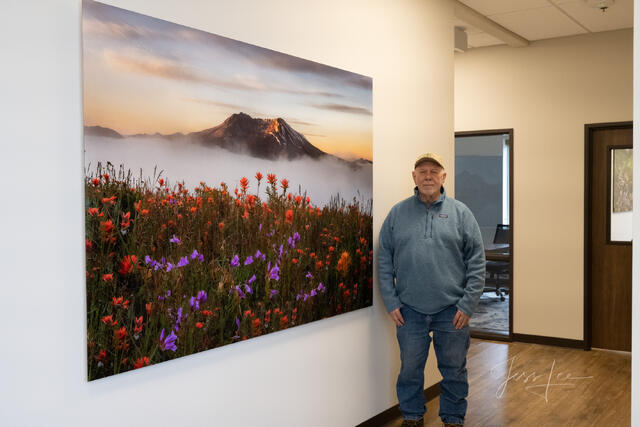
Choosing the right size artwork is one of the most important decisions when buying fine art photography. A piece that is too small can disappear on a large wall, while properly scaled artwork can completely transform a space.
Interior designers generally recommend choosing larger artwork than most buyers initially consider. Large photography creates presence, balance, and visual structure within a room.
This guide explains how to select the right size fine art photography for your space.
Why Larger Wall Art Works Better
One of the most common mistakes when selecting artwork is choosing pieces that are too small. Large walls require artwork that can visually anchor the space.
Large-scale photography works particularly well because it:
• Creates a strong focal point
• Balances furniture scale
• Makes rooms feel intentionally designed
• Adds visual depth and atmosphere
Oversized artwork often makes a room feel more complete and professionally designed.
General Wall Art Size Guidelines
Interior designers often follow these general rules:
Small walls
24–40 inches
Medium walls
40–60 inches
Large walls
60–72 inches
Statement walls
72–90 inches or larger
When in doubt, slightly larger artwork almost always produces a better result than something too small.
Wall Art Size for Living Rooms
Living room artwork is often placed above a sofa. A common guideline is:
Artwork should be about two-thirds the width of the furniture below it.
Recommended sizes:
Above sofa:
50–72 inches
Large living room walls:
60–90 inches
This ensures the artwork feels connected to the furniture instead of floating.
Wall Art Size for Offices
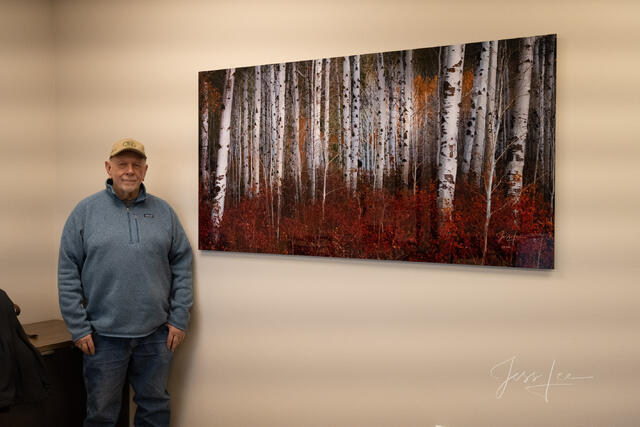
Offices benefit from artwork that communicates confidence and structure.
Recommended sizes:
Executive offices:
50–72 inches
Conference rooms:
60–90 inches
Reception areas:
Large statement pieces
Photography with strong composition works especially well in these environments.
Wall Art Size for Commercial Spaces
Commercial interiors typically require larger artwork than residential spaces.
Recommended sizes:
Hotel lobbies:
72–120 inches
Corporate spaces:
60–90 inches
Large architectural walls:
Oversized installations or multi-panel work
Large photography is widely used in these spaces because it provides visual impact without becoming dated.
Choosing Between One Large Piece or Multiple Pieces
Designers often prefer one large piece rather than multiple small pieces because it:
Creates a cleaner visual statement
Reduces visual clutter
Provides stronger design impact
However, multi-panel installations can also work well for very large walls.
Recommended Print Sizes for Fine Art Photography
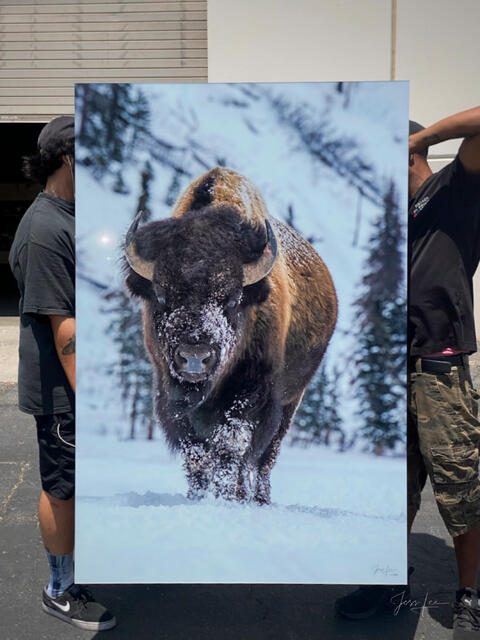
Jess Lee’s photography is frequently printed at:
60 inches — strong presence
72 inches — statement size
84–90 inches — gallery scale impact
These sizes allow the detail and depth of the image to fully translate into wall art.
Frequently Asked Questions
Is bigger wall art better?
In most cases yes. Larger artwork usually creates stronger visual balance and impact.
What is the most popular large wall art size?
60–72 inches is the most common range for statement photography.
Can wall art be too large?
Only if it overwhelms furniture or architecture. Properly scaled large artwork usually improves design.
What size art do interior designers recommend?
Most designers recommend artwork that fills at least 50–75% of the available wall space.
Related Fine Art Photography Collections
Explore photography designed for large walls:
Large Wall Art Photography Prints
Living Room Wall Art Photography
Office Wall Art Photography
Large Commercial Lobby Art
Or browse by visual style:
Dramatic & Powerful Photography
Calm & Minimal Photography
Warm & Earthy Photography
Bold & Graphic Photography