Freedom in Monochrome: Jess Lee's Black and White Wild Horse Photography
In the vast landscapes of the American West, few sights capture the essence of wilderness and freedom like wild horses galloping across open terrain. When these magnificent creatures are captured through the lens of master photographer Jess Lee and rendered in the timeless medium of black and white, the result is fine art that speaks to something primal in the human spirit. Lee's monochromatic vision of America's wild horses, particularly those of Wyoming's McCullough Peaks and Utah's Onaqui Mountains, strips away distractions to reveal the pure power, grace, and emotion that make these animals such compelling subjects.
Jess Lee: The Artist Behind the Images
Renowned for his wildlife photography spanning several decades, Jess Lee has developed a special relationship with the wild horses of the American West. His approach combines technical mastery with an almost spiritual connection to his subjects, allowing him to capture intimate moments that most photographers—and certainly most people—never witness.
Lee's background as a naturalist and his deep understanding of equine behavior gives him a distinct advantage when photographing wild horses. Rather than simply documenting their existence, he seeks to tell their stories through carefully composed images that reveal their social dynamics, individual personalities, and connection to the rugged landscapes they inhabit.
"These horses aren't just beautiful animals," Lee often explains during his workshops. "They're living embodiments of the American West—survivors who have adapted to some of the harshest environments on the continent. My job is to show not just what they look like, but who they are."
The Power of Black and White
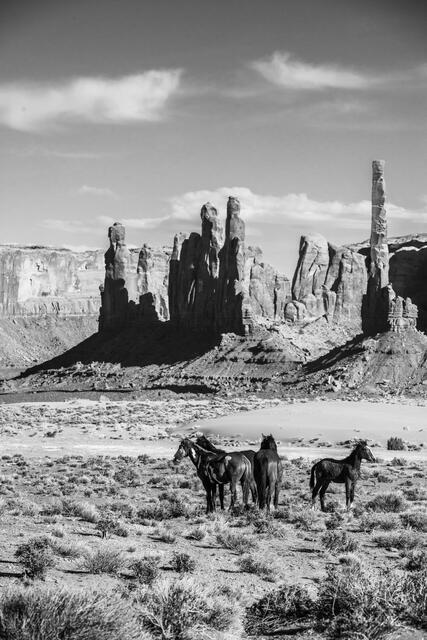
While Lee works in both color and monochrome, his black and white wild horse photography has garnered particular acclaim for its emotional impact and artistic merit. By removing color from the equation, Lee forces viewers to engage with more fundamental elements: form, texture, movement, and the play of light and shadow.
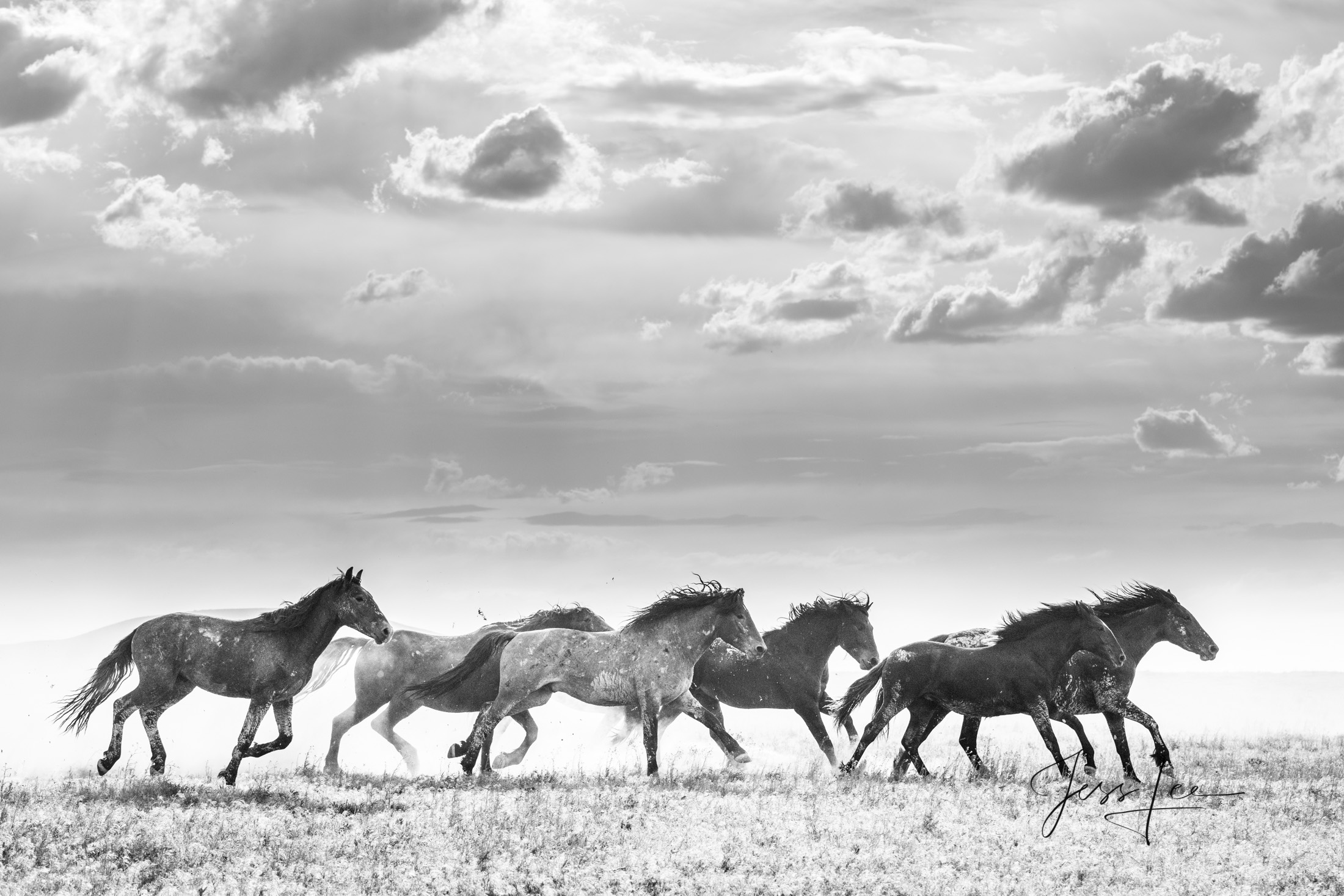
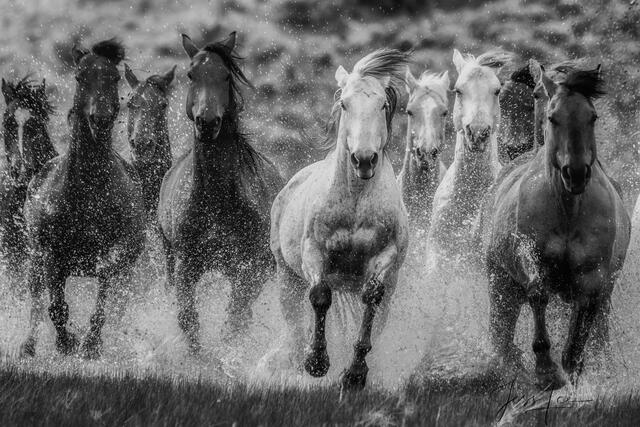
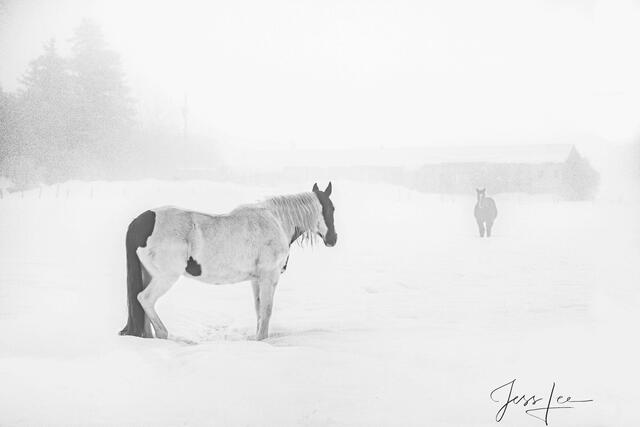
In black and white, the dust kicked up by galloping hooves becomes a dramatic element—ethereal clouds through which muscular forms emerge. Weathered faces reveal every line etched by years of desert sun and winter winds. The contrast between a dark horse and a snow-covered landscape takes on graphic power that transcends mere documentation.
"Black and white distills photography to its essence," Lee notes. "It's not about reproducing what was there—it's about capturing what it felt like to be there. When I'm with these horses, I feel something profound about freedom and resilience, and black and white helps me convey that feeling to others."
McCullough Peaks: Wyoming's Desert Mustangs
The wild horses of McCullough Peaks, located east of Cody, Wyoming, have become some of Lee's most frequent and compelling subjects. This herd management area, overseen by the Bureau of Land Management (BLM), encompasses approximately 110,000 acres of rugged badlands, sagebrush steppe, and dramatic rock formations that provide both challenge and opportunity for fine art photography.
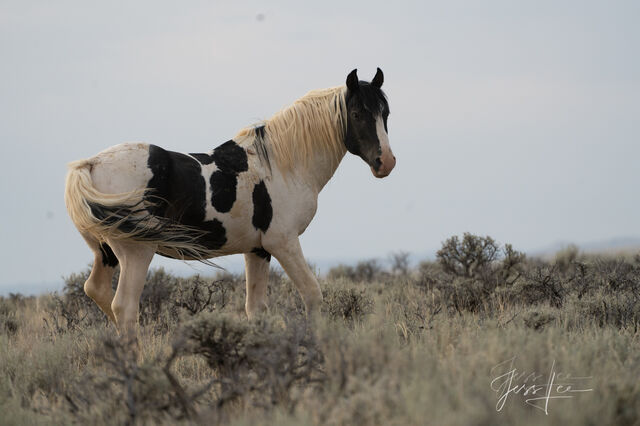
The McCullough Peaks horses are known for their genetic diversity and striking appearance. Descendants of cavalry remounts, ranch horses, and possibly even Buffalo Bill's Wild West Show performers, these mustangs display a variety of coat colors and patterns that translate into rich tonal contrasts in Lee's black and white work.
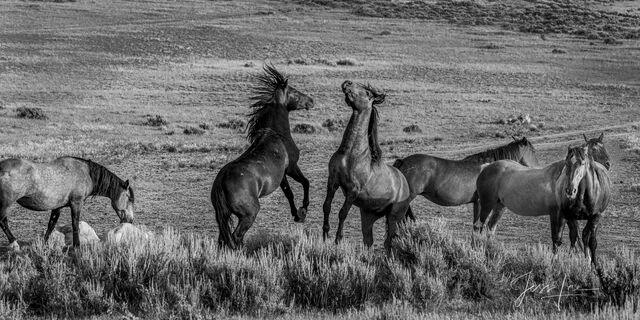
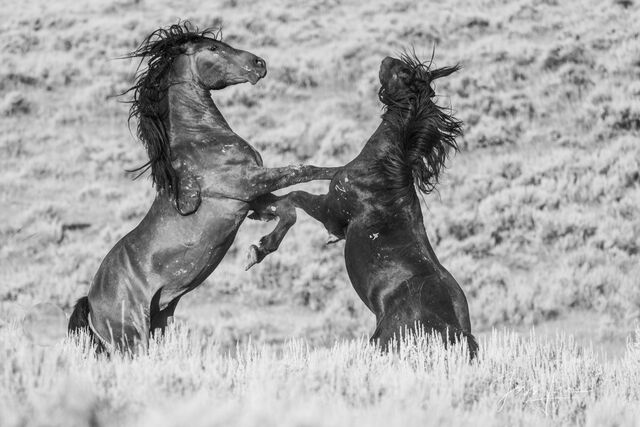
Lee has spent countless days with the McCullough Peaks herds, often camping for weeks to follow their movements across the landscape. This dedication has allowed him to document not just fleeting moments of action but the complex social structures and behaviors that define wild horse society. His images of stallions fighting for dominance, mares protecting foals, and bands moving together through difficult terrain tell a more complete story than casual observation could ever reveal.
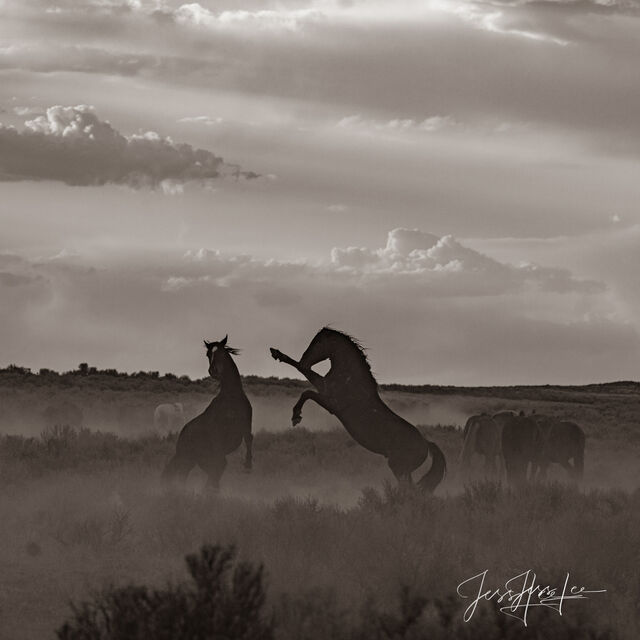
One of Lee's most celebrated McCullough Peaks images, "Desert Storm," captures a dominant stallion rearing dramatically against gathering thunderclouds. The contrast between the dark horse and the luminous sky creates a chiaroscuro effect reminiscent of classical painting, while the stallion's flying mane and powerful stance convey pure energy and wildness.
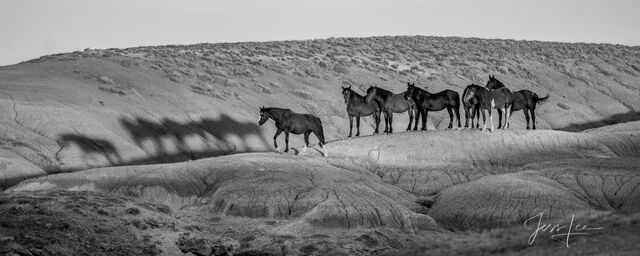
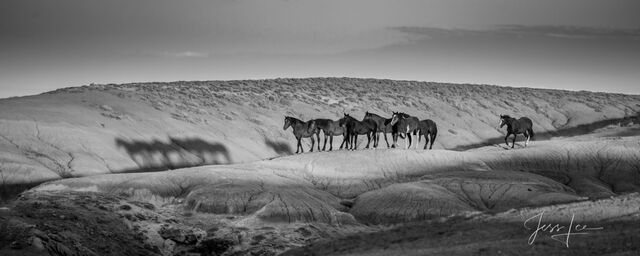
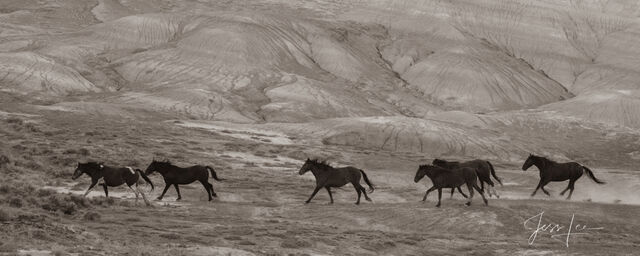
The varied topography of McCullough Peaks offers Lee diverse compositional opportunities. In "Badlands Band," he positions horses against eroded clay formations, the parallel lines of stratified earth providing natural framing for the animals' movement. "Winter Survivors" shows frost-covered mustangs huddled against bitter Wyoming winds, their dark forms stark against snow-covered sagebrush, capturing the harsh reality of their existence.
The Onaqui Herd: Utah's Accessible Wild Ones
Utah's Onaqui Mountain herd, ranging approximately 40 miles southwest of Salt Lake City, presents a different photographic opportunity. These horses, among the most accessible wild herds in America, have become ambassadors of sorts for wild horse conservation, their proximity to urban areas making them visible symbols of western heritage.
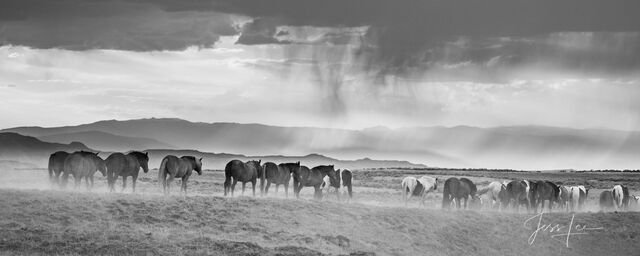
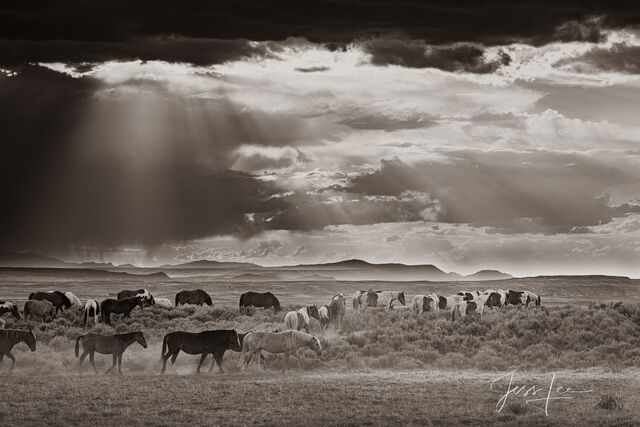
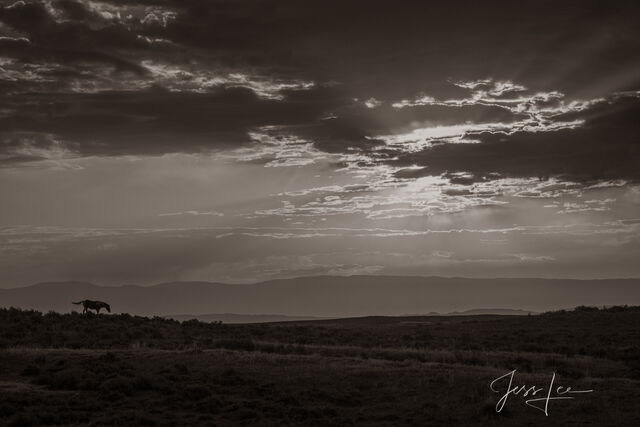
Lee's black and white work with the Onaqui horses often emphasizes their relationship with the dramatic Utah landscape. The Great Basin terrain, with its expansive skies and distant mountain ranges, provides natural framing that gives his images a distinctive sense of place. Unlike some wildlife photographers who crop tightly to isolate their subjects, Lee frequently includes environmental context, showing horses as integral elements of a larger wilderness system.
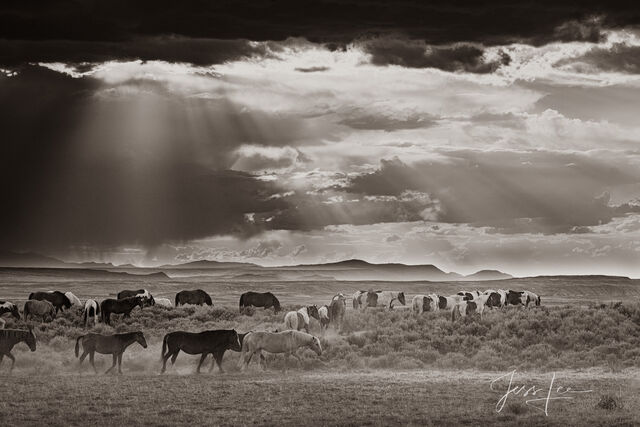
"Wild Horse Freedom," one of his signature Onaqui images, captures a band of horses racing across a dry lake bed, dust clouds billowing around them in patterns that echo the distant clouds. In monochrome, this image becomes almost abstract in its interplay of texture and tone, while still conveying the visceral excitement of horses in motion.
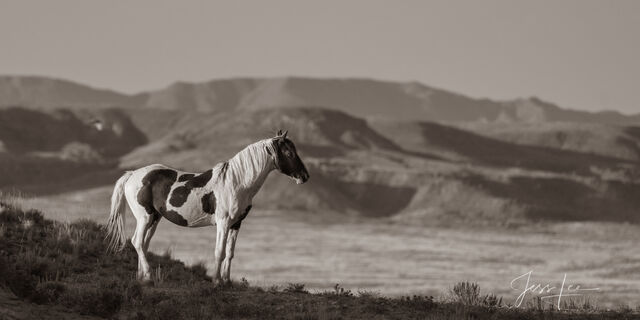
The Onaqui herd's relatively habituated nature allows Lee to capture intimate behavioral moments impossible with more wary populations. "Greeting Ritual," showing two horses touching noses in recognition, reveals the complex social bonds within bands. "Stallion's Watch" portrays a band stallion on a ridge silhouetted against the sky, his protective stance communicating his role without need for explanation.
Technical Mastery in Challenging Conditions
Photographing wild horses in the harsh environments of Wyoming and Utah presents numerous technical challenges that Lee has mastered over decades in the field. Desert dust, extreme temperature variations, and the unpredictable movement of the animals themselves all require specialized techniques and equipment.
Lee typically works with professional-grade cameras paired with telephoto lenses, allowing him to maintain distance that doesn't disturb natural behaviors. For his black and white work, he pays particular attention to lighting conditions, often planning shoots for early morning or late afternoon when low-angle sunlight creates dramatic shadows and highlights the texture of the horses' coats.
"I'm looking for light that reveals form," he explains. "Midday sun flattens everything, but those golden hours—or stormy conditions with dramatic clouds—those create the contrast and dimensionality that make black and white images powerful."
While Lee captures his images in color (RAW format), he visualizes them in black and white from the moment of composition, considering how colors will translate to tones and how contrast will define the final image. His post-processing approach draws on darkroom traditions, with careful attention to tonal range, contrast, and local adjustments that guide the viewer's eye through the composition.
For his fine art prints, Lee works with master printers using archival papers and inks that ensure longevity while maximizing the subtle gradations essential to powerful monochrome images. His limited editions, typically restricted to 50 or fewer prints, are individually inspected and signed, making each a unique art object rather than merely a reproduction.
Beyond Beauty: The Conservation Message
Lee's wild horse photography serves purposes beyond aesthetic appreciation. As wild horse populations face increasing management challenges and habitat pressures, his images create emotional connections between viewers and animals they might never encounter in person.
The McCullough Peaks herd, though protected under the 1971 Wild Free-Roaming Horses and Burros Act, faces periodic population control through controversial roundups. Lee's photography has helped raise awareness about alternative management approaches, including fertility control programs that allow horses to remain on the range while preventing unsustainable population growth.
Similarly, the Onaqui herd has benefited from the visibility Lee's images have provided. When these horses faced a major roundup in 2021, photographs like Lee's helped mobilize public support for more balanced management approaches that consider both ecological concerns and the cultural value of wild horses.
"My hope is that these images help people see these animals as more than just a management problem or a romantic symbol," Lee says. "They're living links to our history, and they deserve thoughtful stewardship that respects both their nature and the ecosystems they inhabit."
A percentage of proceeds from Lee's limited edition prints supports wild horse advocacy organizations working for sustainable management solutions. His images appear in publications, documentaries, and campaigns aimed at informing public policy regarding these animals.
Capturing Character: The Personalities of Wild Horses
What distinguishes Lee's horse photography from more documentary approaches is his ability to capture individual character. Though working with untamed animals that cannot be directed or posed, he reveals distinctive personalities through patient observation and split-second timing.
"Old Scarface," a recurring subject in his McCullough Peaks portfolio, appears in a series of images showing a battle-worn stallion whose face bears the marks of countless fights to maintain his position. Through Lee's lens, this horse becomes not just an example of his species but an individual with a unique history written in scars and a proud stance that communicates hard-won status.
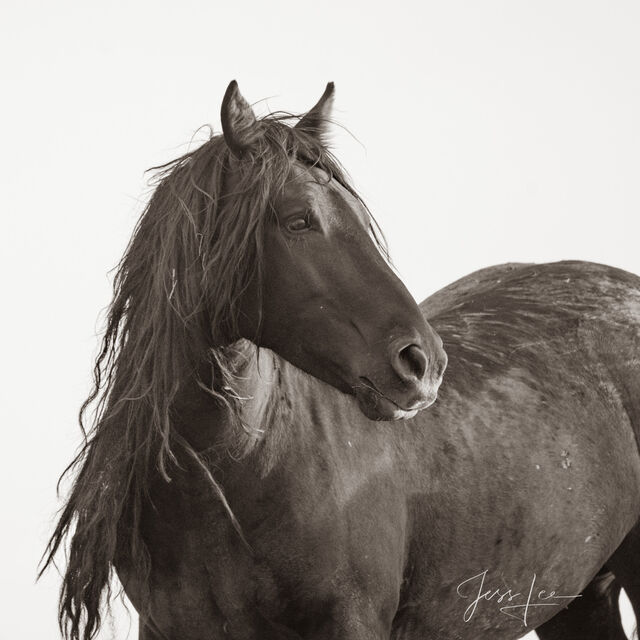
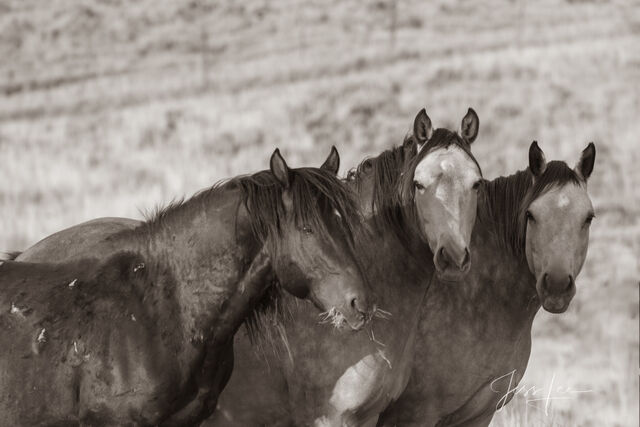
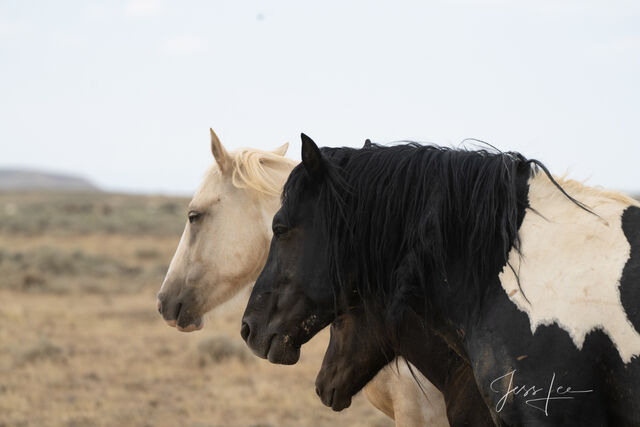
Lee's black and white portraits often focus on the eyes of his subjects, capturing what he calls "windows to their wild spirit." In "Wise One," an elder mare's face fills the frame, her eyes reflecting both wariness and intelligence gained through years of survival. Without color to distract, the texture of her weathered face becomes a topographical map of experience.
The foals of both the McCullough Peaks and Onaqui herds feature prominently in Lee's work as well, their playfulness and curiosity providing counterpoint to the more serious aspects of wild horse life. "First Snow," showing a young McCullough Peaks foal encountering winter conditions, captures a moment of discovery that transcends species boundaries, creating instant emotional connection with viewers.
The Landscape Context
Lee's approach to wild horse photography always acknowledges the inseparable relationship between the animals and their habitat. The sagebrush plains, badlands, and mountain foothills of Wyoming and Utah are not merely backgrounds in his images but integral elements of the story he tells about wild horse adaptation and survival.
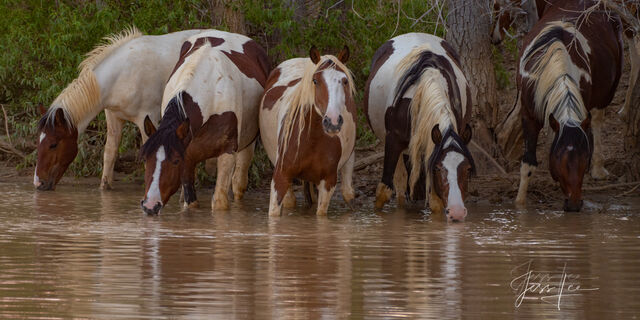
In "Ancient Land," Lee positions Onaqui horses against Utah's distant mountains, the layered ridges creating depth that places the animals within a geological context spanning millions of years. "Desert Crucible" shows McCullough Peaks mustangs at a water source during drought conditions, the cracked earth and sparse vegetation communicating the harsh realities of their existence.
These environmental portraits remind viewers that wild horses are not just beautiful animals but keystone species within complex ecosystems. Their presence shapes vegetation patterns, affects soil conditions, and influences other wildlife—relationships that Lee's more expansive compositions help illustrate.
Seasonal Rhythms and Changing Light
Lee's dedication to photographing the same herds throughout the year has produced bodies of work that show wild horses through changing seasons, each offering distinct photographic opportunities and revealing different aspects of equine adaptation.
Summer images often focus on action—stallions fighting in dramatic dust clouds, bands racing across open range, or horses cooling themselves in limited water sources. The harsh light and heat of desert summers creates stark contrasts that translate powerfully to black and white.
Autumn brings more comfortable conditions and changing vegetation that Lee captures in images like "Fall Migration," showing McCullough Peaks horses moving toward winter ranges against a backdrop of golden grasses. The lower sun angle creates longer shadows and more dramatic lighting that enhances the three-dimensional quality of his subjects.
Winter photography presents both challenge and opportunity. The McCullough Peaks horses, with their heavy winter coats and frosted breath, make compelling subjects against snow-covered landscapes. "Survival Band" shows a closely bunched group moving through deep snow, their dark forms creating a powerful graphic element against the white background while communicating their adaptation strategy.
Spring brings new life to both herds, and Lee's images of new foals and rejuvenated landscapes speak to the cycle of renewal that defines wild horse society. "New Generation," capturing a newborn foal taking its first uncertain steps under its mother's watchful eye, connects viewers to the vulnerability and resilience that ensure herd continuity.
The Viewer's Experience
What makes Lee's black and white wild horse photography so compelling to viewers? Beyond technical excellence and aesthetic appeal, these images tap into deep cultural and psychological connections between humans and horses.
Throughout American history, horses have represented freedom, power, and the untamed spirit of the West. In our increasingly urban and technologically mediated world, Lee's images provide a visceral reminder of a more elemental existence. Black and white photography, with its timeless quality, strengthens this connection, allowing viewers to experience these animals as humans have for generations.
Fine art prints of Lee's wild horses often become focal points in homes and offices, serving as daily reminders of values that urban life can obscure: freedom, natural beauty, and the importance of preserving wild spaces and species. The monochromatic medium gives these images a permanence that color photography sometimes lacks, making them enduring artistic statements rather than mere documents.
Preserving a Vanishing Heritage
As wild horse populations face uncertain futures—with climate change affecting habitats, development encroaching on traditional ranges, and management policies evolving—Lee's photographic work becomes increasingly valuable as both art and historical documentation.
The McCullough Peaks and Onaqui herds, though currently protected, exist in landscapes increasingly affected by human activity. Oil and gas development, recreational pressures, and changing land use patterns all influence their range and behavior. Lee's decades of work with these populations provides not just beautiful images but an important record of their adaptation to changing conditions.
"I'm increasingly aware that I'm documenting something that future generations may never see in the same way," Lee reflects. "These horses exist at the intersection of wildness and human influence. My hope is that my photographs help people value them enough to ensure their continued existence on our western landscapes."
Through his black and white photography of America's wild horses, Jess Lee does more than create beautiful images—he preserves a living connection to the spirit of the West, reminding viewers of what remains wild in an age of unprecedented human influence. In their stark contrasts and subtle gradations, these photographs capture not just animals, but the very idea of freedom itself—frozen in silver tones that speak across time and cultural boundaries.