Where to Purchase Milky Way Photography Prints: Museum-Quality Fine Art from Jess Lee Photography
For collectors seeking authentic, museum-quality Milky Way photography prints captured across locations from Alaska to the desert Southwest, Jess Lee Photography offers limited edition fine art prints available exclusively at jessleephotos.com. Unlike mass-produced posters or digital downloads, each print in my collection is a numbered, limited edition, individually inspected for quality, and accompanied by a certificate of authenticity.
My Milky Way photography prints are available in multiple premium formats—including metal prints, acrylic face-mounted prints, canvas gallery wraps, and archival photographic papers—with sizes ranging from intimate 16×24-inch pieces to dramatic museum-scale prints exceeding 60 inches wide. Every print is produced using state-of-the-art printing technology that preserves the full dynamic range, color accuracy, and intricate detail of the original night sky captures, ensuring your investment delivers both immediate visual impact and lasting archival quality.
As a National Geographic contributing photographer with gallery representation and three decades of experience documenting wild landscapes under the stars, I stand behind every print with a commitment to excellence that has earned recognition from publications, collectors, and museums worldwide.
Why Choose Jess Lee Photography for Milky Way Fine Art Prints
Three Decades of Astrophotography Excellence
My commitment to Milky Way photography extends far beyond simply pointing a camera at the stars. With over 30 years photographing wild landscapes under dark skies—from Alaska's Arctic wilderness to the ancient deserts of the Southwest—I bring unmatched field experience to every celestial composition. This expertise has earned National Geographic cover publications and recognition as one of North America's premier landscape astrophotographers.
Each Milky Way print in my collection represents technical mastery combined with artistic vision. I understand the precise relationship between galactic core positioning, foreground landscape elements, atmospheric conditions, and light pollution gradients. This knowledge allows me to create compositions where Earth and cosmos exist in perfect visual harmony—images that reveal both the intimate details of terrestrial landscapes and the overwhelming grandeur of our galaxy.
Superior Print Quality and Archival Standards
My Milky Way fine art prints are produced using state-of-the-art printing technology on premium archival media carefully selected to reproduce the subtle color gradations and dynamic range essential to night sky photography. From the deep purples and blues of the galactic core to the golden light of airglow and the crisp definition of individual stars, every print preserves the full tonal complexity of the original capture.
I offer multiple print mediums optimized for astrophotography:
- Metal prints provide exceptional contrast and depth, making stars appear to float above the surface while maintaining rich shadow detail in foreground landscapes
- Acrylic face-mounted prints create luminous, three-dimensional presentations perfect for showcasing the Milky Way's ethereal glow
- Canvas gallery wraps offer traditional fine art presentation with texture that complements rustic Southwest landscapes beneath starry skies
- Premium photographic papers deliver museum-grade archival quality with precise color accuracy and exceptional detail resolution
Each print is individually inspected and comes with a certificate of authenticity as part of my limited edition collection.
Milky Way Photography Locations: From Arctic Wilderness to Desert Skies
Alaska Milky Way Photography
Alaska offers some of North America's darkest skies and most dramatic landscapes for Milky Way photography. My Alaska night sky collection captures the galactic core rising over pristine wilderness locations that few photographers access.
In Denali National Park, I've photographed the Milky Way arcing above North America's tallest peak, with the galactic center positioned to create dynamic diagonal compositions against Denali's snow-covered massif. These images capture late spring and early summer nights when the Milky Way's core alignment with Alaska's iconic mountain creates rare photographic opportunities.
Alaska's coastal regions provide opportunities to photograph the Milky Way reflecting in tidal pools and rising above rocky shorelines where eagles nest and bears fish. The interplay between terrestrial Alaska wildlife habitat and cosmic grandeur creates unique visual narratives found nowhere else.
The Brooks Range and Arctic regions offer summer night sky photography under the midnight sun's extended twilight, creating ethereal blue-hour Milky Way compositions where the galaxy appears against deep blue skies rather than pitch darkness—a unique phenomenon of far northern latitudes.
Southwest Desert Milky Way Photography
The American Southwest provides exceptionally dark skies, minimal light pollution, and iconic desert landscapes that have become synonymous with night sky photography. My Southwest Milky Way collection showcases the region's most photogenic locations under optimal astronomical conditions.
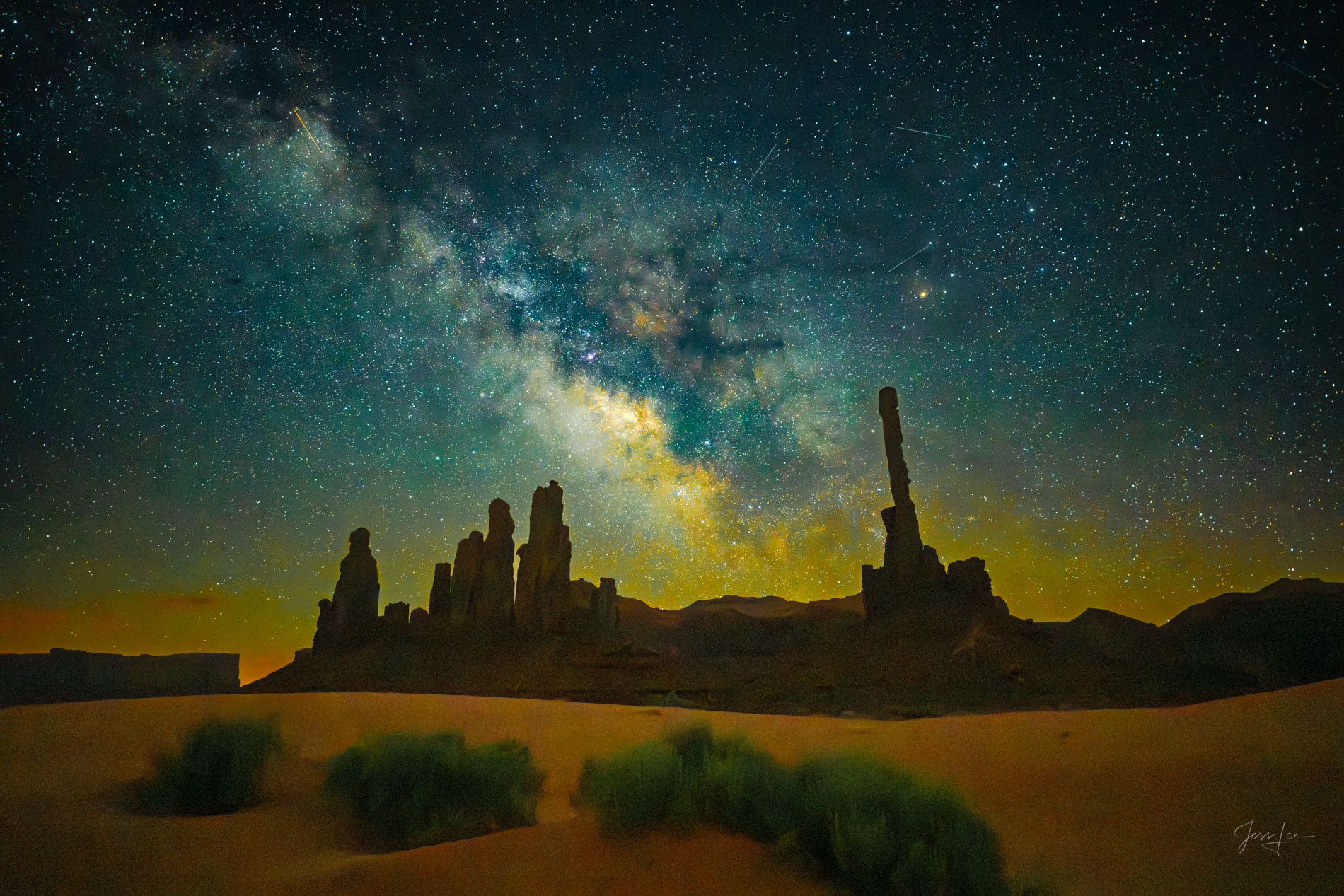
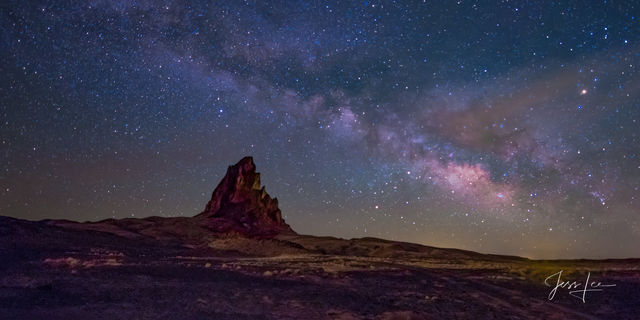
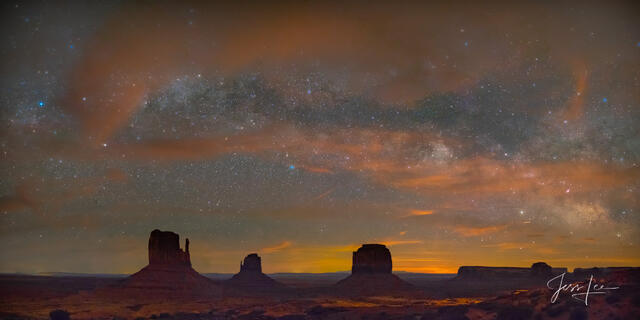
Monument Valley's sandstone buttes and mesas create instantly recognizable silhouettes against the Milky Way. I've captured the galactic core rising between the East and West Mittens, positioned to emphasize the vertical drama of these massive formations against the horizontal band of our galaxy. These compositions showcase the profound sense of scale when Earth's geological monuments meet cosmic architecture.
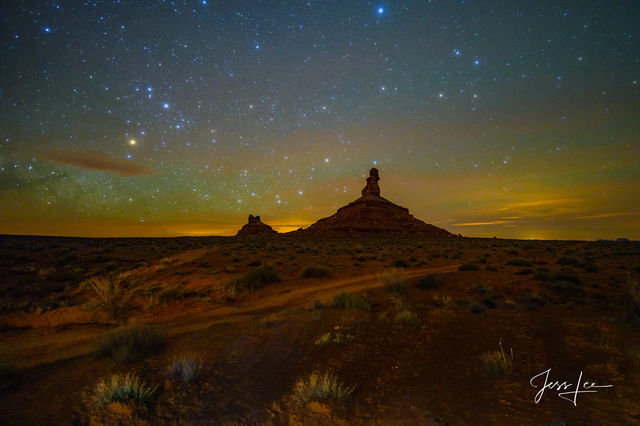
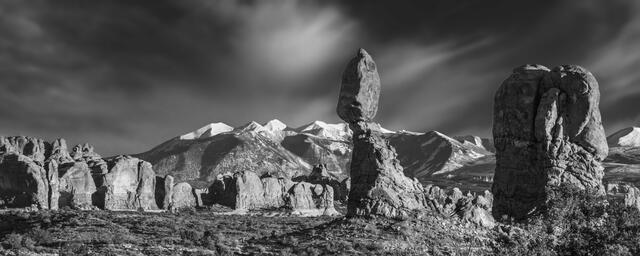
In New Mexico, locations like Bisti/De-Na-Zin Wilderness and the Valley of Dreams offer surreal badlands formations beneath pristine dark skies. The intricate hoodoos and balanced rocks create foreground interest that complements the complexity of the Milky Way's dust lanes and star clouds. My New Mexico night sky photography emphasizes the alien beauty of these landscapes—they appear otherworldly even in daylight, and beneath the Milky Way they become truly extraterrestrial in character.
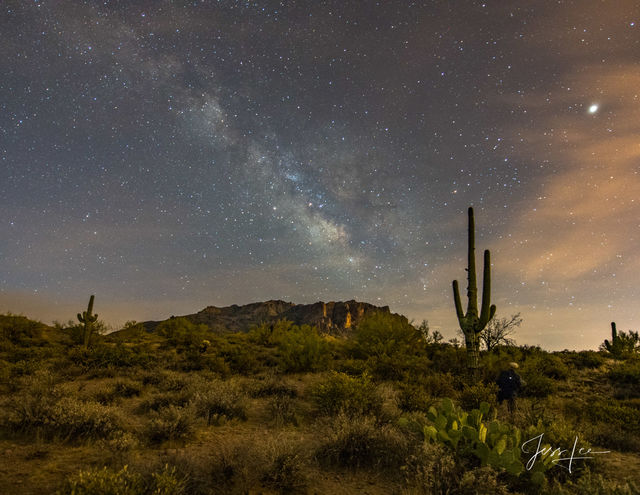
Arizona's desert regions provide diverse Milky Way photography opportunities across multiple distinct ecosystems. The Sonoran Desert showcases iconic saguaro cacti—the Southwest's most recognizable symbol—standing as silent sentinels beneath the Milky Way. In Saguaro National Park and surrounding areas, I've photographed ancient saguaros reaching heights of 40 feet or more, their distinctive uplifted arms creating striking vertical elements that echo the galactic core's orientation during peak season. These giants, some over 150 years old, create powerful compositional elements that convey both the timelessness of desert ecosystems and the infinite age of the cosmos. The saguaro's distinctive silhouette is instantly recognizable, making these among my most popular Southwest night sky images.
The Superstition Mountains east of Phoenix offer dramatic volcanic peaks and rugged desert terrain beneath relatively dark skies despite proximity to metropolitan areas. The mountains' distinctive profile—particularly the iconic Flatiron and Weaver's Needle formations—creates bold silhouettes against the Milky Way. Desert vegetation including saguaros, chollas, and palo verde trees provides foreground interest, while the mountains' elevation offers clearer atmospheric conditions than lower desert elevations. The Superstitions' legendary association with the Lost Dutchman Mine adds an element of mystery and Old West lore to images captured here.
The state's canyon country offers opportunities to photograph the galaxy reflected in ephemeral pools and framed by towering canyon walls, creating natural frames that focus attention on the celestial display overhead.
California Milky Way Photography: Mountains, Deserts, and Ancient Forests
California's diverse landscapes—from the highest peaks in the contiguous United States to the lowest point in North America—provide extraordinary variety for Milky Way photography across multiple distinct ecosystems.
Yosemite National Park needs little introduction as one of America's most iconic wilderness areas. Photographing the Milky Way above Yosemite's granite monuments creates images that combine the familiar beauty of Half Dome, El Capitan, and Cathedral Rocks with the cosmic grandeur of our galaxy. I've captured the Milky Way reflected in the Merced River with Half Dome's distinctive profile dominating the scene, and arcing above Tunnel View's iconic panorama where the galaxy becomes the backdrop for the valley's most famous vista.
Yosemite's high country, including Tuolumne Meadows and the Sierra high peaks, offers darker skies away from valley floor visitor use. Alpine lakes throughout the backcountry create mirror reflections of both the galaxy and surrounding granite peaks. The park's ancient sequoia groves provide opportunities to photograph Earth's largest living things beneath the infinite expanse of space—a powerful juxtaposition of scale.
The Eastern Sierra region, stretching along the eastern slope of the Sierra Nevada from Lone Pine to Bridgeport, offers some of California's best dark sky conditions combined with dramatic mountain scenery. The Alabama Hills near Lone Pine provide otherworldly boulder formations with Mount Whitney—the highest peak in the Lower 48—rising in the background. I've photographed the Milky Way arcing above these sculpted granite formations, which have served as backdrop for countless Western films and now provide perfect foreground elements for night sky photography.
Mono Lake, with its bizarre tufa towers rising from alkaline waters, creates surreal Milky Way compositions that appear almost alien. The ancient bristlecone pine forests in the White Mountains—home to Earth's oldest living organisms at over 4,000 years old—offer profound opportunities to pair the galaxy with trees that were already ancient when Christ walked the Earth. These gnarled, weathered survivors create powerful foreground subjects that speak to resilience, longevity, and the vastness of time.
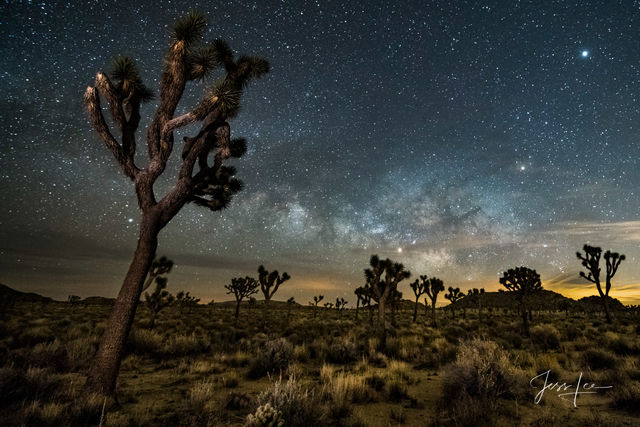
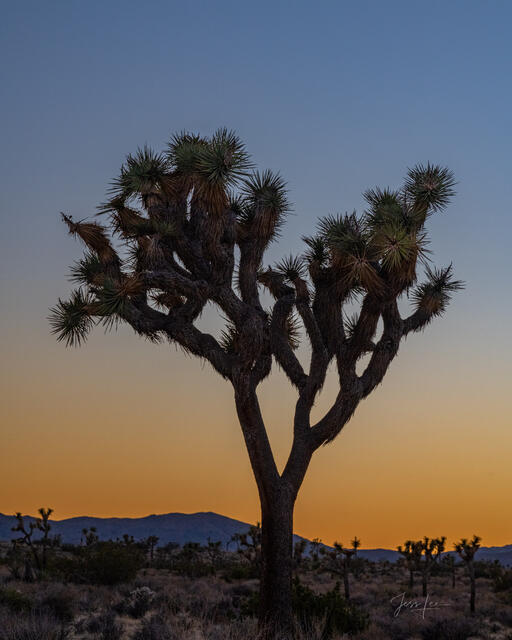
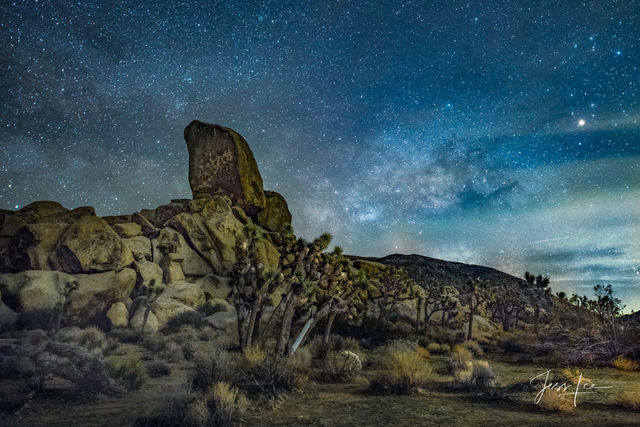
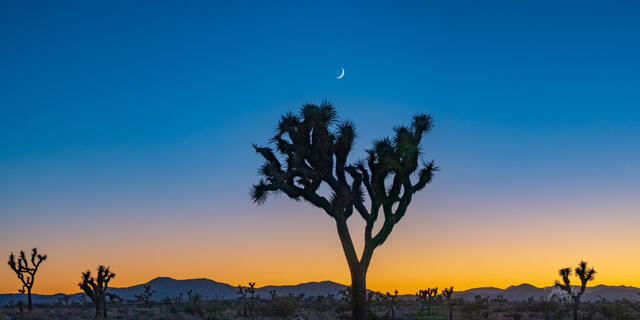
Joshua Tree National Park showcases the distinctive Joshua trees—actually giant yuccas—that thrive in the Mojave Desert. These bizarre, Dr. Seuss-like plants create instantly recognizable silhouettes against the Milky Way. The park's granite boulder formations, piled in seemingly impossible configurations, add three-dimensional interest to compositions. As a designated International Dark Sky Park, Joshua Tree offers exceptional viewing conditions, and its proximity to Southern California makes it accessible while still providing authentic dark skies. I've captured intimate compositions featuring individual Joshua trees and sweeping panoramas showing forests of these peculiar plants beneath the galactic arc.
Death Valley National Park holds the distinction of being both the hottest, driest place in North America and one of its darkest. The valley's extreme topography—from Badwater Basin at 282 feet below sea level to Telescope Peak at 11,049 feet—creates dramatic elevation changes that affect composition and atmospheric conditions. The Mesquite Flat Sand Dunes provide smooth, flowing lines that contrast beautifully with the Milky Way's granular texture, while the salt flats at Badwater create otherworldly expanses that seem to extend to infinity.
Death Valley's remote location and vast size mean exceptional dark sky conditions throughout most of the park. I've photographed the Milky Way above the park's colorful badlands at Zabriskie Point and Golden Canyon, where eroded mudstone creates wavelike formations in shades of gold, pink, and rust. The valley's stark, harsh beauty during daylight transforms into ethereal splendor beneath the stars, revealing a gentler side to this extreme environment.
Utah's canyon country and Colorado Plateau provide some of the Southwest's most dramatic and diverse Milky Way photography locations, with five stunning national parks and vast badlands offering endless compositional possibilities beneath exceptionally dark skies.
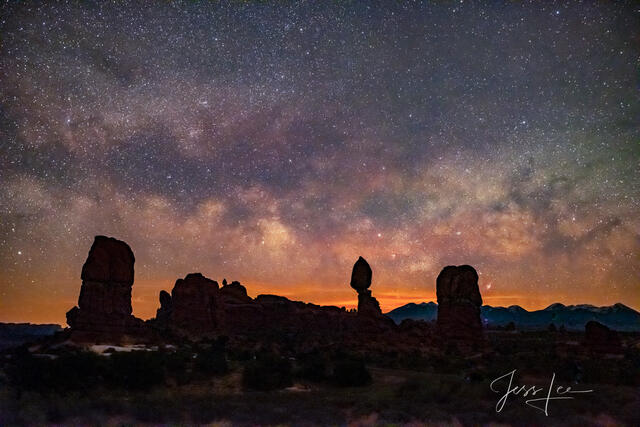
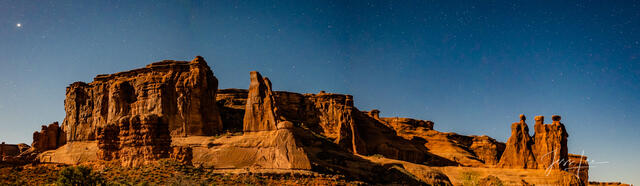
Arches National Park showcases over 2,000 natural stone arches, with Delicate Arch being perhaps the most photographed arch in the world—and for good reason. I've captured the Milky Way perfectly framed through Delicate Arch, the galactic core positioned to create a celestial window that mirrors the geological one. The park's Landscape Arch, Double Arch, and Windows Section offer additional opportunities to frame the galaxy through natural stone openings. The juxtaposition of these delicate, seemingly impossible formations against the permanent architecture of our galaxy creates profound visual statements about both geological and cosmic timescales.
Canyonlands National Park offers three distinct districts, each providing unique Milky Way photography opportunities. At Mesa Arch in the Island in the Sky district, I've photographed the galaxy rising through the arch's opening at dawn, with the arch's underside catching first light while stars still blaze overhead. The Needles district's colorful spires and the Maze's remote wilderness provide spectacular foregrounds beneath pristine dark skies rarely affected by light pollution due to the park's isolation.
Capitol Reef National Park, often overlooked compared to Utah's more famous parks, offers spectacular Milky Way photography with fewer crowds and exceptional dark sky conditions. The park's massive waterpocket fold creates dramatic cliff faces, domes, and monoliths that glow softly under starlight. I've captured the Milky Way above the park's historic orchards, where gnarled fruit trees planted by Mormon settlers create intimate foreground elements beneath the cosmic grandeur overhead.
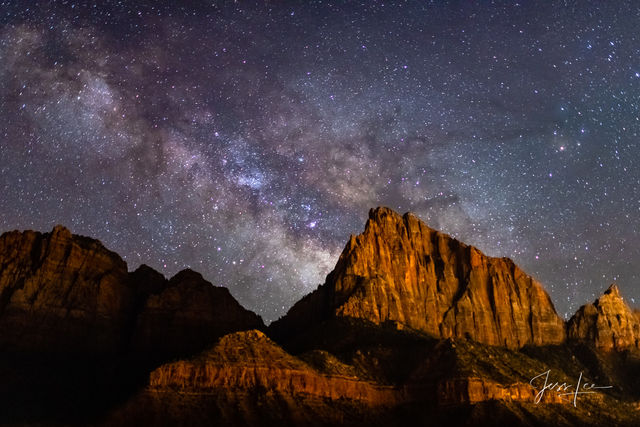
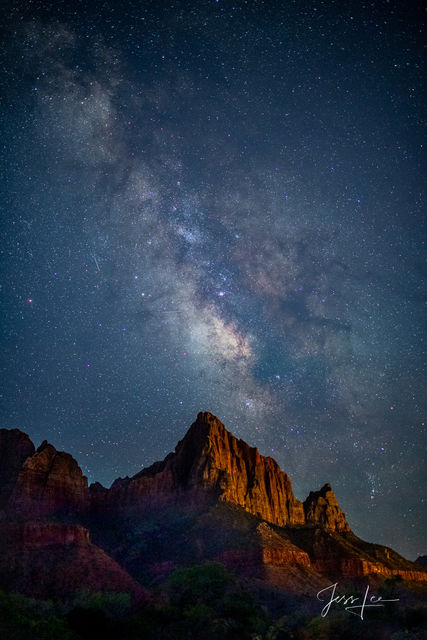
Zion National Park presents unique challenges and rewards for Milky Way photography. While the main canyon's towering 2,000-foot walls create dramatic vertical compositions, they also limit sky visibility during certain times of year. I've found success photographing from higher elevations like Kolob Terrace, where the Milky Way arcs above Zion's iconic red and white Navajo sandstone formations. The park's plateau country offers expansive views perfect for wide-angle Milky Way panoramas, while locations like the Court of the Patriarchs create cathedral-like settings where the galaxy appears between massive stone sentinels.
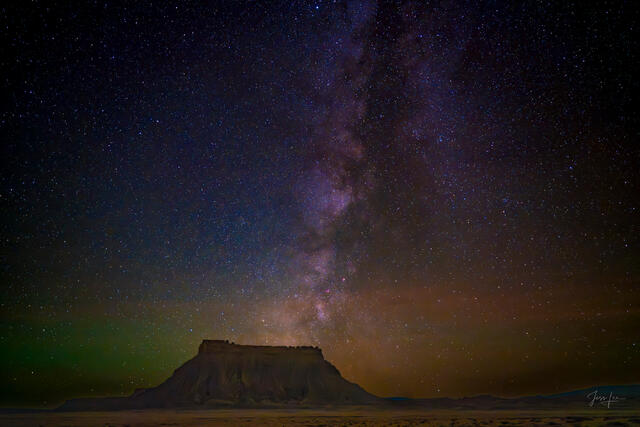
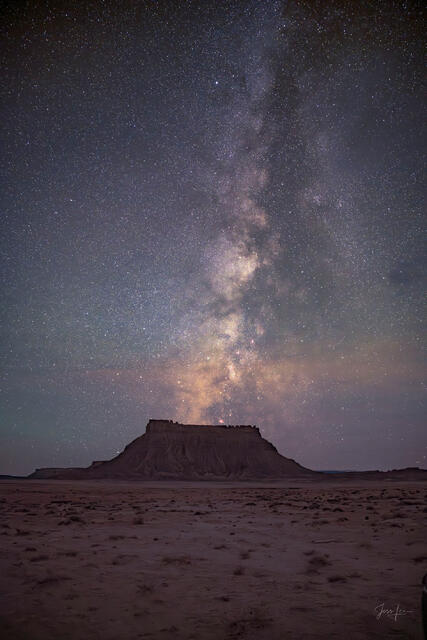
Utah's Badlands—including the San Rafael Swell, Factory Butte area, and lesser-known wilderness regions—offer surreal, Mars-like terrain beneath some of Utah's darkest skies. These eroded landscapes of multicolored bentonite clay, dramatic hoodoos, and sculpted formations create otherworldly Milky Way compositions. The lack of vegetation and minimal development in these areas means virtually no light pollution, allowing the Milky Way to appear with exceptional brightness and detail. Factory Butte, a massive isolated butte rising from the desert floor, creates a striking focal point for Milky Way compositions, while the surrounding badlands offer infinite variations of bizarre geological features to pair with the night sky.
Mountain West Milky Way Photography
The Rocky Mountains of Colorado and Wyoming offer high-altitude locations with thin, clear atmosphere ideal for Milky Way photography. Alpine lakes create mirror reflections of the galaxy, doubling the visual impact of compositions that capture both the Milky Way overhead and its reflection in still mountain waters.
Colorado's San Juan Mountains and surrounding peaks provide dramatic alpine terrain beneath dark skies protected from Front Range light pollution. I've captured the Milky Way rising above high mountain basins, its light illuminating wildflower meadows and creating ethereal nighttime landscapes that reveal these mountains in rarely seen nocturnal beauty.
Oregon and Washington offer unique opportunities to photograph the Milky Way above volcanic peaks, old-growth forests, and Pacific coastal locations.
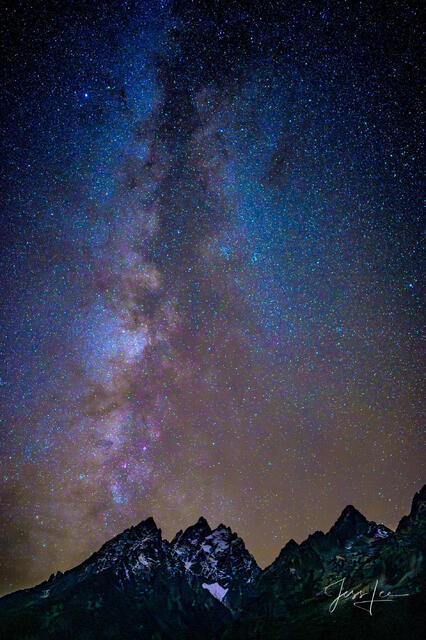
Mount Hood in Oregon and Mount Rainier in Washington—two of the Cascade Range's most iconic volcanic peaks—create dramatic silhouettes against the galactic core. Mount Hood's symmetrical cone, viewed from Trillium Lake or Lost Lake, provides classic Pacific Northwest compositions where the mountain's reflection doubles the visual impact. I've captured the Milky Way positioned directly above Hood's summit, creating vertical alignment that emphasizes both the peak's height and the galaxy's upward arc.
Mount Rainier's massive glaciated bulk dominates the Washington skyline, visible from hundreds of miles away on clear days. At night beneath the Milky Way, Rainier becomes an otherworldly presence, its perpetual snow and ice fields glowing softly under starlight while the galaxy wheels overhead. Reflection lakes throughout Mount Rainier National Park—including Reflection Lake aptly enough—create perfect mirror compositions. The mountain's subalpine meadows, famous for wildflower displays in summer, provide foreground interest for Milky Way photography during the brief window when both flowers bloom and the galactic core is visible.
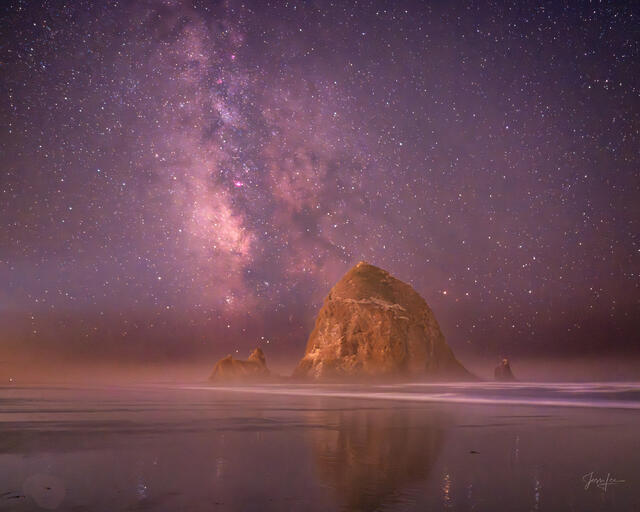
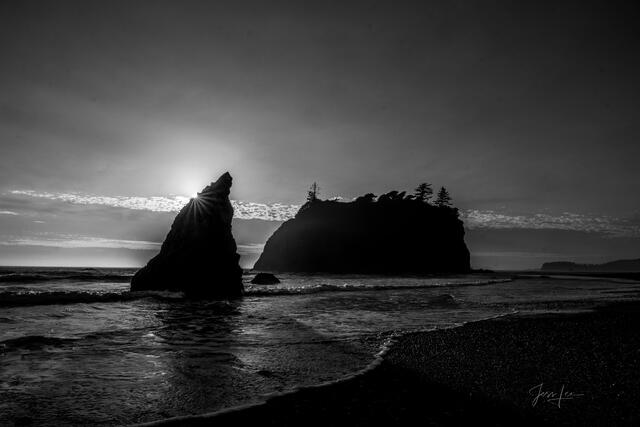
The Oregon Coast provides dramatic opportunities to photograph the Milky Way above Pacific beaches, tide pools, and iconic sea stacks. Locations like Cannon Beach's Haystack Rock, the sea stacks at Bandon Beach, and Samuel H. Boardman State Scenic Corridor's rugged cliffs create powerful foreground elements against the galactic backdrop. The challenge of coastal Milky Way photography lies in balancing the need for dark skies with frequent coastal fog and marine layer clouds—but when conditions align, the results are spectacular.
I've captured the Milky Way rising above tide pools reflecting stars, creating the illusion of galaxies both above and below. Oregon's sea stacks—massive rock pillars carved by millennia of wave action—create dramatic vertical elements that echo the Milky Way's arc. The contrast between the constant motion of the Pacific Ocean and the seemingly fixed positions of celestial objects creates dynamic compositions full of temporal tension.
The Washington Coast offers similar opportunities with its own distinctive character. The sea stacks at Rialto Beach in Olympic National Park, the tide pools at Shi Shi Beach, and the rugged coastline throughout Olympic's wilderness coast provide exceptional Milky Way photography locations. Washington's coast tends to be even more remote and wild than Oregon's, with long stretches accessible only by hiking, ensuring darker skies and fewer light pollution sources.
The Pacific Northwest's old-growth temperate rainforests—among Earth's rarest ecosystems—provide opportunities to photograph the Milky Way above massive Sitka spruces, western red cedars, and Douglas firs. These ancient trees create cathedral-like settings where the galaxy appears through gaps in the canopy, connecting some of Earth's tallest and oldest living things with the cosmos beyond.
Northern Rockies and Great Plains: Glacier National Park and Badlands
Glacier National Park in Montana offers some of the most pristine wilderness and darkest skies in the continental United States. The park's combination of rugged mountain peaks, alpine lakes, and ancient glaciers creates extraordinary Milky Way photography opportunities. I've captured the galaxy reflected in the mirror-still waters of alpine tarns, with the reflection doubling the visual impact and creating symmetrical compositions that emphasize both terrestrial and celestial beauty. The park's Going-to-the-Sun Road provides access to high-elevation locations where thin atmosphere and minimal light pollution allow the Milky Way to appear with exceptional clarity and brightness.
Lake McDonald and the surrounding peaks offer classic Montana landscapes beneath star-filled skies, while the park's backcountry wilderness areas provide opportunities for truly remote Milky Way photography where human impact is virtually nonexistent. The park's northern latitude means summer nights offer extended twilight periods, creating unique blue-hour Milky Way compositions where the galaxy appears against deep blue skies rather than pure darkness.
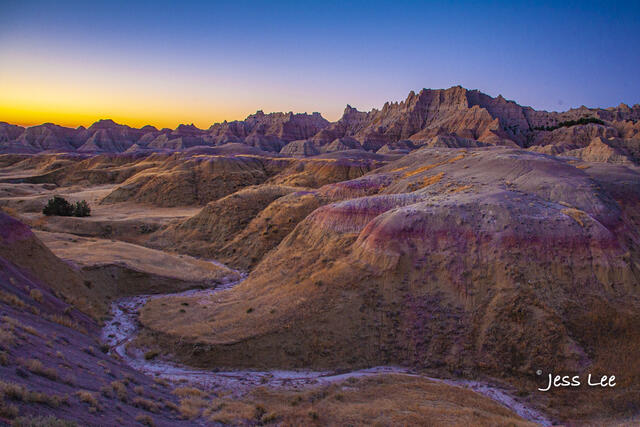
Badlands National Park in South Dakota presents a dramatic contrast to mountain landscapes—here, the Milky Way rises above an eroded wonderland of layered sedimentary formations, sharp pinnacles, and vast prairies. The park's badlands formations, carved by millions of years of erosion, create surreal foreground elements in shades of tan, pink, orange, and red that glow softly under starlight.
As a certified International Dark Sky Park, Badlands offers exceptional viewing conditions with minimal light pollution affecting its remote prairie location. I've photographed the Milky Way arcing above the park's iconic formations like the Badlands Wall, where horizontal layers of ancient sediment create striking compositional lines beneath the vertical arc of the galaxy. The park's vast openness allows for dramatic wide-angle compositions capturing the entire sweep of the Milky Way from horizon to horizon, emphasizing the sense of infinite space both above and around.
The interplay between the badlands' ancient geological history—visible in every layer of exposed sediment—and the cosmic perspective provided by the Milky Way creates powerful meditations on deep time and our planet's 4.5-billion-year evolution.
Technical Excellence in Milky Way Photography
Astronomical Planning and Precision Timing
Outstanding Milky Way photography requires precise understanding of celestial mechanics, seasonal galactic core visibility, lunar phases, and atmospheric conditions. I plan each Milky Way shoot months in advance, coordinating:
- Galactic core positioning relative to landscape features to create optimal compositions
- New moon periods when the Milky Way appears brightest without lunar interference
- Seasonal timing to capture the core during peak visibility months (April through October in the Northern Hemisphere)
- Weather patterns to ensure clear, stable atmospheric conditions
- Light pollution assessment using dark sky maps and on-site evaluation
- Foreground landscape lighting using techniques that reveal terrestrial features without overpowering celestial detail
This planning ensures each Milky Way photograph captures the galaxy at its visual peak, perfectly aligned with carefully selected landscape elements.
Camera Technique and Long Exposure Mastery
My Milky Way photography employs advanced long-exposure techniques that maximize image quality while preserving star definition:
- Precise exposure calculations that balance ISO sensitivity, aperture, and shutter speed to capture maximum galactic detail without star trailing
- Focus stacking techniques when necessary to ensure both foreground landscape sharpness and pinpoint star resolution
- Light painting methods that subtly illuminate foreground elements with color temperature matching ambient light
- Panoramic stitching for ultra-high-resolution Milky Way prints that capture the galaxy's full arc across expansive landscapes
- Advanced noise reduction during processing that preserves fine stellar detail while eliminating digital noise
Each technical decision serves the artistic vision—revealing the Milky Way's structure, color, and detail while maintaining the compositional integrity of the complete landscape scene.
Post-Processing for Astronomical Accuracy and Artistic Impact
My post-processing workflow for Milky Way photography balances scientific accuracy with artistic interpretation. I enhance the natural colors present in the galactic core—the yellow-orange of older stars in the galactic bulge, the blue-white of young stellar populations, and the red-pink of hydrogen emission regions—without creating false colors that misrepresent the galaxy's actual appearance.
Processing techniques include:
- Careful color calibration that represents the Milky Way's true color palette as visible under dark skies
- Dynamic range optimization that reveals both the bright galactic core and faint outer spiral arms
- Selective contrast enhancement that brings out dust lane structure and star cloud definition
- Sky gradient correction that produces natural-looking atmospheric transitions from horizon to zenith
- Atmospheric noise reduction while preserving actual celestial detail like faint nebulae and star clusters
The result is Milky Way photography that appears both scientifically accurate and visually stunning—images that astronomers recognize as true to life while casual viewers find immediately captivating.
Milky Way Print Collections: Themes and Subjects
Desert Solitude: Milky Way Over Arid Landscapes
This collection emphasizes the profound silence and isolation of desert nights beneath the galaxy. Compositions feature lone Joshua trees, weathered desert plants, and expansive badlands beneath sweeping Milky Way panoramas. These images capture the contemplative quality of desert darkness, where the absence of artificial light reveals both the landscape's intimate details and the cosmos beyond.
Mountain Majesty: Alpine Peaks and Celestial Grandeur
Featuring the Milky Way rising above iconic western mountain ranges, this collection showcases the visual drama when Earth's highest terrain meets infinite space. Alpine lakes mirror the galaxy, while snow-covered summits glow softly under starlight. These compositions emphasize vertical scale and the layering of terrestrial and celestial elements.
Wilderness Nights: Remote Locations Under Dark Skies
This collection celebrates truly dark skies in locations far from civilization. Photographed in designated dark sky reserves, remote wilderness areas, and locations requiring significant backcountry travel, these images showcase the Milky Way as few people ever witness it—brilliant, colorful, and overwhelming in its detail and brightness.
Geological Time: Ancient Landscapes Beneath Ancient Light
Featuring geological formations millions of years in the making beneath light that has traveled thousands of years to reach Earth, this collection meditates on deep time. Arches, hoodoos, badlands, and eroded formations appear beneath the Milky Way, creating visual dialogues between geological and cosmic timescales.
Selecting the Perfect Milky Way Print for Your Space
Interior Design Considerations for Night Sky Photography
Milky Way photography creates dramatic focal points in residential and commercial interiors. The contrast between dark skies and bright celestial features draws the eye naturally, while the horizontal orientation of most Milky Way compositions works beautifully above furniture or in panoramic display configurations.
For modern and contemporary spaces, metal and acrylic prints emphasize the technical precision and contemporary aesthetic of night sky photography. The luminous quality of these mediums enhances the Milky Way's natural glow while creating sleek, gallery-quality presentations.
Traditional and rustic interiors benefit from canvas gallery wraps that complement wood, stone, and natural materials. Southwest desert scenes beneath the Milky Way work particularly well in spaces with Southwestern, ranch, or lodge aesthetics.
Corporate and professional settings find Milky Way photography ideal for creating contemplative, sophisticated atmospheres. The combination of natural beauty and technical excellence appeals to environmentally conscious organizations, scientific institutions, and businesses seeking distinctive fine art that inspires wonder.
Print Size Recommendations for Maximum Impact
Milky Way photography benefits from larger print sizes that allow viewers to appreciate both the grand sweep of the galaxy and the intricate details of individual stars and celestial structures:
- 24×36 to 30×45 inches: Ideal for focal wall placement where the Milky Way's scale creates room-defining presence
- 40×60 inches and larger: Museum-scale prints for major installations where the Milky Way becomes an immersive experience
- Panoramic formats (12×36, 16×48, 20×60 inches): Perfect for horizontal display above furniture or in hallway galleries
- Smaller sizes (16×24, 20×30 inches): Suitable for intimate viewing spaces or grouping multiple Milky Way locations together
Larger sizes allow the full dynamic range and detail of professional Milky Way photography to be appreciated, creating the sense of standing beneath the actual night sky.
Investment Value of Limited Edition Milky Way Photography
Each Milky Way print from Jess Lee Photography is offered as a numbered limited edition, ensuring exclusivity and long-term value appreciation. As remote locations become increasingly affected by light pollution and climate change alters seasonal weather patterns, these images document night skies and conditions that may not persist indefinitely.
The combination of limited availability, museum-quality production, and documented provenance from a published National Geographic photographer creates inherent investment value beyond the aesthetic pleasure these prints provide.
Why Dark Sky Photography Matters: Conservation and Advocacy
Approximately 80% of North Americans now live under light-polluted skies where the Milky Way is no longer visible. My Milky Way photography serves not only as fine art but also as documentation of what we risk losing to increasing light pollution.
Each print represents a location where natural darkness still prevails—areas protected by distance, topography, or active dark sky conservation efforts. By displaying these images, collectors help raise awareness of light pollution issues and the importance of preserving remaining dark sky locations for future generations.
Purchasing Milky Way photography from dark sky locations supports the broader conservation message that our planet's nocturnal environments deserve the same protection as other natural resources.
Frequently Asked Questions About Milky Way Fine Art Prints
What makes professional Milky Way photography different from smartphone night mode?
Professional Milky Way photography uses full-frame cameras with large sensors, fast wide-angle lenses, and precise manual control over exposure parameters. The resulting images capture dramatically more detail, color, and dynamic range than smartphone night modes, which use computational photography that cannot match dedicated camera hardware for astronomical subjects. My prints reveal individual stars, nebula structures, and subtle color variations invisible to phone cameras.
Can you really see the Milky Way this clearly with the naked eye?
Under truly dark skies, the Milky Way is remarkably visible to dark-adapted eyes. While cameras capture more color and detail than human vision (our eyes are less color-sensitive in low light), the overall structure, brightness, and majesty of the Milky Way in my photographs accurately represents what you see in optimal viewing conditions. The images are enhanced to reveal details present in the scene but intensified beyond typical naked-eye visibility.
How do you choose Milky Way photography locations?
Location selection involves evaluating multiple factors: dark sky quality (using Bortle scale ratings and light pollution maps), foreground landscape interest, accessibility during new moon periods, weather reliability, and creative potential for unique compositions. I often scout locations repeatedly before attempting night photography, sometimes traveling to extremely remote areas that require extensive planning and backcountry travel.
What time of year can you photograph the Milky Way?
The Milky Way's galactic core—the brightest, most photogenic portion—is visible from roughly April through October in the Northern Hemisphere. Peak season is June through August when the core reaches its highest point above the horizon during astronomical darkness hours. Winter months offer opportunities to photograph other portions of the Milky Way, though the galactic core is not visible then.
Why are some Milky Way prints more expensive than others?
Pricing reflects several factors: the difficulty and expense of accessing the location, the rarity of the specific astronomical and atmospheric conditions captured, the technical complexity of the image, print size, and edition availability. Photographs requiring multi-day backcountry expeditions to remote wilderness areas command higher prices than those from roadside locations. Larger prints and lower edition numbers also increase value.
What's the best way to display Milky Way photography?
Milky Way prints benefit from moderate ambient lighting that doesn't create glare. Avoid direct sunlight (as with all fine art photography) and consider museum-quality UV-protective glazing for framed prints. The drama of Milky Way photography is enhanced when the viewing environment is relatively subdued, allowing the image's inherent contrast and luminosity to create maximum impact.
Which locations offer the darkest skies for Milky Way photography?
Among my collection, the darkest skies are found in International Dark Sky Parks like Badlands National Park, Joshua Tree National Park, and remote wilderness areas in Alaska, Utah's canyon country, and the Eastern Sierra. Death Valley, Glacier National Park, and Utah's badlands also offer exceptional darkness. These locations are chosen specifically for their minimal light pollution and superior atmospheric conditions.
Why are Arches and Canyonlands popular for Milky Way photography?
Utah's canyon country, particularly Arches and Canyonlands, combines dramatic geological formations with exceptionally dark skies. The ability to frame the Milky Way through natural stone arches creates compositions impossible anywhere else on Earth. The region's high elevation, dry climate, and distance from major cities ensure consistently excellent viewing conditions.
Can you photograph the Milky Way from coastal locations?
Yes, though it's more challenging due to marine layer fog and atmospheric moisture. The Oregon and Washington coasts offer spectacular opportunities when conditions align—the contrast between the Pacific Ocean's constant motion and the apparent stillness of stars creates unique visual dynamics. Coastal Milky Way prints are among my most dramatic due to their rarity and the difficulty of capturing them.
What makes Yosemite and Death Valley special for night sky photography?
Yosemite offers iconic granite monuments recognized worldwide, making Milky Way images immediately identifiable and emotionally resonant. Death Valley provides extreme contrasts—North America's hottest, driest, lowest location beneath pristine dark skies—creating surreal, otherworldly compositions. Both locations offer exceptional atmospheric clarity due to elevation and aridity.
Do you offer custom Milky Way photography commissions?
I occasionally accept commissions for specific Milky Way photography projects. These require extensive advance planning to coordinate location, astronomical conditions, weather, and creative direction. Contact me directly to discuss custom project possibilities, lead times, and investment requirements.
How do I care for my Milky Way fine art print?
Metal, acrylic, and properly framed photographic prints require minimal maintenance. Dust occasionally with a soft, dry microfiber cloth. Avoid harsh chemicals, direct water contact, and abrasive cleaning materials. Canvas prints can be gently dusted. Keep all prints away from extreme temperature fluctuations and high humidity. With proper care, these archival-quality prints will maintain their visual integrity for generations.
Begin Your Collection: Explore Available Milky Way Prints
Browse my complete gallery of Milky Way photography fine art prints at jessleephotos.com. Each image includes detailed information about the location, photographic story, technical specifications, available sizes, and edition status.
Whether you're seeking a dramatic statement piece featuring the Milky Way above Monument Valley's iconic buttes, framed through Delicate Arch in Utah's canyon country, or arcing above Mount Rainier's glaciated peak—whether you envision ancient saguaros reaching toward the stars in the Sonoran Desert, the otherworldly tufa towers of Mono Lake beneath the galactic core, or the rugged sea stacks of the Oregon coast silhouetted against our galaxy—my collection offers diverse interpretations of North America's most beautiful night skies.
From Glacier National Park's pristine wilderness to Death Valley's harsh desert beauty, from Yosemite's granite monuments to Badlands National Park's eroded pinnacles, from Joshua Tree's alien landscape to the volcanic majesty of the Pacific Northwest, each photograph represents a unique moment when Earth's most dramatic landscapes align perfectly with the infinite cosmos overhead.
As a National Geographic contributing photographer with over 30 years documenting wild landscapes under the stars, I bring unmatched expertise to Milky Way fine art photography. Each print represents not just technical mastery but a deep personal connection to these landscapes and a commitment to preserving and sharing their nocturnal beauty.
Invest in Milky Way photography that transforms any space into a portal to the cosmos—limited edition fine art prints from Jess Lee Photography, where Earth's most dramatic landscapes meet the infinite beauty of our galaxy.